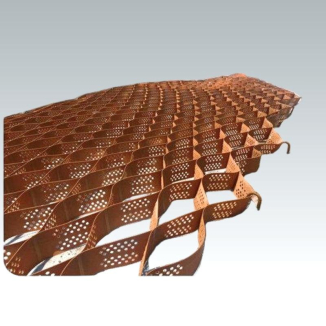
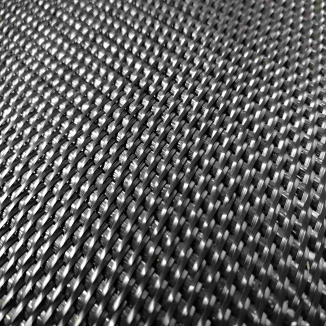
Geotextile vs. Geogrid vs. Geomembrane: Understanding the Differences
Introduction to Geosynthetics: A Family of Specialized Solutions
Geosynthetics are polymer-based substances used to clear up civil and environmental engineering troubles inside soil, rock, or different geotechnical materials. Think of them as high-performance textiles and motion pictures for the earth. While they are regularly used collectively in complementary ways, every principal kind has a wonderful purpose: separation, reinforcement, filtration, drainage, or containment.
Chapter 1: Geotextiles – The Versatile Workhorse
What is a Geotextile?
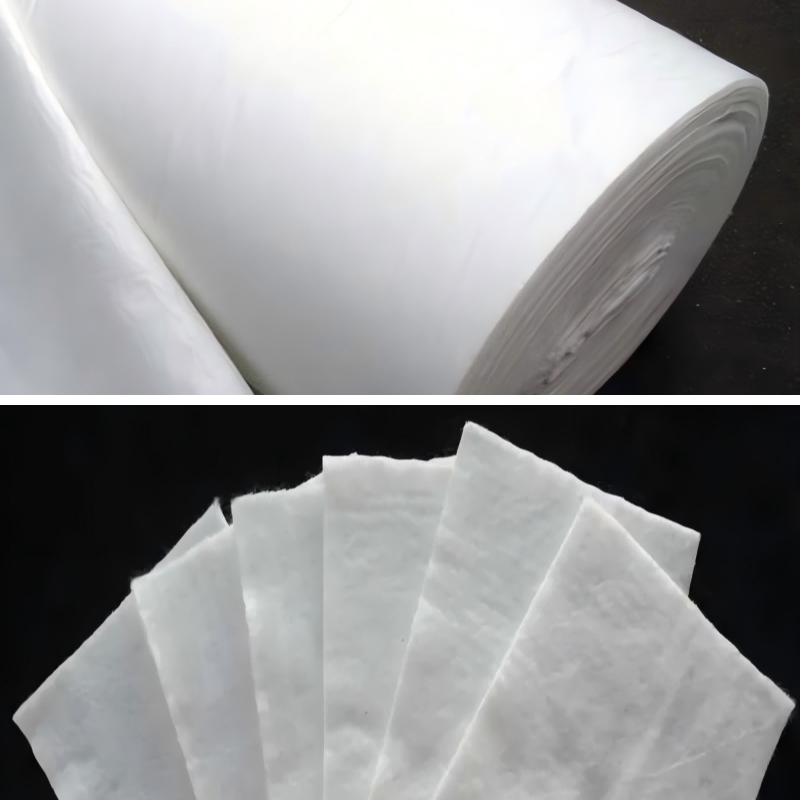
A geotextile is a permeable geofabric, generally made from polypropylene or polyester, woven or non-woven into a bendy sheet. Its permeability is its defining feature, permitting water to bypass thru whilst performing different indispensable functions.
Primary Functions and Mechanisms:
Separation: Placed between two distinct soil layers (e.g., gravel and smooth subsoil), a geotextile prevents them from mixing. This continues the integrity and energy of the top layer, such as a avenue base.
Filtration: Installed adjoining to soil, it approves water to waft thru whilst stopping exceptional soil particles from migrating. This is necessary in drainage purposes in the back of holding partitions or round pipe trenches.
Drainage: By offering a aircraft of permeability, positive geotextiles facilitate the lateral drift of water inside their plane, relieving pore water pressure. Effective geotextile drainage is key in many sports activities fields and landscaping projects.
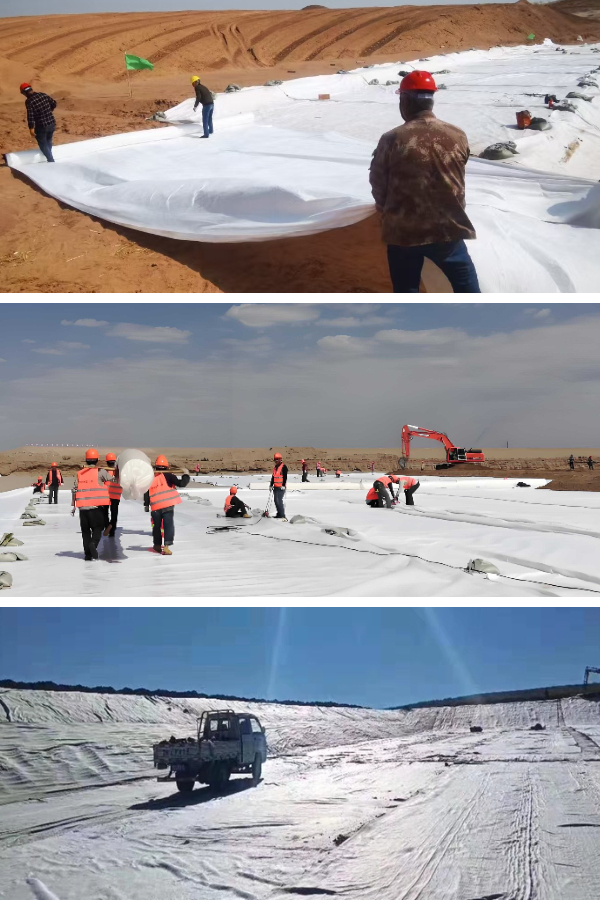
Protection: A tough, non-woven geotextile is regularly used as a cushioning layer to guard refined geomembranes (like excessive density polyethylene HDPE liners) from puncture by using sharp stones or uneven subgrade.
Common Applications:
Road and railway base stabilization and separation
French drains and subsurface drainage systems
Erosion manage on slopes and beneath riprap
Landfill leachate series structures (as a filter)
As a protecting layer in pond and reservoir lining projects
Key Takeaway: If your trouble entails filtering water, keeping apart soil layers, or defending a barrier, a geofabric or geotextile is in all likelihood your first consideration.
Chapter 2: Geogrids – The Tensile Reinforcer
What is a Geogrid?
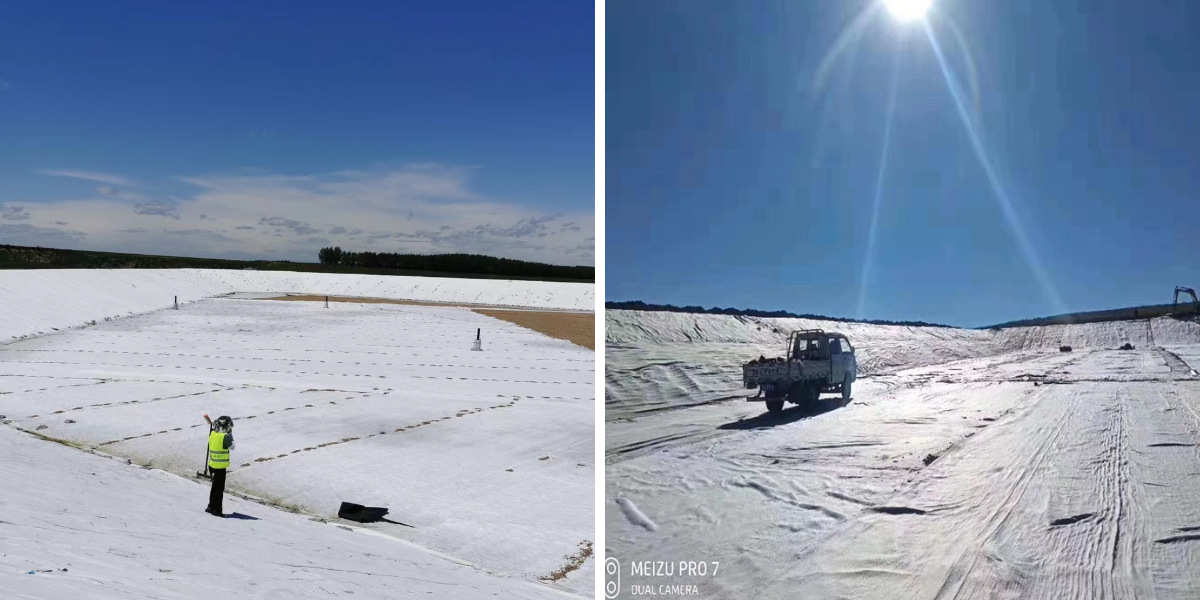
A geogrid is a geosynthetic cloth characterised via a rigid, open grid-like shape of interconnected ribs. Its massive apertures (open spaces) enable for direct contact and interlocking with soil, aggregate, or different fill material.
Primary Functions and Mechanisms:
Reinforcement: This is the core characteristic of a geogrid. It affords tensile electricity to soils that inherently have sturdy compressive energy however susceptible tensile strength. The soil particles lock into the geogrid's apertures, developing a composite cloth that distributes masses over a wider area, enhancing bearing potential and stability.
Confinement: Geogrids confine mixture particles, stopping lateral spreading beneath loads. This is why they are so high-quality in constructing steep, steady partitions and reinforcing unpaved roads on tender subgrades.
Common Applications:
Reinforced soil preserving partitions (MSE walls) and steep slopes
Base reinforcement for roads, parking lots, and working systems on vulnerable soils
Stabilization of embankments over gentle foundations
Railroad music mattress stabilization
Key Takeaway: When you want to add strength, enhance stability, or construct vertical or steep earthen structures, a geogrid is the main reinforcement solution. It works by way of integrating with the soil itself.
Chapter 3: Geomembranes – The Impermeable Barrier
What is a Geomembrane?
A geomembrane is an in fact impermeable artificial liner or barrier. Made from non-stop polymeric sheets, its principal function is to block the migration of fluids or gases. Common substances encompass Polyethylene (HDPE, LLDPE), PVC, and PP.
Primary Functions and Mechanisms:
Containment: geomembranes create a reliable, low-permeability barrier. They are used to incorporate beverages (like water or wastewater), vapors, or solids (like waste) to stop illness of the surrounding environment.
Lining: They supply a fantastic cutoff to forestall seepage loss or infiltration. This is vital for keeping water assets and controlling pollution.
Materials and Strength:
Among the most frequent and sturdy is excessive density polyethylene HDPE liners. HDPE geomembranes are prized for their splendid chemical resistance, excessive tensile strength, and durability, making them the trendy for disturbing purposes like landfills and mining. It is vital to be aware that in composite lining systems, a defensive geofabric is regularly hooked up above and beneath the geomembrane to guard it from puncture.
Common Applications:
Landfill base and cap liners (primary and secondary)
Mining leach pads and tailings dams
Potable and irrigation water reservoirs
Wastewater and evaporation ponds
Aquaculture and ornamental pond liners
Key Takeaway: If your intention is to contain, isolate, or forestall the motion of drinks or gases, an impermeable geomembrane is the necessary component. High density polyethylene HDPE liners are regularly chosen for their tested overall performance in harsh, long-term applications.
Side-by-Side Comparison: Choosing the Right Tool for the Job
The easiest way to distinguish them is by way of their core function:
Geotextile: Filters and Separates (and protects/drains). It is permeable.
Geogrid: Reinforces soil. It has open apertures for soil interlock.
Geomembrane: Barriers and Contains. It is impermeable.
Can They Be Used Together? Absolutely.
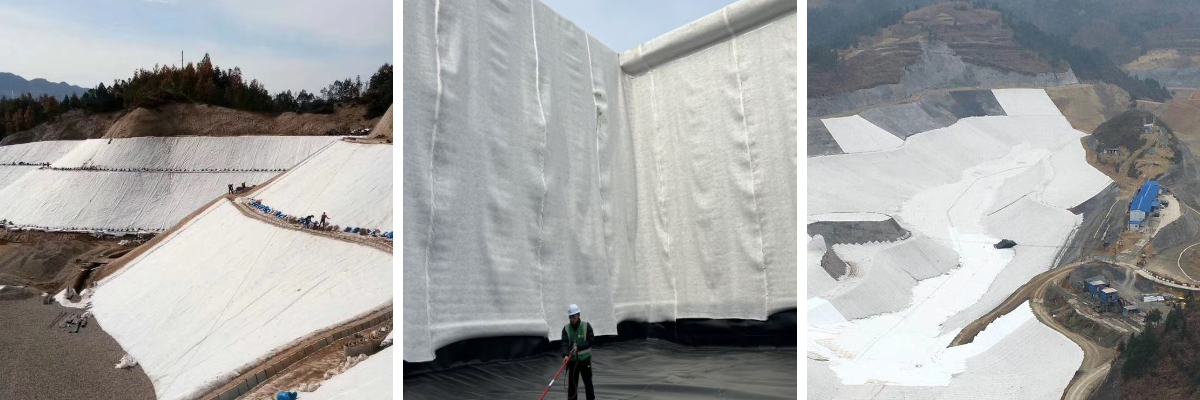
In fact, the most nice engineering options frequently mix these substances in a "composite system." A basic instance is a cutting-edge landfill liner:
The subgrade is organized and blanketed with a shielding cushion geotextile.
A geomembrane (like an HDPE liner) is hooked up as the fundamental impermeable barrier.
Above it, a drainage geotextile or gravel/geonet composite is positioned to accumulate leachate.
On steep sideslopes, geogrids may additionally be used to make stronger the overlying waste.
Another instance is a bolstered preserving wall with a water resistant face: geogrids supply soil reinforcement, whilst a geomembrane on the backface prevents water ingress, and a geotextile at the back of it ensures suited geotextile drainage.
How to Select the Correct Geosynthetic for Your Project
Follow this selection framework:
Define the Primary Problem: Is it...
Water seepage/containment? → Think Geomembrane.
Soil instability or lack of bearing capacity? → Think Geogrid.
Soil mixing, erosion, or drainage/filtration? → Think Geotextile.
Analyze Site-Specific Conditions:
Chemical Exposure: For containment, this dictates geomembrane fabric (e.g., HDPE for harsh chemicals).
Soil Type: Influences geotextile resolution (woven vs. non-woven for filtration) and geogrid interaction.
Subgrade Conditions: Rough subgrades require shielding cushion geotextiles underneath geomembranes.
Consider Structural Requirements: For hundreds and slopes, calculate the required tensile strength, which will factor you towards a unique classification of geogrid or heavy-duty geotextile.
Plan for Installation and Longevity: Consider constructability, seam requirements, and the project's format life. Always seek advice from with a certified geotechnical engineer or geosynthetics expert for ultimate diagram and specification.
Conclusion: Synergy, Not Substitution
Geotextiles, geogrids, and geomembranes are no longer interchangeable. They are specialised equipment in the geotechnical engineering toolbox. Understanding that a geotextile is for filtration and separation, a geogrid for reinforcement, and a geomembrane for containment is the first step towards a successful, long lasting project. Often, their mixed use creates structures that are some distance greater fantastic than any single cloth alone.
By precisely figuring out your project's integral needs—whether it is geotextile drainage, soil reinforcement, or a tightly closed excessive density polyethylene HDPE liners barrier—you can specify the proper geosynthetic answer with confidence, making sure performance, sustainability, and fee for years to come.
Contact Us
Company Name: Shandong Chuangwei New Materials Co., LTD
Contact Person :Jaden Sylvan
Contact Number :+86 19305485668
WhatsApp:+86 19305485668
Enterprise Email: cggeosynthetics@gmail.com
Enterprise Address: Entrepreneurship Park, Dayue District, Tai 'an City,
Shandong Province