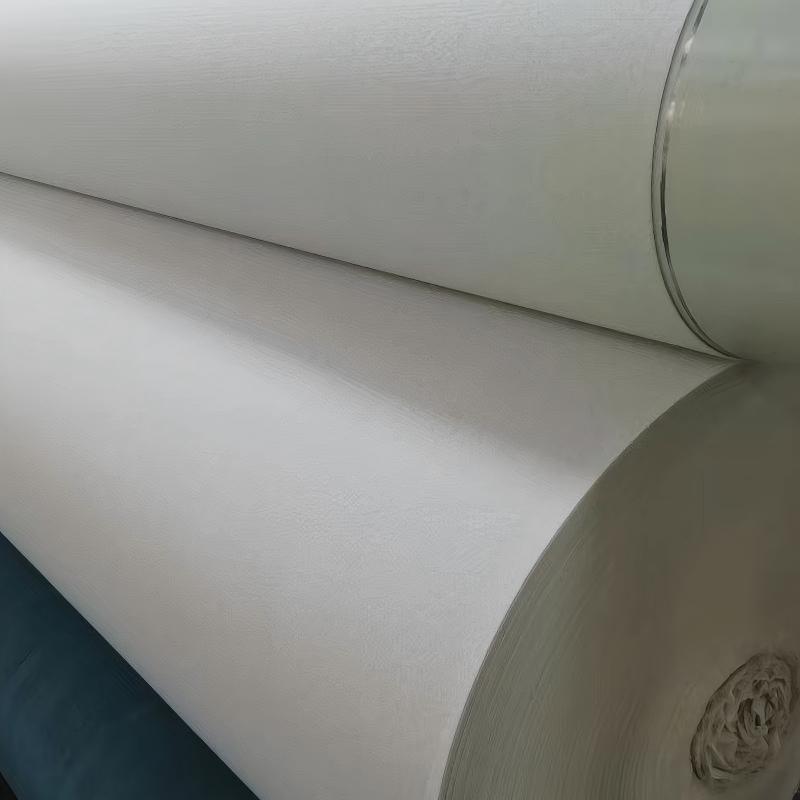
Honeycomb Geotextile
1.Strong structural stability: Honeycomb 3D structure locks soil particles, boosts subgrade/slope anti-sliding and anti-deformation, prevents settlement, suitable for soft soil foundations and steep slopes.
2.Efficient drainage & filtration: Uniformly connected honeycomb pores drain soil water quickly, block fine soil loss, avoid drainage blockage, and ensure long-term drainage.
3.Good durability & damage resistance: Made of high-strength synthetic materials, UV and acid-alkali resistant; honeycomb structure disperses impact, reduces wear, and extends project life.
Product Introduction
I. Basic Properties
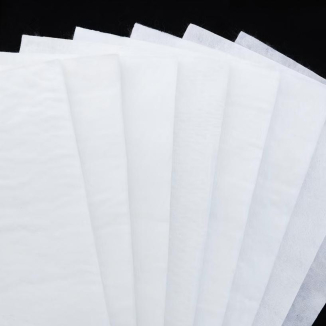
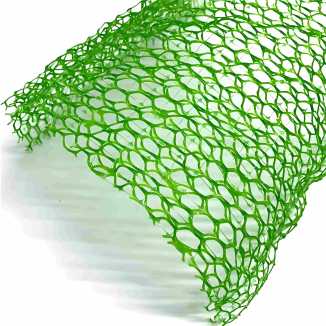
Honeycomb Geotextile is a geosynthetic material made from high-molecular synthetic substrates (such as polypropylene and polyester) through special molding processes, featuring a honeycomb-like three-dimensional grid structure. In terms of morphology, its core characteristic lies in regular hexagonal or polygonal honeycomb units connected to each other, forming a connected three-dimensional porous structure. Its weight per unit area is usually 100-500g/㎡, and its thickness can be adjusted between 2-15mm according to the requirements of application scenarios. In terms of material properties, the substrate itself is resistant to UV aging, acid and alkali corrosion (withstanding an environment with a pH value of 3-11) and microbial erosion. Meanwhile, its overall mechanical properties are enhanced through structural design, with longitudinal and transverse tensile strengths generally reaching 15-80kN/m, which can meet the basic strength requirements of different projects for materials.
II. Core Functions
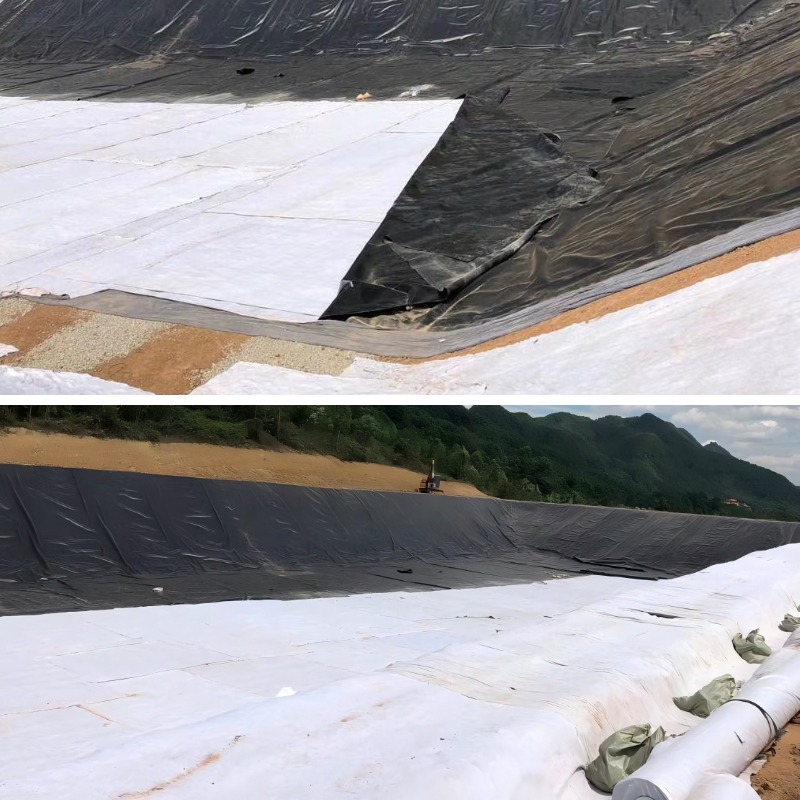
Soil Stabilization and Deformation Resistance: The honeycomb units can "lock" soil particles to restrict their lateral displacement, while dispersing external loads (such as vehicle rolling and rainwater scouring force) to reduce settlement and sliding of subgrades and slopes. Especially in soft soil foundations or high-steep slope projects, it can significantly improve structural stability.
Efficient Drainage and Filtration: The connected honeycomb pores form natural drainage channels, which can quickly drain accumulated water inside the soil and reduce pore water pressure. At the same time, the pore size is precisely designed to block the loss of fine soil particles with water flow, avoiding clogging of drainage channels and achieving the synergy of "drainage" and "filtration.
Structural Protection and Isolation: When laid between engineering structural layers (such as between subgrade and cushion, and between pipelines and backfill soil), it can isolate fillers of different particle sizes to prevent structural failure caused by material mixing. Additionally, it can buffer external impacts and protect fragile components such as underlying geomembranes and pipelines from being punctured or worn by sharp objects.
III. Main Characteristics
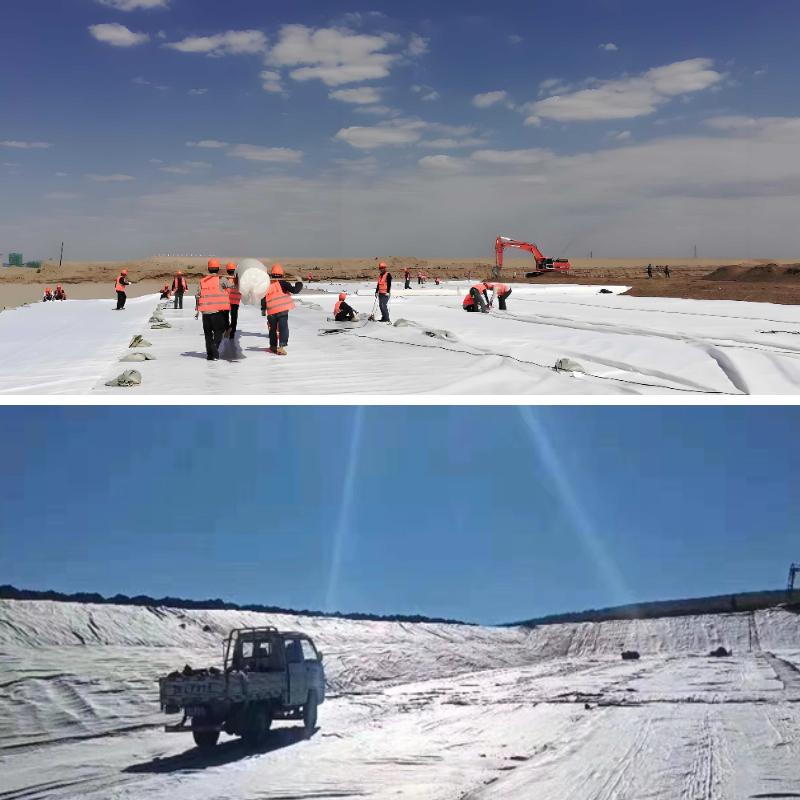
Performance Advantages Endowed by Structure: Different from the single-layer structure of flat geotextiles, the honeycomb three-dimensional structure enables the material to have its tensile and tear resistance improved by 30%-50% under the same weight. Moreover, it can disperse stress more efficiently, avoiding damage caused by excessive local stress.
Outstanding Construction Convenience and Economy: The material is lightweight and can be flexibly cut and spliced according to project dimensions. Its laying efficiency is 20%-30% higher than that of traditional geosynthetic materials, shortening the construction period. Meanwhile, the honeycomb structure can reduce the usage of traditional fillers (such as sand and gravel) by approximately 15%-25%, lowering the project's raw material costs and transportation costs.
Good Ecological Compatibility: The high-molecular materials used do not release toxic or harmful substances, and the honeycomb pores can provide growth space for plant roots. In scenarios such as slope greening and ecological river regulation, it can balance engineering functions and ecological restoration needs, conforming to the environmental protection concept of modern engineering.
Product Parameters
project | metric | ||||||||||
Nominal strength/(kN/m) | |||||||||||
6 | 9 | 12 | 18 | 24 | 30 | 36 | 48 | 54 | |||
1 | Longitudinal and transverse tensile strength / (kN/m) ≥ | 6 | 9 | 12 | 18 | 24 | 30 | 36 | 48 | 54 | |
2 | Maximum elongation at maximum load in longitudinal and transverse directions/% | 30~80 | |||||||||
3 | CBR top penetration strength /kN ≥ | 0.9 | 1.6 | 1.9 | 2.9 | 3.9 | 5.3 | 6.4 | 7.9 | 8.5 | |
4 | Longitudinal and transverse tearing strength /kN | 0.15 | 0.22 | 0.29 | 0.43 | 0.57 | 0.71 | 0.83 | 1.1 | 1.25 | |
5 | Equivalent aperture O.90(O95)/mm | 0.05~0.30 | |||||||||
6 | Vertical permeability coefficient/(cm/s) | K× (10-¹~10-), where K=1.0~9.9 | |||||||||
7 | Width deviation rate /% ≥ | -0.5 | |||||||||
8 | Unit area mass deviation rate /% ≥ | -5 | |||||||||
9 | Thickness deviation rate /% ≥ | -10 | |||||||||
10 | Thickness coefficient of variation (CV)/% ≤ | 10 | |||||||||
11 | Dynamic perforation | Puncture hole diameter/mm ≤ | 37 | 33 | 27 | 20 | 17 | 14 | 11 | 9 | 7 |
12 | Longitudinal and transverse fracture strength (grab method)/kN ≥ | 0.3 | 0.5 | 0.7 | 1.1 | 1.4 | 1.9 | 2.4 | 3 | 3.5 | |
13 | Ultraviolet resistance (Xenon arc lamp method) | Longitudinal and transverse strength retention rate% ≥ | 70 | ||||||||
14 | Ultraviolet resistance (fluorescence UV lamp method) | Longitudinal and transverse strength retention rate% ≥ | 80 | ||||||||
Product Application
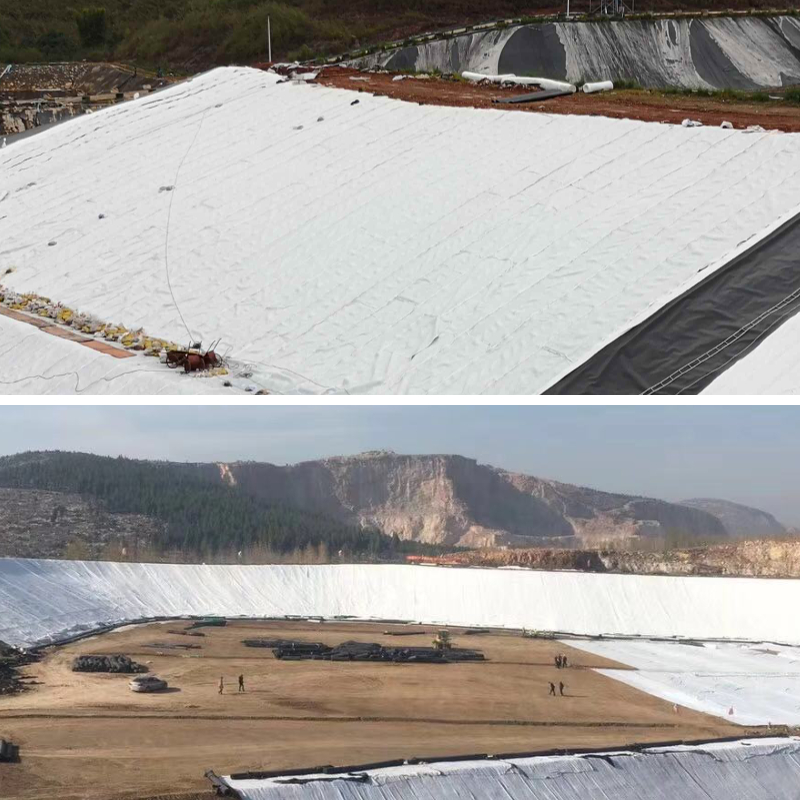
In the construction of transportation infrastructure, it serves as a core material for enhancing the stability of subgrades and slopes. In road engineering, when laid between the subgrade of soft soil foundations and the cushion layer, the honeycomb units can lock soil particles, disperse the load from vehicle movement, and reduce subgrade settlement and cracking. It is particularly suitable for soft soil sections of high-grade highways and rural roads. In railway engineering, when used on track slopes or both sides of the subgrade, it can resist soil erosion caused by rainwater scouring, and at the same time, reduce the risk of subgrade water accumulation through efficient drainage, ensuring the smoothness of the track. During the construction of airport runways, when laid between the runway base course and the foundation, it can enhance the load-bearing capacity of the foundation, buffer the high-frequency impact of aircraft takeoffs and landings, reduce cracks in the base course, and extend the service life of the runway.
In water conservancy and marine transportation projects, its weather resistance and drainage performance can address key challenges in water-related engineering. In the regulation of rivers and canals, when laid on river slopes or the bottom of canals, it can not only prevent soil erosion caused by water scouring and protect the river ecosystem, but also quickly drain accumulated water through the honeycomb pores, avoid canal seepage, and improve the water delivery efficiency of agricultural irrigation canals. In the reinforcement of dikes and flood control embankments, when laid on the surface or inside the embankment body in combination with geomembranes, it can enhance the anti-sliding stability of the embankment, assist in draining seepage water from the embankment, reduce pore water pressure, and prevent embankment landslides. In port and wharf projects, when used in yard foundations or breakwater cushion layers, it can isolate fillers of different particle sizes such as sand, gravel, and silt, avoid uneven settlement of the foundation, accelerate the drainage of rainwater or seawater, and prevent foundation softening.
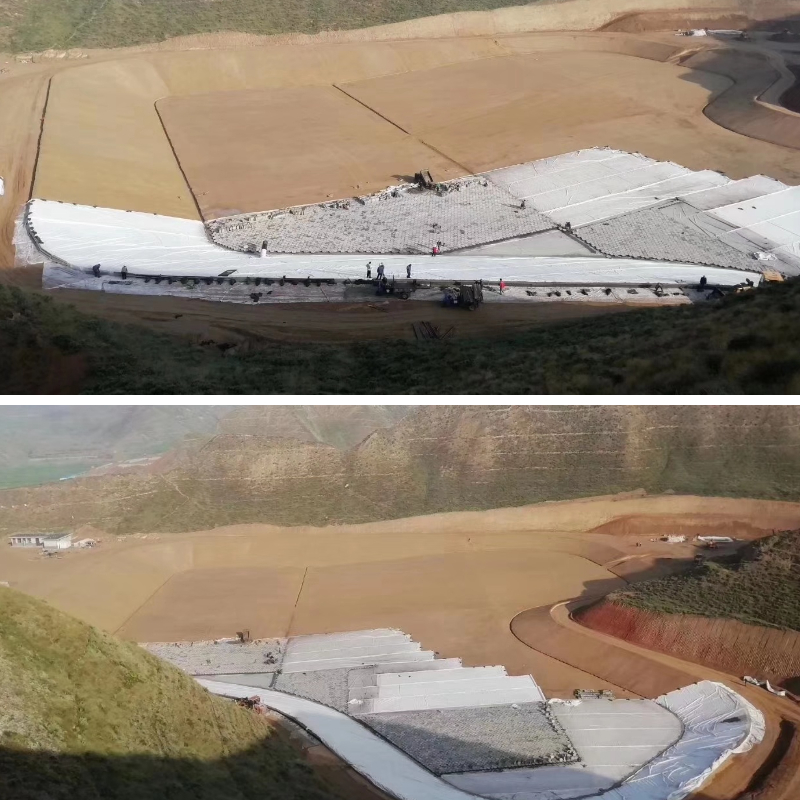
In municipal and construction engineering, it mainly plays the roles of isolation, stabilization, and drainage. In building foundation treatment, for soft soil foundations, after laying the honeycomb geotextile, sand-gravel cushion layers are backfilled. This can prevent soft soil particles from entering the cushion layer, enhance the load-bearing capacity of the cushion layer, and reduce the settlement of the main structure of buildings such as residential communities and large factories. In underground projects (such as underground garages and basements), when laid above the waterproof layer of the roof, it forms an efficient drainage channel in combination with drainage convex sheets, quickly draining rainwater or seepage water and avoiding damage to the waterproof layer due to long-term water pressure. In the construction of urban greenways and park trails, when laid between the trail base course and the soil, it can prevent soil heaving, maintain the flatness of the trail, and at the same time allow rainwater infiltration, taking into account both engineering practicality and ecology. In municipal pipeline engineering, when backfilling the trenches of sewage pipes and water supply pipes, laying it around the pipes can isolate the backfill soil from the pipes, prevent sharp soil particles from scratching the outer walls of the pipes, and reduce the compressive deformation of the pipes caused by soil settlement.
In ecological restoration projects, its environmental friendliness and stability can support ecological protection. In the ecological restoration of mine slopes, when laid on the surface of the slope, it can fix the surface soil, prevent soil erosion caused by rainwater scouring, and at the same time, the honeycomb pores provide attachment and growth space for plant roots. When combined with sowing grass seeds or planting vegetation, it accelerates slope greening. In the construction of artificial wetlands, when laid between the wetland substrate (such as sand, gravel, and soil) and the underlying soil, it can isolate different substrate layers, maintain the stability of the wetland hydrological structure, and not affect the normal infiltration and exchange of water bodies, ensuring the water purification and ecological habitat functions of the wetland. In the anti-seepage and greening around garbage landfills, when laid on the landfill slopes, it can not only assist in isolating pollutants but also fix the soil, providing a foundation for subsequent vegetation restoration and reducing the impact of landfills on the surrounding ecology.
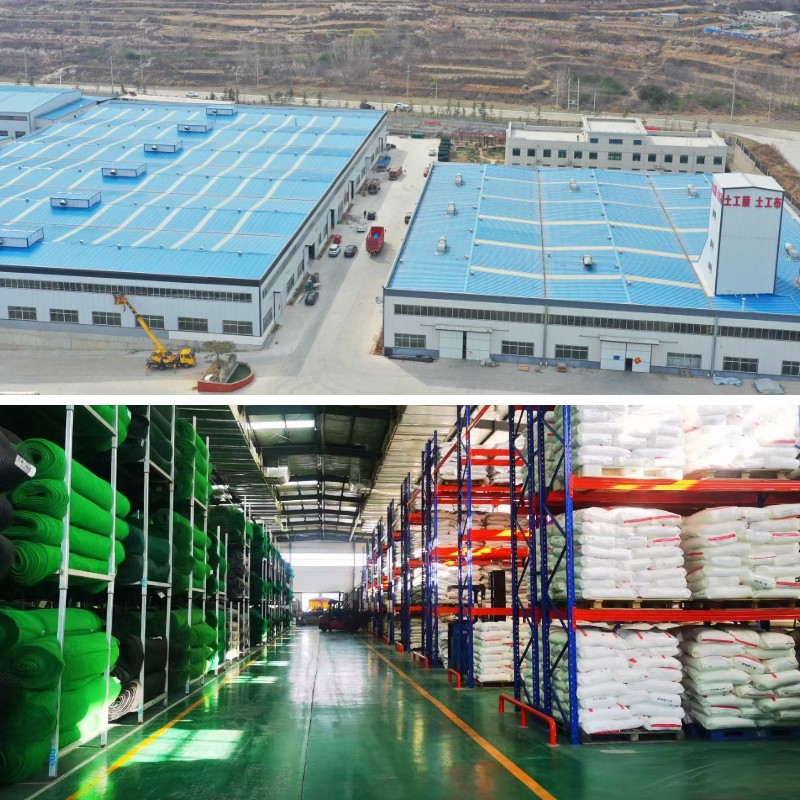
To sum up, with the core advantage of "three-dimensional structure enabling multi-functions", honeycomb geotextile, through the synergistic effects of stable soil locking, efficient drainage, and isolation and protection, not only solves common problems in traditional engineering such as foundation settlement, soil erosion, and poor drainage in the four core fields of transportation, water conservancy, municipal administration, and ecology, but also balances engineering performance and environmental protection needs in ecological scenarios. It has become a key material in modern engineering construction for improving project quality, reducing maintenance costs, and supporting ecological protection. With the upgrading of engineering technology, its application scenarios will further expand to emerging fields such as sponge city construction and underground utility corridor protection, releasing greater application value.