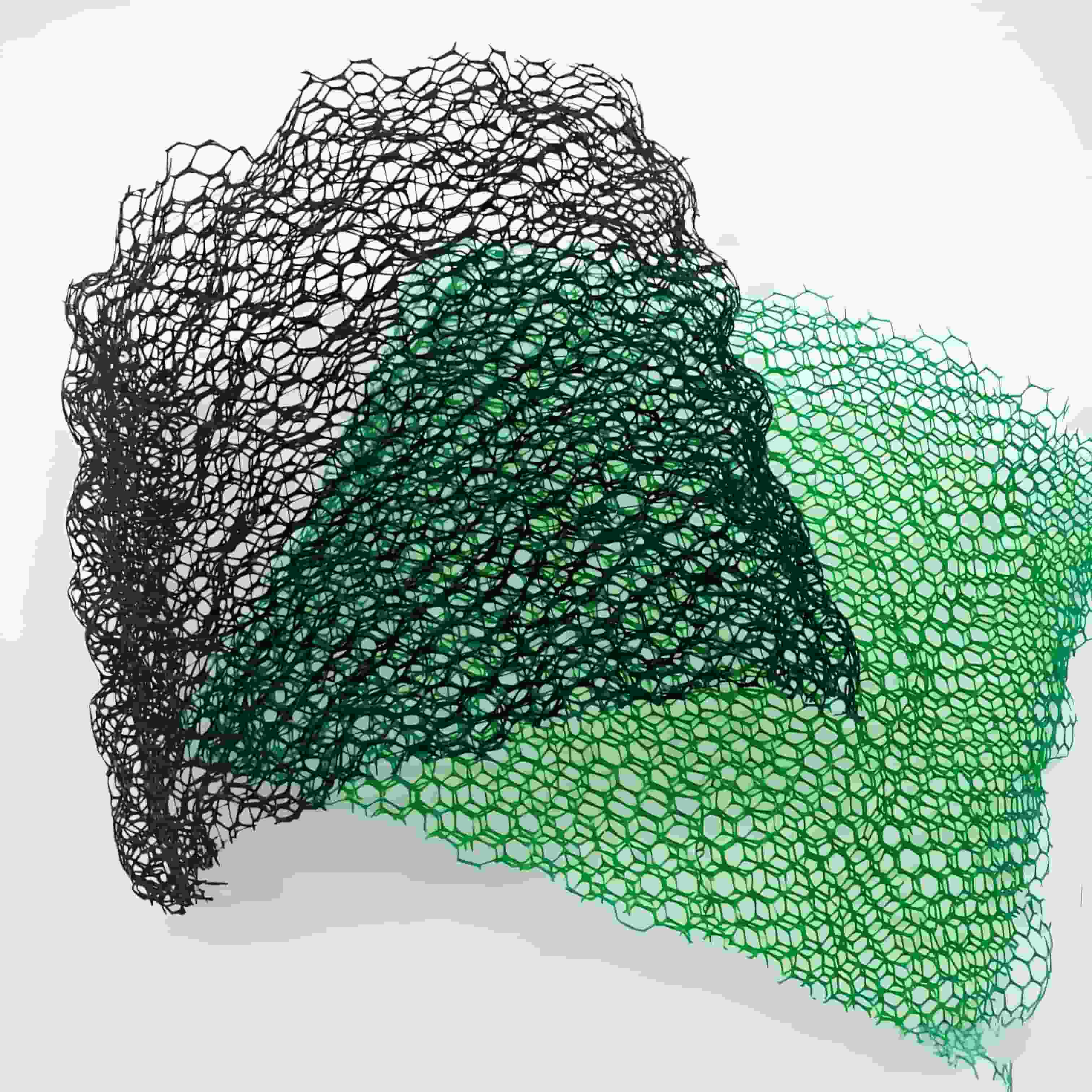
Geotextile Mat
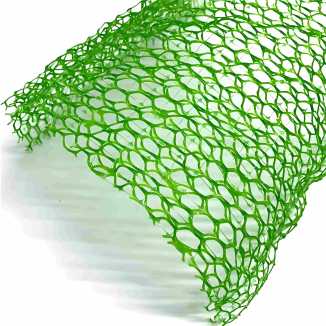
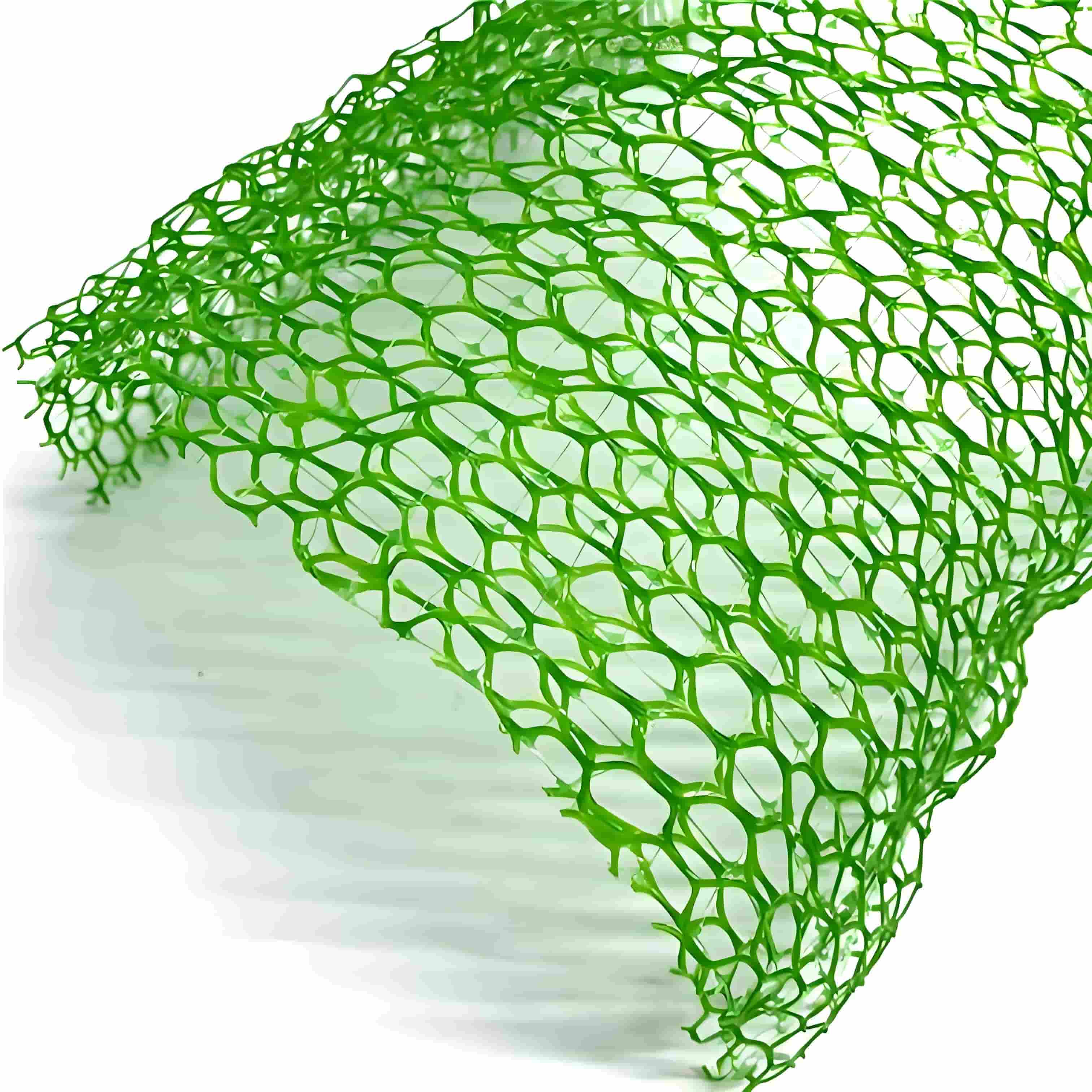
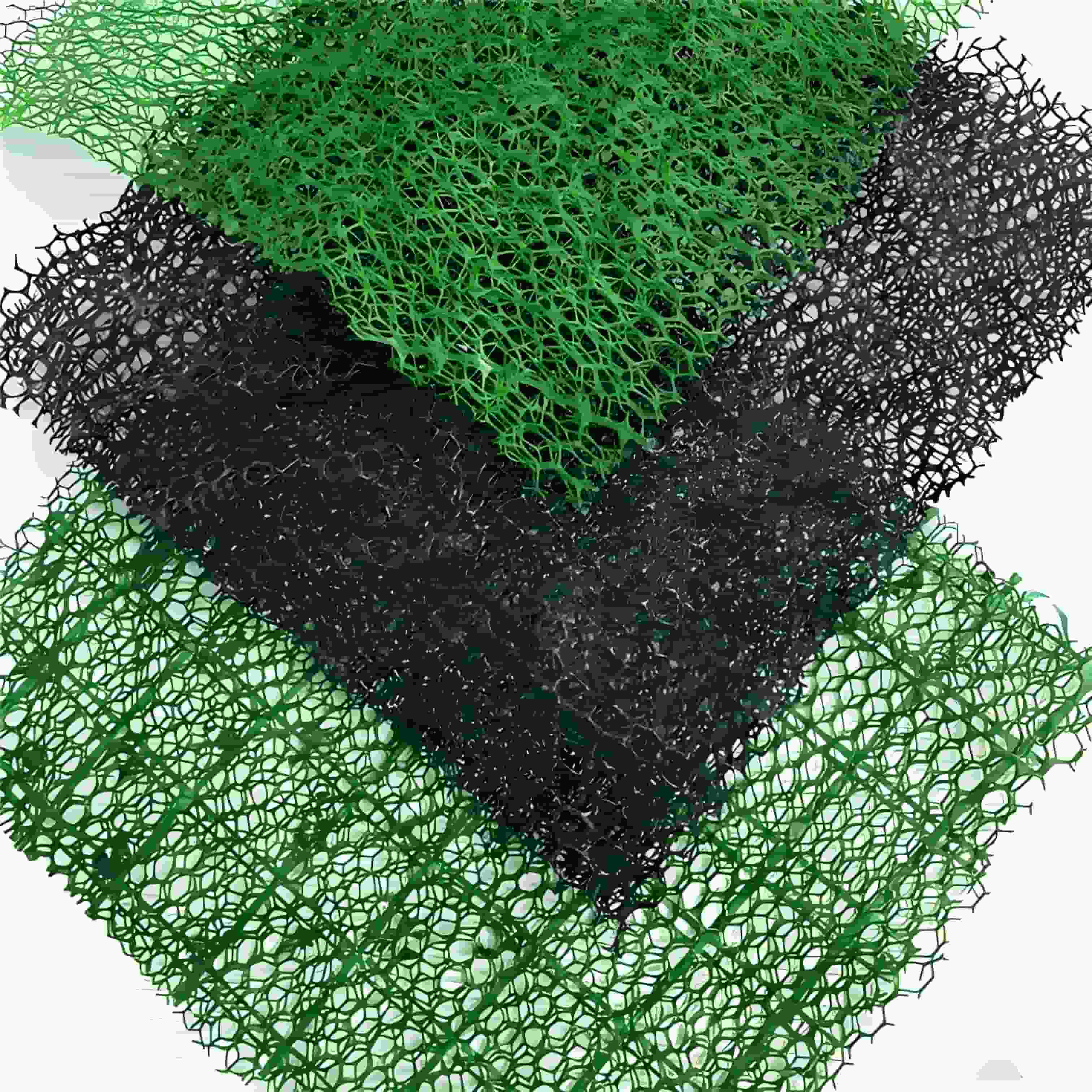
Geotextile Mat is a special material for ecological slope protection and soil and water conservation, made of high-strength and environmentally friendly polymer materials. It has the core advantages of rapid soil fixation and greening, excellent anti-erosion performance and convenient and efficient construction. Its three-dimensional network structure can effectively fix the soil and promote the growth of plant roots. It is suitable for scenarios such as slope protection and mine restoration, and complies with international environmental protection standards (such as ISO 14001). It is an ideal solution for ecological engineering and green infrastructure.
I. Structure and Material Properties
1. Three-dimensional design
A Geotextile Mat is formed by using multi-layer interweaving technology, with a porosity of ≥85%. It has the functions of soil fixation and water retention as well as air permeability, providing an ideal environment for plant growth.
2. High-strength weather-resistant materials
Made of UV-resistant polypropylene (PP) or polyethylene (PE), it is acid and alkali resistant, freeze-thaw resistant (applicable temperature range: -40℃ to 80℃), and has a service life of over 20 years.
3. Water permeability and drainage performance
The open structure ensures the rapid infiltration of rainwater, reduces the erosion of surface runoff, and at the same time avoids soil erosion caused by water accumulation.
Specifications
Item | EM2 | EM3 | EM4 | EM5 |
Mass per unit area /(g/m2) | ≥22O | ≥26O | ≥35O | ≥43O |
Thickness /mm | ≥1O | ≥12 | ≥14 | ≥16 |
Width deviation /m | ±1.0 | |||
Length deviation /m | ±1 | |||
Longitudinal tensile strength /(KN/m) | ≥O. 8O | ≥1.4 | ≥2. O | ≥3. 2 |
Transverse tensile strength /(KN/m) | ≥O. 8O | ≥1.4 | ≥2. O | ≥3. 2 |
Ii. Function and Engineering Advantages
1. Ecological restoration efficiency
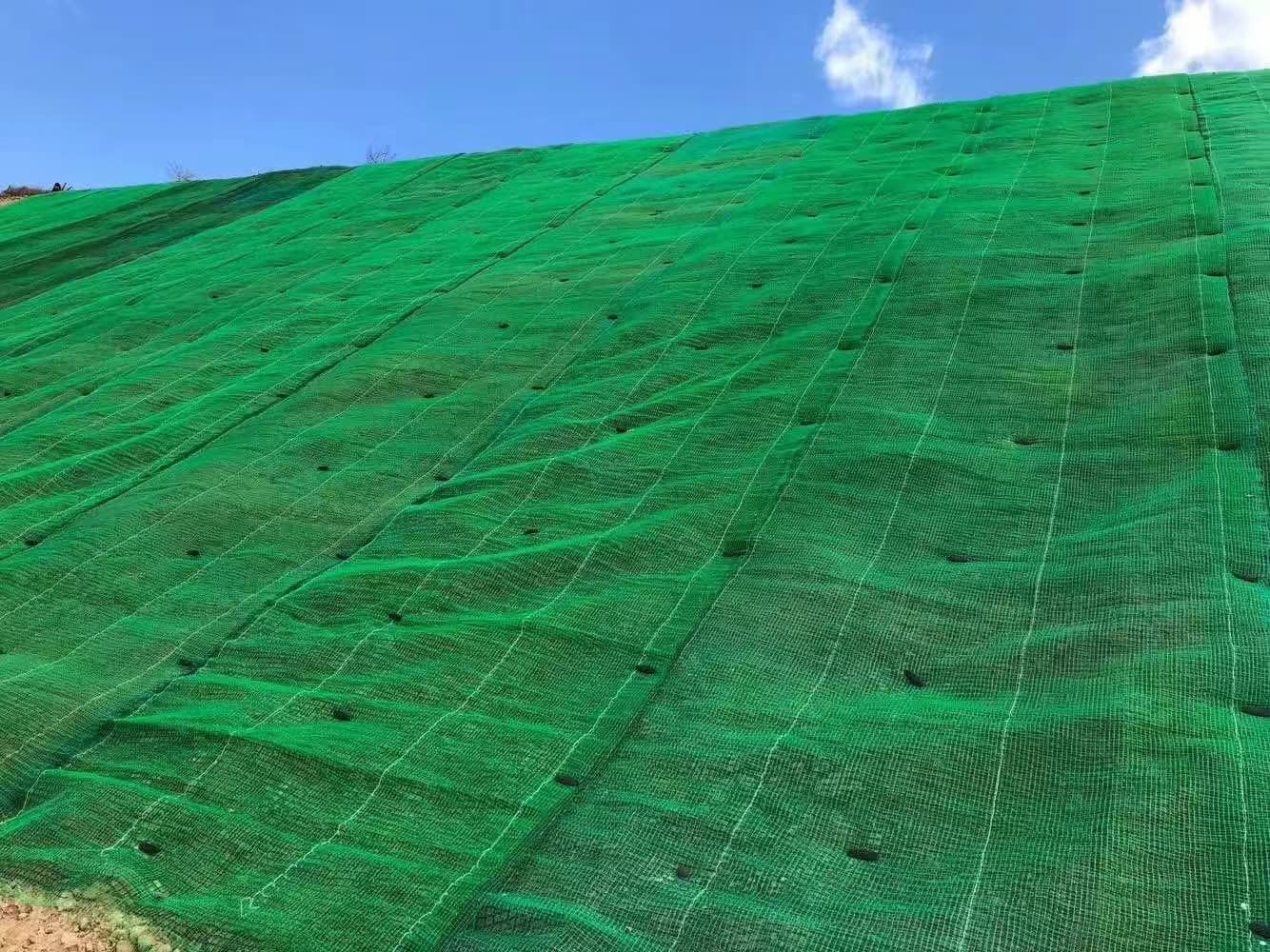
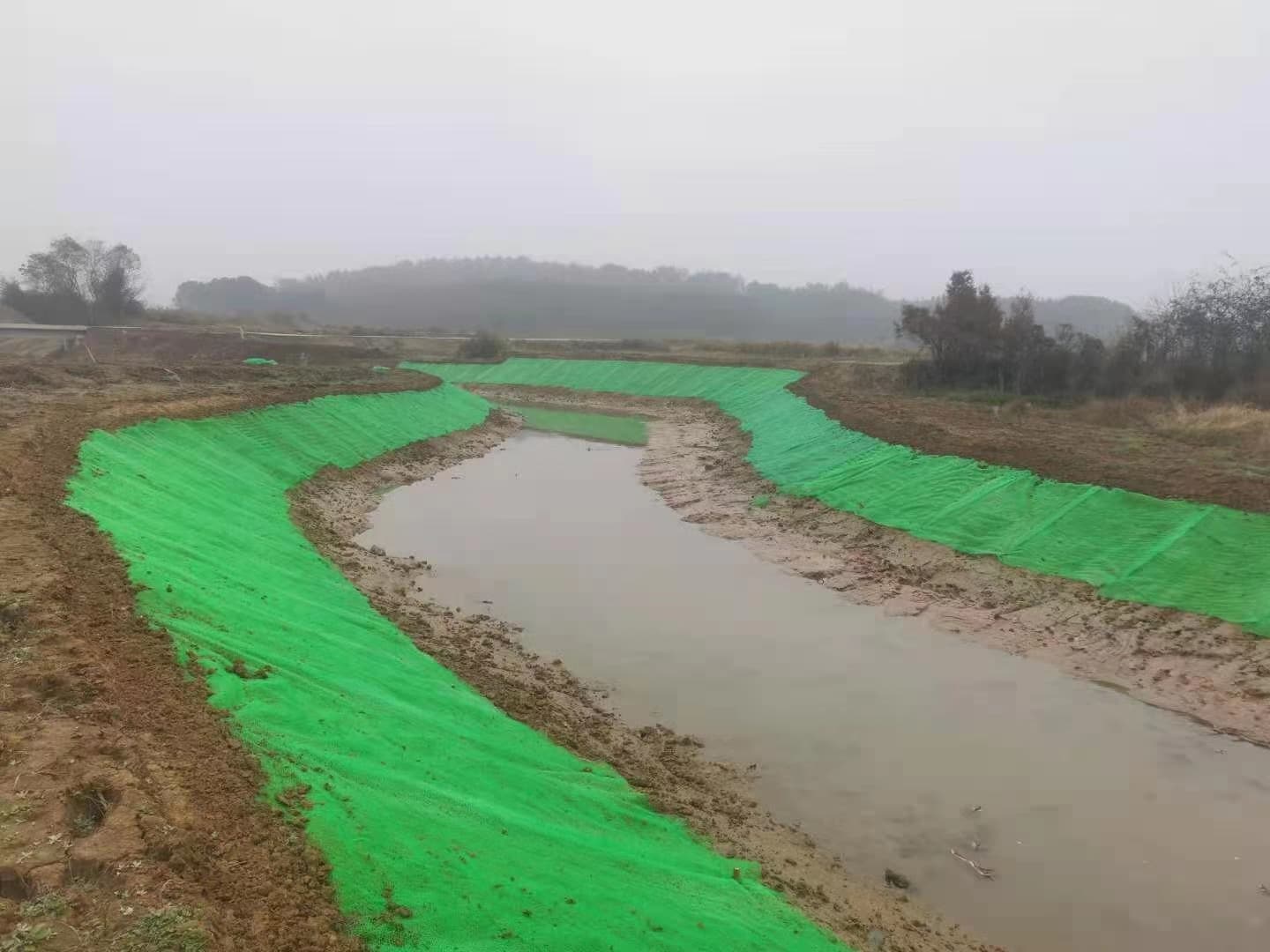
Within three months after the construction, the vegetation coverage rate increased to over 70%, significantly shortening the ecological restoration period. It is suitable for scenarios such as riverbank restoration and greening of exposed mountains.
2. Erosion resistance and slope stability
It can withstand extreme weather such as heavy rain and strong wind, reduce soil loss by up to 80%, and enhance the slope's anti-slip capacity (friction coefficient ≥0.5).
3. Economy and convenient construction
The lightweight design of the roll material (with a single roll weight of ≤30kg) supports manual laying without the need for large machinery. The daily construction area can reach 800 square meters, and the comprehensive cost is 60% lower than that of traditional concrete slope protection.
Iii. Core Application Fields
1. Civil and Transportation Engineering
(1)Highway/railway slope protection
(2)River embankment reinforcement and flood control projects
(3)Ecological greening of mines and quarries
2. Urban construction and landscaping
(1)Park and roof greening base layer
(2)Soil and water conservation in municipal engineering (such as foundation pit slope protection)
(3)Ecological restoration of abandoned land
3. Agriculture and Ecological Governance
(1)Terraced field soil stabilization and desertification control
(2)Reconstruction of wetland and coastal vegetation
(3)Base surface protection of photovoltaic power stations (sand prevention and soil stabilization)

Iv. Environmental Protection and Certification
1. Sustainable materials
It adopts 100% recyclable raw materials, reduces production energy consumption by 40%, and the waste can be recycled, which complies with the EU REACH environmental protection regulation.
2. Authoritative certification
It has passed the China Ten-Ring Certification and the American ASTM anti-aging test, and is compatible with global green building standards (such as LEED).
The 3D Geomat takes ecological friendliness and high efficiency and durability as its core values. Through the combination of scientific structure and environmentally friendly materials, it achieves a synergistic effect of soil and water conservation and vegetation restoration. Its wide range of application scenarios (from infrastructure projects to ecological governance) and significant economic benefits (saving construction time and costs) have made it a benchmark product in the global ecological slope protection field. In the future, it can be expanded to emerging fields such as smart agriculture and sponge cities, contributing to the sustainable development goals.