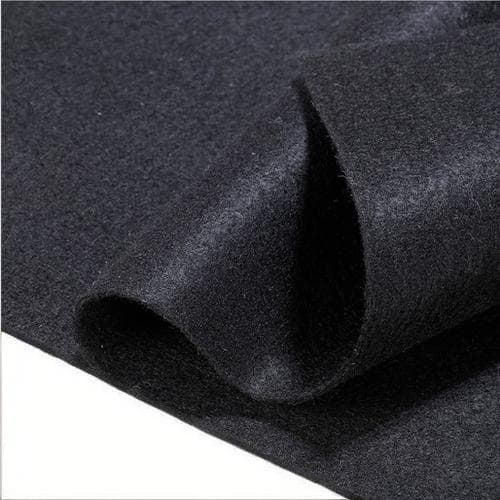
Film Geotextile
1.High-Efficiency Drainage: Water-permeable yet soil-retaining, rapidly drains groundwater while preventing clogging.
2.Reinforcement Capability: High tensile strength for load distribution and improved foundation stability.
3.Durability & Weather Resistance: UV-resistant, acid/alkali-proof, with 10-20 years service life in outdoor environments.
4.Easy Installation: Lightweight rolls , customizable by cutting/sewing to adapt to complex terrains.
5.Eco-Friendly & Cost-Effective: Reduces aggregate usage and cuts project costs by over 30%.
Product Introduction:
1. Basic Properties
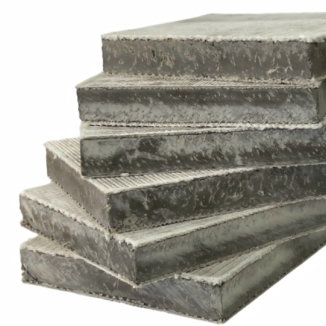
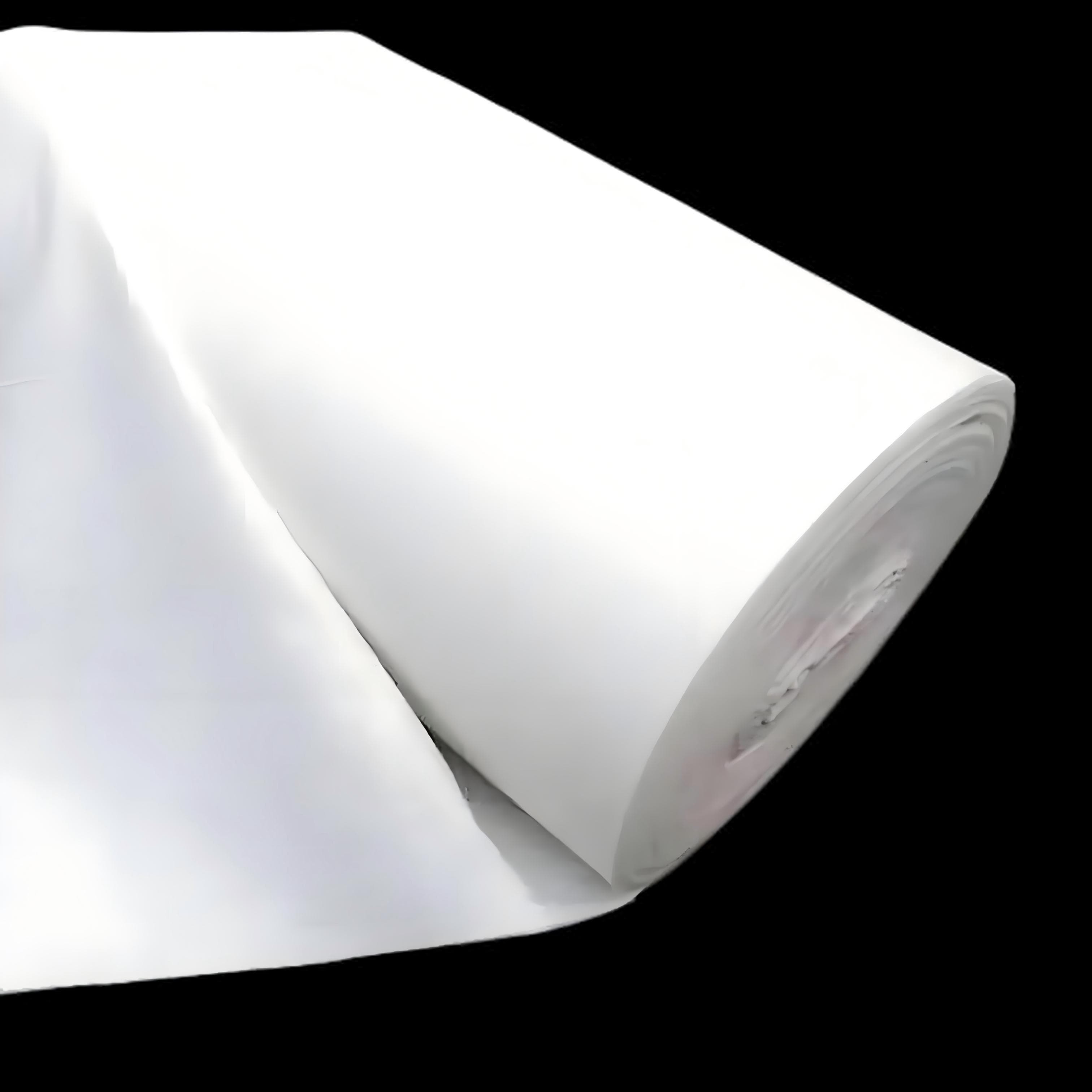
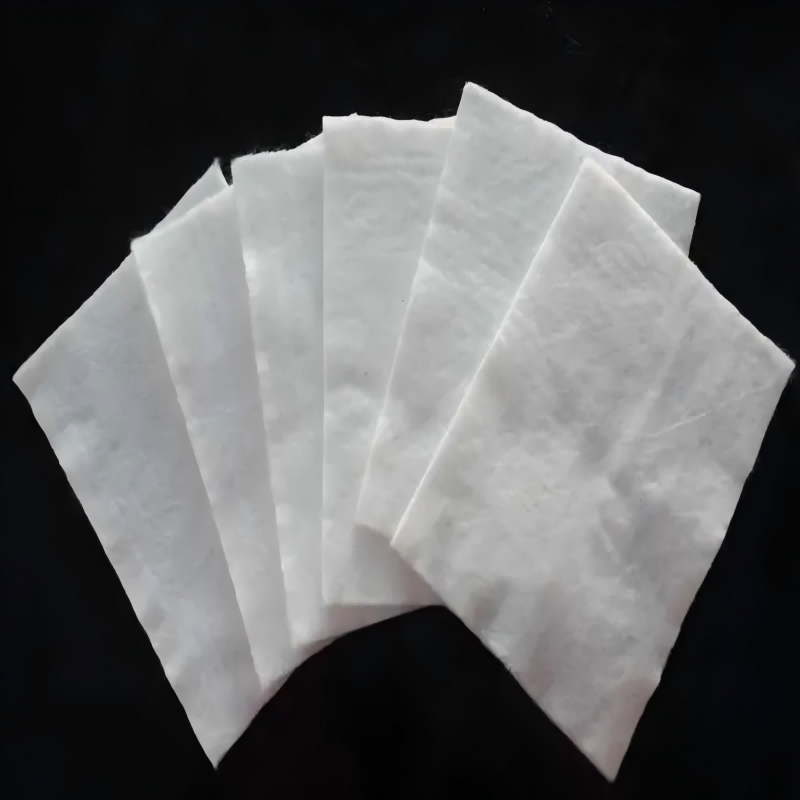
Film Geotextile is a composite geosynthetic material combined by geotextile and impermeable geomembrane film, mainly made of high-density polyethylene raw materials. It owns stable chemical property, uniform thickness and neat texture, with good flexibility and tensile strength. It is resistant to corrosion, acid and alkali, and will not be easily damaged by soil medium. It features stable physical index, strong weather resistance and long service life, suitable for all kinds of harsh outdoor engineering environments.
2. Core Functions
Anti-seepage and Waterproofing: The integrated film layer effectively block water and liquid seepage, prevent water leakage and soil water infiltration.
Drainage and Filtration: The geotextile layer allows water to penetrate freely while intercepting soil particles, avoid pipeline and foundation blockage.
Isolation and Separation: Separate different soil layers, gravel and filling materials, prevent material mixing and ensure foundation structure stability.
Reinforcement and Protection: Enhance overall structural bearing capacity, reduce ground settlement, and protect the impermeable film from puncture and abrasion damage.
Erosion Resistance: Effectively restrain soil loss and slow down water flow erosion on slope and foundation.
3. Main Characteristics
Double-layer integrated design, combining seepage prevention and filtration functions in one piece, convenient construction and save engineering cost.
Excellent puncture resistance and anti-abrasion performance, not easy to crack and break during laying and filling.
Strong anti-aging and UV resistance, adapt to high temperature, cold and humid environment, no easy aging failure.
Good low-temperature flexibility, will not harden and brittle in cold areas, maintain stable using performance.
Eco-friendly and non-toxic, no harmful substance precipitation, safe for water conservancy, aquaculture and environmental protection projects.
Light weight and easy to cut and lay, greatly shorten construction period and reduce manual laying difficulty.
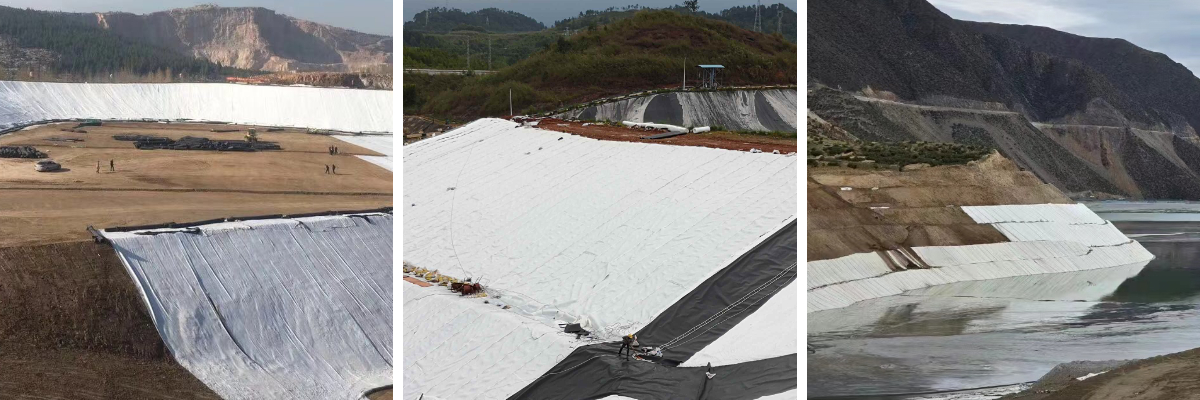
Product Parameters:
| project | metric | ||||||||||
| Nominal strength/(kN/m) | |||||||||||
| 6 | 9 | 12 | 18 | 24 | 30 | 36 | 48 | 54 | |||
| 1 | Longitudinal and transverse tensile strength / (kN/m) ≥ | 6 | 9 | 12 | 18 | 24 | 30 | 36 | 48 | 54 | |
| 2 | Maximum elongation at maximum load in longitudinal and transverse directions/% | 30~80 | |||||||||
| 3 | CBR top penetration strength /kN ≥ | 0.9 | 1.6 | 1.9 | 2.9 | 3.9 | 5.3 | 6.4 | 7.9 | 8.5 | |
| 4 | Longitudinal and transverse tearing strength /kN | 0.15 | 0.22 | 0.29 | 0.43 | 0.57 | 0.71 | 0.83 | 1.1 | 1.25 | |
| 5 | Equivalent aperture O90(O95)/mm | 0.05~0.30 | |||||||||
| 6 | Vertical permeability coefficient/(cm/s) | K× (10-¹~10-), where K=1.0~9.9 | |||||||||
| 7 | Width deviation rate /% ≥ | -0.5 | |||||||||
| 8 | Unit area mass deviation rate /% ≥ | -5 | |||||||||
| 9 | Thickness deviation rate /% ≥ | -10 | |||||||||
| 10 | Thickness coefficient of variation (CV)/% ≤ | 10 | |||||||||
| 11 | Dynamic perforation | Puncture hole diameter/mm ≤ | 37 | 33 | 27 | 20 | 17 | 14 | 11 | 9 | 7 |
| 12 | Longitudinal and transverse fracture strength (grab method)/kN ≥ | 0.3 | 0.5 | 0.7 | 1.1 | 1.4 | 1.9 | 2.4 | 3 | 3.5 | |
| 13 | Ultraviolet resistance (Xenon arc lamp method) | Longitudinal and transverse strength retention rate% ≥ | 70 | ||||||||
| 14 | Ultraviolet resistance (fluorescence UV lamp method) | Longitudinal and transverse strength retention rate% ≥ | 80 | ||||||||
Product Applications:
Film geotextile is primarily made of polypropylene or polyethylene, produced through filament drawing and weaving. Some models also incorporate a geomembrane layer for enhanced impermeability. Its practical characteristics include high strength, resistance to breakage, sun and acid/alkali resistance, and permeability without soil erosion. It is widely used in road construction, from subgrade treatment to pavement protection, at every stage. It is mainly used to solve common problems in road construction, such as subgrade settlement, pavement damage, poor drainage, and the mixing of soil and fill material. It extends the service life of roads and reduces later maintenance costs. It can be used in highways, railways, airport runways, municipal roads, and parking lots.
Among all transportation engineering projects, highway engineering is the largest user of film geotextile. It is frequently used during construction of expressways, primary and secondary roads, and rural roads. The purpose and method of its use vary depending on the road section—for example, sections with abundant soft soil, sections requiring fill, sections requiring excavation, and different structural layers. Below, we will discuss its specific applications in these areas.
The roadbed is the foundation of a road, and its stability directly determines the quality of the entire road. Film Geotextile is widely used in roadbed treatment, primarily for soft soil, fill, and cut roadbeds. It specifically addresses the potential problems in these roadbeds, making them more stable.
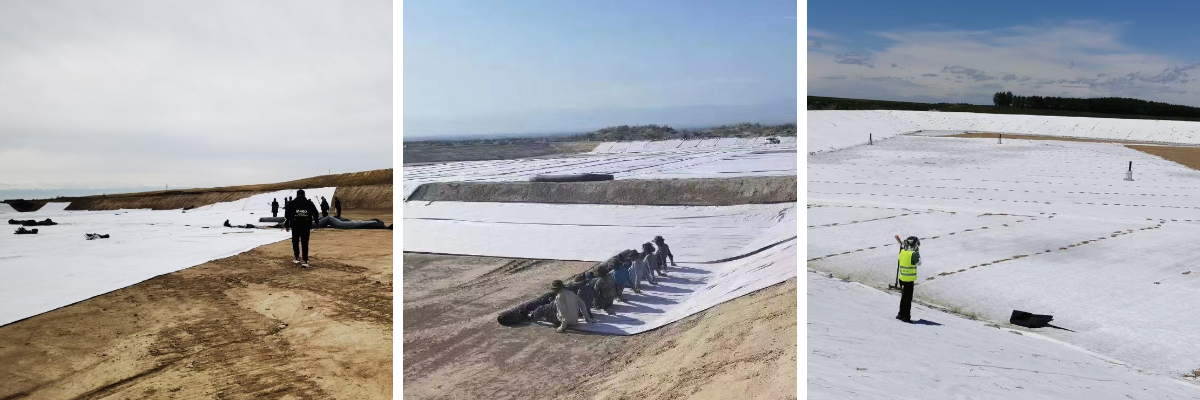
Soft soil roadbeds are where Film Geotextile is most needed. Soft soil itself has high moisture content and poor load-bearing capacity, making it prone to settlement and deformation. If a roadbed is laid directly on it, problems such as road surface collapse and cracking are likely to occur. Film Geotextile addresses this issue in three ways: First, its high strength disperses the weight of the fill material above the subgrade, preventing excessive local pressure that could deform soft soil and increasing the subgrade's load-bearing capacity. Second, its numerous tiny pores allow for rapid drainage of moisture from the soft soil, making it more compact and preventing groundwater seepage, thus avoiding softening and frost heaving of the roadbed. Third, it completely separates the soft soil layer from the overlying fill material (such as gravel and sand), preventing them from mixing and ensuring the fill material doesn't sink into the soft soil, maintaining the integrity of the subgrade structure and reducing subgrade settlement and cracking.
During earth-fill subgrade construction, different types of fill materials (such as coarse stones and fine sand) can easily mix, leading to insufficient subgrade compaction, uneven load-bearing capacity, and disturbance of the underlying soil during compaction. At this stage, laying Film Geotextile between the original ground and the fill, or between different layers of fill material, can separate the different fill materials, ensuring that each layer is firm and intact. Simultaneously, it can distribute the compaction force, reducing disturbance to the underlying soil and preventing subgrade settlement and cracking.
During excavated roadbed construction, Film Geotextile is primarily used for slope protection and drainage. Excavated roadbed slopes are easily eroded by rainwater and exposed to wind and sun, leading to slope collapse and soil loss. Laying Film Geotextile protects the slope soil, preventing soil erosion and making the slope more stable. It also drains seepage water from the slope, reducing soil moisture content and preventing soil softening that could lead to slope collapse. Especially in areas with poor geological conditions and heavy rainfall, it reduces the amount of maintenance work required later, extending the lifespan of the slope.
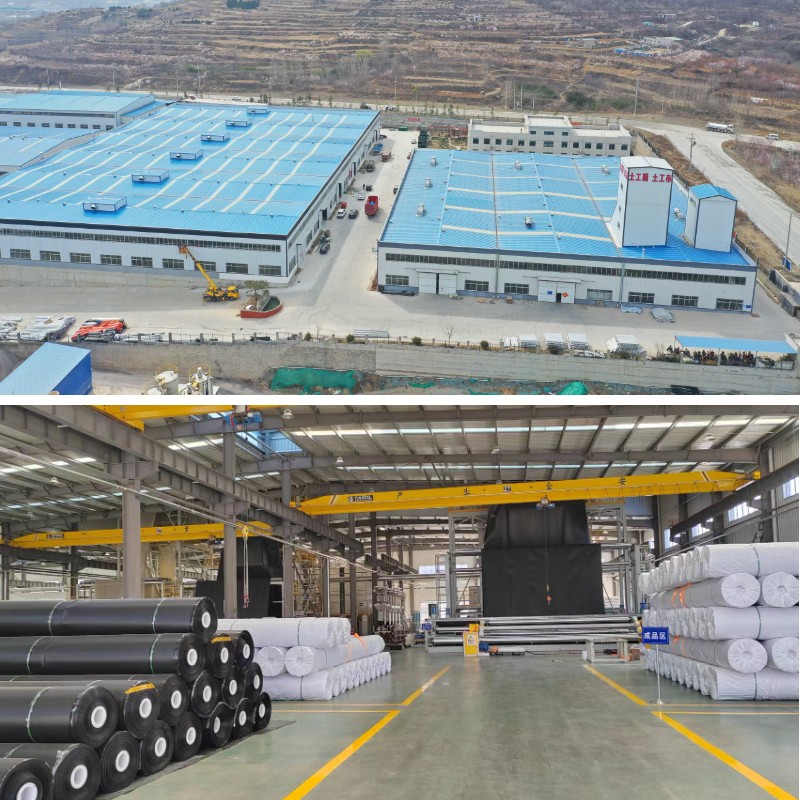
With its comprehensive functions of isolation, reinforcement, filtration, drainage, and seepage prevention, as well as its core advantages of high strength, aging resistance, and ease of construction, film geotextile has become an indispensable key material in many fields such as infrastructure, water conservancy, environmental protection, agriculture, and municipal engineering. Its applications cover core areas such as roadbeds, water conservancy dams, landfills, farmland protection, and underground engineering. It effectively solves pain points in engineering projects such as settlement, leakage, and soil erosion, while reducing construction costs and extending the service life of projects, balancing practicality and economy, and providing reliable support for the stable progress of various projects and ecological protection.