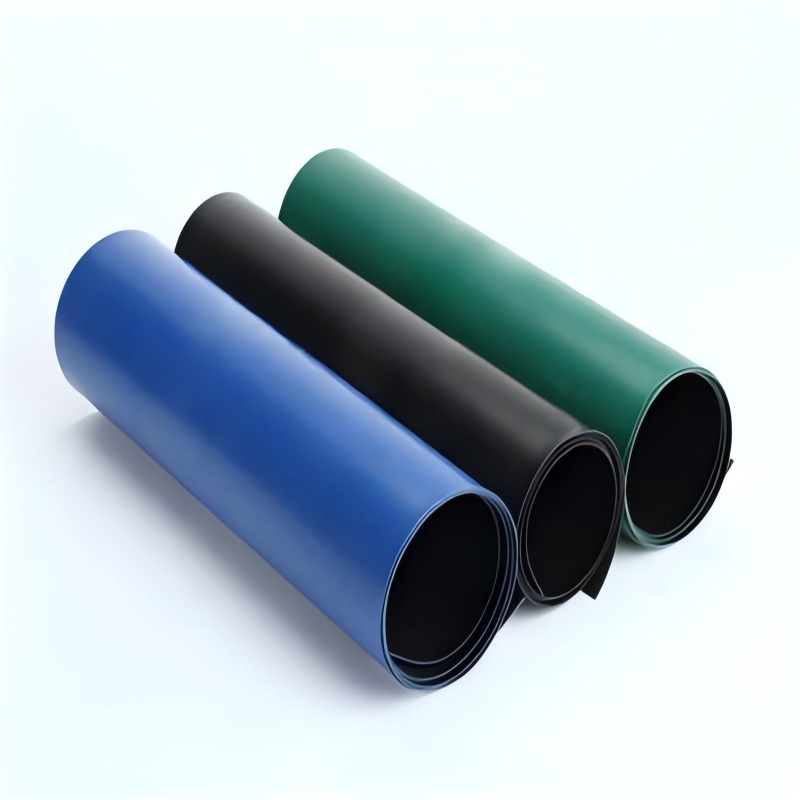
HDPE Sheet for Pond
1. Extremely high efficiency: Its anti-seepage effect is millions or even tens of millions of times that of high-quality compacted clay.
2. Space saving: The thickness is usually between 0.5mm and 3.0mm, which requires much less space than the clay lining layer that requires a large thickness.
3. Fast construction speed: significantly reducing complex processes such as soil excavation and compaction, mechanized laying and welding, and short construction period.
4. Strong adaptability to deformation: Good flexibility enables it to adapt well to the settlement and deformation of the foundation, and is not easily cracked.
5. Controllable quality: It is an industrialized production product with uniform and stable quality, while the quality of clay is greatly affected by soil sources and is difficult to control.
Product Introduction:
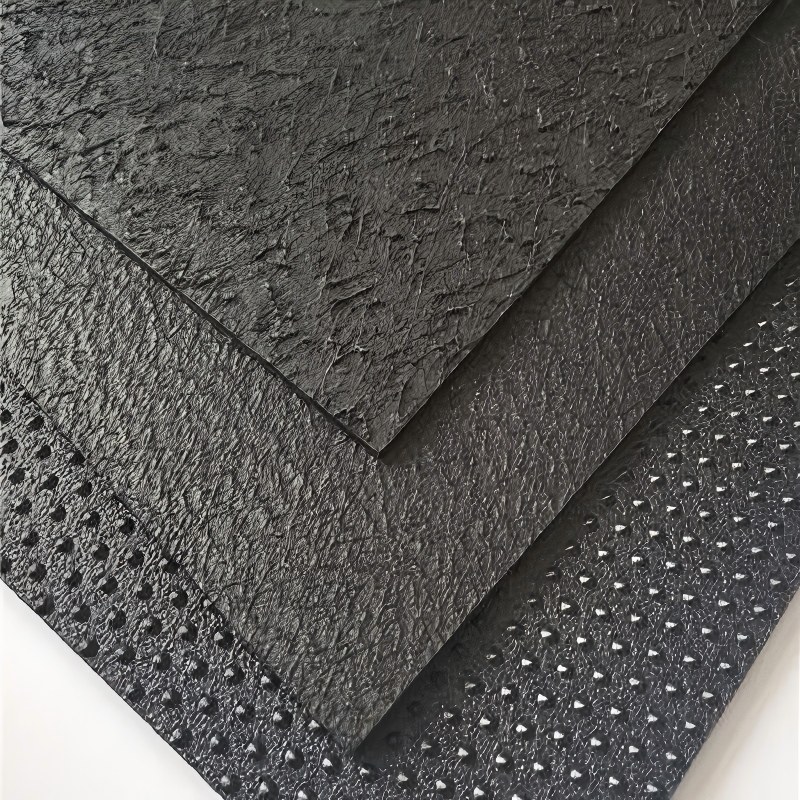
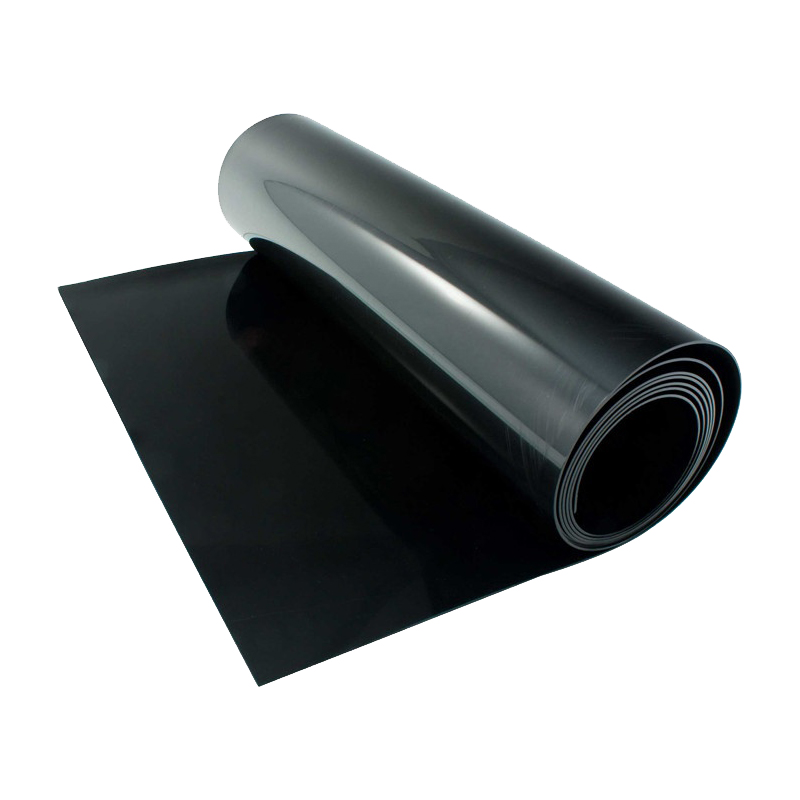
HDPE Sheet for Pond is a high-performance impermeable geomembrane specially manufactured for pond construction, landscape water bodies, and aquaculture projects. Available in mainstream 300 micron Pond Liner 500 micron Pond, it covers different depth and anti-seepage demands for small and large ponds. The classic HDPE 5 version stands out for its excellent tensile strength, puncture resistance and durable anti-leakage performance.
Made of premium high-density polyethylene material, this pond liner features great corrosion resistance, UV stability and flexibility to fit complex terrain. It effectively prevents water seepage, soil erosion and water loss, greatly lowering maintenance costs. Easy to cut and install, it serves as a reliable long-term waterproof solution for aquaculture ponds, garden ponds and reservoir renovation.
Main Features
The characteristics of geomembranes are mainly reflected in their material and engineering properties:
1. Extremely low permeability: This is its most core characteristic, with a permeability coefficient usually less than 10 ⁻¹¹~10 ⁻¹³ m/s, almost considered impermeable.
2. Excellent anti-seepage performance: It can effectively prevent the leakage of fluids such as water, chemical solutions, biogas, volatile gases, etc.
3. Good durability and aging resistance: by adding carbon black, antioxidant, anti ultraviolet agent, etc., it can resist ultraviolet radiation, temperature change, chemical and biological erosion, and its service life can reach decades or even longer.
4. High strength and ductility: It has good tensile, tear, and puncture resistance, and can adapt to uneven settlement and deformation of the foundation.
5. Strong chemical stability: able to resist corrosion from various acids, bases, salts, and oils, suitable for various complex environments, especially in landfills and chemical fields.
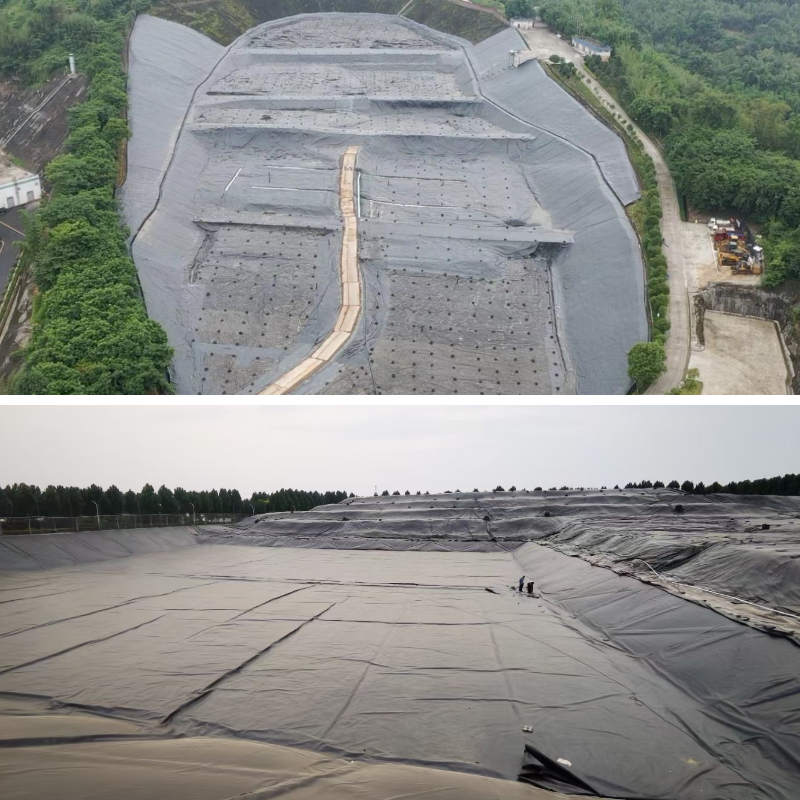
6. Easy construction and high cost-effectiveness: Compared to traditional anti-seepage structures such as concrete and clay, geomembranes are lightweight, easy to transport, and have fast construction speed, resulting in lower overall costs.
Common types
According to the differences in raw materials and manufacturing processes, they are mainly divided into the following categories:
1. HDPE geomembrane (high-density polyethylene geomembrane):
Features: High strength, extremely strong resistance to chemical corrosion, good resistance to UV aging, long service life.
Application: It is the most widely used type, especially suitable for projects with strict environmental requirements, such as landfills, hazardous waste disposal sites, mining tailings ponds, etc.
2. LLDPE geomembrane (linear low-density polyethylene geomembrane):
Features: softer than HDPE, better ductility, stronger resistance to stress cracking, and better adaptability to uneven settlement.
Application: Suitable for occasions with high deformation requirements, such as landfill closure, artificial lakes, landscape water bodies, etc.
3. PVC geomembrane (polyvinyl chloride geomembrane):
Features: Good flexibility, easy welding, low cost. But its UV resistance and resistance to certain organic solvents are not as good as HDPE.

Application: Commonly used in water conservancy projects (channels, reservoirs), garden landscapes, basement anti-seepage, etc.
Product Parameters:
metric | ASTM | unit | test value | Minimum test frequency | ||||||
test method | 0.75 mm | 1.00 mm | 1.25 mm | 1.50 mm | 2.00 mm | 2.50mm | 3.00 mm | |||
Minimum average thickness | D5199 | mm | 0.75 | 1 | 1.25 | 1.5 | 2 | 2.5 | 3 | Per volume |
Minimum value (any one of 10) | -0.1 | -0.1 | -0.1 | -0.1 | -0.1 | -0.1 | -0.1 | |||
minimum density | D 1505/D 792 | g/cm3 | 0.94 | 0.94 | 0.94 | 0.94 | 0.94 | 0.94 | 0.94 | 90,000 kg |
Minimum average tensile performance (1) | D638 Type IV | |||||||||
Breakage strength, | N/mm | 20 | 27 | 33 | 40 | 53 | 67 | 80 | 9,000 kg | |
yield strength | N/mm | 11 | 15 | 18 | 22 | 29 | 37 | 44 | ||
Strain extension, | % | 700 | 700 | 700 | 700 | 700 | 700 | 700 | ||
yield extension | % | 12 | 12 | 12 | 12 | 12 | 12 | 12 | ||
Minimum strength of right-angle tear | D 1004 | N | 93 | 125 | 156 | 187 | 249 | 311 | 374 | 20,000 kg |
Minimum puncture strength | D4833 | N | 240 | 320 | 400 | 480 | 640 | 800 | 960 | 20,000 kg |
Constant tensile load stress cracking (2) | D5397 | hour | 300 | 300 | 300 | 300 | 300 | 300 | 300 | Based on GRI GM-10 |
Carbon black content | D 1603(3) | % | 2.0-3.0 | 2.0-3.0 | 2.0-3.0 | 2.0-3.0 | 2.0-3.0 | 2.0-3.0 | 2.0-3.0 | 9,000 kg |
Carbon black dispersion | D5596 | Note (4) | Note (4) | Note (4) | Note (4) | Note (4) | Note (4) | Note (4) | 20,000 kg | |
Oxygen induction time (OIT) (5) | D3895 | minute | 100 | 100 | 100 | 100 | 100 | 100 | 100 | 90,000 kg |
(a) Standard OIT | D5885 | minute | 400 | 400 | 400 | 400 | 400 | 400 | 400 | |
(b) high-handed OIT | ||||||||||
85℃ Oven aging (minimum average) (5)(6) | Per formula | |||||||||
(A) Standard OIT is retained after 90 days | D 5721 | % | 55 | 55 | 55 | 55 | 55 | 55 | 55 | |
(B) High voltage OIT is retained for 90 days | D 3895 D5885 | % | 80 | 80 | 80 | 80 | 80 | 80 | 80 | |
Ultraviolet resistance (7) | Note (8) 50 | Note (8) 50 | Note (8) 50 | Note (8) 50 | Note (8) 50 | Note (8) 50 | Note (8) 50 | Per formula | ||
(a) standard OIT | D3895 | |||||||||
(b) Retention of high pressure OIT after 1600 hours (9) | D5885 | % |
Product Applications:
HDPE Sheet for Pond is the core anti-seepage geomembrane material specially optimized for modern aquaculture pond construction and renovation, and its most mainstream and practical application scenario is commercial aquaculture pond anti-seepage treatment. Traditional earthen aquaculture ponds are prone to water seepage, soil leakage, water quality turbidity and nutrient loss, which will lead to unstable water level, increased water replenishment costs, and even bacterial breeding that endangers the survival of aquatic products. With the continuous upgrading of intensive aquaculture, the application of standardized HDPE pond liners represented by 300 micron Pond Liner, 500 micron Pond Liner and HDPE 500 micron specifications has completely solved the pain points of traditional pond breeding and become the standard configuration for high-efficiency aquaculture projects worldwide.
In small and medium-sized ecological aquaculture ponds, the 300 micron Pond Liner is the most cost-effective conventional option. This lightweight HDPE sheet has moderate thickness, good flexibility and excellent ductility, which can perfectly fit the uneven base of manually trimmed earthen ponds. It effectively isolates pond water from external soil layers, blocks underground soil seepage and groundwater backflow, and maintains stable pond water volume and water quality. For conventional fish and shrimp breeding ponds with shallow water depth and low ground pressure, the 300 micron specification fully meets daily anti-seepage needs, reduces frequent water replacement, saves water resources, and creates a stable living environment for aquatic organisms.
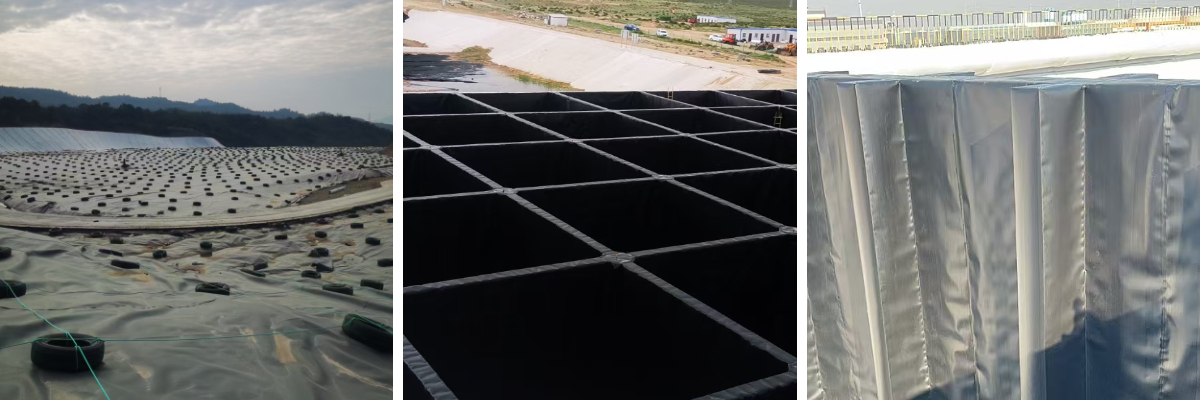
For large-scale intensive aquaculture farms and deep-water breeding ponds with higher load and anti-seepage requirements, the 500 micron Pond Liner and classic HDPE 500 micron material have become the preferred choice. Compared with thin-specification liners, HDPE 500 micron products feature higher tensile strength, stronger puncture resistance and super anti-aging performance. They can resist the friction of pond bottom sediment, the impact of water flow, and the piercing of aquatic biological sundries, avoiding membrane damage and water leakage in long-term breeding cycles. In addition, this thickened HDPE sheet has excellent UV resistance and chemical corrosion resistance, which can resist the erosion of aquaculture feed residues and microbial metabolites, prevent pond bottom deterioration, and greatly extend the service life of aquaculture ponds.
In the actual construction and application of aquaculture ponds, HDPE pond liners show extremely high practicability. The material is easy to cut, splice and lay, adapting to various pond shapes and terrain conditions. After laying 500 micron Pond Liner and 300 micron Pond Liner in a targeted manner according to pond depth and usage scenarios, the pond bottom can be kept flat and clean, reducing the deposition of harmful substances such as ammonia nitrogen and nitrite. This not only improves the survival rate and growth rate of aquatic products but also greatly reduces later pond cleaning and maintenance costs.
To sum up, targeted application of different specifications including HDPE 500 micron and 300 micron pond liners is the key to standardized construction of modern aquaculture ponds. As a durable, low-cost and high-efficiency anti-seepage solution, HDPE Sheet for Pond effectively solves various problems of traditional aquaculture, supports large-scale and standardized aquaculture production, and has become an indispensable geomaterial in the aquaculture industry.
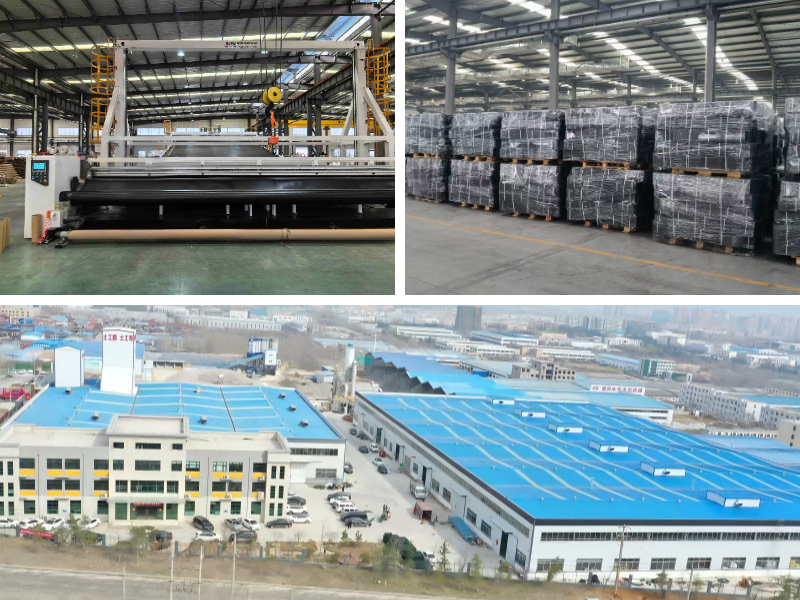
As an efficient, economical, and environmentally friendly anti-seepage material, geomembrane plays an irreplaceable role in civil engineering, environmental protection, water conservancy, and other fields due to its excellent performance and wide adaptability. It is one of the core materials for achieving anti-seepage and isolation functions in modern engineering.