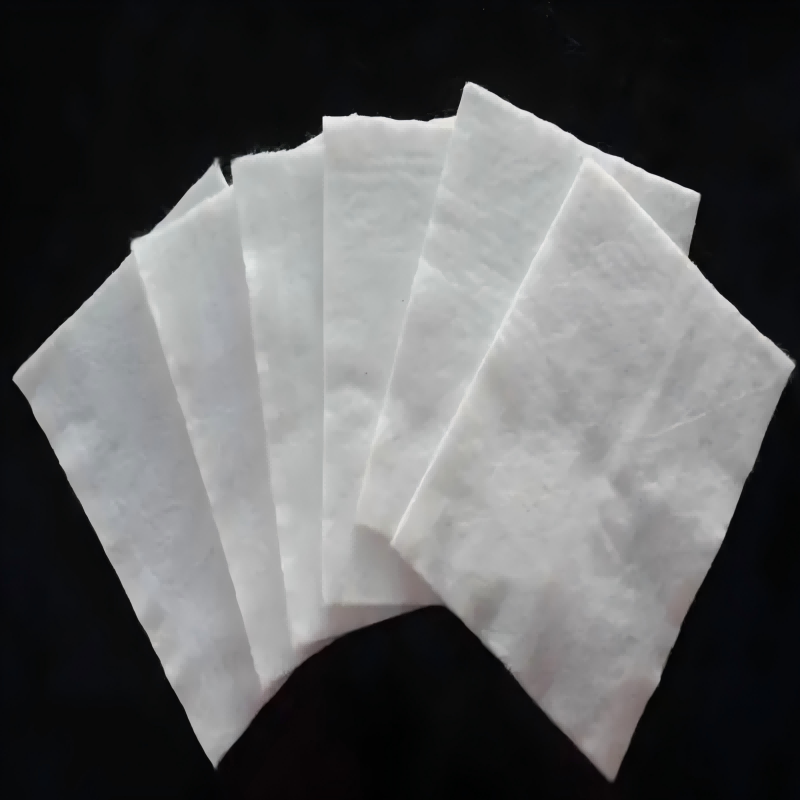
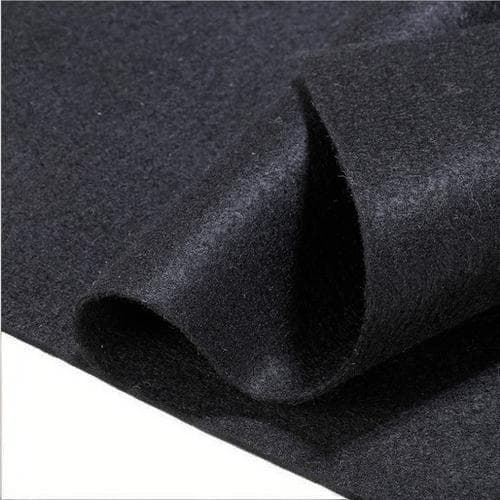
Retaining Wall Geotextile Fabric
1. Replace traditional materials: It can replace traditional sand and gravel filter layers, drainage ditches, etc., saving materials, transportation costs, and project land occupation.
2. Improve engineering quality: Through its systematic functions, it can effectively extend the service life of engineering structures and improve stability.
3. Shorten the construction period: The construction is simple and fast, which can significantly shorten the construction period of the project.
4. Reduce engineering costs: Overall, using geotextiles is usually more economical than using traditional materials and methods.
5. Ecological and environmental protection: In applications such as slope protection and grass planting, it can work synergistically with plants, which is beneficial for the restoration and protection of the ecological environment.
Product Introduction:
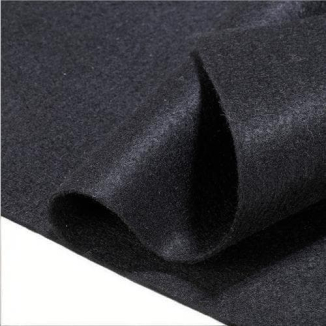
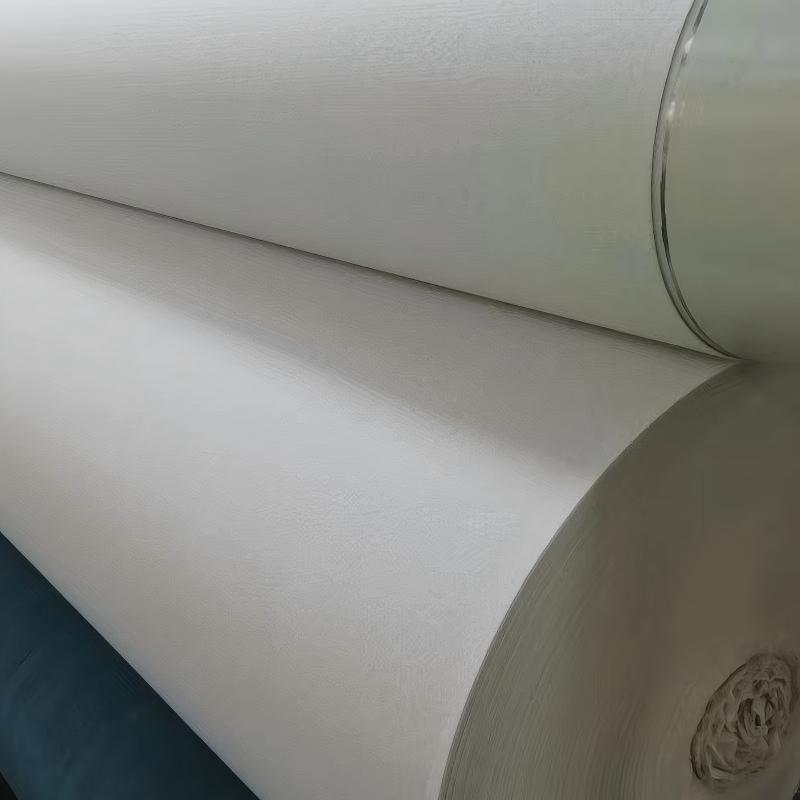
Retaining Wall Geotextile Fabric is a permeable geosynthetic material made from synthetic fibers (such as polypropylene, polyester, polyethylene, etc.) or natural fibers through processes such as needle punching, weaving, thermal bonding, and chemical bonding. It is widely used in civil engineering, water conservancy engineering, transportation engineering, and other fields. Its core function is to solve problems such as infiltration, drainage, filtration, reinforcement, and isolation of soil structures. It is one of the indispensable key materials in modern geotechnical engineering.
Core definition of geotextile
From the perspective of material essence and engineering function, the definition of geotextile can be understood from two dimensions:
Material dimension: Flexible sheet materials made from high molecular weight polymers (mainly polypropylene PP and polyester PET) through non-woven (needle punched, water punched) or weaving (machine woven, woven) processes, with certain tensile strength, tear strength, and water permeability, different from traditional cotton and linen fabrics (natural fibers are prone to decay) and plastic films (impermeable).
Functional dimension: As an intermediate material between soil and engineering structures, it improves the mechanical and hydrological properties of soil through its own physical characteristics (such as permeability, filtration, and tensile strength), reduces engineering diseases (such as piping, settlement, and erosion), lowers engineering costs, and extends service life.
Main characteristics of geotextile
The characteristics of geotextile are determined by its raw materials and processes, and the core can be summarized as "four properties and one flexibility", as follows:
1. Controllable permeability: Non woven geotextiles (such as needle punched fabrics) achieve permeability through the pores between fibers, with a porosity of usually 70% -90%. Water flow can pass smoothly, but it can block soil particles (filtering function); Some woven geotextiles can achieve customized requirements of "high permeability" or "low permeability" by adjusting the weaving density.
2. Stable mechanical properties:
Tensile strength: The tensile strength of mainstream polypropylene geotextile can reach 10-50kN/m, which can resist the tensile force generated by soil deformation and avoid self fracture;
Tear resistance/puncture resistance: The needle punching process tightly interweaves fibers, which can withstand mechanical compaction and stone punctures during construction, reducing the risk of damage;
Creep resistance: Under long-term loads such as soil self weight and vehicle loads, the deformation is small and stable, and it will not lose its function due to "slow stretching".
3. Strong chemical stability: Synthetic fibers (especially polypropylene and polyester) are resistant to acid and alkali (stable within the pH range of 3-11), salt corrosion (suitable for marine and saline alkali engineering), microbial erosion (not decomposed by bacteria or fungi), and can be used for a long time in underground or water (with a lifespan of up to 20-50 years), with slow performance degradation.
4. Environmental aging resistance:
UV resistant: Some geotextiles are added with UV resistant agents, which greatly reduce the destructive effect of UV rays on fibers when exposed to sunlight. They are suitable for outdoor projects such as roadbeds and slopes;
High and low temperature resistance: It can maintain stable performance within the range of -40 ℃ (in cold regions) to 80 ℃ (in high temperature environments), without brittle cracking or softening.
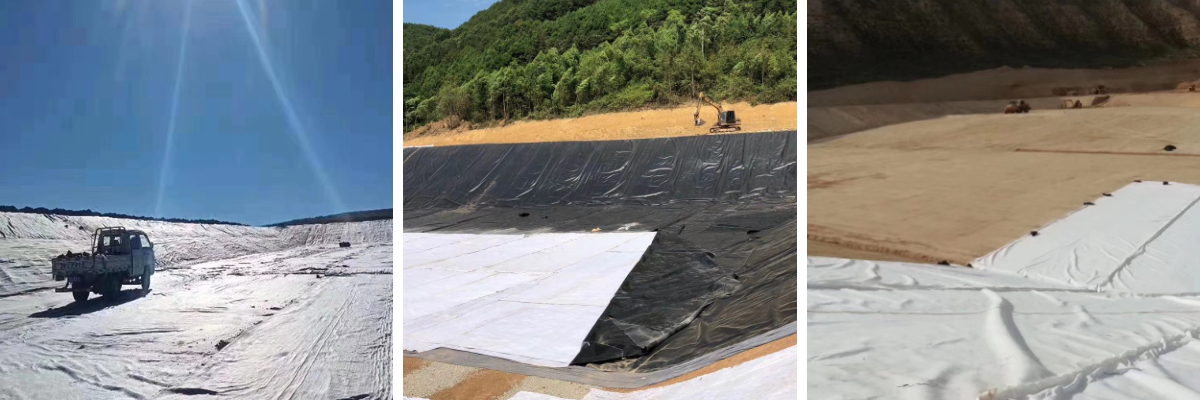
5. Flexible and easy to construct: Geotextiles are lightweight (with a conventional thickness of 80-500g/m ² and a weight of only 0.08-0.5kg per square meter), have good flexibility, can be cut and folded freely, and can fit irregular soil surfaces (such as curved slopes and irregular foundations). They have high construction efficiency and do not require complex equipment.
Product Parameters:
project | metric | ||||||||||
Nominal strength/(kN/m) | |||||||||||
6 | 9 | 12 | 18 | 24 | 30 | 36 | 48 | 54 | |||
1 | Longitudinal and transverse tensile strength / (kN/m) ≥ | 6 | 9 | 12 | 18 | 24 | 30 | 36 | 48 | 54 | |
2 | Maximum elongation at maximum load in longitudinal and transverse directions/% | 30~80 | |||||||||
3 | CBR top penetration strength /kN ≥ | 0.9 | 1.6 | 1.9 | 2.9 | 3.9 | 5.3 | 6.4 | 7.9 | 8.5 | |
4 | Longitudinal and transverse tearing strength /kN | 0.15 | 0.22 | 0.29 | 0.43 | 0.57 | 0.71 | 0.83 | 1.1 | 1.25 | |
5 | Equivalent aperture O.90(O95)/mm | 0.05~0.30 | |||||||||
6 | Vertical permeability coefficient/(cm/s) | K× (10-¹~10-), where K=1.0~9.9 | |||||||||
7 | Width deviation rate /% ≥ | -0.5 | |||||||||
8 | Unit area mass deviation rate /% ≥ | -5 | |||||||||
9 | Thickness deviation rate /% ≥ | -10 | |||||||||
10 | Thickness coefficient of variation (CV)/% ≤ | 10 | |||||||||
11 | Dynamic perforation | Puncture hole diameter/mm ≤ | 37 | 33 | 27 | 20 | 17 | 14 | 11 | 9 | 7 |
12 | Longitudinal and transverse fracture strength (grab method)/kN ≥ | 0.3 | 0.5 | 0.7 | 1.1 | 1.4 | 1.9 | 2.4 | 3 | 3.5 | |
13 | Ultraviolet resistance (Xenon arc lamp method) | Longitudinal and transverse strength retention rate% ≥ | 70 | ||||||||
14 | Ultraviolet resistance (fluorescence UV lamp method) | Longitudinal and transverse strength retention rate% ≥ | 80 | ||||||||
Product Applications:
1. Filtering function application: Block soil particles and allow water flow to pass through
Water conservancy engineering: the "filter layer" of dams and cofferdams. When seepage occurs on the upstream side of the dam, geotextile can prevent soil particles from being carried away by the water flow (avoiding pipe surge disasters), while allowing seepage to be smoothly discharged, protecting the stability of the dam structure;
Municipal drainage: rainwater pipe network, filtration layer of infiltration filter. Lay geotextile around the pipeline network to prevent soil particles from entering the pipeline and causing blockage, while allowing rainwater to infiltrate underground and replenish groundwater;
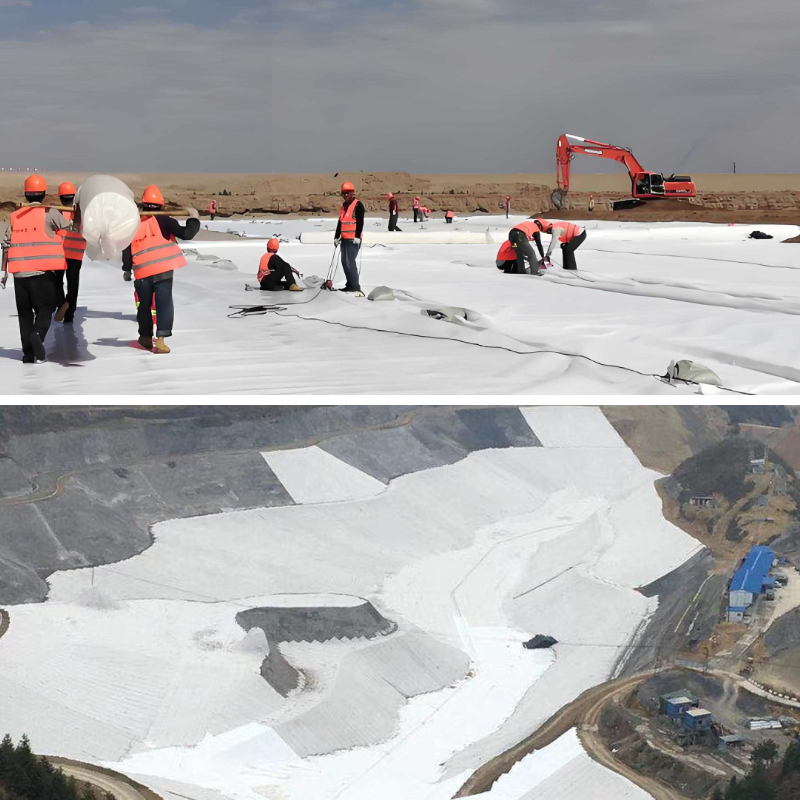
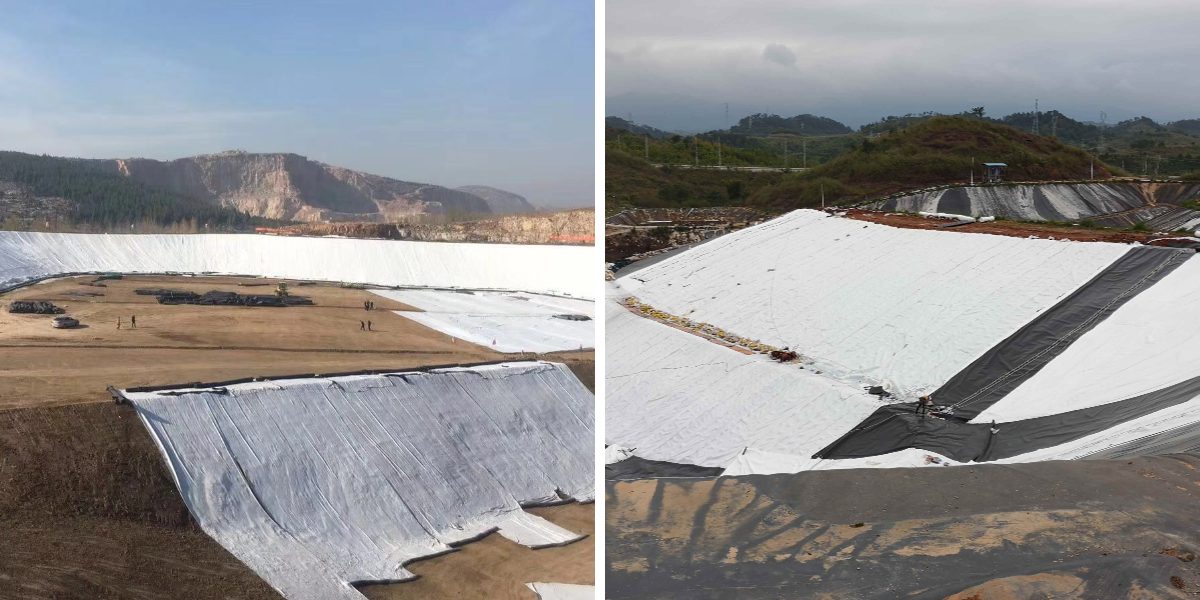
Landfill site: filtration layer of leachate collection system. Block impurities in the landfill from entering the leachate pipeline, avoid pipeline blockage, and ensure the normal collection and treatment of leachate.
2. Drainage function application: Accelerate water discharge and reduce soil moisture content
Transportation engineering: roadbed and pavement drainage. Lay geotextile on the top of the roadbed (below the road surface), combined with drainage blind ditches, to quickly drain rainwater from the roadbed to the roadside drainage ditch, avoiding roadbed softening (reducing road cracking and settlement);
Construction project: underground garage, basement floor drainage. Lay geotextile under the waterproof layer of the bottom plate to guide the seepage in the soil to the collection well, preventing the waterproof layer from being damaged by water pressure;
Agricultural engineering: greenhouse, farmland drainage. Lay geotextile underneath the planting layer to accelerate the drainage of excess rainwater and prevent crop root rot; In the improvement of saline alkali land, geotextiles can be used to remove salt from the soil.
3. Isolation function application: Separate different materials to avoid mixed pollution
Transportation engineering: isolation between roadbed and cushion layer. Lay geotextile between the roadbed (plain soil) and the graded crushed stone cushion layer to prevent the infiltration of plain soil particles into the crushed stone layer (to prevent the crushed stone cushion layer from losing its bearing capacity), and to prevent the crushed stone from embedding into the plain soil (to ensure the thickness of the cushion layer);
Water conservancy engineering: isolation of soil dams and impermeable membranes for reservoirs and artificial lakes. Lay geotextile between the earth dam and HDPE anti-seepage membrane to prevent sharp particles in the soil from puncturing the anti-seepage membrane and reduce friction damage between the membrane and the soil;
Landfill site: isolation between the landfill area and the foundation. Lay geotextile between garbage and foundation soil to prevent pollution of underground soil by leachate from garbage, while avoiding mixing of foundation soil with garbage.
4. Application of reinforcement function: Enhance the tensile strength of soil and reduce deformation
Traffic engineering: Reinforcement of soft soil foundation subgrade. Laying geotextile on soft soil foundation (such as silt and peat soil), and then filling the roadbed with filling material. Geotextile can evenly transfer the roadbed load to the foundation, reduce foundation settlement, and resist lateral displacement of the filling material (to avoid roadbed landslides);
Slope engineering: reinforcement layer of slope protection net. Laying geotextile on the surface of rock or soil slopes, and then fixing protective nets. Geotextile can disperse the tension of the protective net, avoid local stress causing the net to break, and prevent the loss of surface soil of the slope;
Construction project: Reinforcement layer in foundation pit support. Lay geotextile underneath the sprayed concrete on the slope of the foundation pit to enhance the tensile performance of the concrete layer, reduce crack formation, and improve the stability of the support structure.
5. Application of protective function: Protect engineering structures from external damage
Water conservancy engineering: erosion prevention and protection of rivers and channels. Laying geotextile (often combined with geomembrane) on the bank slope and channel bottom of the river to resist water erosion (especially during flood season), avoid bank slope collapse and channel deformation;
Transportation engineering: protection of bridge abutments and culvert entrances and exits. Laying geotextile at the connection between the backfill soil on the abutment and the bridge foundation to reduce the impact of vehicle loads on the abutment soil and avoid settlement of the abutment (reducing the problem of "bridge head jumping");
Post disaster restoration: soil protection after earthquakes and floods. Laying geotextile on collapsed slopes and washed away roadbed surfaces to temporarily prevent further soil loss and buy time for subsequent repairs.