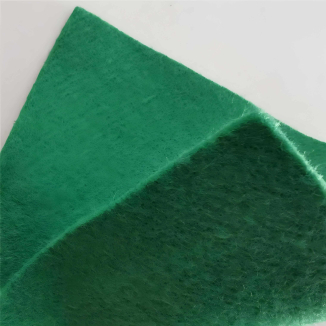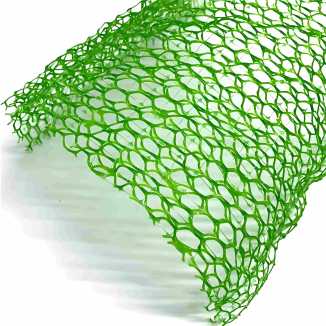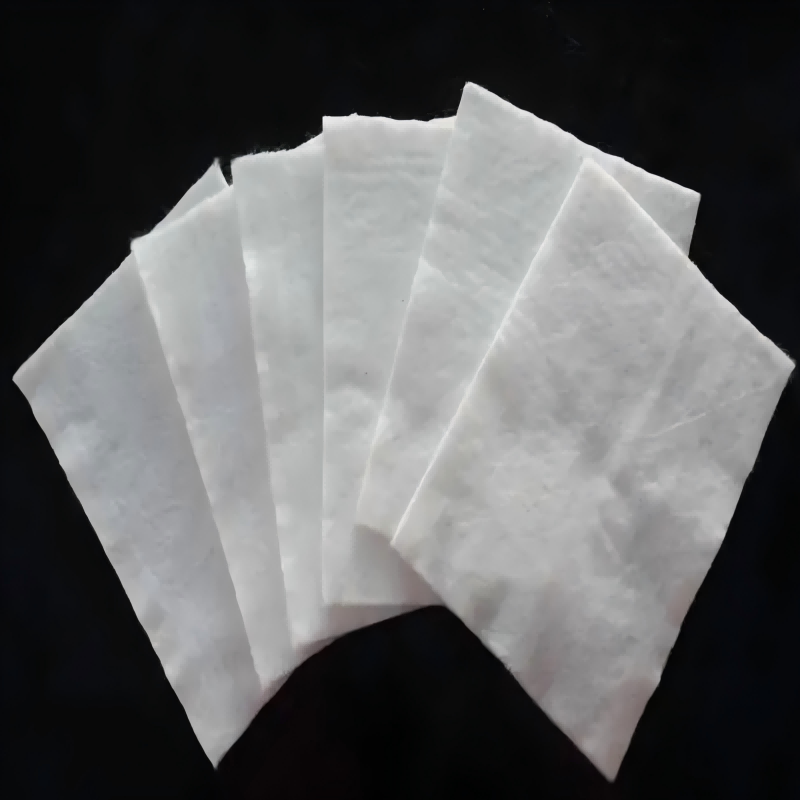
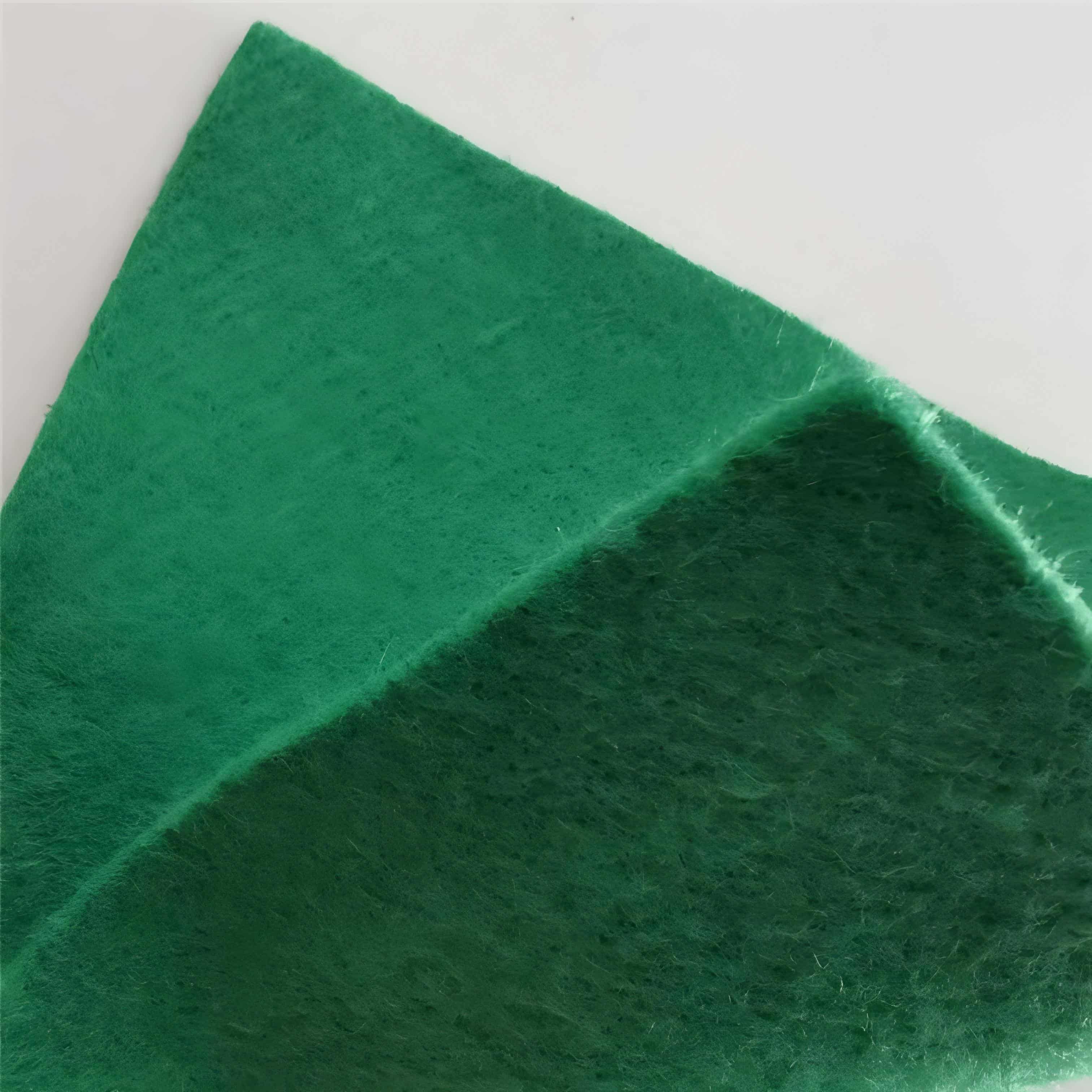
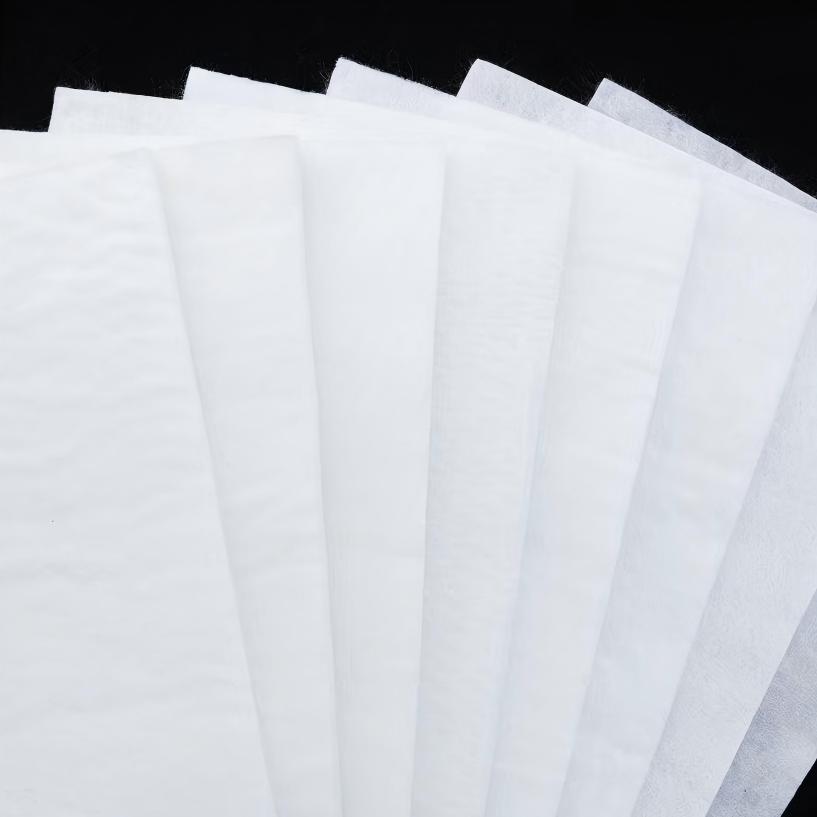
Woven Geotextile Filter Fabric
1. Excellent strength, able to maintain stable mechanical properties in both dry and wet environments, effectively enhancing the structural load-bearing capacity.
2. Good permeability and filtration, allowing water flow to pass smoothly while retaining soil particles, maintaining project stability.
3. Strong corrosion resistance, suitable for long-term use in acidic and alkaline soil and water, with outstanding resistance to microorganisms and insect infestations.
4. Convenient construction, lightweight and soft materials, simple and efficient transportation and laying, suitable for various complex working conditions.
Product Introduction:
Woven Geotextile Filter Fabric is a type of geosynthetics, which is a permeable polymer (usually synthetic plastic) fabric. It is used in combination with soil, rock, water, or other geotechnical materials in civil engineering, geotechnical engineering, and construction engineering as an integral part of the entire engineering structure, serving functions such as reinforcement, protection, drainage, filtration, and isolation.
Simply put, it is an "intelligent" engineering textile material that is buried underground or used underwater to solve various engineering problems.
Product Features
1. High strength: Using plastic fibers, it can maintain sufficient strength and elongation in both dry and wet conditions.
2. Corrosion resistance: It can resist corrosion for a long time in soil and water of different pH levels.
3. Good water permeability: There are gaps between fibers, and the water permeability is good.
4. Good antimicrobial properties: It is not harmful to microorganisms or insects.
5. Convenient construction: The material is light and flexible, making transportation, laying, and construction convenient.
6. Complete specifications: The width can reach 9 meters, and the unit area mass is 100-1000g/m ².
Main function
1. Isolation: Isolate building materials with different physical properties to prevent material loss and mixing, maintain overall structure and function, and enhance the load-bearing capacity of the structure.
2. Filtration (reverse filtration): When water flows from the fine soil layer into the coarse soil layer, it allows the water to pass through while effectively intercepting soil particles, fine sand, etc., maintaining the stability of the water and soil engineering.
3. Drainage: It has good water conductivity and can form drainage channels inside the soil to discharge excess liquids and gases.
4. Reinforcement: Enhance the tensile strength and deformation resistance of soil, improve soil quality, and strengthen the stability of building structures.
5. Protection: When water flows on the soil, it will diffuse, transmit or decompose concentrated stress, preventing the soil from being damaged by external forces and protecting the soil.
6. Anti puncture: Combined with geomembrane to form a composite waterproof and anti-seepage material, it plays a role in preventing puncture.
Product Parameters:
project | metric | ||||||||||
Nominal strength/(kN/m) | |||||||||||
6 | 9 | 12 | 18 | 24 | 30 | 36 | 48 | 54 | |||
1 | Longitudinal and transverse tensile strength / (kN/m) ≥ | 6 | 9 | 12 | 18 | 24 | 30 | 36 | 48 | 54 | |
2 | Maximum elongation at maximum load in longitudinal and transverse directions/% | 30~80 | |||||||||
3 | CBR top penetration strength /kN ≥ | 0.9 | 1.6 | 1.9 | 2.9 | 3.9 | 5.3 | 6.4 | 7.9 | 8.5 | |
4 | Longitudinal and transverse tearing strength /kN | 0.15 | 0.22 | 0.29 | 0.43 | 0.57 | 0.71 | 0.83 | 1.1 | 1.25 | |
5 | Equivalent aperture O.90(O95)/mm | 0.05~0.30 | |||||||||
6 | Vertical permeability coefficient/(cm/s) | K× (10-¹~10-), where K=1.0~9.9 | |||||||||
7 | Width deviation rate /% ≥ | -0.5 | |||||||||
8 | Unit area mass deviation rate /% ≥ | -5 | |||||||||
9 | Thickness deviation rate /% ≥ | -10 | |||||||||
10 | Thickness coefficient of variation (CV)/% ≤ | 10 | |||||||||
11 | Dynamic perforation | Puncture hole diameter/mm ≤ | 37 | 33 | 27 | 20 | 17 | 14 | 11 | 9 | 7 |
12 | Longitudinal and transverse fracture strength (grab method)/kN ≥ | 0.3 | 0.5 | 0.7 | 1.1 | 1.4 | 1.9 | 2.4 | 3 | 3.5 | |
13 | Ultraviolet resistance (Xenon arc lamp method) | Longitudinal and transverse strength retention rate% ≥ | 70 | ||||||||
14 | Ultraviolet resistance (fluorescence UV lamp method) | Longitudinal and transverse strength retention rate% ≥ | 80 | ||||||||
Product Applications:
1. Water conservancy and waterway engineering
Dam engineering
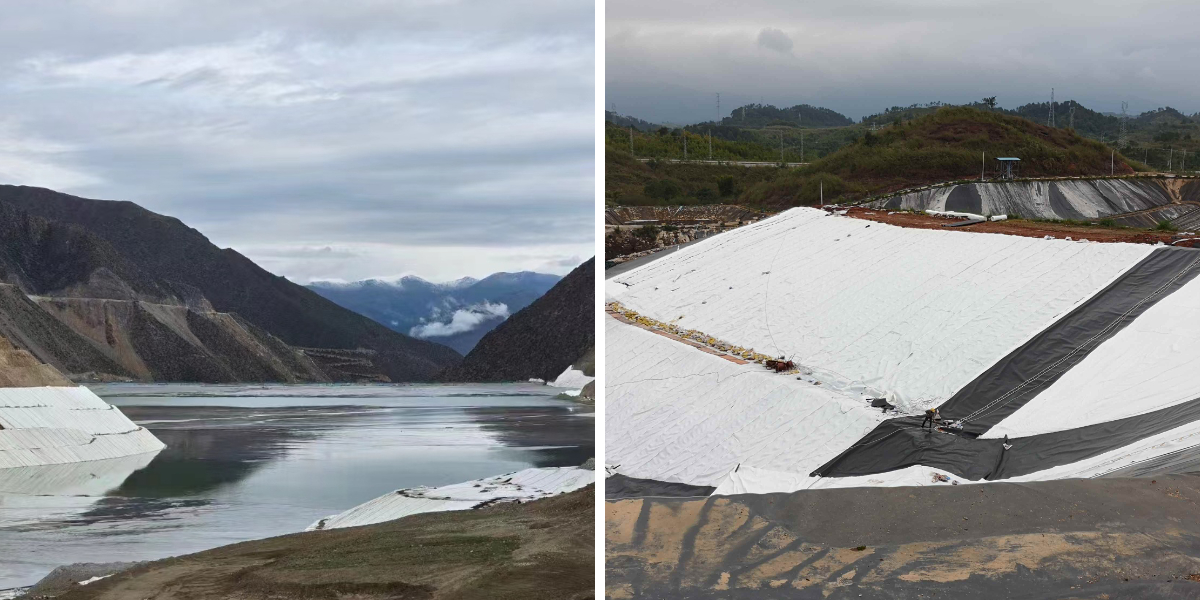
Anti filter layer: Geotextile is laid between the dam body and foundation, as well as between the dam body and slope protection. When water flows through, it intercepts soil particles and fine sand to prevent soil material loss from the dam body. At the same time, it ensures smooth discharge of seepage, avoids dangerous situations such as piping and soil flow, and enhances the stability of the dam (such as the transition layer of the anti-seepage body of earth dams and rock dams).
Anti seepage assistance: Used in combination with geomembrane as a protective layer for the membrane body, it prevents sharp particles from piercing the geomembrane of the dam body, and also has drainage function (such as the anti-seepage system of reservoir dams).
River and Channel Engineering
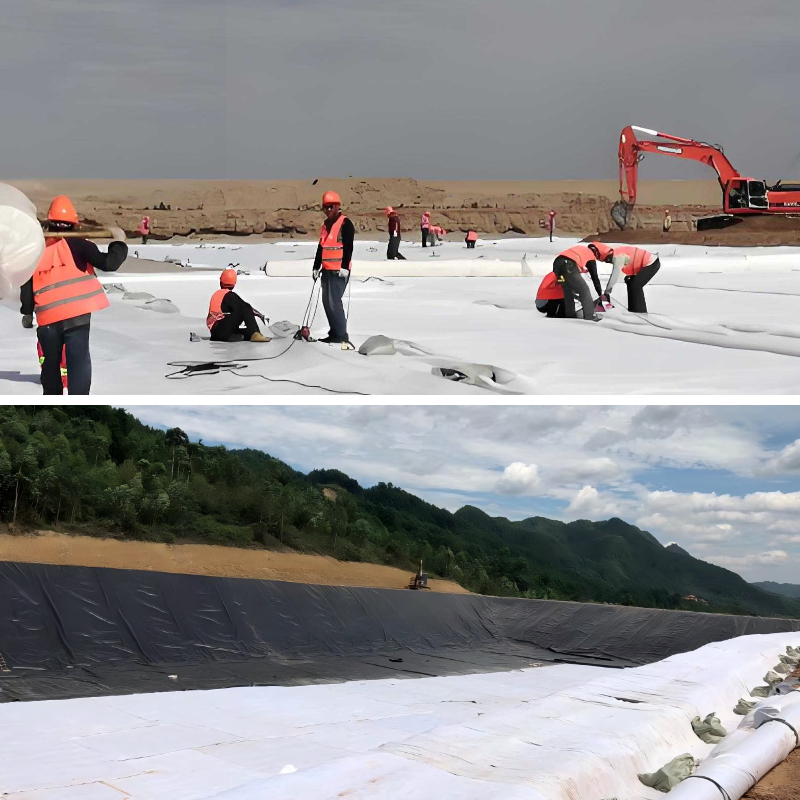
River regulation: Lay geotextile on the bank slope and riverbed, isolate the riverbed foundation soil from backfilling sand and gravel, prevent the collapse of the bank slope caused by water flow erosion, and accelerate the discharge of water seepage at the bottom of the river to reduce sedimentation (such as ecological bank protection after urban river dredging).
Irrigation channel: As an isolation and protective layer for the slope and bottom of the channel, it reduces the erosion of the channel wall by water flow, avoids channel leakage, and improves water delivery efficiency (such as agricultural irrigation channels and water diversion channels).
2. Road and Traffic Engineering
Highway and railway subgrade
Isolation function: It is laid between the roadbed soil and cushion layer (such as sand, gravel, lime soil, etc.) to prevent the mixing of different materials (such as the isolation between roadbed soft soil and graded sand and gravel), and to avoid the strength decrease caused by the mixing of roadbed materials.
Reinforcement effect: In soft soil foundation sections, the high tensile strength of geotextiles disperses roadbed loads, reduces uneven settlement, and enhances overall roadbed stability (such as the "geotextile+gravel pile" composite foundation in highway soft foundation treatment).
Road maintenance and repair
When renovating old road surfaces, geotextile is laid as a crack prevention layer to reduce reflection cracks between the new and old road surfaces and extend the service life of the road surface (such as the "white to black" asphalt pavement project).
In temporary roads or construction access roads, it is used as a roadbed reinforcement material to enhance the bearing capacity of the road surface and adapt to the passage of heavy vehicles.
Airports and Rail Transit
In the foundation treatment of airport runways and aprons, it is used to isolate the foundation soil from the pavement structure layer, while assisting drainage to prevent pavement from freezing and thawing damage or settlement due to water accumulation.
Laying under the track bed of subway and light rail tracks, isolating the gravel and foundation soil of the track bed, reducing deformation of the track bed, and improving track stability.
3. Environmental Protection and Municipal Engineering
landfill
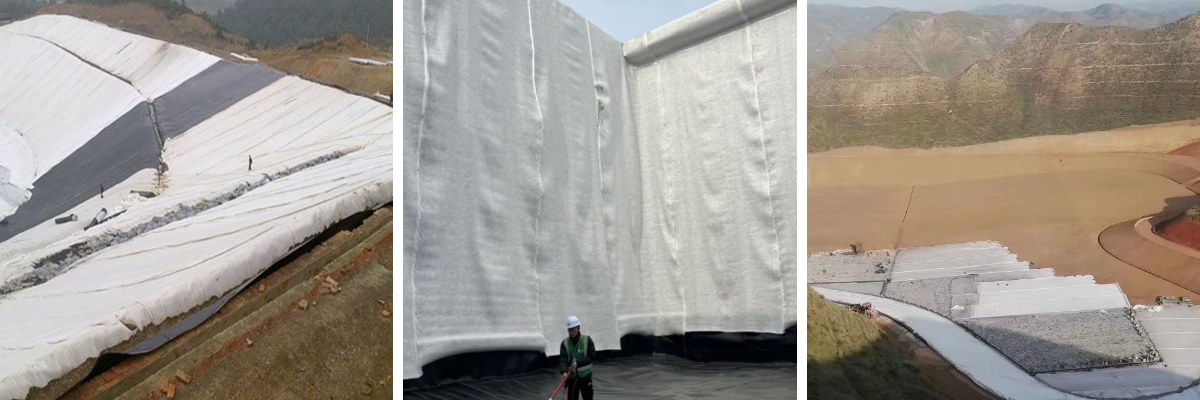
Auxiliary layer of anti-seepage system: It is laid under the geomembrane at the bottom and slope of the landfill site, serving as a "protective layer+filtering layer" to prevent sharp stones in the foundation from piercing the geomembrane, and to discharge water seepage from the foundation, avoiding damage to the membrane body by water pressure.
Leachate drainage: laid above the geomembrane to guide the leachate from garbage into the collection system, while intercepting garbage particles to prevent blockage of the drainage pipe.
Wastewater Treatment and Water Environment
In artificial wetlands, as an isolation material for the substrate layer, it prevents the mixing of substrates with different particle sizes, while filtering suspended impurities in wastewater to improve purification efficiency.
The liners of sedimentation tanks and filtration tanks in sewage treatment plants enhance the anti-seepage of the tank body, while assisting in sludge filtration and drainage.
Municipal infrastructure construction
In underground pipe gallery and tunnel engineering, it is used for the protection and drainage of waterproof layers, isolating the pipe gallery structure from backfill soil, draining water seepage around the structure, and avoiding water pressure erosion of the pipe gallery.
The anti-seepage and soil and water conservation of urban green belts, parks and lakes, to prevent soil erosion and maintain the water level of landscape water bodies.
4. Mining and Energy Engineering
Mine engineering
Anti filtration and drainage of tailings dam: It is laid between the tailings accumulation body and the dam body to filter fine particles in the tailings water, prevent seepage and damage to the dam body, and discharge the accumulated water in the dam body to ensure the safety of the tailings dam (such as tailings treatment of metal mines and coal mines).
Mine drainage: As a filtering layer of the underground drainage system, it prevents sediment from blocking the drainage pipes and improves drainage efficiency.
Energy engineering
When laying oil and gas pipelines, it is used as a cushion layer under the pipeline to isolate the soil from the pipeline, reduce deformation caused by foundation settlement, and prevent sharp stones from scratching the pipeline anti-corrosion layer.
5. Agriculture and Ecological Engineering
Agricultural engineering
Soil and water conservation: Lay on the surface of terraced fields and sloping farmland to reduce the erosion of soil by rainwater, prevent soil erosion, and maintain water and fertilizer (such as slope management after returning farmland to forests on the Loess Plateau).
Greenhouse: As an isolation and drainage material for the foundation inside the greenhouse, it prevents soil compaction and improves soil permeability.
Ecological restoration
Ecological riverbank protection: In conjunction with vegetation planting, geotextile is laid and covered with soil to provide a stable substrate for plant growth, while preventing soil from being washed away by water flow, achieving the dual function of "bank protection+ecology".
Desertification control: Laying and fixing sand particles in deserts or sandy areas to reduce wind erosion and create conditions for vegetation restoration (such as sand prevention and stabilization projects on both sides of desert roads).
6. Other special fields
Military engineering: Ground reinforcement of temporary defense works, rapid anti-seepage and drainage in flood prevention and rescue (such as dam plugging and temporary cofferdam construction during flood control and disaster relief).
Sports field: The foundation drainage system of football fields and golf courses is laid with geotextile and filled with sand and gravel to form a drainage layer, quickly draining accumulated water from the field and keeping it dry.
The core application of geotextiles is to flexibly utilize their single or composite functions according to the needs of different projects. Through reasonable selection (such as needle punching, weaving, composite, etc.) and laying design, problems such as anti-seepage, drainage, reinforcement, and protection in engineering can be solved, and the safety and durability of the project can be improved.