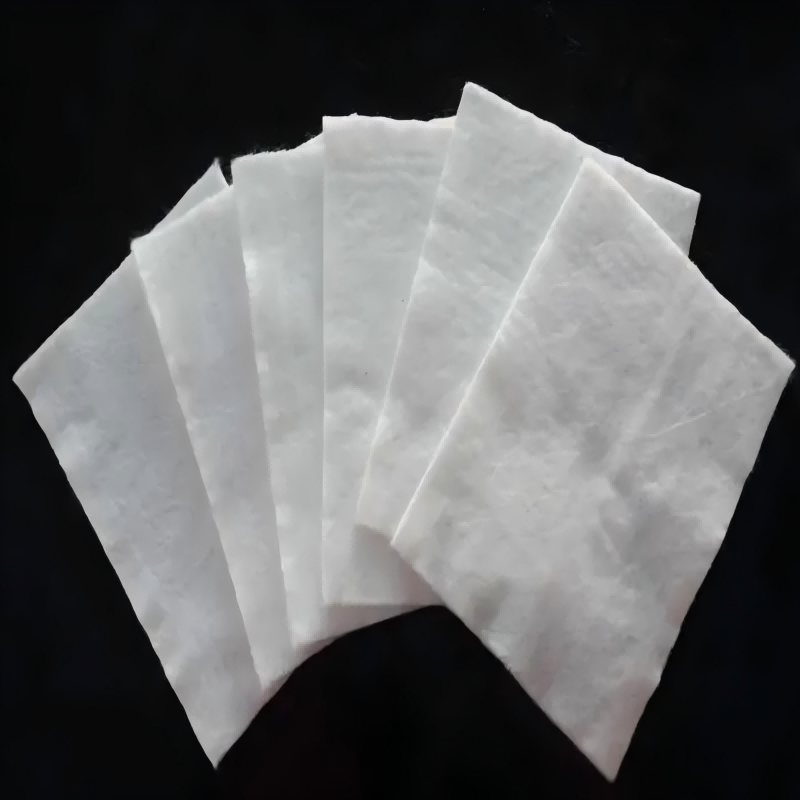
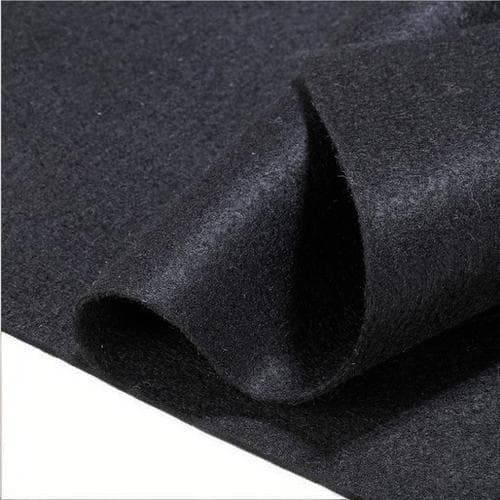
Geotextile under Gravel
1. Low cost: Mature production technology, moderate material prices, and high construction efficiency can reduce the overall project cost.
2. Easy construction: The texture is soft and can be cut and spliced according to engineering needs, adapting to complex terrains such as steep slopes and depressions.
3. Environmental friendliness: Most geotextiles use recyclable synthetic fibers, and the construction process causes minimal damage to the surrounding environment.
4. Multi functional integration: A single material can simultaneously achieve multiple functions such as filtration, drainage, isolation, and reinforcement, reducing the variety and amount of materials used.
5. Extend the lifespan of the project: indirectly improve the durability of the project by optimizing soil structure, reducing erosion and settlement.
Product Introduction:
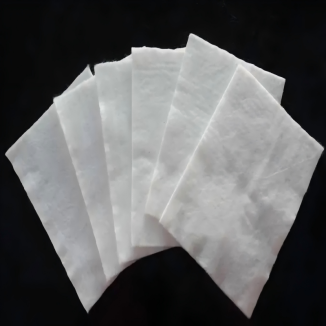
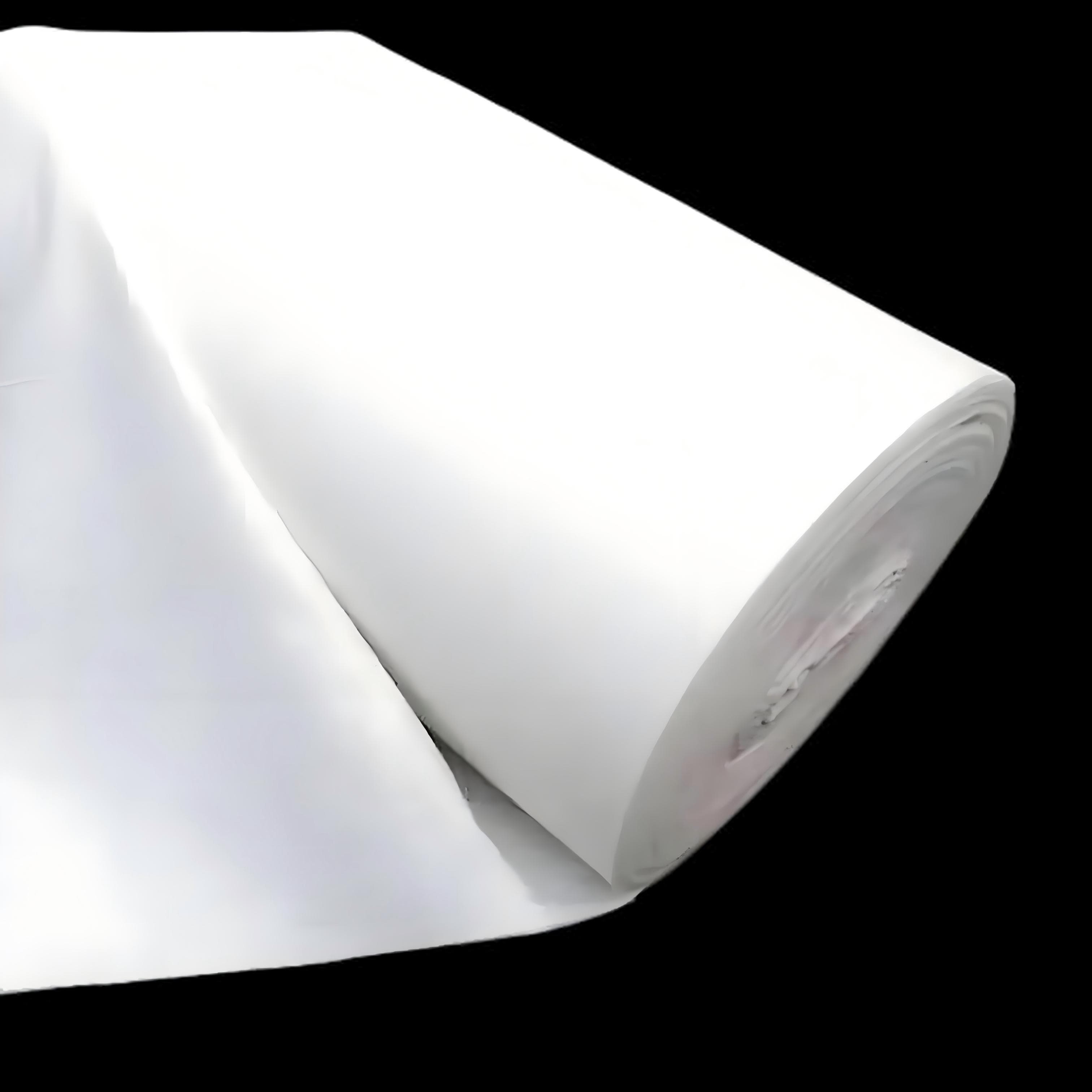
Geotextile under Gravel is a permeable geosynthetic material made from synthetic fibers such as polyester (PET) and polypropylene (PP) through needle punching, weaving, or thermal bonding processes. The finished product is in the form of a cloth, with a width of usually 4-9 meters and a length of up to 50-100 meters. It is divided into two categories: woven geotextiles (such as machine woven and woven) and non-woven geotextiles (such as short fiber needle punched and long fiber spunbond).
Core Features
1. High strength and durability
High tensile strength: Plastic fibers can maintain strong strength in both dry and wet conditions, and can withstand complex stresses during construction and use.
Corrosion resistance and aging resistance: it is stable for a long time under acid and alkali environment, ultraviolet ray and microbial erosion, and its service life can reach decades.
Anti puncture and wear-resistant: It can effectively resist piercing by sharp objects and adapt to complex geological conditions.
2. Excellent permeability and filtration function
The gaps between fibers allow water flow to pass through while intercepting soil particles, fine sand, etc., to prevent soil erosion.
Form a flat drainage channel to quickly dissipate soil pore water pressure and enhance structural stability.
3. Reliable isolation and reinforcement function
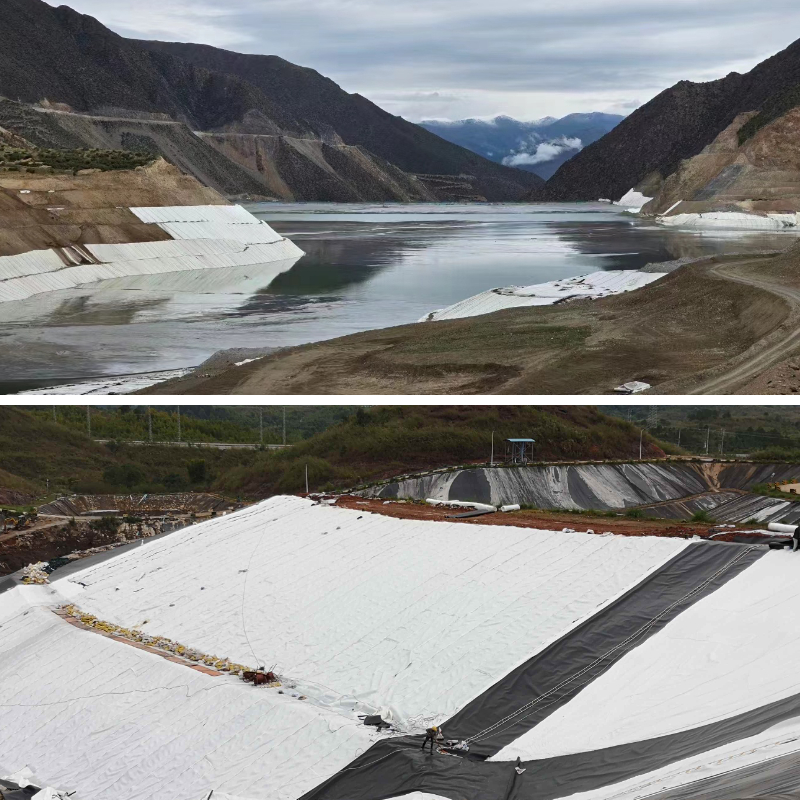
Isolate materials with different physical properties (such as soil, sand, and concrete) to prevent mixing and structural failure.
After being buried in the soil, it provides additional tensile strength through friction, improves overall stability, and disperses local loads.
4. Environmental protection and construction convenience
Non toxic and odorless, recyclable, in line with green engineering requirements.
The material is soft and easy to transport, cut, and lay, greatly reducing construction costs.
Product Parameters:
project | metric | ||||||||||
Nominal strength/(kN/m) | |||||||||||
6 | 9 | 12 | 18 | 24 | 30 | 36 | 48 | 54 | |||
1 | Longitudinal and transverse tensile strength / (kN/m) ≥ | 6 | 9 | 12 | 18 | 24 | 30 | 36 | 48 | 54 | |
2 | Maximum elongation at maximum load in longitudinal and transverse directions/% | 30~80 | |||||||||
3 | CBR top penetration strength /kN ≥ | 0.9 | 1.6 | 1.9 | 2.9 | 3.9 | 5.3 | 6.4 | 7.9 | 8.5 | |
4 | Longitudinal and transverse tearing strength /kN | 0.15 | 0.22 | 0.29 | 0.43 | 0.57 | 0.71 | 0.83 | 1.1 | 1.25 | |
5 | Equivalent aperture O.90(O95)/mm | 0.05~0.30 | |||||||||
6 | Vertical permeability coefficient/(cm/s) | K× (10-¹~10-), where K=1.0~9.9 | |||||||||
7 | Width deviation rate /% ≥ | -0.5 | |||||||||
8 | Unit area mass deviation rate /% ≥ | -5 | |||||||||
9 | Thickness deviation rate /% ≥ | -10 | |||||||||
10 | Thickness coefficient of variation (CV)/% ≤ | 10 | |||||||||
11 | Dynamic perforation | Puncture hole diameter/mm ≤ | 37 | 33 | 27 | 20 | 17 | 14 | 11 | 9 | 7 |
12 | Longitudinal and transverse fracture strength (grab method)/kN ≥ | 0.3 | 0.5 | 0.7 | 1.1 | 1.4 | 1.9 | 2.4 | 3 | 3.5 | |
13 | Ultraviolet resistance (Xenon arc lamp method) | Longitudinal and transverse strength retention rate% ≥ | 70 | ||||||||
14 | Ultraviolet resistance (fluorescence UV lamp method) | Longitudinal and transverse strength retention rate% ≥ | 80 | ||||||||
Product Applications:
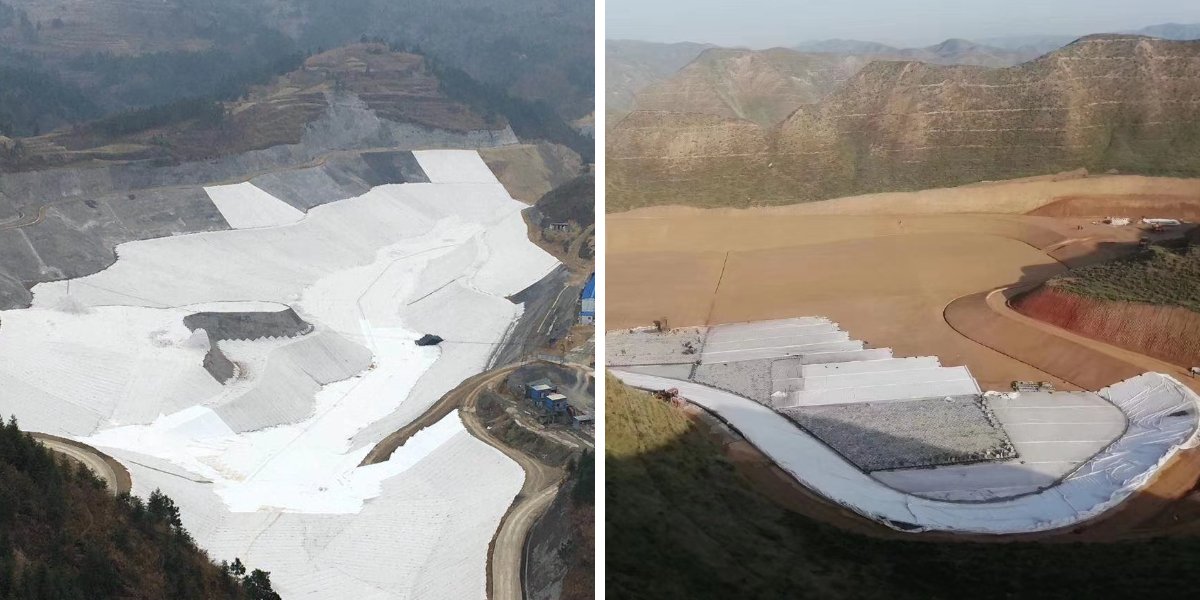
1. Water conservancy engineering
Anti filter layer for embankment slope protection: prevents landslides caused by water flow erosion.
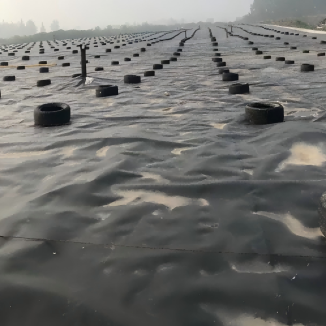
Reservoir and canal anti-seepage protection: combined with geomembrane to form a waterproof barrier.
Drainage hidden pipe filter layer: accelerates the discharge of groundwater and reduces water pressure.
2. Transportation infrastructure
Reinforcement of highway/railway subgrade: Enhance the bearing capacity of soft foundation and reduce settlement.
Backdrainage of retaining wall: prevent water accumulation behind the wall from causing structural instability.
Airport runway reinforcement: Enhance the runway's ability to resist deformation and extend its service life.
3. Environmental Protection Engineering
Landfill liner: wraps waste to prevent soil contamination by leachate.
Sewage treatment tank protection: isolate sewage from the foundation to avoid corrosion.
4. Municipal Administration and Architecture
Basement waterproofing and drainage: form drainage channels to alleviate groundwater pressure.
Tunnel lining protection: Reduce external water pressure and prevent lining cracking.
5. Expansion in emerging fields
Ecological slope protection: Planting vegetation on the slope and fixing the soil with geotextile to achieve dual effects of greening and reinforcement.
Artificial wetland: As an anti filter layer, it supports the operation of water purification systems.
Family scene: Garden grass protection, temporary roof waterproofing, moving protection, etc., showcasing cross-border practicality.
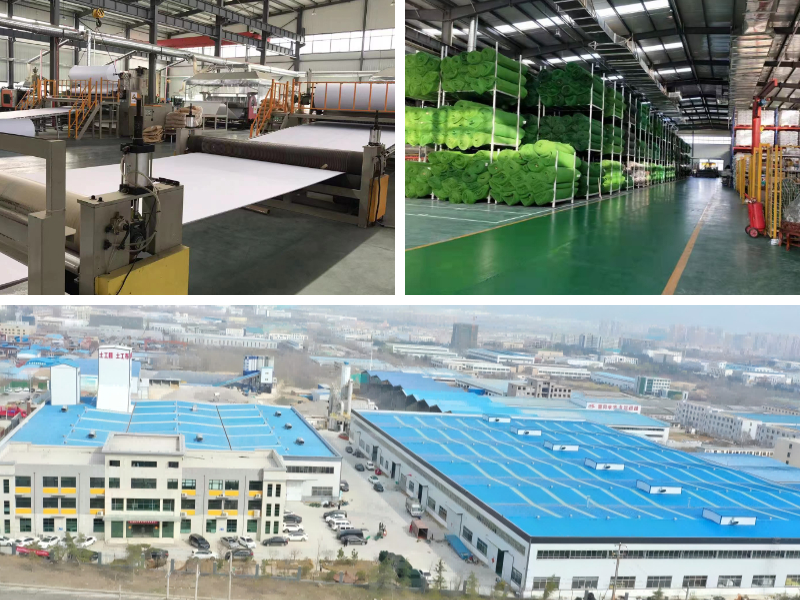
Geotextile has become an indispensable "invisible guardian" in modern engineering due to its "small size, large function" characteristics. From the Great Wall to home gardens, it uses technology to safeguard safety, environmental protection, and efficiency, continuously pushing infrastructure construction towards higher standards.