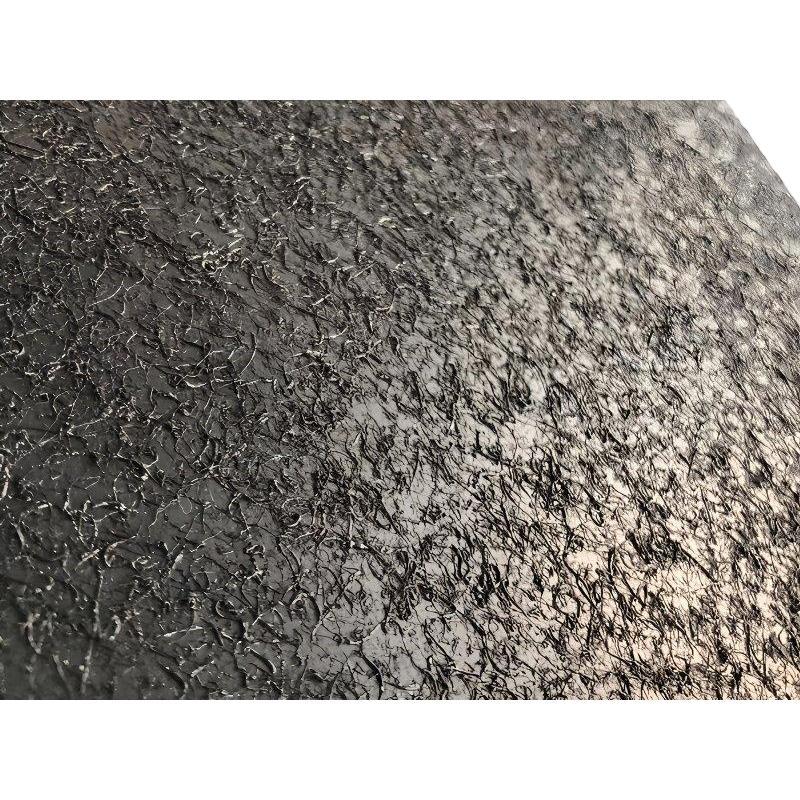
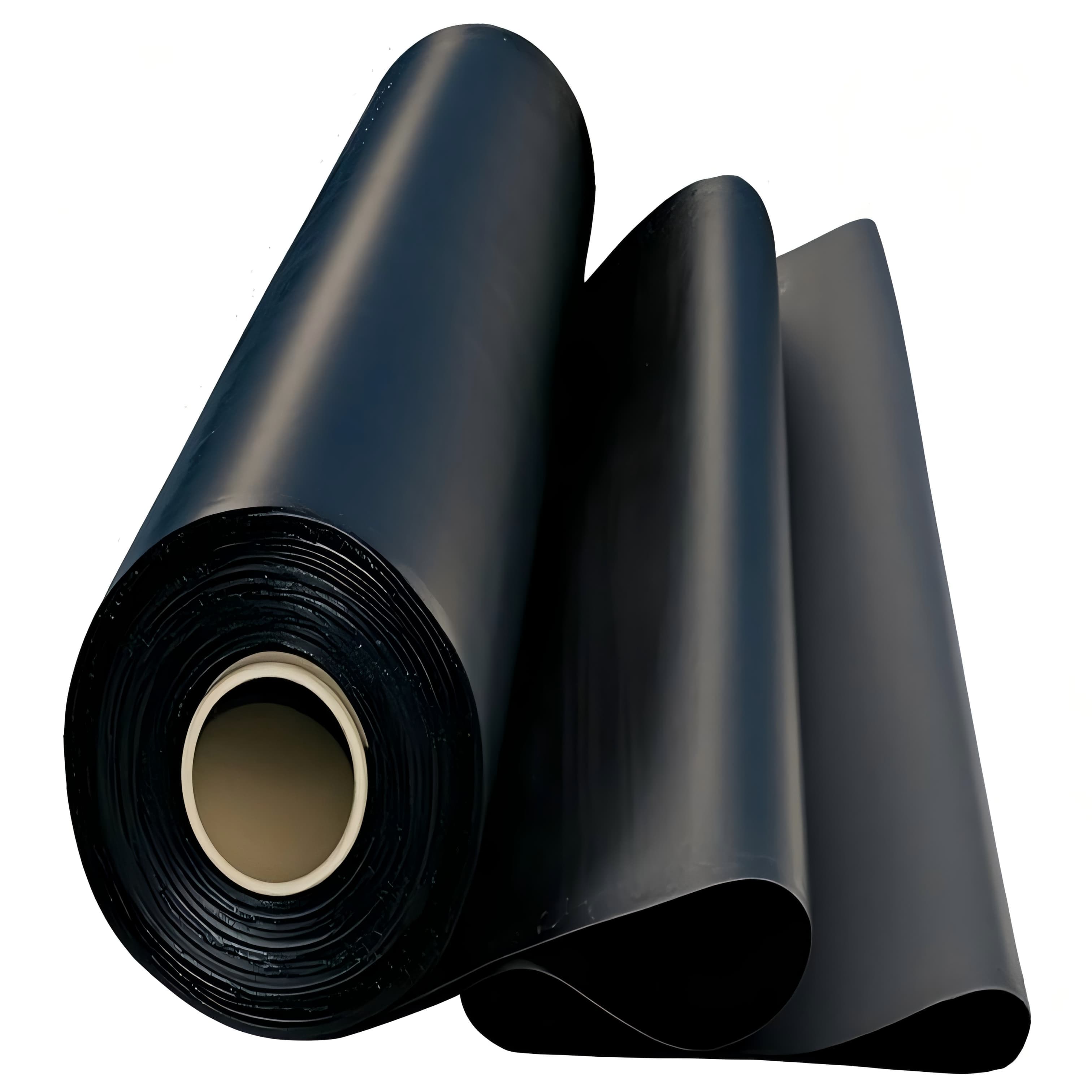
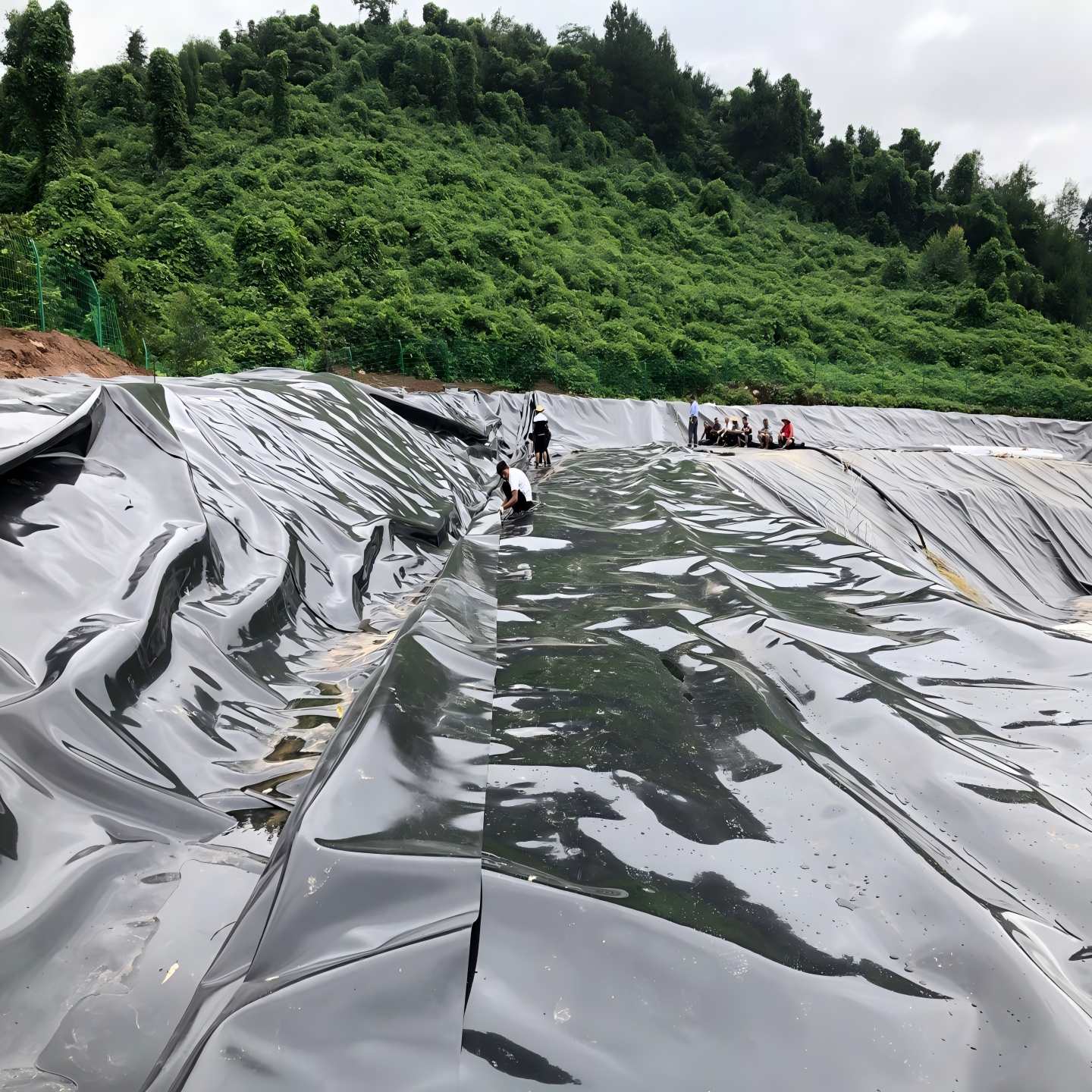
Textured Geomembrane
1.Excellent Anti-seepage Performance
It has an extremely low permeability coefficient, enabling it to effectively block the leakage of water, leachate, etc.
2.Strong Chemical Resistance
It can withstand erosion from acids, alkalis, salts, and organic solvents, maintaining stable performance over long-term use.
3.Outstanding Mechanical Properties
It combines high strength with good elongation, allowing it to adapt to foundation settlement and deformation. It is also resistant to punctures and tears, preventing damage during construction or use.
4.Durable and Environmentally Friendly
It boasts strong anti-aging properties, reducing the need for frequent replacements. Additionally, some products are recyclable, meeting the requirements of green engineering.
Product Introduction:
Textured Geomembrane is a waterproof and barrier material with high-molecular polymers as its basic raw material. It possesses characteristics such as anti-seepage and isolation, playing a crucial role in numerous engineering fields.
Features
1.Excellent Anti-seepage Performance: It has extremely low water permeability, with a permeability coefficient generally ranging from 10⁻¹¹ to 10⁻¹⁷ cm/s. It can effectively block the penetration of water and prevent liquid leakage.
2.Strong Adaptability to Deformation: With relatively high elongation, it can adapt to uneven settlement and deformation of the foundation, maintaining good anti-seepage performance under various geological conditions and engineering environments.
3.Good Chemical Stability: It is resistant to corrosion by acids, alkalis, salts, and other chemical substances, as well as to bacterial and chemical actions. It can be used in harsh chemical environments.
4.Excellent Anti-aging Performance: After the addition of anti-aging agents and other additives, it has strong resistance to ultraviolet radiation, thermal-oxidative aging, and photo-oxidative aging, resulting in a long service life.
5.High Mechanical Strength: It features high tensile strength, tear resistance, and puncture resistance, enabling it to withstand external forces such as stretching, tearing, and puncturing during the construction process, as well as various loads during the operation of the engineering project.
Product Parameters:
Metric | ASTM | unit | Test value | Minimum test frequency | ||||||
test method | 0.75 mm | 1.00 mm | 1.25 mm | 1.50 mm | 2.00 mm | 2.50mm | 3.00 mm | |||
Minimum average thickness | D5199 | mm | 0.75 | 1 | 1.25 | 1.5 | 2 | 2.5 | 3 | Per volume |
Minimum value (any one of 10) | -10% | -10% | -10% | -10% | -10% | -10% | -10% | |||
minimum density | D 1505/D 792 | g/cm3 | 0.94 | 0.94 | 0.94 | 0.94 | 0.94 | 0.94 | 0.94 | 90,000 kg |
Minimum average tensile performance (1) | D638 Type IV | |||||||||
Breakage strength, | N/mm | 20 | 27 | 33 | 40 | 53 | 67 | 80 | 9,000 kg | |
yield strength | N/mm | 11 | 15 | 18 | 22 | 29 | 37 | 44 | ||
Strain extension, | % | 700 | 700 | 700 | 700 | 700 | 700 | 700 | ||
yield extension | % | 12 | 12 | 12 | 12 | 12 | 12 | 12 | ||
Minimum strength of right-angle tear | D 1004 | N | 93 | 125 | 156 | 187 | 249 | 311 | 374 | 20,000 kg |
Minimum puncture strength | D4833 | N | 240 | 320 | 400 | 480 | 640 | 800 | 960 | 20,000 kg |
Constant tensile load stress cracking (2) | D5397 | hour | 300 | 300 | 300 | 300 | 300 | 300 | 300 | Based on GRI GM-10 |
Carbon black content | D 1603(3) | % | 2.0-3.0 | 2.0-3.0 | 2.0-3.0 | 2.0-3.0 | 2.0-3.0 | 2.0-3.0 | 2.0-3.0 | 9,000 kg |
Carbon black dispersion | D5596 | Note (4) | Note (4) | Note (4) | Note (4) | Note (4) | Note (4) | Note (4) | 20,000 kg | |
Oxygen induction time (OIT) (5) | 90,000 kg | |||||||||
(a) Standard OIT | D3895 | minute | 100 | 100 | 100 | 100 | 100 | 100 | 100 | |
(b) high-handed OIT | D5885 | minute | 400 | 400 | 400 | 400 | 400 | 400 | 400 | |
85℃ Oven aging (minimum average) (5)(6) | Per formula | |||||||||
(A) Standard OIT is retained after 90 days | D 5721 | % | 55 | 55 | 55 | 55 | 55 | 55 | 55 | |
(B) High voltage OIT is retained for 90 days | D 3895 D5885 | % | 80 | 80 | 80 | 80 | 80 | 80 | 80 | |
Ultraviolet resistance (7) | Per formula | |||||||||
(a) standard OIT | D3895 | Note (8) 50 | ||||||||
(b) Retention of high pressure OIT after 1600 hours (9) | D5885 | % | ||||||||
Product Applications:
1.Environmental Protection Engineering
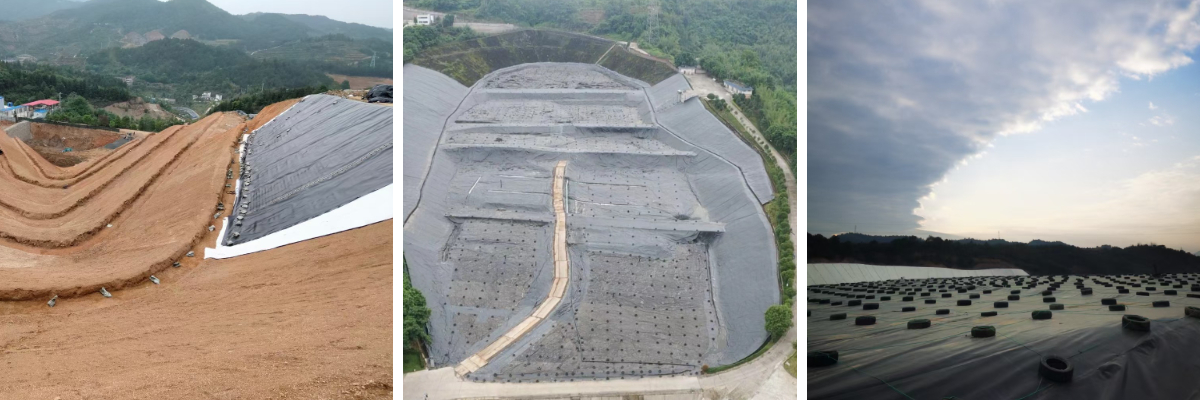
Landfills: Geomembranes are used for the bottom anti-seepage, slope anti-seepage, and capping coverage of landfills to prevent the leakage of landfill leachate and protect the surrounding environment.
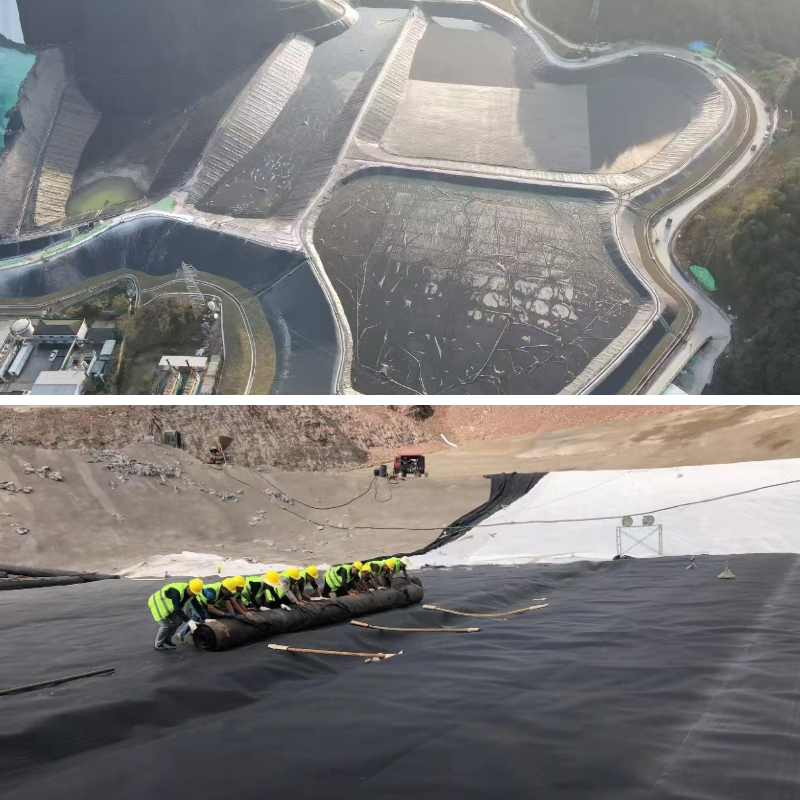
Sewage Treatment Plants: Geomembranes are laid in structures such as sewage treatment tanks and regulation tanks to prevent sewage leakage and avoid soil and groundwater pollution.
2.Water Conservancy Engineering
Canal Anti-seepage: Geomembranes are adopted for anti-seepage treatment in projects like irrigation canals and drainage canals to reduce water leakage losses and improve the utilization efficiency of water resources.
Reservoirs and Dams: They are used for the anti-seepage reinforcement of reservoir dams and levees to enhance the stability of the dam body and prevent seepage damage.
3.Transportation Engineering
Highways and Railways: In projects such as soft soil foundation treatment and subgrade reinforcement, geomembranes can serve as isolation layers or anti-seepage layers to prevent water erosion of the subgrade and improve the bearing capacity and stability of the subgrade.
Tunnels and Subways: Geomembranes are used for waterproofing and anti-seepage in underground projects like tunnels and subways to ensure the safety and durability of the projects.
4.Mining Engineering
Tailings Ponds: Geomembranes are laid at the bottom and on the slopes of tailings ponds to prevent the leakage of tailings slurry and protect the surrounding environment.
Heap Leaching Sites: They are used for anti-seepage treatment of heap leaching sites to prevent the leakage of leaching solution and improve the metal recovery rate.
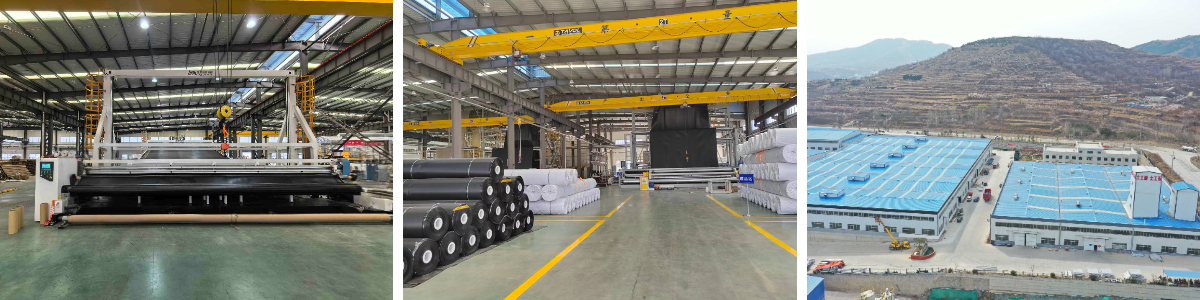
With its outstanding anti-seepage performance, chemical stability, construction convenience, and cost-effectiveness, geomembrane has become an ideal choice for anti-seepage treatment in fields such as water conservancy engineering, environmental protection engineering, transportation engineering, and mining engineering, providing reliable solutions for various types of projects.