Revolutionizing Irrigation Canal Construction: Cement Blanket as an Alternative to Traditional Lining Methods
Introduction: Why Traditional Canal Lining Falls Short
Irrigation canal lining is the backbone of agricultural water conservation, preventing water leakage, soil erosion, and structural damage throughout water delivery systems. For decades, traditional concrete pouring, brick laying, and compacted soil lining have dominated canal construction. However, these conventional methods suffer from cumbersome workflows, heavy equipment reliance, slow curing speeds, and frequent post-construction damage. They also require long-term, high-cost maintenance to sustain canal functionality.
As modern agricultural and water conservancy projects pursue high efficiency and cost-effectiveness, innovative waterproof lining materials have emerged to replace outdated techniques. Among these solutions,cement blanket, also widely known as concrete impregnated fabric and categorized under professional cement curing blankets, has become a game-changing option for irrigation canal renovation and new construction. It streamlines on-site operations, shortens project cycles, and drastically reduces long-term maintenance expenditures, making it the preferred material for modern irrigation canal lining projects worldwide.
What Is Cement Blanket? Core Definition and Working Principle
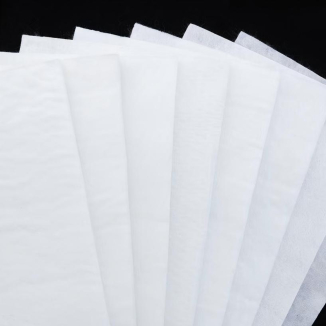
A cement blanket is a flexible, prefabricated composite geotechnical material integrated with cement powder, high-strength fiber fabrics, and waterproof backing layers. Unlike traditional loose concrete mixtures that require on-site batching and pouring, this material maintains a soft, foldable fabric state before hydration, allowing easy transportation, cutting, and laying on any canal terrain.
As a professional concrete impregnated fabric, its internal three-dimensional fiber structure locks cement particles stably without leakage or waste. Once fully soaked with water, the material triggers a rapid cement hydration reaction, gradually hardening into a dense, rigid concrete protective layer. This unique water-activated curing feature distinguishes it from traditional concrete and solidifies its status as one of the most practical cement curing blankets for water conservancy infrastructure.
The entire hardening process requires no complex mixing equipment, formwork support, or professional pouring teams. It adapts perfectly to irregular canal slopes, curved canal sections, and uneven foundation surfaces, solving the fitting and construction difficulties of traditional rigid lining materials.
Key Advantages of Cement Blanket for Irrigation Canal Lining
1. Dramatically Shortens Project Construction Time
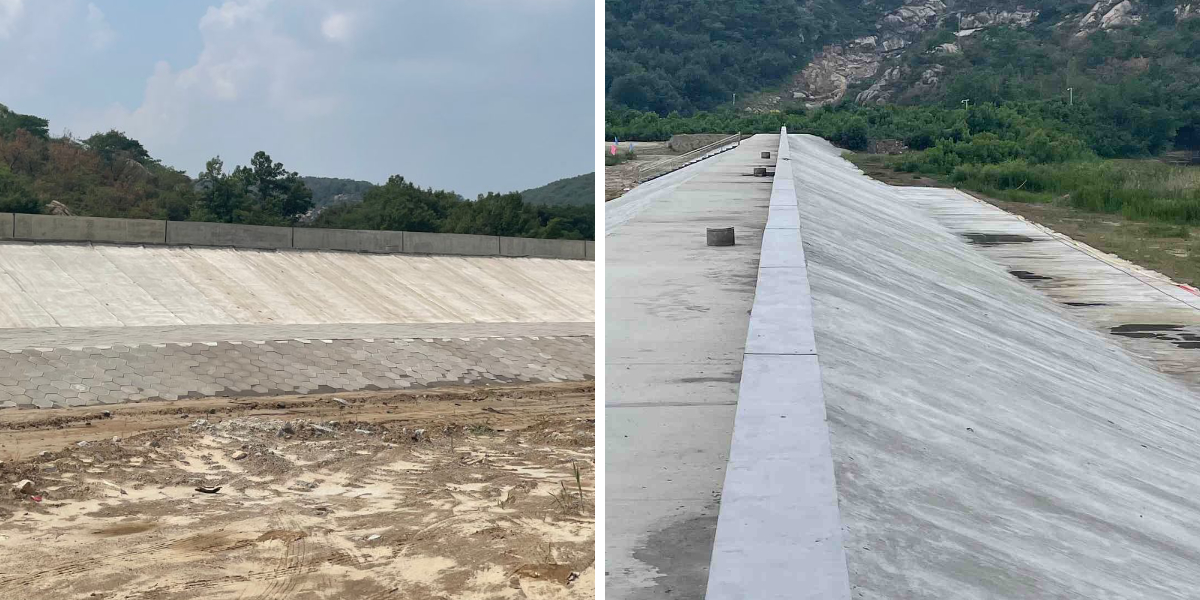
Construction efficiency is the most prominent advantage of adopting cement blanket for irrigation canal lining. Traditional concrete lining involves multiple tedious steps: foundation trimming, formwork installation, concrete batching, pouring, vibration compaction, and long-term natural curing. The whole process is easily affected by weather conditions, leading to delayed progress and prolonged project cycles.
In contrast, concrete impregnated fabric simplifies canal lining construction to three core steps: laying, watering, and curing. The flexible fabric can be quickly deployed across long-distance canal sections, even in narrow or high-slope canal areas inaccessible to mechanical equipment. With rapid hydration and initial setting performance, the material forms a stable protective structure in a short period, eliminating the long waiting time for traditional concrete curing. As efficient cement curing blankets, it supports fast-track construction schedules, enabling projects to be completed and put into use far ahead of traditional timelines.
2. Minimizes Long-Term Maintenance Costs
Irrigation canals operate in long-term humid, open-air environments, exposed to continuous water scouring, ultraviolet radiation, temperature changes, and soil erosion. Traditional lining materials are prone to cracking, peeling, leakage, and hollowing after long-term use, requiring frequent inspection, repair, and partial reconstruction that accumulates huge maintenance costs annually.
Cement blanket features high structural density, excellent tensile strength, and crack resistance after hardening. Its integrated fiber reinforcement structure effectively resists water flow impact and terrain micro-deformation, avoiding the local damage common in traditional concrete lining. The waterproof backing layer further enhances anti-seepage performance, fundamentally reducing water loss and preventing soil erosion inside canals.
Thanks to the stable material properties of concrete impregnated fabric, lined canals maintain intact structural performance for a long service life with minimal daily upkeep. Unlike traditional linings that require regular patching and reinforcement, these professionalcement curing blankets greatly reduce post-operation maintenance labor, material, and time costs, delivering superior long-term economic benefits for irrigation projects.
3. Strong Terrain Adaptability and Construction Flexibility
Many irrigation canals feature complex terrains, including curved segments, variable slope gradients, and irregular foundation surfaces where rigid concrete pouring is difficult to construct effectively. Cement blanket boasts outstanding flexibility and ductility in its pre-curing state, allowing free cutting, folding, and fitting to various canal shapes without gaps or deformation.
This concrete impregnated fabric can be laid on dry foundations, moist surfaces, or even shallow water environments, with construction unaffected by mild rainy weather. It fits both large-scale main irrigation canals and small field branch canals, adapting to diverse project scenarios. Compared with rigid lining materials, these versatile cement curing blankets eliminate the need for precise foundation leveling, greatly reducing pre-construction foundation processing workload.
4. Eco-Friendly and Stable Operational Performance
Sustainable water conservancy construction requires materials with low environmental impact and stable long-term performance. Cement blanket uses prefabricated integrated production, with no on-site dust pollution, concrete waste, or noise disturbance during construction. Its low-alkali formula avoids water quality contamination, protecting aquatic ecological environments and meeting green construction standards for agricultural irrigation projects.
After hardening, concrete impregnated fabric forms a compact, anti-aging protective layer with excellent UV resistance, freeze-thaw resistance, and chemical corrosion resistance. It does not degrade, crack, or fall off under long-term outdoor exposure and alternating dry-wet conditions. As reliable cement curing blankets, they maintain consistent anti-seepage and anti-scouring performance throughout the canal’s service life, ensuring stable and efficient water delivery for agricultural irrigation.
Practical Application Scenarios of Cement Blanket in Irrigation Projects
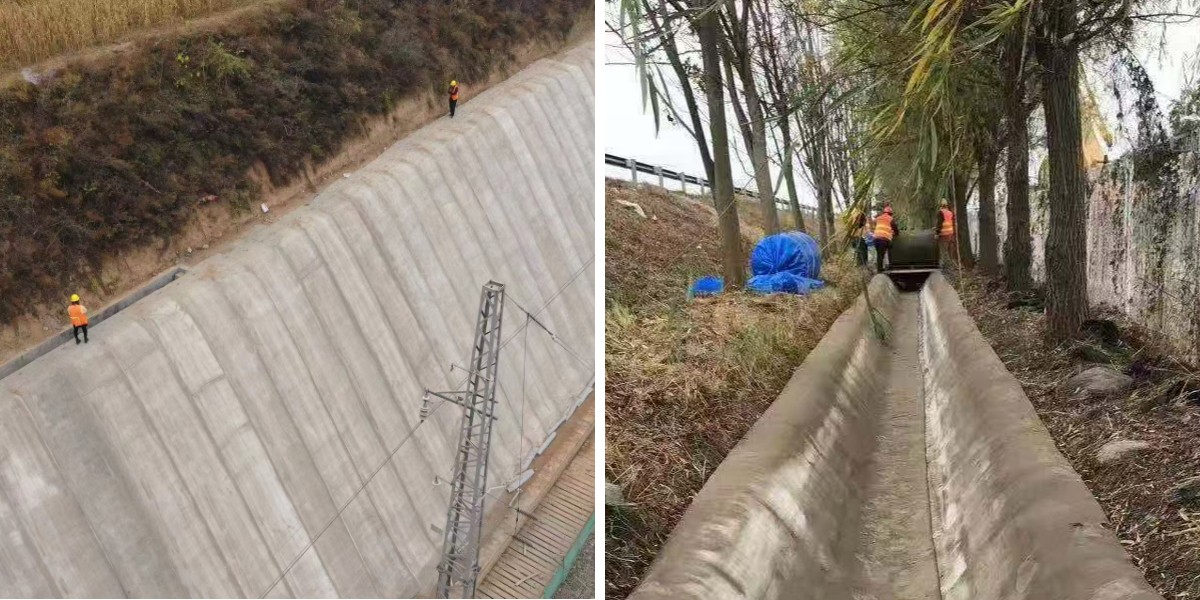
Cement blanket is widely applicable to all types of irrigation canal lining projects, perfectly solving the pain points of slow construction and high maintenance costs in traditional water conservancy upgrades. It is ideal for new agricultural irrigation canals, old canal renovation, farmland water system reconstruction, slope protection of water delivery ditches, and anti-seepage reinforcement of field drainage canals.
For remote rural irrigation projects with limited mechanical equipment, the lightweight and easy-to-transportconcrete impregnated fabric reduces construction threshold and labor input. For key irrigation projects with tight deadlines, the rapid construction capability of cement curing blankets ensures on-time project delivery without compromising engineering quality. In seasonal irrigation areas with strict water supply time limits, the fast-curing feature enables early canal operation, guaranteeing timely agricultural irrigation water supply.
Conclusion: Upgrade Canal Lining with High-Efficiency Cement Blanket Solutions
Traditional irrigation canal lining methods can no longer meet the dual demands of modern water conservancy projects for rapid construction and low-cost operation. Cement blanket stands out as an innovative lining solution with its fast construction speed, low maintenance cost, strong terrain adaptability, and stable eco-friendly performance.
By adopting concrete impregnated fabric to replace traditional concrete pouring and brick lining, irrigation projects effectively shorten construction cycles, cut comprehensive engineering costs, and improve the overall stability and service life of canal systems. For all agricultural irrigation canal construction and renovation projects, choosing high-quality cement curing blankets is a cost-effective, efficient, and sustainable optimization strategy that brings long-term value to water resource utilization and farmland irrigation development.