An Evaluation of the Performance of Geotextile Tubes in Dewatering of Mining Tailings
Introduction: The Dewatering Problem Every Mine Eventually Faces
Tailings management is one of the heaviest operational and environmental burdens in mining. Slurries produced by ore processing arrive with high water content, fine particles, and unpredictable chemistry, and every site must eventually answer the same question: how to remove water fast, store solids safely, and keep the operation compliant. A geotextile tube has become one of the most practical answers to that question, because it dewaters and contains material in a single step. Suppliers who understand local conditions can extend that benefit further, which is why more operators now evaluate Mining Geotube Solutions as a system rather than a product. And because no two tailings streams behave alike, Customized geotextile tubes are usually the difference between a tube that works and a tube that fails.
How a Geotextile Tube Dewears Tailings
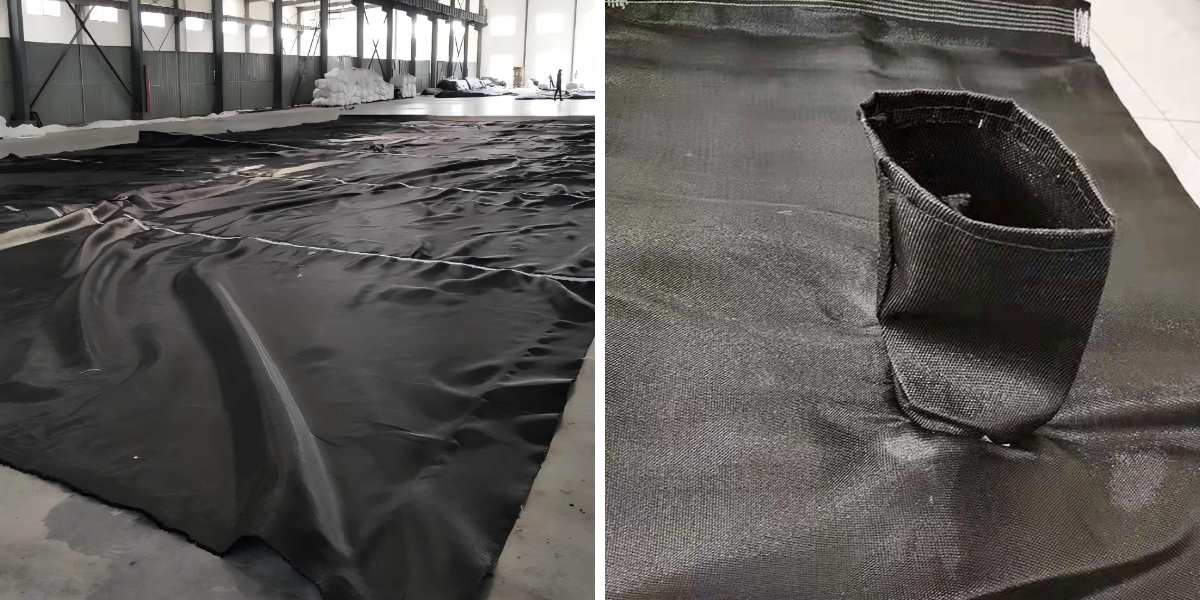
The mechanism is simple, and that simplicity is exactly why the geotextile tube performs so reliably in harsh mining environments. Slurry is pumped into a woven or nonwoven fabric tube through a filling port. Pressure inside the tube forces water outward through the fabric pores while the fabric structure retains the solids. The result is a dense, stackable filter cake inside a container that is itself the containment structure.
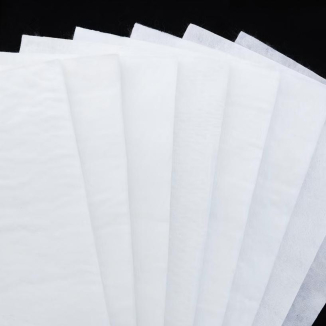
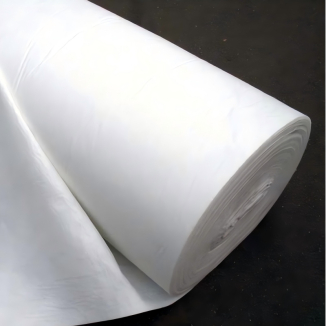
Performance depends on the fabric — its pore openings, tensile strength, and permeability — and on how well the fill cycle is managed. Fill too fast and the fabric blinds; fill too slowly and throughput suffers. Any serious discussion of Mining Geotube Solutions therefore starts with matching fabric specification to the tailings gradation and chemistry, not with tube dimensions alone. This is also why Customized geotextile tubes outperform stock sizes when tailings contain clays, ultrafines, or reactive minerals.
What Drives Performance in Real Tailings Conditions
Several variables determine how well a geotextile tube dewaters in practice:
Particle size distribution. Fine and colloidal tailings retain water stubbornly and require tighter control of fabric pore size and dosing strategy.
Chemistry. pH, salinity, and residual reagents affect both flocculation efficiency and long-term fabric durability.
Solids concentration. Thicker feed reduces fill cycles but raises pumping pressure and internal stress.
Fill and rest cycles. Alternating active filling with resting periods allows the cake to consolidate and restores fabric permeability.
Site climate. Freeze-thaw, intense UV, and heat cycling age fabric differently across regions.
Because these factors interact, credible Mining Geotube Solutions are engineered around site-specific testing rather than generic catalogue performance. Equally, Customized geotextile tubes allow the fabric grade, seam construction, and port arrangement to be adjusted to the actual tailings stream, which is where most performance gains are quietly won.
Mining Geotube Solutions as a Complete Dewatering System
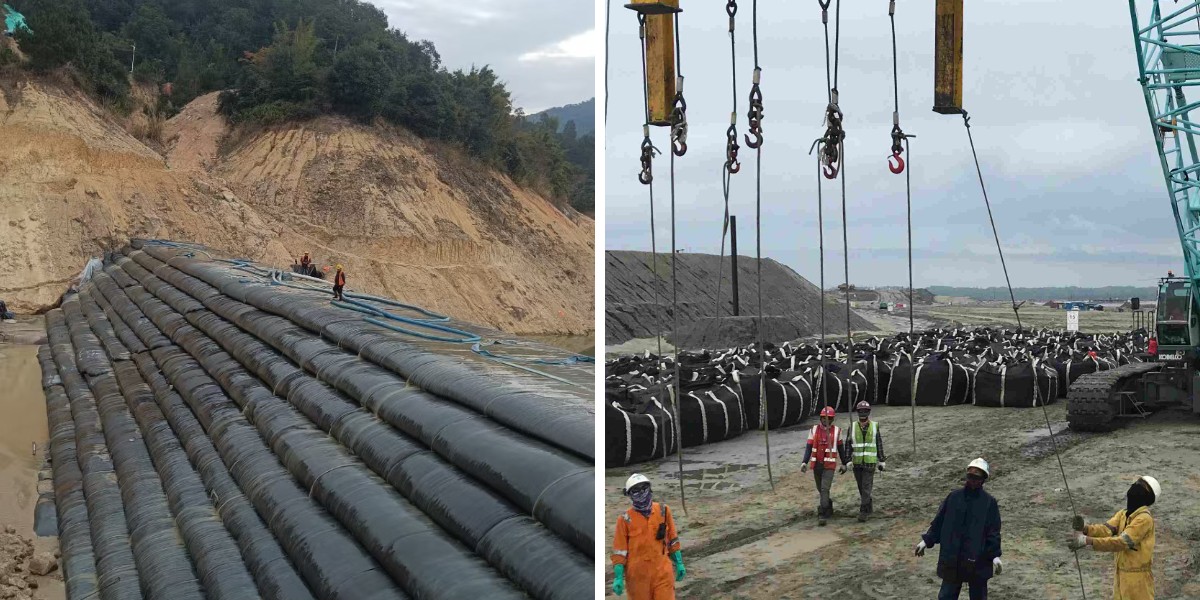
A tube on its own is only a component. Mining Geotube Solutions combine tube selection, feed conditioning, pumping strategy, staging layout, and closure planning into one working system. Effective designs address:
Feed conditioning. Polymer selection and dosing must suit the tailings, not the equipment. The right flocculant structure produces flocs that release water quickly and build a permeable cake.
Staging and footprint. Tubes are typically arranged in cells with access for filling lines, drainage channels, and eventual decommissioning. Layout decisions made early determine whether the site can scale later.
Containment and drainage. The fabric retains solids, but the site still needs a managed route for released water, whether recirculation to the plant or treatment before discharge.
Closure and rehabilitation. Because the tube becomes the containment structure, its long-term stability under UV exposure, weathering, and stacking loads is part of the design brief from the start. Well-planned Customized geotextile tubes include this closure requirement in the specification rather than treating it as an afterthought.
Customized Geotextile Tubes for Difficult Tailings
Standard tubes are built for average conditions, and average conditions rarely exist at a mine. Customized geotextile tubes address the specific failure modes operators actually encounter:
Blinding and poor dewatering in high-clay tailings, solved through fabric structure and pore-size adjustment.
Seam stress under high filling pressure, solved through reinforced seam design and validated joint detailing.
Chemical exposure, solved by selecting polymers and coatings resistant to the site's pH and reagent residue.
Space constraints, solved with non-standard circumferences and stacking configurations suited to a tight footprint.
Cold or high-altitude climates, solved with fabric grades that retain flexibility and strength through freeze-thaw cycles.
This is the practical case for Mining Geotube Solutions built around engineering input: the specification should follow the tailings test results, and the geotextile tube should be manufactured to that specification. Operators who insist on this sequence consistently report steadier dewatering, longer service life, and fewer emergency interventions.
Field Practice: Getting Consistent Results
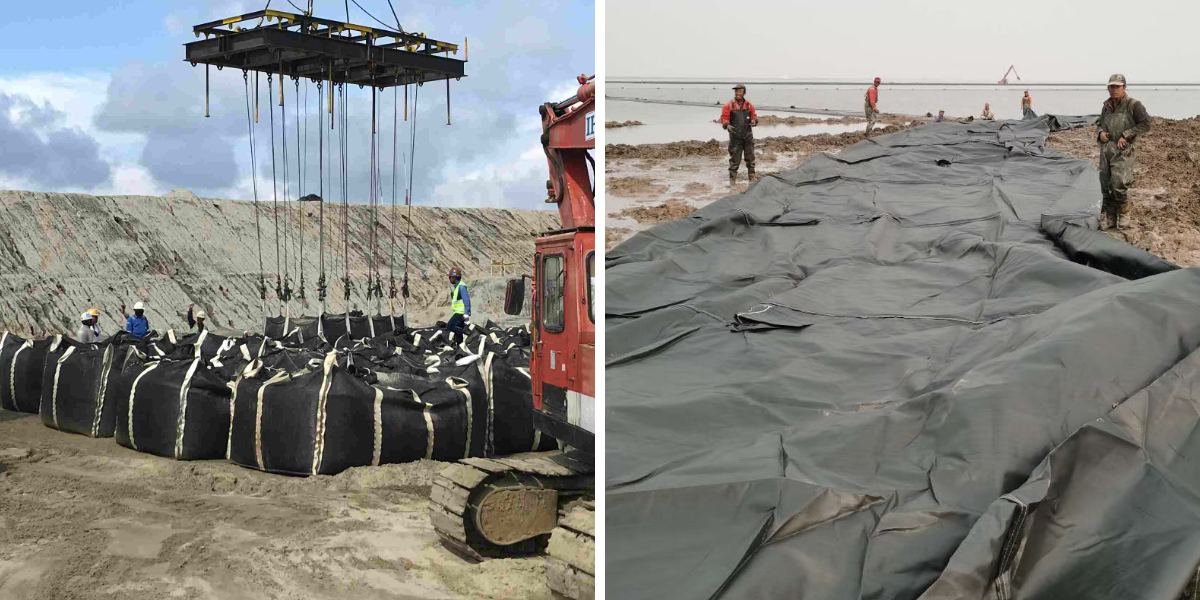
Performance is determined as much on site as in the factory. Practical guidance for any geotextile tube installation includes filling in controlled lifts with adequate resting intervals, monitoring internal pressure and fabric strain, rotating filling among tubes to allow consolidation, inspecting seams and ports regularly, and keeping fill lines clean to avoid clogging.
Documentation matters too. Records of fill volumes, dosing, and dewatering behaviour build the evidence base for the next stage of the project. Mature Mining Geotube Solutions treat this data as an asset, using it to refine dosing and staging as the tailings body changes over the mine's life. Where the tailings stream shifts — new ore zones, changed reagent regimes, deeper pits — revisiting Customized geotextile tubes specifications keeps performance from drifting.
Why the Approach Outperforms Conventional Options
Compared with conventional impoundments and mechanical dewatering, a geotextile tube offers faster deployment, lower capital intensity, smaller operating footprint, and the ability to scale in stages as production grows. Dewatering and containment happen together, which shortens the path from slurry to stable, stackable material and simplifies site rehabilitation at closure.
The main caveats are real and worth stating plainly: fabric selection must be correct, feed conditioning must be competent, and site drainage must be designed rather than improvised. Where those conditions are met, Mining Geotube Solutions deliver predictable throughput and a genuinely lower environmental risk profile. Where they are not, even a well-made geotextile tube will underperform — which is precisely why Customized geotextile tubes, supported by proper testing and engineering review, are the recommended default for mining applications.
Conclusion
Tailings dewatering succeeds when fabric, chemistry, and site design are treated as one problem. Understanding how a geotextile tube dewaters is the foundation; engineering Mining Geotube Solutions around your actual tailings is the method; and specifying Customized geotextile tubes is how that method becomes durable performance on site. Operators who plan containment, drainage, and closure together — instead of purchasing tubes as isolated consumables — get the dewatering rate, structural reliability, and regulatory confidence they were looking for.
If your project involves high-fines tailings, tight footprints, or challenging climate conditions, share your tailings test results and site constraints with our engineering team. We will recommend a fabric specification, filling strategy, and layout tailored to your operation, and supply Customized geotextile tubes manufactured to that design.