Geomat Technology Boosts Sustainable Soil Erosion Prevention
Geomat Technology Boosts Sustainable Soil Erosion Prevention
Soil erosion rarely announces itself. It shows up later as silted drains, exposed roots, cracked pavement and slopes that keep sliding after every rain. For contractors, developers and landowners, repairing erosion after the fact costs far more than preventing it at the start. Geomat technology offers a practical answer: a lightweight, open structure that holds soil long enough for vegetation to take over permanently. Used as part of a wider geomat erosion control plan, a 3D geomat protects the vulnerable weeks after seeding, while revetment mesh gives vulnerable faces the mechanical strength they need. This article explains how each element works, where they perform best, and why they suit sustainable site design better than hard surfaces alone.
Why Soil Erosion Remains a Persistent Problem
Erosion starts the moment bare soil meets moving water or wind. Raindrops break the surface apart, runoff carries fine particles away, and rills widen into gullies with each storm. Steep slopes, disturbed construction ground, road cuttings, landfill caps and drainage channels are all exposed. Concrete and stone revetments stop erosion but seal the ground and push runoff elsewhere. Loose seeding alone often fails, because seed and topsoil wash away before roots establish. This is the gap geomat erosion control is built to fill — temporary protection that survives the first critical weeks and then fades into a living cover. A 3D geomat works within that same window, and where the face is steep or the flow strong, a revetment mesh carries the extra load the vegetation cannot yet take.
What a 3D Geomat Actually Does
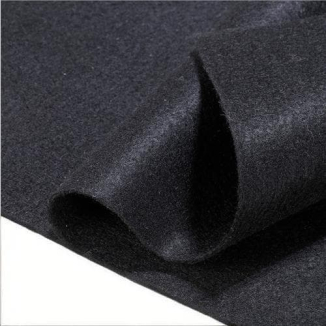
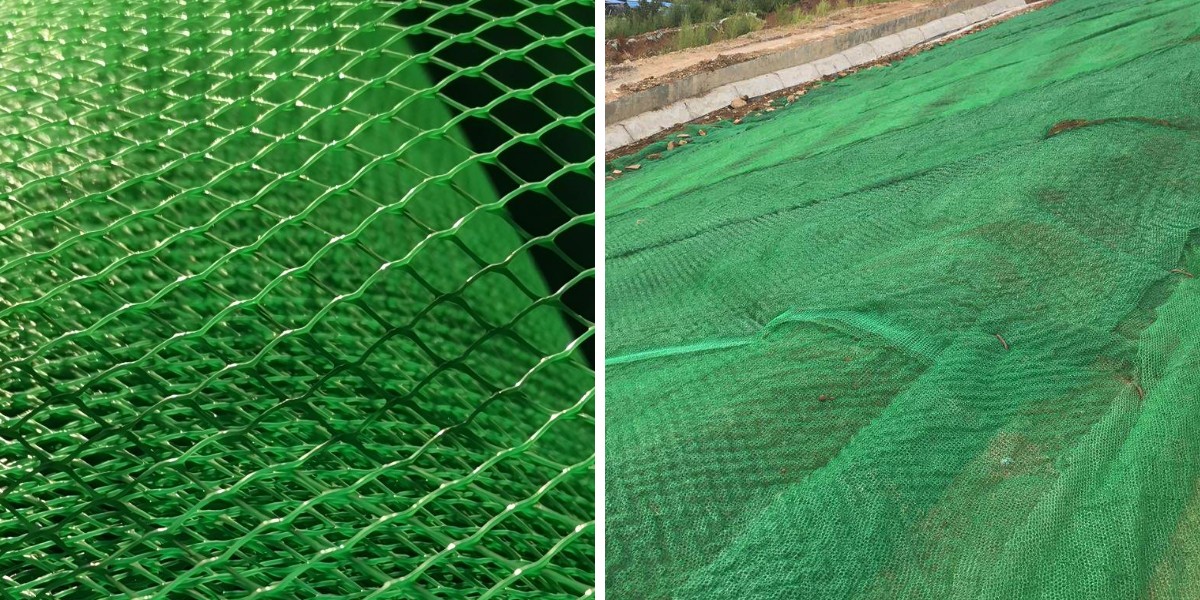
A 3D geomat is a three-dimensional mat of polymer filaments fused into a flexible, open network. Its layers trap soil, seed and moisture instead of letting them travel downhill. Laid on a prepared slope, the mat slows runoff at the surface, breaks raindrop impact and keeps the seedbed stable. Because the structure is open rather than solid, water still infiltrates and air still circulates. In any geomat erosion control programme, this is the layer that buys time for plants. The mat is light, easy to cut on site and quick to handle, which matters on remote or steep ground. Where the surface also faces concentrated flow, a revetment mesh is normally added beneath or above it, giving the 3D geomat a stronger base to sit on.
How Geomat Erosion Control Supports Vegetation Growth
The value of geomat erosion control shows up in the first growing season. The dimpled structure of a 3D geomat holds moisture after rain and shelters seedlings from sun and wind, so germination has a real chance. Roots grow through the open mesh and anchor into the soil below, and the mat gradually loses importance as the root mat thickens. On a bare batter this is often reinforced with a revetment mesh at the toe and crest, where scour is strongest. This is why the finished result is a self-sustaining green slope rather than a permanent artificial skin. On windy sites, the same 3D geomat stops surface soil from blowing away, and the same geomat erosion control logic keeps seedlings in place during short, intense storms.
Where Revetment Mesh and Geomat Systems Perform Best
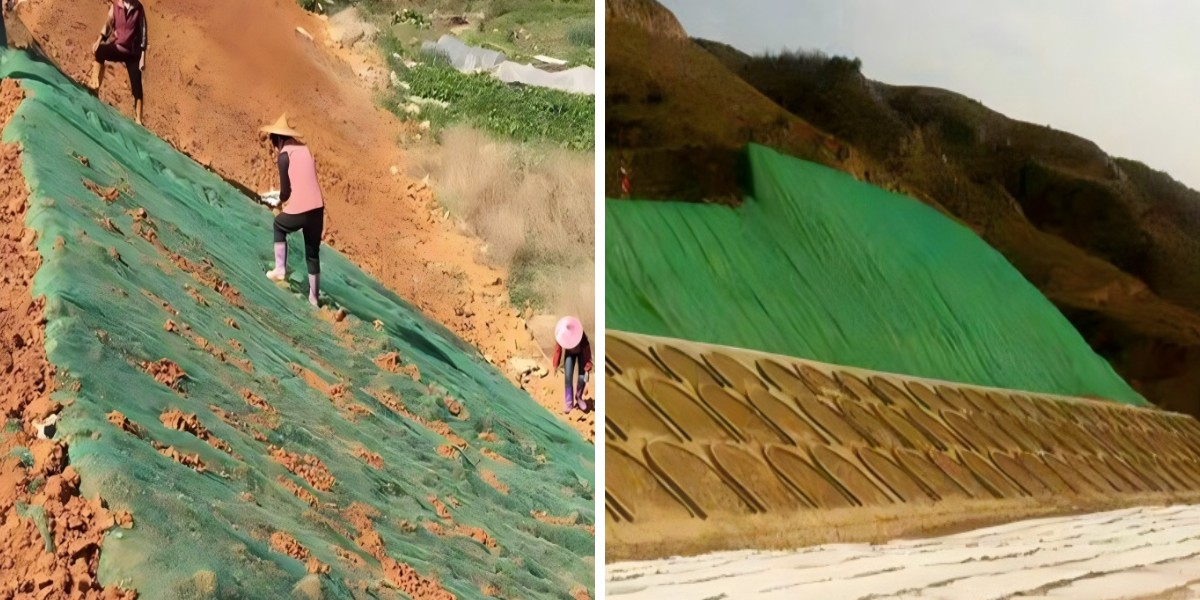
Slope protection is the most common use. A 3D geomat follows the batter, holds the seedbed and prevents the surface washing that turns a smooth face into a network of rills. In channels and ditches, a revetment mesh resists the shear of flowing water while vegetation matures along bed and banks. On construction sites, geomat erosion control stabilises stockpiles, batters and temporary exposed ground that would otherwise discharge sediment into drains. Landfill closure, mine rehabilitation, road embankments and riverbank restoration rely on the same combination: a 3D geomat for surface protection, a revetment mesh where hydraulic stress is highest, and a design that ties both into the drainage plan.
Sustainability Benefits Beyond Erosion Control
Sustainability here reflects how the material performs. Geomat erosion control supports a vegetation-based solution, so the finished slope absorbs rain, reduces runoff peaks, cools the surface and creates habitat instead of shedding water like a roof. A 3D geomat is thin and light, so freight volume per protected area stays small — a real advantage for projects far from supply points. A revetment mesh replaces a large share of concrete and stone, cutting truck movements and embedded material. Because the long-term cover is living vegetation, maintenance shifts from repairing cracked surfaces to occasional inspection and re-seeding. That is the definition of a low-impact, long-life intervention.
Choosing and Installing the Right Product
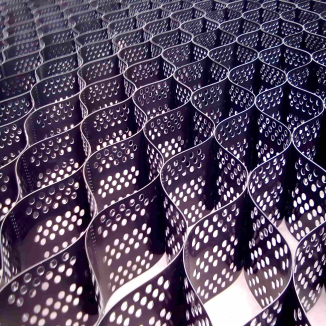
Selection starts with the site, not the catalogue. Slope angle, soil type, rainfall pattern, water velocity and exposure duration decide which grade of 3D geomat fits, and whether geomat erosion control alone is enough or a revetment mesh is also needed. Loose sand behaves differently from stiff clay, and a channel carrying seasonal flow needs more resistance than a landscaped embankment. Preparation matters as much as the material: trim the surface, clear rocks and loose material, and shape it so the mat lies in full contact. Seed goes under the mat, anchoring must be dense at crest and toe, and overlaps between rolls must be tied rather than laid side by side. A well-fixed revetment mesh at the weak lines is usually what separates a slope that holds from one that fails in the first storm.
A Practical Route to Long-Term Site Stability
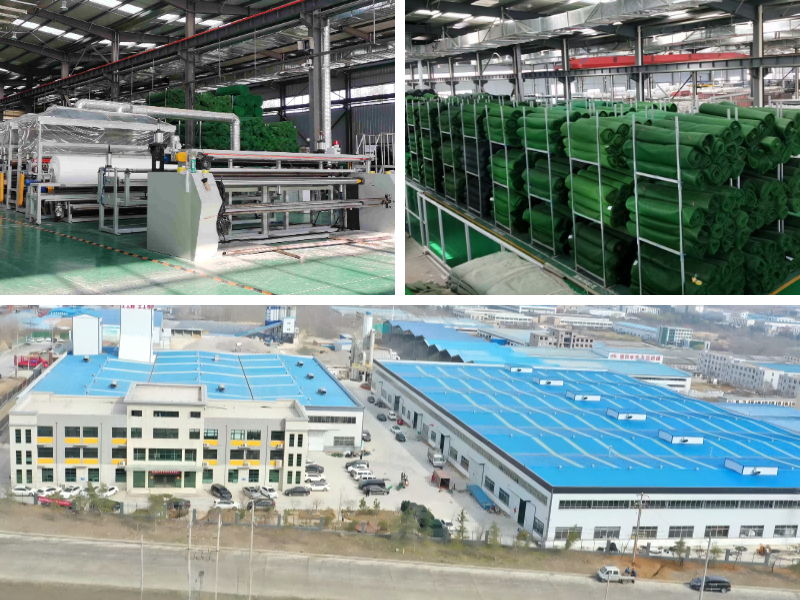
Erosion control works best when it is designed as part of the site rather than added at the end. Geomat technology fits that logic: a 3D geomat protects the soil during the vulnerable period, geomat erosion control carries the slope through to a permanent plant cover, and a revetment mesh handles the concentrated loads vegetation cannot yet resist. For projects that must meet environmental conditions, control sediment discharge and still keep a natural appearance, this combination is among the most cost-effective options available. Buyers sourcing for tropical and high-rainfall markets should confirm filament quality, UV resistance and roll dimensions before ordering, and ask for installation guidance with the shipment.