How Concrete Blanket Simplifies Water Conservancy Construction
Introduction
Water conservancy work seldom sits on convenient ground. Canals cut through soft soil, steep banks, and sites far from a batching plant. Every extra step, from formwork to curing, costs time and money. That is why many teams now weigh a concrete blanket against a traditional poured lining. The product ships as a flexible mat that hardens only when it gets wet. As a Ditch Lining Material, it takes most of the wet trade off the bank. Once in place, it works as a durable concrete ditch liner without the joints that usually fail first.
What a Concrete Blanket Really Is
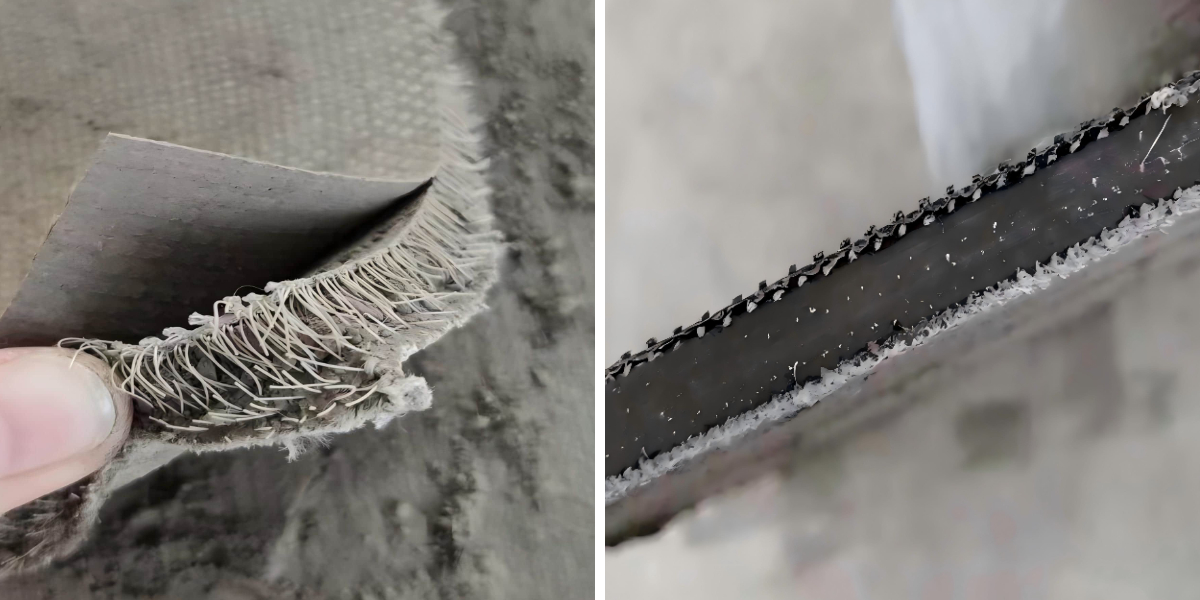
A concrete blanket is a factory-made roll: a cementitious layer bonded to a strong geotextile backing. The cement is pre-hydrated under controlled conditions, so the roll stays flexible in the warehouse and on the truck. You unroll it, fix it down, and wet it. It sets in place and forms a hard, continuous surface.
Because it is made in a plant, thickness and mix stay consistent. That matters when the ditch is long and the crew is small. As a Ditch Lining Material, the roll format lets you cut and fit around bends, outlets, and existing structures without building forms. In service, the finished surface acts as a concrete ditch liner: water flows over a smooth, erosion-resistant skin instead of bare earth.
Two details decide quality. The backing needs full contact with the subgrade, so any void under the mat becomes a weak point. The water used for hydration should be clean and evenly applied. Miss either one and the mat looks fine on top while it fails at the edge.
Why the Ditch Lining Material Choice Shapes the Job
Lining is not a cosmetic finish. It controls seepage, protects the bank from scour, and holds the channel's shape through the wet season. Get it wrong and the repair bill arrives every year.
Poured concrete does the job, but it brings formwork, joints, curing time, and access problems on narrow berms. A concrete blanket changes that sequence. The Ditch Lining Material arrives ready to install, so the crew spends its hours placing rather than preparing. The concrete ditch liner that results is thinner than a cast slab, yet it still seals the bed, holds the side slope, and resists abrasion from silt and gravel.
There is also a scheduling benefit that rarely shows on paper. Lining can start on some reaches before the channel is fully dry, and short sections can be finished and handed over while other parts are still being excavated. That keeps machines and labour moving instead of waiting.
Faster Site Work on Awkward Ground
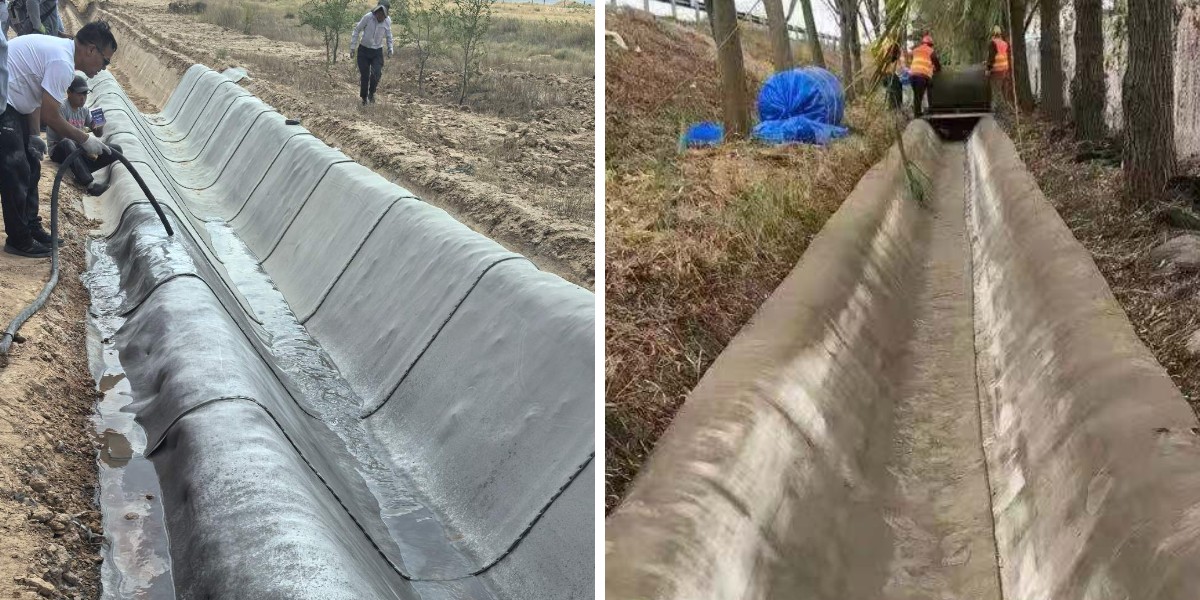
Access is the quiet killer of canal schedules. On a steep side slope, a mixer truck cannot reach the face, and a pump adds cost and cleaning. A concrete blanket removes that problem. Rolls are light enough for a small excavator or a few workers, and they follow the shape of the ground.
Installation is simple in principle: prepare the subgrade, roll out the mat, overlap the edges, fix it, wet it, and protect it until it sets. No forms, no steel fixing, no waiting for a pour window. As a Ditch Lining Material, it also suits short reaches and repair sections where bringing in a plant makes no sense.
The same logic applies to the finished channel. A concrete ditch liner laid in rolls can be extended a few metres at a time, which fits how water projects actually progress: in segments, around weather, and around land access. Crews close a section, let it set overnight, and move on. The next morning the surface is ready to take flow.
Performance Under Weather and Wear
Canals live outdoors. They see sun, frost, root pressure, and debris. A lining has to cope with all of it.
The factory-controlled mix in a concrete blanket gives a dense, low-permeability surface, which limits seepage loss and reduces the risk of undercutting. The geotextile backing spreads load and separates the cement layer from soft or stony ground, so the mat does not crack where a cast slab might. Used as a Ditch Lining Material on irregular profiles, it conforms instead of bridging, which is exactly where thin poured sections fail.
Joints deserve attention. Every joint in a lined channel is a potential leak and a future repair. A concrete ditch liner supplied in long rolls has fewer of them, and the overlaps are easy to seal. Over a full season of running water, fewer weak points mean fewer callbacks.
Cold weather needs care. Hydration slows in low temperatures, and the mat should not be wetted when frost is expected. Hot, windy days dry the surface too fast, so a light spray and a cover help. None of this is difficult, but it has to be planned rather than improvised.
Lower Maintenance and a Simpler Long-Term Cost
Maintenance is where lining choices really separate. A cracked slab means cutting, breaking, and re-pouring, often with the channel shut down. A damaged concrete blanket is usually patched: cut back to sound material, fit a new piece, wet it, and walk away.
For the owner, that means a concrete ditch liner that a small team can repair with hand tools. For the operator, it means shorter shutdowns and less disturbance to flow.
The same Ditch Lining Material also reduces cleaning. A smooth, sealed surface sheds silt more readily, so desilting takes less machine time. Weeds find fewer anchor points in a continuous skin than in a jointed slab with cracks and open seams. These savings are modest in any single year, but they repeat for the life of the channel.
One more advantage belongs to logistics. Rolls stack and transport dry, so a remote site needs no batching plant and no curing regime written into the programme. Fewer deliveries mean less wear on access roads and fewer chances for weather to break the schedule.
Where It Fits Best in Water Projects
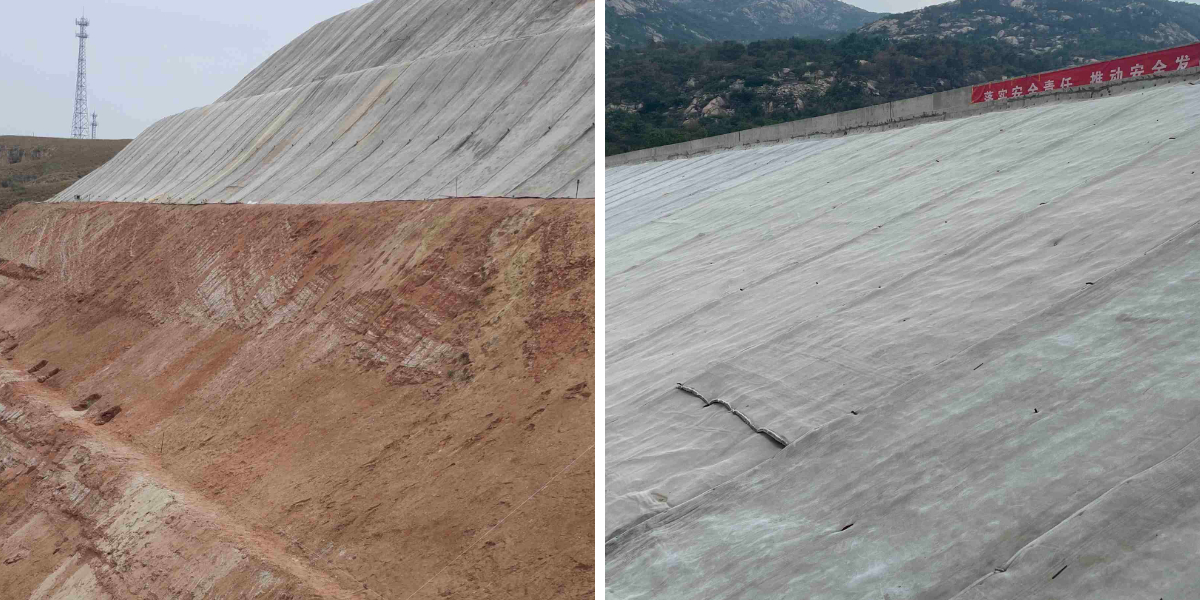
The product is not a replacement for every structure. It suits channels, farm ditches, side slopes, spillways, and outfall aprons, where the profile is long and the access is awkward. It is a strong fit for rehabilitation work, where the old lining is stripped and the new one goes down quickly.
Designers often specify a concrete blanket for reaches with variable ground, because the mat tolerates minor irregularities that would need over-excavation under a cast slab. Irrigation distributors like it for the same reason: a Ditch Lining Material that can be laid between crop cycles and put into service almost at once keeps water moving when farmers need it.
Where the channel carries high-velocity flow or heavy bed load, check the specification and add protection at transitions. A concrete ditch liner performs well when it is matched to the duty, and poorly when it is treated as a universal answer.
Choosing and Installing Well
Start with the subgrade. Strip vegetation, grade the profile, and compact. Remove stones that could puncture the backing. Any soft pocket should be dug out and replaced, not covered.
Check the roll before laying. Look for damage to the cement layer and confirm width and length. Overlap as the manufacturer instructs, fix with the recommended anchors, and keep the mat taut without stretching it. Wet it thoroughly and evenly, then protect it from traffic until it has set.
Inspect the edges and the outlets, since these show problems first. A tidy lap and a properly sealed termination will do more for the life of a concrete blanket than extra thickness in the middle of the run.
One last point on handling. The Ditch Lining Material should be kept dry and covered until the moment of laying, because a roll that hydrates early will not bond properly. Store it off the ground, lift it with a spreader rather than a single hook, and never drag it across rough stone. These habits cost little and protect the surface you are paying for. A well-installed concrete ditch liner starts with a dry roll and a clean bed.
Conclusion
Water conservancy construction is a business of sequence, access, and weather. A concrete blanket answers all three by turning a wet trade into a dry installation. It gives the designer a reliable Ditch Lining Material, the contractor a fast method, and the owner a concrete ditch liner that is cheap to keep and easy to repair. Used with care on the subgrade and the joints, it removes a lot of friction from canal work.