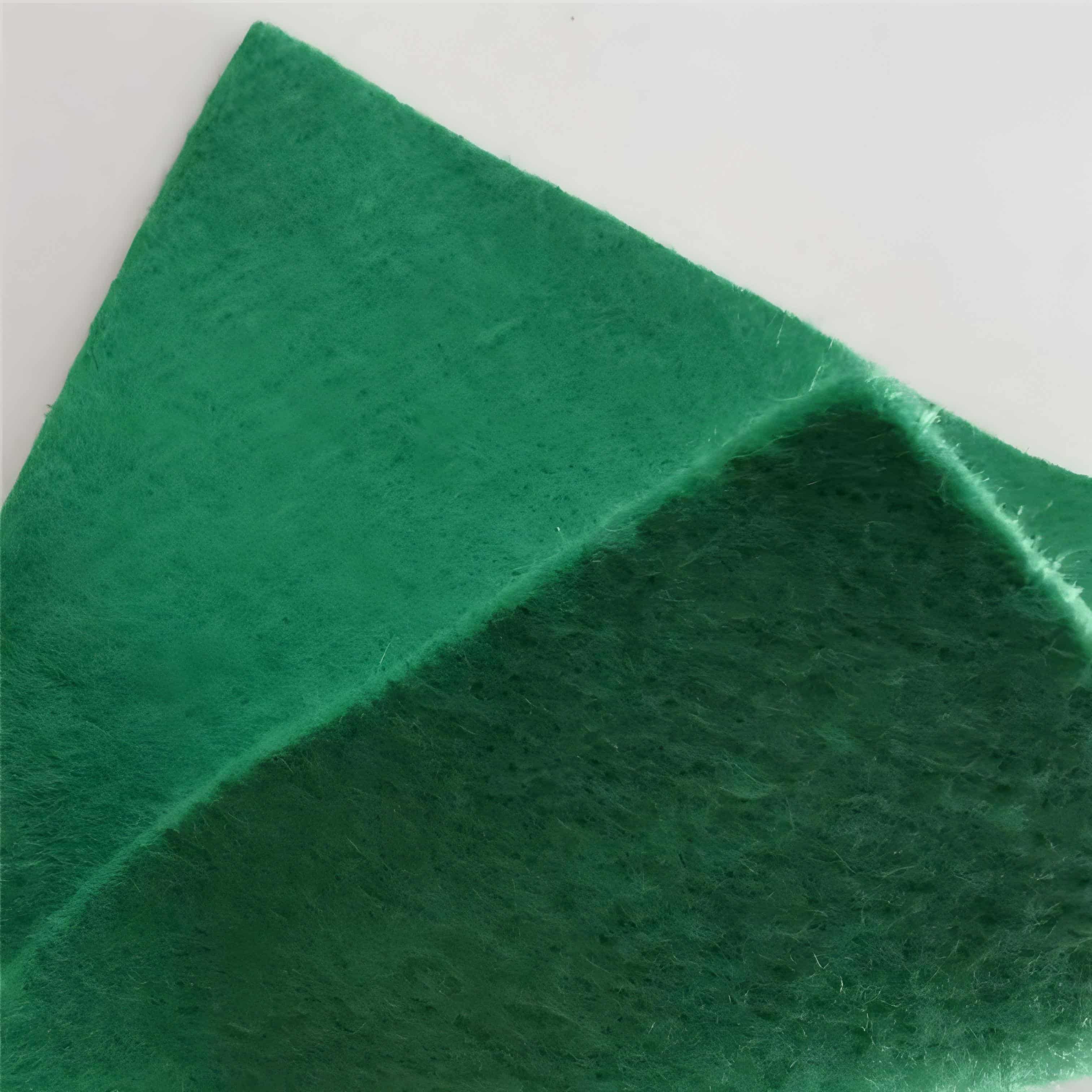
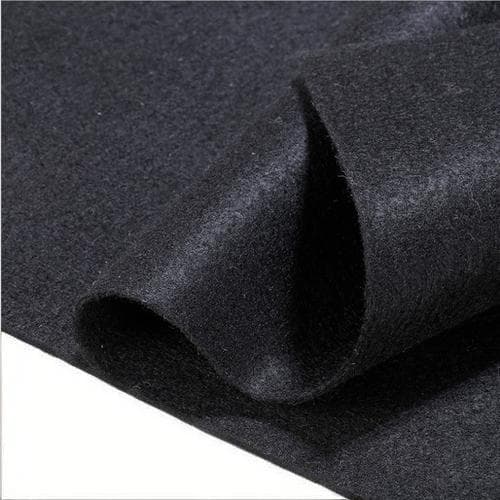
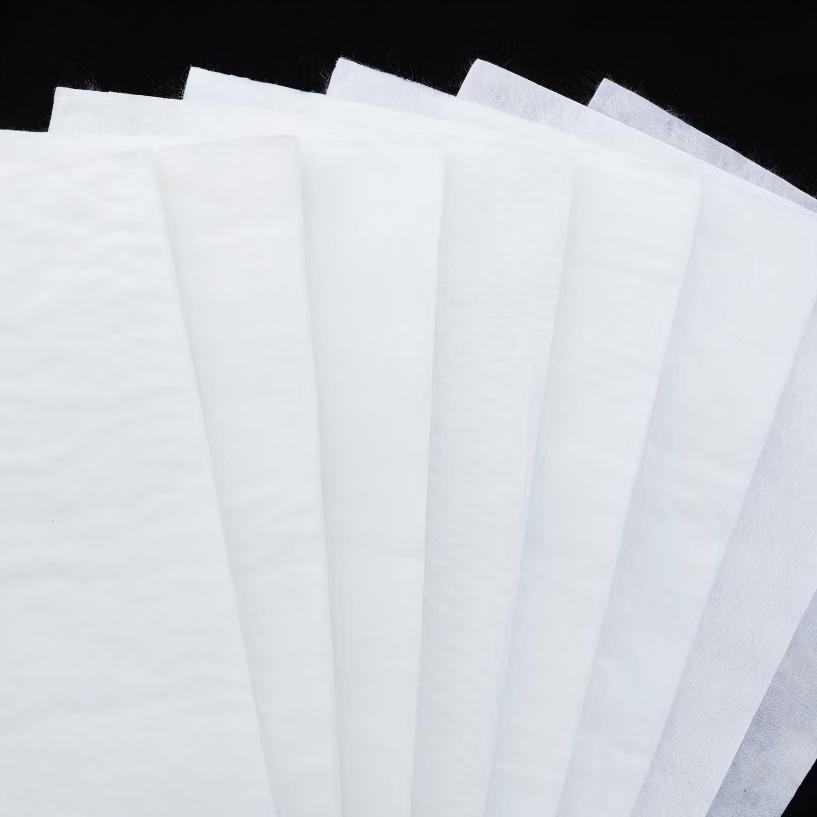
Waterproof Geotextile Fabric
1. Excellent anti-seepage performance: core advantage. It has extremely high impermeability and can effectively block the penetration of water, pollutants, and other liquids.
2. High strength and durability: The surface geotextile has high tensile, tear, and burst strength, which can protect the internal anti-seepage layer from damage during construction and long-term use.
3. Chemical corrosion resistance: The polymer material used has good corrosion resistance to acid, alkali, salt, and various chemical substances, and is suitable for various complex environments.
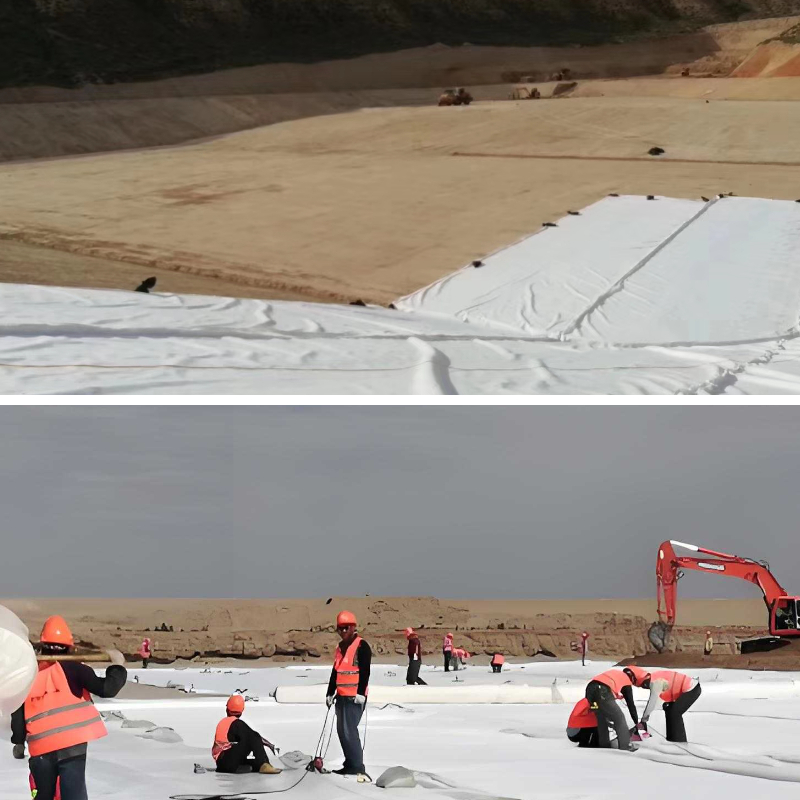
4. Easy construction and high efficiency: The factory prefabricates it into rolls with stable quality. On site laying and splicing are all that is needed, greatly shortening the construction period and reducing labor costs.
Product Introduction:
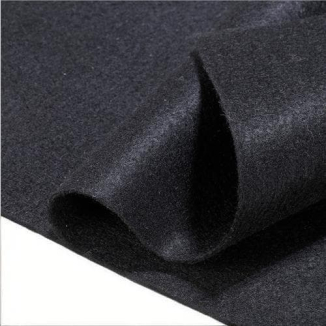
Waterproof Geotextile Fabric is not a single structured material, but a composite geotextile with multiple functions such as waterproofing, isolation, and reinforcement. It is made of synthetic fibers (such as polyester, polypropylene, nylon, etc.) as the base material, and is made into a permeable geotextile through processes such as needle punching, weaving, thermal bonding, or chemical bonding. It is then compounded with polymer waterproof films (such as polyethylene, polyvinyl chloride, etc.) or modified with its own material to form a composite geotextile with multiple functions such as waterproofing, isolation, and reinforcement.
The essence of its structure is the synergistic combination of "substrate layer+waterproof functional layer": on the one hand, the substrate layer (geotextile part) is responsible for providing tensile strength, tear resistance, and also has certain filtering and drainage capabilities, which can avoid soil particles blocking the waterproof layer and ensure the stability of the overall structure; On the other hand, the waterproof functional layer (film or modified coating) blocks the irregular infiltration of water, sewage, chemical solutions and other liquids through a dense structure, accurately achieving the required anti-seepage effect for the project.
Key features
The performance characteristics of waterproof geotextile are directly related to its process design and material selection, mainly reflected in the following four dimensions:
1. Stable and reliable physical and mechanical properties
Waterproof geotextile has high tensile strength (conventional model tensile strength ≥ 10kN/m), and also has excellent tear and puncture resistance, which can resist mechanical friction during construction and soil pressure and water flow impact during engineering use; Its elastic modulus is stable, and it is not easily deformed under long-term load. The material thickness is uniform (usually 1-5mm), and the structure is dense, which can ensure the integrity of the waterproof layer.
2. Excellent waterproof penetration effect
The permeability coefficient of this material is extremely low (usually ≤ 1 × 10 ⁻¹¹ m/s), and it can effectively block the penetration of corrosive liquids such as clean water, sewage, and saltwater; At the same time, it has strong water pressure resistance (conventional models can withstand water pressure of 0.3-1.5MPa without leakage), which can meet the anti-seepage needs in different engineering scenarios and avoid engineering hazards caused by liquid leakage (such as dam piping, groundwater pollution, etc.).
3. Strong weather resistance and chemical stability
In terms of weather resistance, waterproof geotextiles are treated with ultraviolet (UV) resistance, which makes them less prone to brittleness and cracking even when exposed to long-term sunlight in outdoor environments; In terms of chemical stability, it exhibits stable performance in acidic and alkaline environments with pH values ranging from 3 to 11, and can withstand corrosion from seawater in coastal areas and chemical agents in chemical sites; At the same time, it has outstanding resistance to high and low temperatures, does not crack under low temperature environments, and does not melt under high temperature environments, which can adapt to the engineering needs of different climates and regions.
4. High convenience in construction and use
The width of the waterproof geotextile roll is relatively large (up to a maximum width of 6 meters), and the number of joint joints is small during on-site laying, which can reduce the risk of leakage caused by improper joint treatment; The material is lightweight (200-800g per square meter), making it convenient and efficient for both manual and mechanical laying, without the need for complex equipment; In addition, its splicing process is simple, which can be completed by hot welding, hot melt adhesive bonding and other methods. The joint strength can reach more than 80% of the base material, ensuring the consistency of the overall waterproof effect.
Product Parameters:
project | metric | ||||||||||
Nominal strength/(kN/m) | |||||||||||
6 | 9 | 12 | 18 | 24 | 30 | 36 | 48 | 54 | |||
1 | Longitudinal and transverse tensile strength / (kN/m) ≥ | 6 | 9 | 12 | 18 | 24 | 30 | 36 | 48 | 54 | |
2 | Maximum elongation at maximum load in longitudinal and transverse directions/% | 30~80 | |||||||||
3 | CBR top penetration strength /kN ≥ | 0.9 | 1.6 | 1.9 | 2.9 | 3.9 | 5.3 | 6.4 | 7.9 | 8.5 | |
4 | Longitudinal and transverse tearing strength /kN | 0.15 | 0.22 | 0.29 | 0.43 | 0.57 | 0.71 | 0.83 | 1.1 | 1.25 | |
5 | Equivalent aperture O.90(O95)/mm | 0.05~0.30 | |||||||||
6 | Vertical permeability coefficient/(cm/s) | K× (10-¹~10-), where K=1.0~9.9 | |||||||||
7 | Width deviation rate /% ≥ | -0.5 | |||||||||
8 | Unit area mass deviation rate /% ≥ | -5 | |||||||||
9 | Thickness deviation rate /% ≥ | -10 | |||||||||
10 | Thickness coefficient of variation (CV)/% ≤ | 10 | |||||||||
11 | Dynamic perforation | Puncture hole diameter/mm ≤ | 37 | 33 | 27 | 20 | 17 | 14 | 11 | 9 | 7 |
12 | Longitudinal and transverse fracture strength (grab method)/kN ≥ | 0.3 | 0.5 | 0.7 | 1.1 | 1.4 | 1.9 | 2.4 | 3 | 3.5 | |
13 | Ultraviolet resistance (Xenon arc lamp method) | Longitudinal and transverse strength retention rate% ≥ | 70 | ||||||||
14 | Ultraviolet resistance (fluorescence UV lamp method) | Longitudinal and transverse strength retention rate% ≥ | 80 | ||||||||
Product Applications:
1. Water conservancy and hydropower engineering
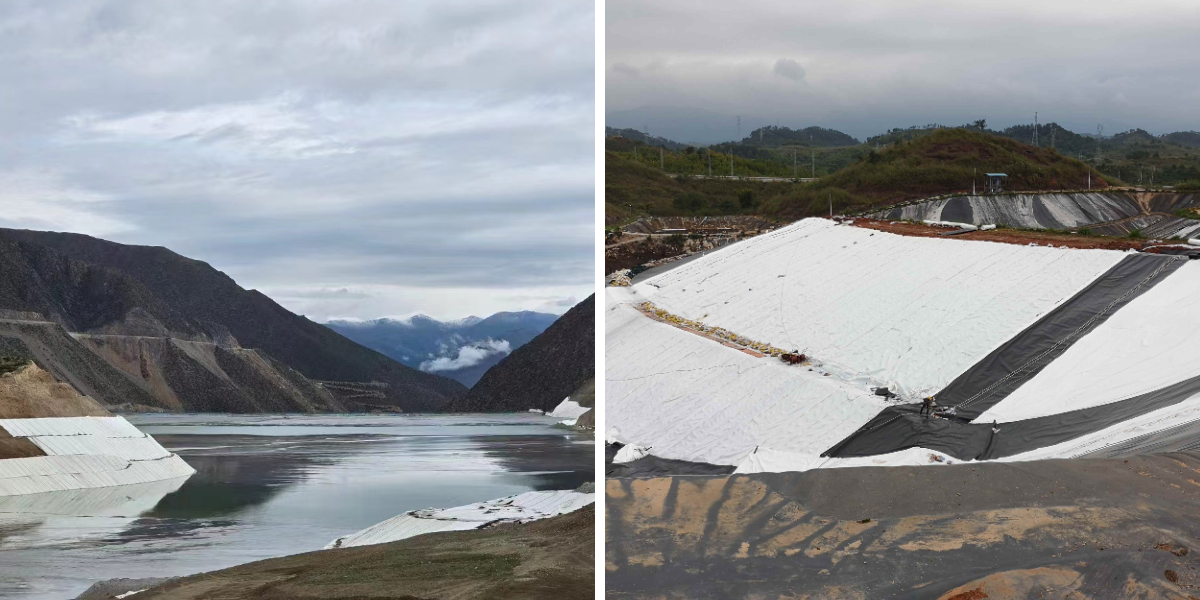
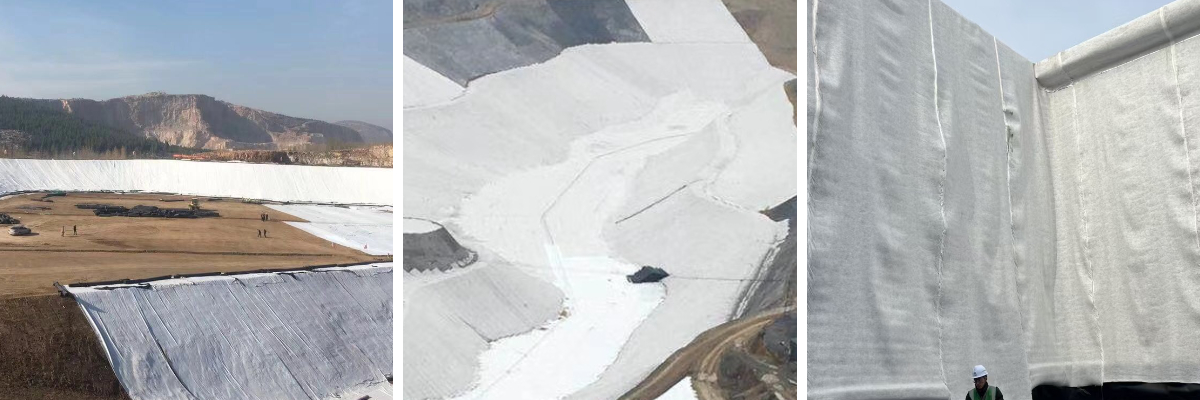
In the field of water conservancy and hydropower, waterproof geotextile is mainly used for dam seepage prevention, channel seepage prevention, and hydropower plant waterproofing. When laid on the upstream slope of the dam or inside the dam body, it can block the infiltration of river water and reservoir water into the dam body, prevent risks such as dam piping and collapse (such as small and medium-sized reservoir reinforcement projects); When used on the inner walls of irrigation and water diversion channels, it can significantly reduce water resource leakage losses (compared to traditional earthen channels, the leakage amount can be reduced by more than 90%); When laid on the foundation or outer side of underground structures in hydropower plant buildings, it can prevent groundwater from infiltrating the buildings and protect the safe operation of mechanical and electrical equipment.
2. Environmental engineering
In environmental engineering, waterproof geotextile is a key material to prevent pollution from spreading. In landfills, it is laid as an "anti-seepage lining layer" at the bottom and slopes of the landfill, which can block the infiltration of garbage leachate into the underground aquifer and prevent groundwater from entering the landfill (usually combined with geomembranes and bentonite waterproof blankets to form a "double-layer anti-seepage system" to improve safety); In sewage treatment plants, waterproofing is used for the bottom and walls of oxidation and sedimentation tanks to prevent sewage leakage and pollution of surrounding soil and groundwater; In ecological wetland restoration projects, laying at the bottom of wetland artificial lakes and rivers can form a flexible waterproof layer without affecting soil permeability and aquatic plant root growth, which meets the needs of ecological restoration.
3. Municipal and Construction Engineering
The application scenarios in the fields of municipal and architectural engineering are concentrated in underground spaces and landscape facilities: in the construction of underground garages and basements, it is laid on the outer side of the bottom plate and side walls, which can replace traditional waterproofing membranes, adapt to foundation settlement with flexibility, and reduce the risk of cracking and leakage; In artificial lakes and landscape water pool projects in parks and residential areas, it is used for bottom anti-seepage. Compared with concrete waterproof layers, it can better cope with structural expansion and contraction caused by temperature changes and avoid crack formation; In roof greening projects, it is laid above the waterproof layer of the roof, which has both waterproof and filtering functions, can prevent planting soil particles from blocking the drainage layer, and protect the roof structure from moisture erosion.
4. Transportation Engineering
In transportation engineering, waterproof geotextile is mainly used to ensure the stability of roadbeds, tunnels, and ports. In the construction of highway and railway roadbeds, it is laid between the roadbed and the road surface to block rainwater from infiltrating the roadbed, avoid deformation caused by road subsidence and frost heave, and extend the service life of the road; In tunnel engineering, it is used to form a "waterproof isolation layer" between the secondary lining and the initial support, preventing groundwater from seeping into the interior of the tunnel and ensuring driving safety; In port and dock engineering, it is laid at the bottom of the dock revetment and breakwater to resist seawater erosion and tidal impact, while isolating seawater from the foundation soil and protecting the foundation structure.
5. Agricultural and Mining Engineering
The application in the fields of agriculture and mining focuses on resource protection and pollution prevention and control: in the agricultural field, the inner walls of reservoirs and water cellars are used for anti-seepage, which can improve the utilization rate of water resources, especially suitable for water-saving irrigation projects in arid areas; In the mining industry, as an anti-seepage lining for tailings ponds, it can prevent heavy metal ions in tailings water from penetrating underground, avoid soil and water resource pollution, and ensure the safety of the ecological environment around the mining area.
Waterproof geotextile (composite geomembrane), as an efficient modern engineering material, provides a reliable solution to the problems of anti-seepage, isolation, and reinforcement in engineering construction by organically combining anti-seepage function with protection, drainage, and reinforcement functions. Its excellent performance, simple construction, and significant economic benefits make it an indispensable key material in fields such as civil engineering, water conservancy, and environmental protection.