Excellent Mechanical Properties
High Strength and Damage Resistance
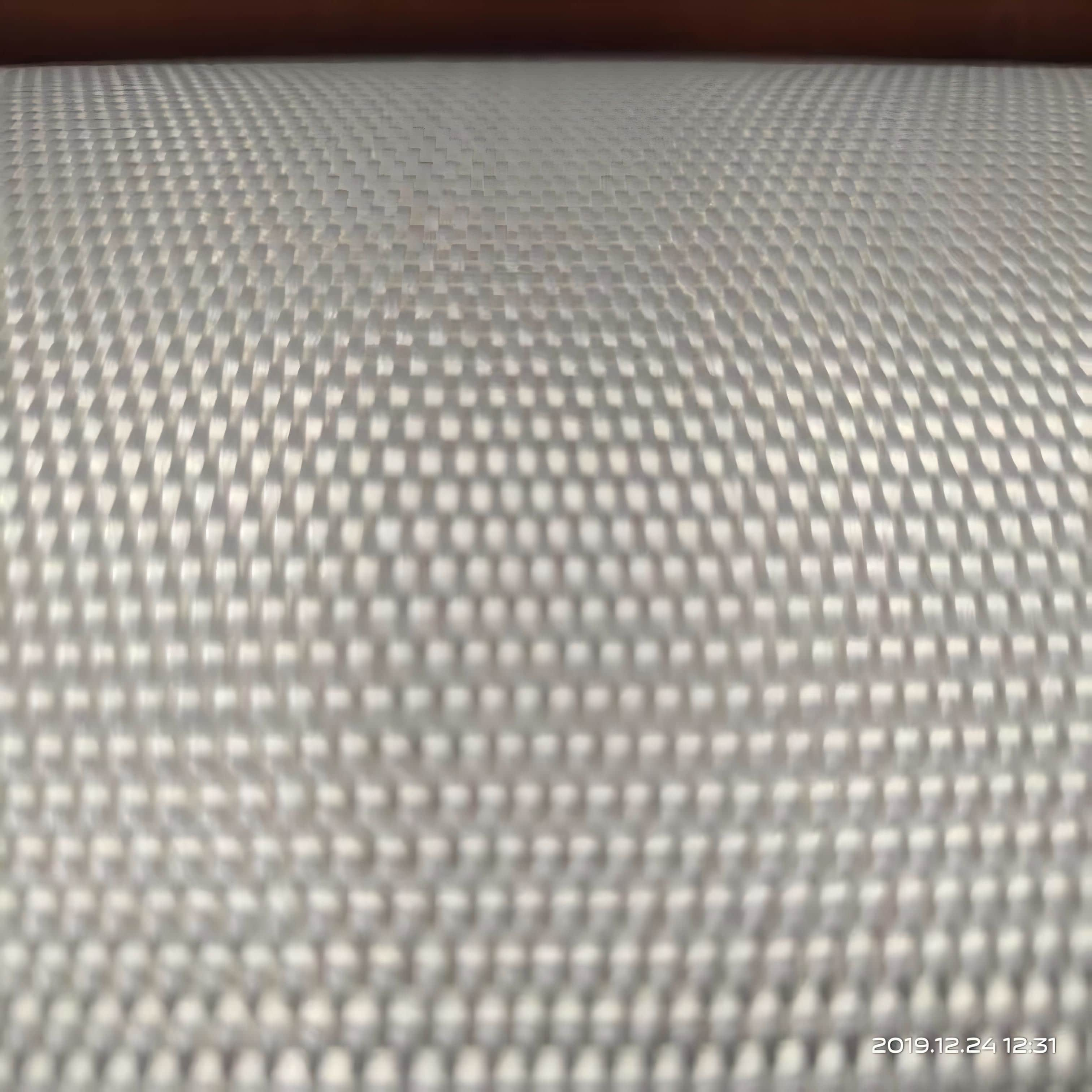
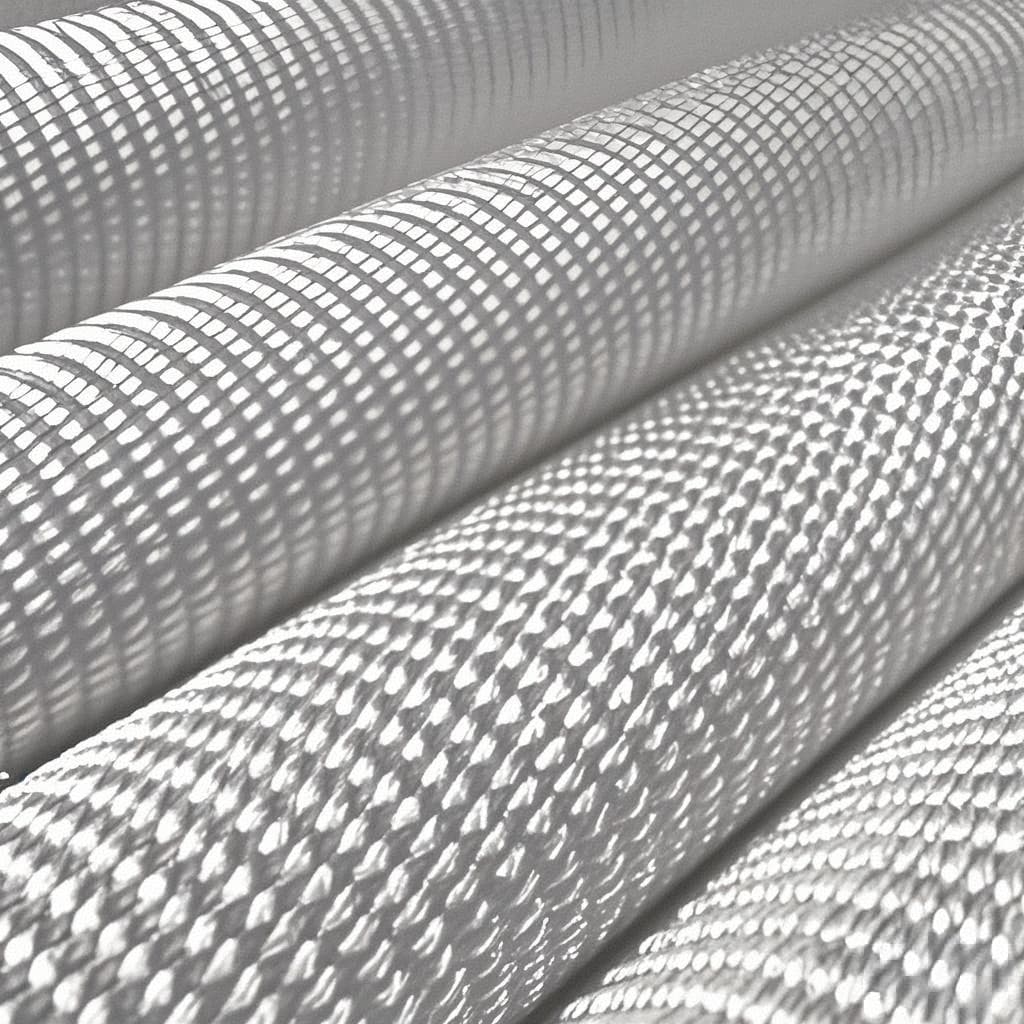
Long-fiber geotextile fabric is manufactured from synthetic materials such as polypropylene, polyester, or nylon. Through a structured interweaving process, it achieves tensile strength levels more than double those of short-fiber geotextiles, offering superior resistance to tearing and damage.Ductility and Stress Distribution
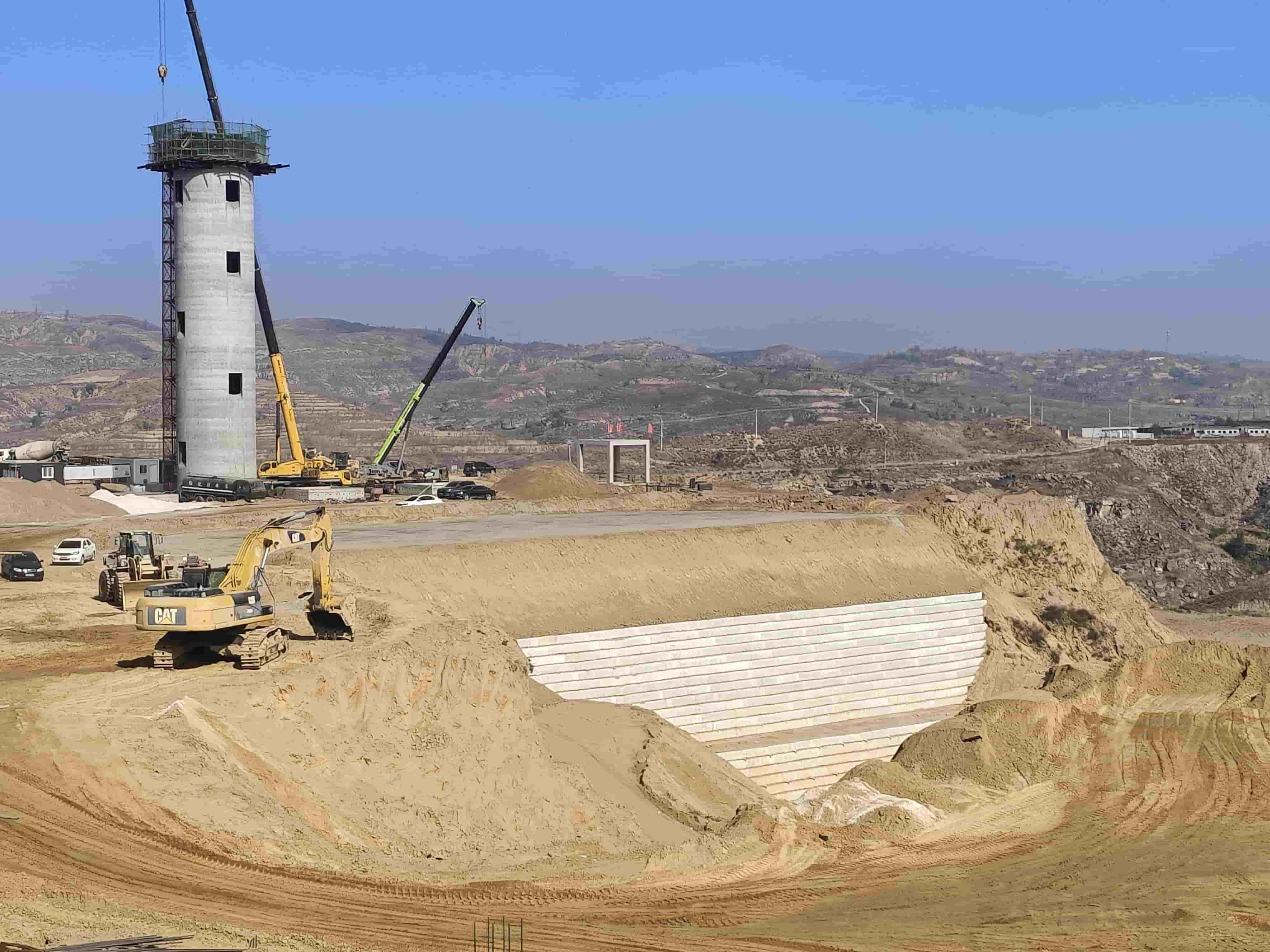
The fabric exhibits excellent elongation properties, enabling it to effectively disperse and transfer stress. This ensures uniform load distribution, making it especially suitable for applications such as foundation reinforcement and slope stabilization.
Specification
Item | Index | |||||||||||||
Nominal Strength (kN/m)Nominal Strength (kN/m) | ||||||||||||||
35 | 50 | 65 | 80 | 100 | 120 | 140 | 160 | 180 | 200 | 250 | ||||
1 Longitudinal Tensile Strength/(kN/m) ≥ | 35 | 50 | 65 | 80 | 100 | 120 | 140 | 160 | 180 | 200 | 250 | |||
2 Transverse Tensile Strength/(kN/m) ≥ | 0.7 × Longitudinal Tensile Strength×0.7 | |||||||||||||
3 | Maximum Load Elongation/% | Longitudinal ≤ | 35 | |||||||||||
Transverse | 30 | |||||||||||||
4 | Puncture Strength/kN ≥ | 2.0 | 4.0 | 6.0 | 8.0 | 10.5 | 13.0 | 15.5 | 18.0 | 20.5 | 23.0 | 28.0 | ||
5 | Equivalent Aperture DiameterOg(O₉s)/mm | 0.05~0.50 | ||||||||||||
6 | Vertical Permeability Coefficient/(cm/s) | K×(10⁵~102)in: K=1.0~9.9 | ||||||||||||
7 | Width Deviation Rate/% ≥ | -1.0 | ||||||||||||
8 | Longitudinal Tear Strength/kN 2 | 0.4 | 0.7 | 1.0 | 1.2 | 1.4 | 1.6 | 1.8 | 1.9 | 2.1 | 2.3 | 2.7 | ||
9 | Unit Area Mass Deviation Rate/% ≥ | -5 | ||||||||||||
10 | Length and Width Deviation Rate/% | ±2 | ||||||||||||
11 | Seam/Joint Strengtha/(kN/m) ≥ | Nominal Strength×0.5 | ||||||||||||
12 | Oxidation Resistance (Longitudinal Strength Retention Rate) a / % ≥ | Polypropylene: 90; Other Fibers: 80 | ||||||||||||
13 | Anti-UV Performance (Gas Chromatography Method)b | Longitudinal Strength Retention Rate/%≥ | 90 | |||||||||||
Anti-UV Performance (UV Lamp Method) | Longitudinal Strength Retention Rate/%≥ | 90 | ||||||||||||
Durability and Environmental Adaptability
Corrosion and Weather Resistance
Thanks to the properties of synthetic fibers, the fabric resists degradation from acids, alkalis, insects, and mold. It remains stable and functional even in complex geological or chemically aggressive environments.Anti-Aging and Long Service Life
Long-fiber geotextile fabric is highly resistant to ultraviolet exposure and natural weathering. Even after prolonged use, it retains more than 80% of its original strength, ensuring a long operational lifespan.
Engineering Functional Advantages
Water Permeability and Drainage Control
With precisely engineered pore structures, the fabric enables effective water filtration to prevent soil loss while rapidly relieving pore water pressure. This makes it ideal for drainage systems, tunnel waterproofing, and seepage control projects.High Friction Coefficient and Construction Stability
Featuring a high coefficient of friction (typically ≥0.4), the fabric improves structural stability by reducing the risk of slippage during construction. It is particularly effective in applications such as reinforcing retaining walls and isolating roadbed layers.
Economy and Construction Convenience
Lightweight and Easy to Transport
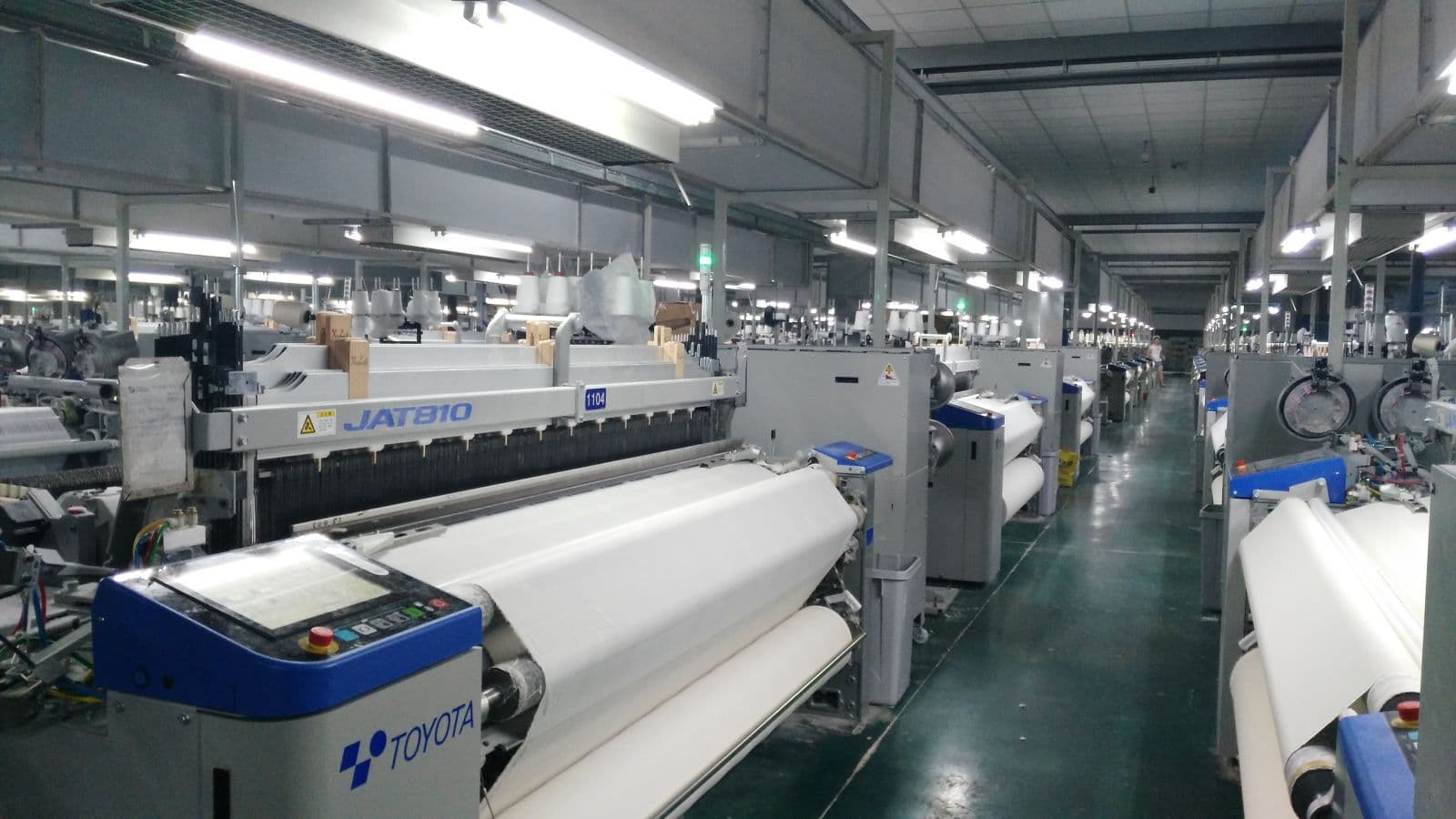
Weighing only one-third to one-half as much as traditional construction materials, long-fiber woven fabric supports roll-based transport and fast on-site deployment. This significantly reduces logistics and labor costs.Multi-Functional and Integrated Application
Combining functions such as filtration, separation, reinforcement, and protection, the fabric can replace traditional multi-layer construction techniques. This integration simplifies processes and shortens construction time by over 30%.
Environmental Protection and Sustainable Development
Utilizing recyclable polyester materials such as PET, the production process consumes approximately 20% less energy compared to conventional materials. This aligns with green building standards, and certain products are certified under the ISO 14001 Environmental Management System.
Long-fiber woven fabrics combine material innovation with advanced structural design to deliver unmatched technical advantages in civil engineering and environmental protection. Their high strength, durability, and multifunctionality position them as essential components in modern infrastructure development.
Application Fields of Filament Woven Fabric
Thanks to their superior strength, longevity, and multifunctional performance, filament woven fabrics are widely used across a variety of sectors. Below is a systematic overview of their primary application areas:
I. Civil Engineering Applications
Foundation Reinforcement and Slope Protection
Long-fiber woven fabric is extensively used in the reinforcement of backfills behind retaining walls, the construction of wrapped retaining walls, and the strengthening of bridge abutments. Its high tensile strength and exceptional puncture resistance (exceeding 2200 Newtons) significantly improve structural stability. In stone slopes and reinforced soil applications, it helps prevent soil erosion and frost damage, while enhancing the load-bearing capacity of the foundation.Separation and Filtration Systems
Used as a separation layer between roadbeds and soft foundations, and between ballast and subgrade, the fabric prevents material intermixing and ensures effective drainage. In ash dams and tailings dams, it serves as the primary filtration layer on the dam face, helping to retain fine particles and maintain structural integrity.
II. Transportation Infrastructure Construction
Road Engineering
In road construction, the fabric is used to reinforce flexible pavements, repair cracks, and prevent reflective cracking. Its ability to distribute stress extends pavement lifespan. It also acts as a separation layer between base materials in highway and airport runway projects, improving the strength of weak foundations.Railway Engineering
Applied as a separator between railway ballast and subgrade, the fabric helps prevent track deformation and settlement. It also functions as a filtration layer in railway drainage systems, minimizing freeze-thaw damage to the substructure.
III. Water Conservancy and Environmental Protection
Drainage and Seepage Control Systems
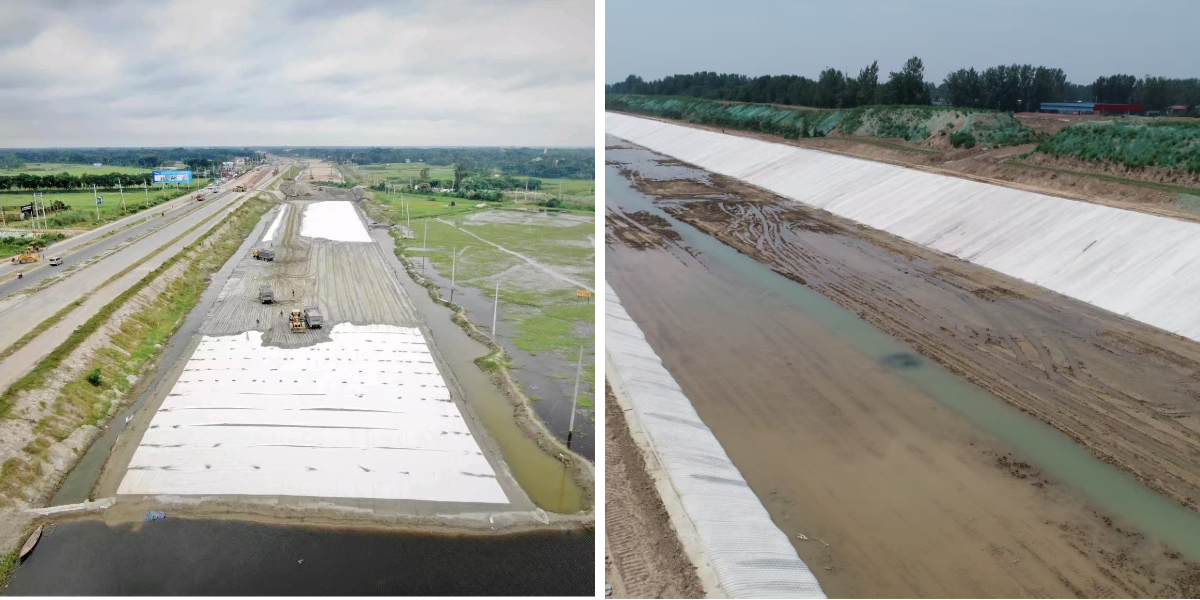
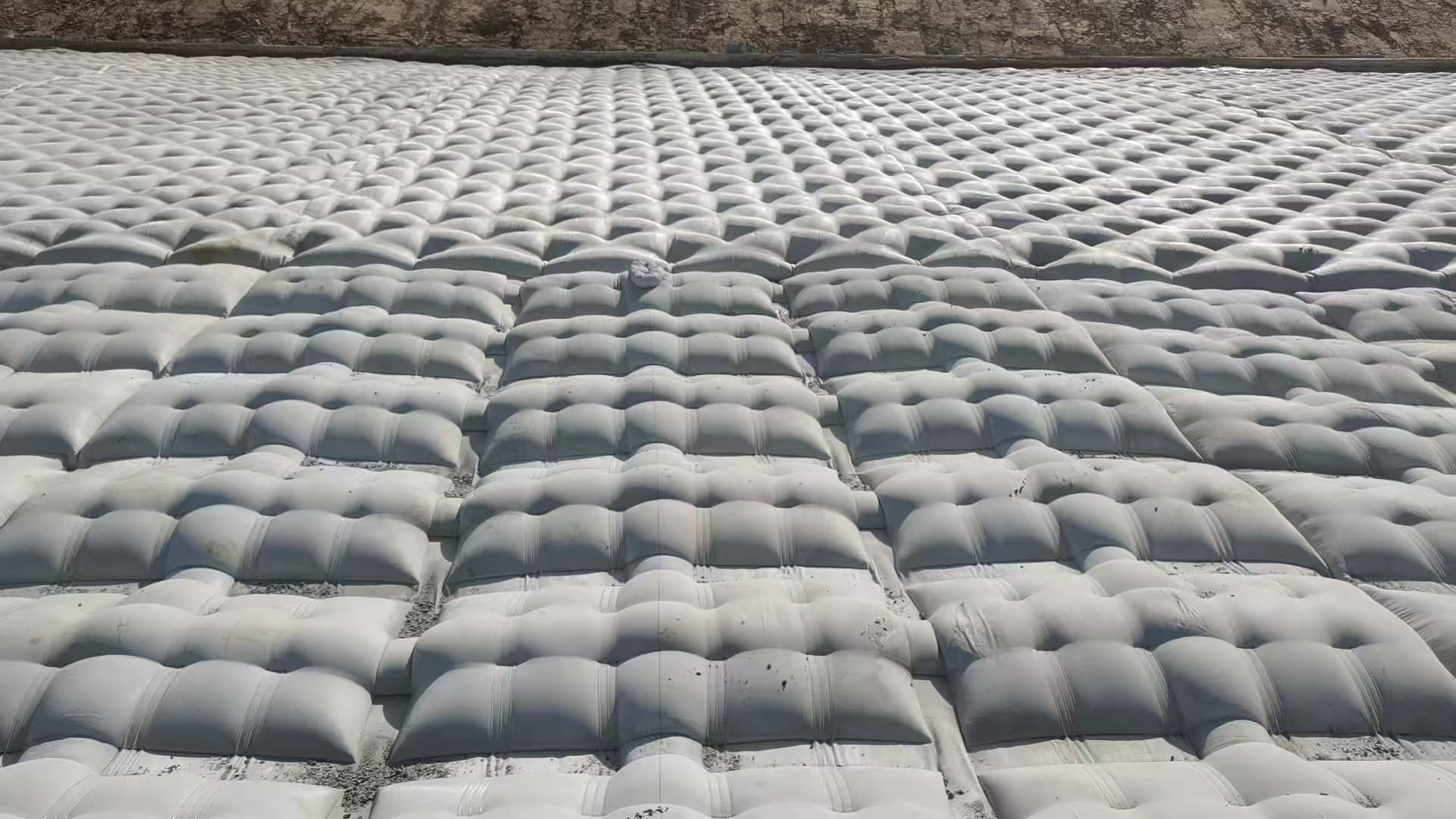
The fabric plays a key role in both vertical and horizontal drainage within earth dams and in seepage control for tunnels. It helps dissipate pore water pressure and reduce hydrostatic stress on concrete linings. Additionally, it serves as a base layer for impermeable barriers in artificial lakes, ponds, and landfills, typically used in conjunction with geomembranes to form composite anti-seepage systems.Ecological Restoration
In soil and water conservation efforts, the fabric is used for slope stabilization to prevent erosion. It is also widely applied in urban greening and wetland rehabilitation projects as a protective and stabilizing material.
IV. Industrial and Civil Construction
Construction Drainage Systems
Long-fiber woven fabric is implemented in drainage systems for basements, sports field sub-bases, and similar structures to prevent water buildup and protect building foundations from moisture damage.Industrial Facility Protection
Serving as an isolation layer in environments such as chemical plants and ash storage sites, the fabric resists chemical corrosion and extends the operational life of critical infrastructure.
V. Extended Applications in Traditional Textile Fields
Functional Textiles
Woven fabrics made from nylon and polyester filaments offer abrasion resistance and wrinkle resistance, making them ideal for use in high-performance outdoor apparel, automotive interiors, and military-grade equipment.Home and Industrial Textiles
These fabrics are used in home products such as curtains, upholstery, and sofa covers, as well as in industrial applications like agricultural coverings and filtration textiles.
Development Trend
With growing emphasis on environmental protection, filament woven fabrics are evolving toward the use of recyclable polyester (PET) materials and low-energy-consumption manufacturing processes. This shift aligns with global sustainability goals and green building standards.
Looking ahead, these fabrics hold significant potential in emerging sectors such as marine engineering and new energy infrastructure—particularly in applications like foundation reinforcement for photovoltaic (solar) fields. Their adaptability, durability, and environmental benefits position them as key materials in the next generation of eco-friendly engineering solutions.