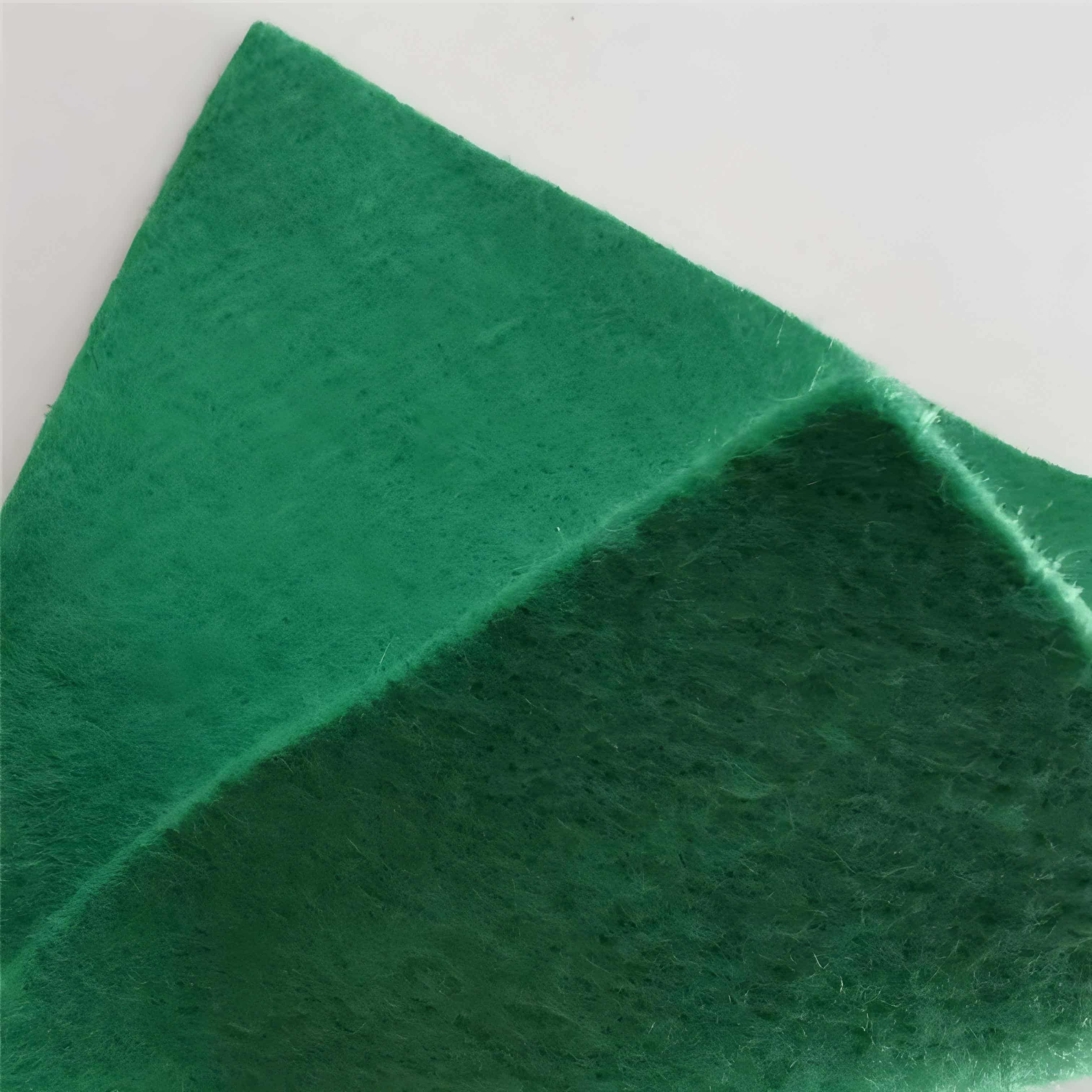
Geotekstil Woven
1.Drainage and Filtration: Drains water and filters soil to prevent soil softening from water accumulation; used in roadbeds and dikes.
2.Reinforcement: Has high tensile strength to enhance soil strength and reduce settlement/landslides; used in roads and fill engineering.
3.Anti-seepage and Isolation: Isolates media and prevents water seepage; used in landfills and artificial lake liners.
4.Protection and Buffering: Resists scouring and impact, and protects geosynthetics; used in riverbank protection and landfill coverings.
Product Introduction
I. Basic Properties
1.Material Foundation
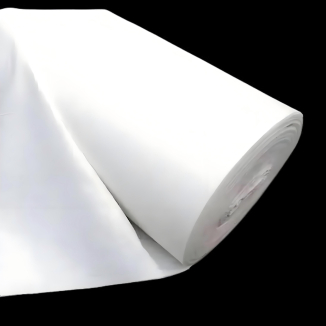
Geotekstil Woven are mainly made of synthetic fibers such as polyester (PET) and polypropylene (PP); some contain natural fibers (which require anti-corrosion treatment). The raw materials are weather-resistant and resistant to soil chemical corrosion.
2.Structural Types
Divided into three categories:
Woven type: Warp and weft interwoven, with high strength;
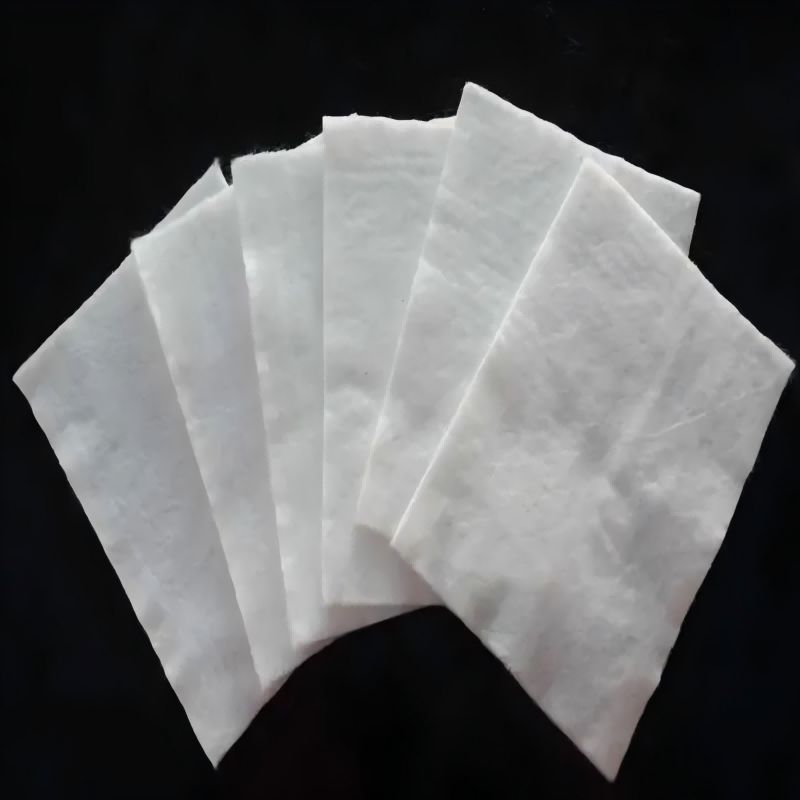
Non-woven type: Fibers randomly laid and pressed, with good filtration performance;
Composite type: E.g., "non-woven + woven", which combines multiple properties.
3.Basic Characteristics
They inherently have basic tensile and tear resistance. Some products achieve density (for anti-seepage use) or high porosity (for drainage use) through coating/combination, making them suitable for different engineering scenarios.
II. Core Functions
1.Drainage and Filtration
Through its high-porosity structure, it drains accumulated water inside the soil, while retaining soil particles and preventing clogging to avoid soil softening caused by water accumulation. It is mainly used in drainage layers of roadbeds, dikes, and slopes.
2.Reinforcement
Relying on its tensile strength, it achieves synergistic stress-bearing with soil, improving the soil’s shear resistance and restricting lateral deformation, thus reducing the risk of roadbed settlement and dike landslides. It is mainly used in road bases, filling projects, and soft soil foundation treatment.
3.Anti-seepage and Isolation
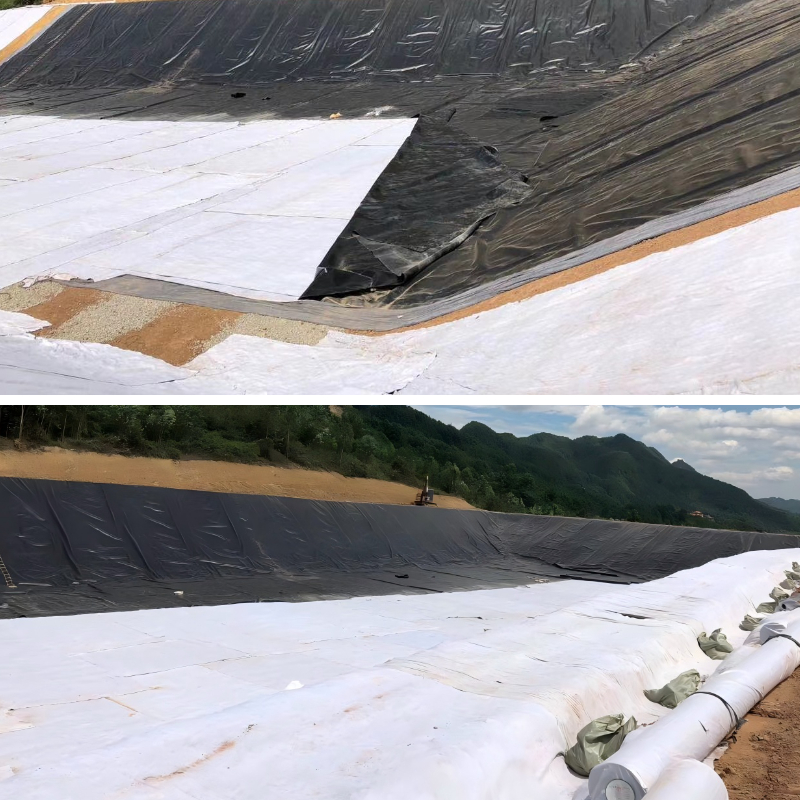
Its dense structure or composite coating can block water seepage or isolate different media (e.g., soil and sand-gravel, garbage and soil). It is mainly used in anti-seepage layers of landfills, liners for artificial lakes, and channel anti-seepage projects.
4.Protection and Buffering
It buffers the erosion of soil by water scouring and vehicle loads, and at the same time protects fragile materials such as geomembranes from puncture by sharp objects. It is mainly used in riverbank protection, landfill cover layers, and protection of tunnel surrounding rock.
III. Main Features
1.Convenient Construction
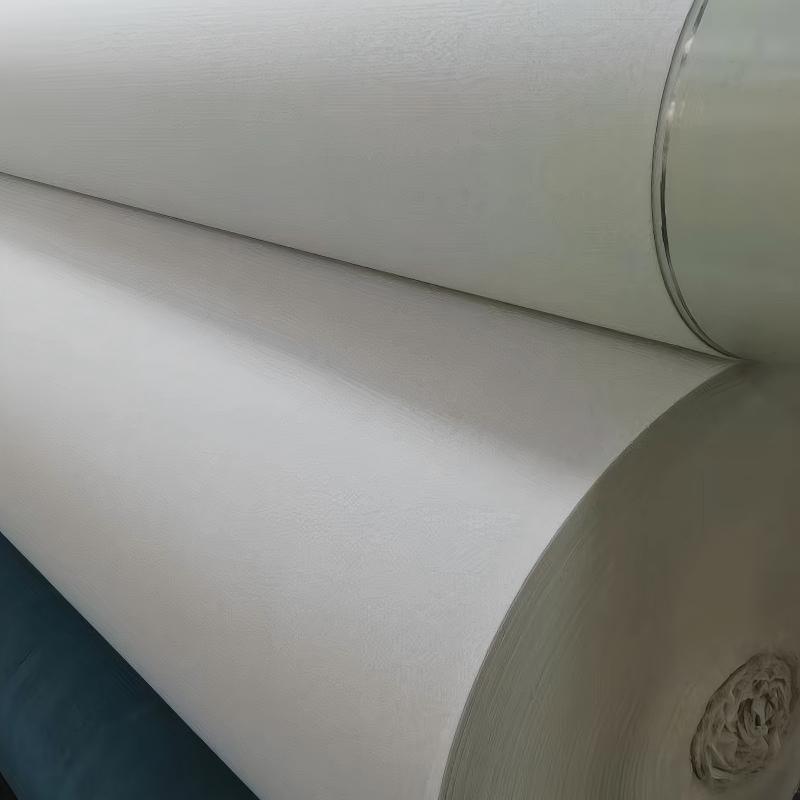
Lightweight (tens to hundreds of grams per square meter), easy to cut, and transportable in rolls, it has high laying efficiency and requires no complex equipment.
2.Weather Resistance
Made of synthetic fibers, it is acid-alkali resistant and UV aging resistant. Its service life can reach 10-30 years in harsh environments such as open air and underground, with low maintenance costs.
3.Excellent Cost-Effectiveness
Compared with traditional materials (e.g., sand-gravel cushions, concrete), it has lower material and construction costs, and reduces post-maintenance frequency.
4.Synergistic Adaptability
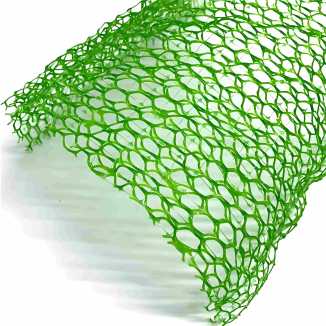
It can be used in combination with other geosynthetics such as geomembranes and geogrids to form combined solutions like "reinforcement + anti-seepage" and "drainage + protection", improving the overall performance of engineering projects.
Product Parameters
project | metric | ||||||||||
Nominal strength/(kN/m) | |||||||||||
6 | 9 | 12 | 18 | 24 | 30 | 36 | 48 | 54 | |||
1 | Longitudinal and transverse tensile strength / (kN/m) ≥ | 6 | 9 | 12 | 18 | 24 | 30 | 36 | 48 | 54 | |
2 | Maximum elongation at maximum load in longitudinal and transverse directions/% | 30~80 | |||||||||
3 | CBR top penetration strength /kN ≥ | 0.9 | 1.6 | 1.9 | 2.9 | 3.9 | 5.3 | 6.4 | 7.9 | 8.5 | |
4 | Longitudinal and transverse tearing strength /kN | 0.15 | 0.22 | 0.29 | 0.43 | 0.57 | 0.71 | 0.83 | 1.1 | 1.25 | |
5 | Equivalent aperture O.90(O95)/mm | 0.05~0.30 | |||||||||
6 | Vertical permeability coefficient/(cm/s) | K× (10-¹~10-), where K=1.0~9.9 | |||||||||
7 | Width deviation rate /% ≥ | -0.5 | |||||||||
8 | Unit area mass deviation rate /% ≥ | -5 | |||||||||
9 | Thickness deviation rate /% ≥ | -10 | |||||||||
10 | Thickness coefficient of variation (CV)/% ≤ | 10 | |||||||||
11 | Dynamic perforation | Puncture hole diameter/mm ≤ | 37 | 33 | 27 | 20 | 17 | 14 | 11 | 9 | 7 |
12 | Longitudinal and transverse fracture strength (grab method)/kN ≥ | 0.3 | 0.5 | 0.7 | 1.1 | 1.4 | 1.9 | 2.4 | 3 | 3.5 | |
13 | Ultraviolet resistance (Xenon arc lamp method) | Longitudinal and transverse strength retention rate% ≥ | 70 | ||||||||
14 | Ultraviolet resistance (fluorescence UV lamp method) | Longitudinal and transverse strength retention rate% ≥ | 80 | ||||||||
Product Application
I. Road and Transportation Engineering
Subgrade Drainage Layer: Non-woven geotextiles are laid between subgrade fill and cushion to drain accumulated water (such as rainwater and groundwater) inside the subgrade, preventing subgrade frost heave and settlement caused by soil softening. It is especially suitable for rainy areas or soft soil subgrades.
Pavement Reinforcement Layer: Woven geotextiles are incorporated into the base course of asphalt pavements/concrete pavements to enhance the base course’s crack resistance and tensile strength, reduce reflection cracks in the pavement caused by vehicle loads, and extend the pavement’s service life (commonly used in expressways and heavy-duty highways).
Bridge Abutment Transition Section: Reinforced geotextiles are laid at the junction of bridge abutments and subgrades to mitigate the deformation difference between bridge abutments (rigid structures) and subgrades (flexible structures), avoiding the problem of "bridgehead bumping".
II. Water Conservancy and Hydropower Engineering
Dam Anti-seepage and Filtration: Composite geotextiles (non-woven + dense coating) are laid on the upstream slope of dams to block river water seepage; meanwhile, drainage-type geotextiles are laid on the downstream slope or inside the dam body to form a filter layer, preventing soil particles in the dam body from being lost with seepage water (to avoid "piping failure" disasters).
River Channel/Canal Slope Protection: Protective geotextiles (such as woven geotextiles) are laid on the slopes of river channels and irrigation canals to buffer the erosion of slope soil by water scouring. They replace traditional stone masonry slope protection, reducing construction costs and facilitating maintenance.
Reservoir/Artificial Lake Liner: Anti-seepage geotextiles are laid at the bottom of reservoirs and the pool body of artificial lakes to isolate water from underground soil, reducing water resource seepage (especially suitable for arid areas or reservoirs with loose soil).
III. Geotechnical and Slope Engineering
Soft Soil Foundation Treatment: Multiple layers of woven geotextiles are laid on the surface of soft soil foundations (such as muck and peat soil), and combined with sand cushions to form a "reinforced cushion". This enhances the foundation bearing capacity and reduces the settlement of filling projects (such as building foundation pits and filled subgrades).
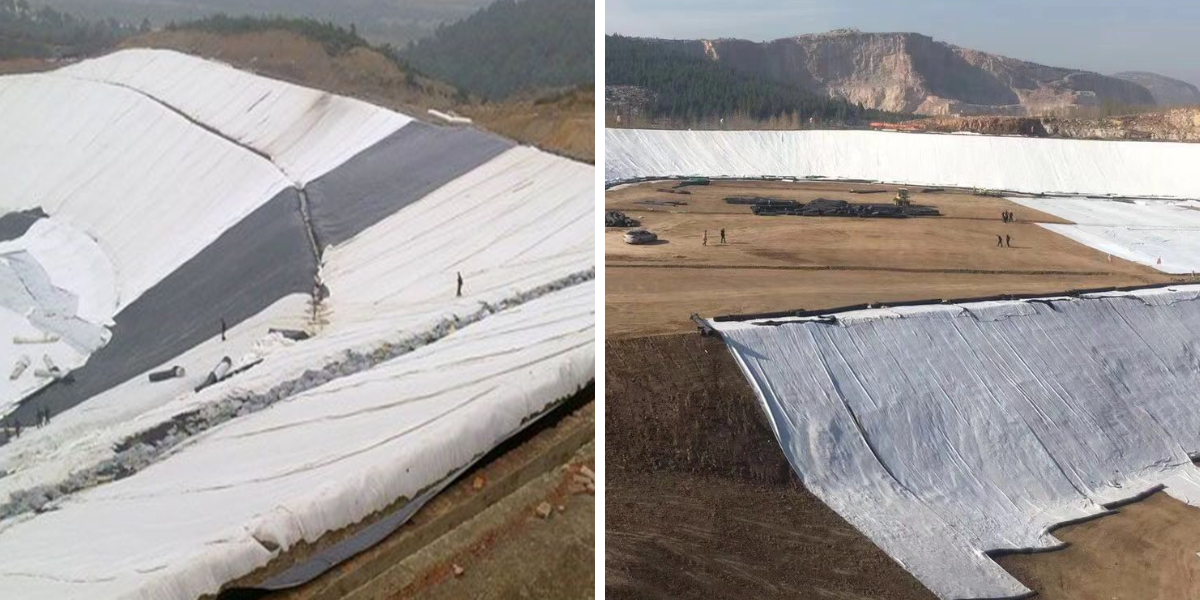
Slope Reinforcement and Protection: Reinforced geotextiles are laid on excavated slopes and subgrade slopes, and combined with anchor rods/cables to form "geotextile-reinforced slopes" to prevent slope soil landslides; meanwhile, protective geotextiles are covered to avoid slope collapse caused by rainwater scouring.
Tunnel Surrounding Rock Protection: Non-woven geotextiles are laid between the initial support (shotcrete) and secondary lining of tunnels. On one hand, they drain seepage water from surrounding rocks; on the other hand, they protect waterproof membranes (geomembranes) from puncture by sharp aggregates in shotcrete.
IV. Environmental Protection and Municipal Engineering
Landfills: Serving as the core of the landfill’s "anti-seepage-filtration" system: ① Composite anti-seepage geotextiles are laid at the bottom to block landfill leachate from seeping into underground soil/groundwater and avoid pollution; ② Drainage-type geotextiles are laid between landfill layers to collect leachate and divert it to the treatment system; ③ Geotextiles are covered on the top layer to prevent excessive rainwater from seeping into the landfill.
Constructed Wetlands: Non-woven geotextiles are laid between the substrate layers (soil, sand, and gravel) of constructed wetlands to filter suspended solids in sewage and isolate different substrate layers (such as soil and crushed stone), ensuring the wetland’s purification efficiency (commonly used in urban sewage treatment and river water quality improvement).
Municipal Drainage Pipelines: Geotextiles are wrapped around underground drainage pipelines to filter soil particles, prevent pipeline joints from failing due to sediment clogging, and protect pipelines from extrusion deformation by surrounding soil.
V. Other Special Scenarios
Agricultural Engineering: Anti-seepage geotextiles are laid in farmland irrigation canals and water storage tanks to reduce water resource seepage and improve irrigation efficiency; drainage geotextiles are laid in the foundation of greenhouses to avoid crop root rot caused by soil waterlogging.
Coastal Engineering: Protective geotextiles are laid on the outer side of seawalls and breakwaters to buffer the erosion of the embankment by wave impact; they are also combined with sandbags to form a "geotextile-sandbag composite protective layer", enhancing the seawall’s resistance to wind and waves.
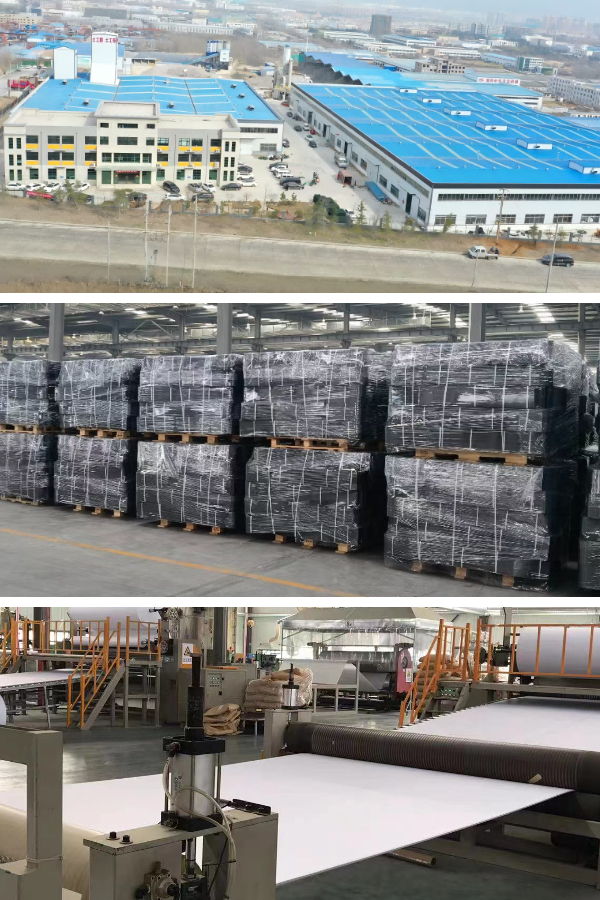
In conclusion, relying on its core advantages of "strong functional adaptability and wide application scope", geotextiles have achieved in-depth alignment with engineering needs in multiple fields. It not only addresses pain points in traditional engineering (such as settlement, seepage, and scouring) through targeted functions (e.g., anti-seepage, reinforcement) but also reduces construction and maintenance costs due to its characteristics of being lightweight, easy to construct, and having strong weather resistance. Meanwhile, it provides key support for water resource protection and pollution prevention in the environmental protection field. In modern engineering, geotextiles are not only efficient substitutes for traditional materials but also have become important basic materials for improving the stability of engineering structures, extending service life, and promoting the sustainable development of engineering projects.