

Geosynthetic Soil Stabilization
1. Reinforcement and strengthening:It can effectively disperse loads, reduce uneven settlement of the base layer, and significantly improve the overall stability and bearing capacity of materials such as soil and gravel.
2. Isolation and protection:It can effectively isolate soil layers of different properties, prevent them from mixing with each other, and maintain the integrity and function of each layer structure. At the same time, it can play a certain buffering and protective role.
3. Anti filtration and drainage:It has good permeability, allowing water flow to pass smoothly while preventing excessive loss of soil particles, playing an ideal filtering effect of "permeable but impermeable soil", preventing soil erosion and foundation hollowing.
Product Introduction:
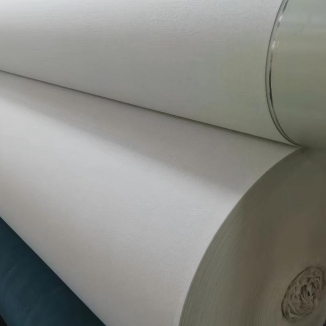
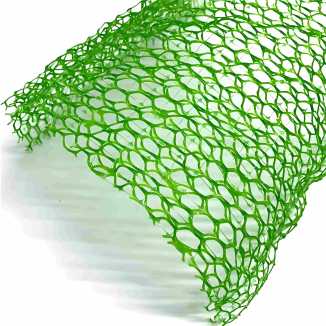
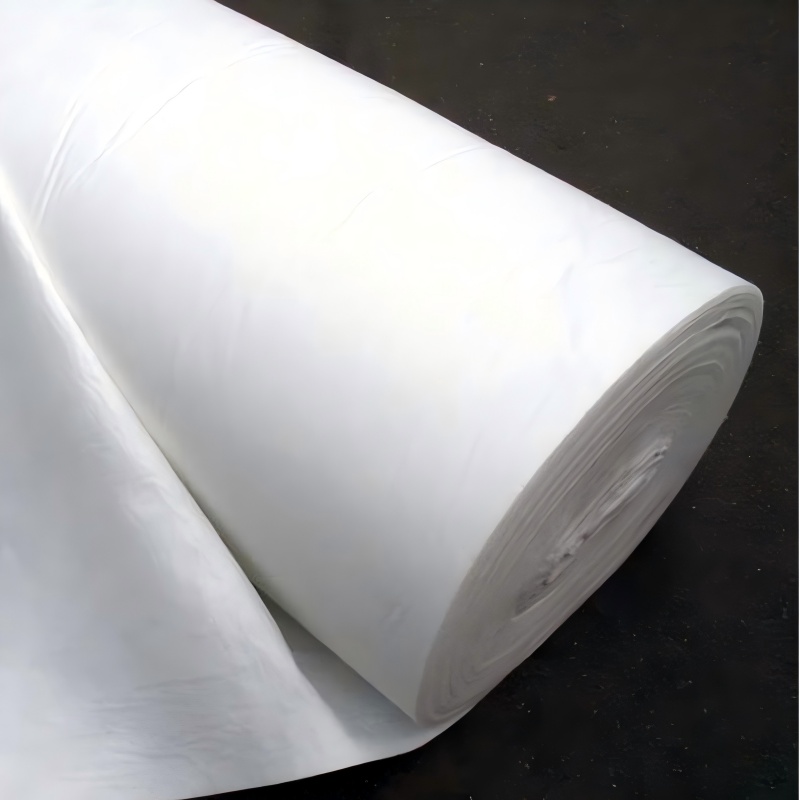
Geosynthetic Soil Stabilization is a type of permeable synthetic material textile specifically designed for geotechnical and civil engineering. It is usually made of synthetic fibers such as polyester (PET) and polypropylene (PP) through processes such as needle punching or weaving.
Simply put, it is like a "cloth" laid in soil, rock, or other geotechnical materials, playing a role in reinforcement, protection, filtration, drainage, isolation, and other functions. It is an indispensable new type of foundation material in modern engineering construction.
Main Features
The reason why geotextiles are widely used is due to their excellent engineering properties:
1. High strength: It has good tensile, tear, burst, and puncture resistance, can effectively disperse loads, and enhance the stability of soil.
2. Strong durability: Made of synthetic fibers, it is resistant to chemical corrosion, microorganisms, and insect infestations, and can maintain stable performance in different soils and waters for a long time.
3. Good permeability: With numerous pores, it allows water to pass smoothly while effectively preventing excessive loss of soil particles, playing a filtering role.
4. Isolation function: Laying between two different types of soil or materials can prevent them from mixing with each other and maintain their respective structural and performance integrity.
5. Protective function: It can serve as a buffer layer, reducing the damage of external stress to waterproof materials (such as geomembranes) and providing good protection.
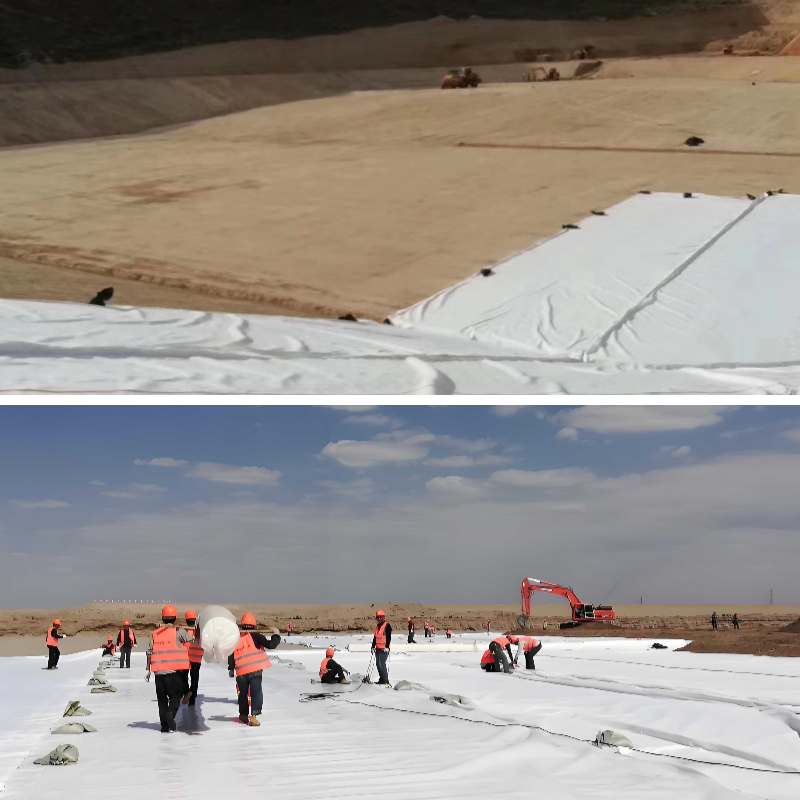
6. Easy construction: The material is lightweight, and the supply, transportation, and laying in rolls are very convenient, which can greatly improve construction efficiency and reduce labor costs.
Product Parameters:
project | metric | ||||||||||
Nominal strength/(kN/m) | |||||||||||
6 | 9 | 12 | 18 | 24 | 30 | 36 | 48 | 54 | |||
1 | Longitudinal and transverse tensile strength / (kN/m) ≥ | 6 | 9 | 12 | 18 | 24 | 30 | 36 | 48 | 54 | |
2 | Maximum elongation at maximum load in longitudinal and transverse directions/% | 30~80 | |||||||||
3 | CBR top penetration strength /kN ≥ | 0.9 | 1.6 | 1.9 | 2.9 | 3.9 | 5.3 | 6.4 | 7.9 | 8.5 | |
4 | Longitudinal and transverse tearing strength /kN | 0.15 | 0.22 | 0.29 | 0.43 | 0.57 | 0.71 | 0.83 | 1.1 | 1.25 | |
5 | Equivalent aperture O.90(O95)/mm | 0.05~0.30 | |||||||||
6 | Vertical permeability coefficient/(cm/s) | K× (10-¹~10-), where K=1.0~9.9 | |||||||||
7 | Width deviation rate /% ≥ | -0.5 | |||||||||
8 | Unit area mass deviation rate /% ≥ | -5 | |||||||||
9 | Thickness deviation rate /% ≥ | -10 | |||||||||
10 | Thickness coefficient of variation (CV)/% ≤ | 10 | |||||||||
11 | Dynamic perforation | Puncture hole diameter/mm ≤ | 37 | 33 | 27 | 20 | 17 | 14 | 11 | 9 | 7 |
12 | Longitudinal and transverse fracture strength (grab method)/kN ≥ | 0.3 | 0.5 | 0.7 | 1.1 | 1.4 | 1.9 | 2.4 | 3 | 3.5 | |
13 | Ultraviolet resistance (Xenon arc lamp method) | Longitudinal and transverse strength retention rate% ≥ | 70 | ||||||||
14 | Ultraviolet resistance (fluorescence UV lamp method) | Longitudinal and transverse strength retention rate% ≥ | 80 | ||||||||
Product Applications:
1. Road traffic engineering
Roadbed isolation and reinforcement: laid between soft soil foundation and crushed stone base.
Function: To prevent soft soil from invading the gravel layer (or gravel from sinking into soft soil), and to maintain the thickness and integrity of the base layer; Disperse vehicle loads, reduce uneven settlement, and effectively prevent ruts and cracks.
Railway line reinforcement: used between the ballast layer and the roadbed.
Function: To prevent ballast particles from sinking into the roadbed soil, maintain the drainage performance of ballast, reduce maintenance frequency, and stabilize the line.
2. Water conservancy engineering
Anti filter layer: used around the water facing slope or internal drainage facilities of earth rock dams, river embankments, and seawalls.
Function: Allow seepage to be smoothly discharged, reduce internal water pressure of the dam body, and effectively prevent soil particles from being carried away by water flow, avoiding piping and structural instability.
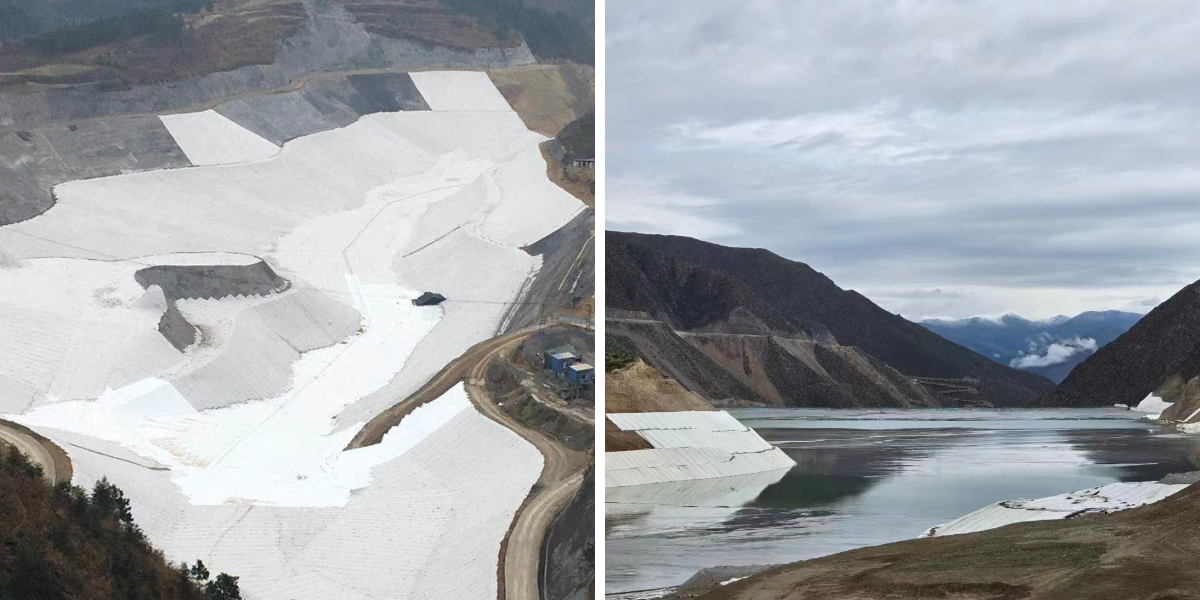
Embankment protection: Lay under revetment materials such as stones and concrete blocks.
Function: As a buffer layer, it prevents water flow from scouring the foundation soil and serves as a filter to protect the bank slope.
Blind drainage ditch: wrapped around the outside of gravel drainage ditch or perforated drainage pipe.
Function: Like a "filter", it allows water to flow freely into the drainage ditch, but prevents surrounding soil particles from blocking the drainage system.
3. Environmental Protection Engineering
Landfill: This is one of the most technically demanding applications.
Function:
Protection: Installed on both sides of the anti-seepage geomembrane, the protective film is not punctured by sharp objects in the garbage or hard objects in the bottom layer.
Drainage and filtration: Geotextile located at the bottom of the landfill promotes the drainage of leachate; Located at the top, it helps the drainage layer to function properly.
4. Construction Engineering
Basement waterproofing protection: used for waterproofing membranes (or coatings) on the exterior of basement floor or side walls.
Function: When backfilling soil, it is an important component of the waterproof system to prevent stones, construction waste, and other debris from puncturing or damaging the waterproof layer.
Roof garden drainage: used for planting under soil layers.
Function: Filter excess water and drain it smoothly, while preventing soil loss during planting.
5. Other application areas
Agriculture: used for anti-seepage and filtration in reservoirs and irrigation channels; The ground cloth in nurseries and greenhouses inhibits weed growth.
Airports, ports, and parking lots: Their functions are similar to road engineering, mainly used for isolating and reinforcing soft foundations, and extending the service life of road surfaces.
Sports facilities, such as football fields and golf courses, have underground drainage systems to prevent the drainage sand layer from being blocked by soil.
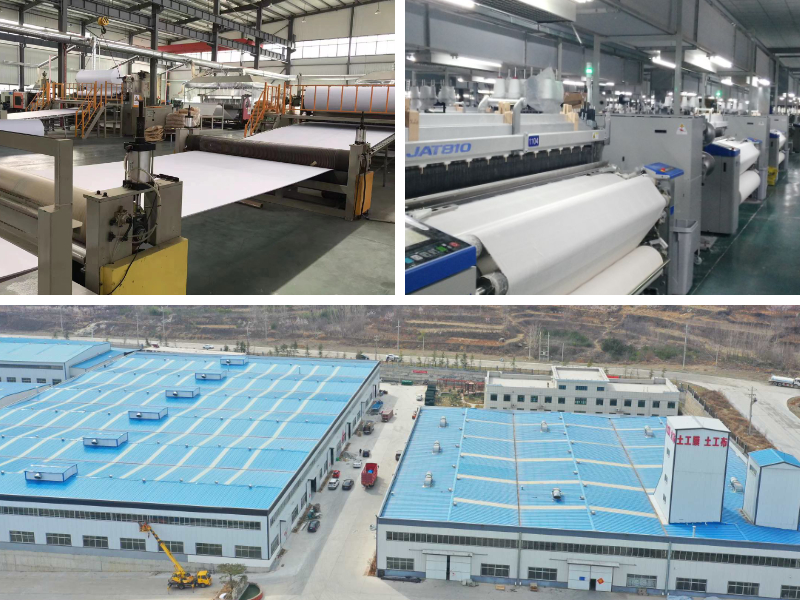
In summary, geotextile is a seemingly simple yet powerful foundational material that silently enhances the quality, safety, and durability of modern engineering through core functions such as isolation, reinforcement, filtration, drainage, and protection, while significantly reducing construction and maintenance costs.