3D Geomat
1.Soil fixation and slope protection:
The three-dimensional mesh structure effectively disperses the scouring force of rainwater, preventing soil erosion.
2.Promotion of vegetation growth:
It provides support for plant roots, accelerating the coverage of vegetation such as lawns and shrubs.
3.High strength and weather resistance:
It is resistant to ultraviolet rays and acid - alkali, with a service life of 5 - 10 years.
4.Convenient construction:
It can be laid on complex terrains (such as steep slopes and river channels) and supports both manual and mechanical construction.
Product Introduction:
I. Basic Properties
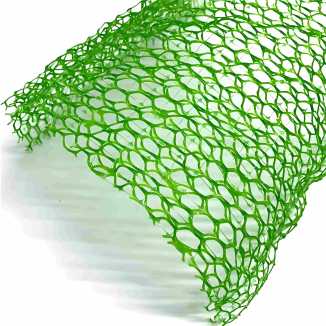
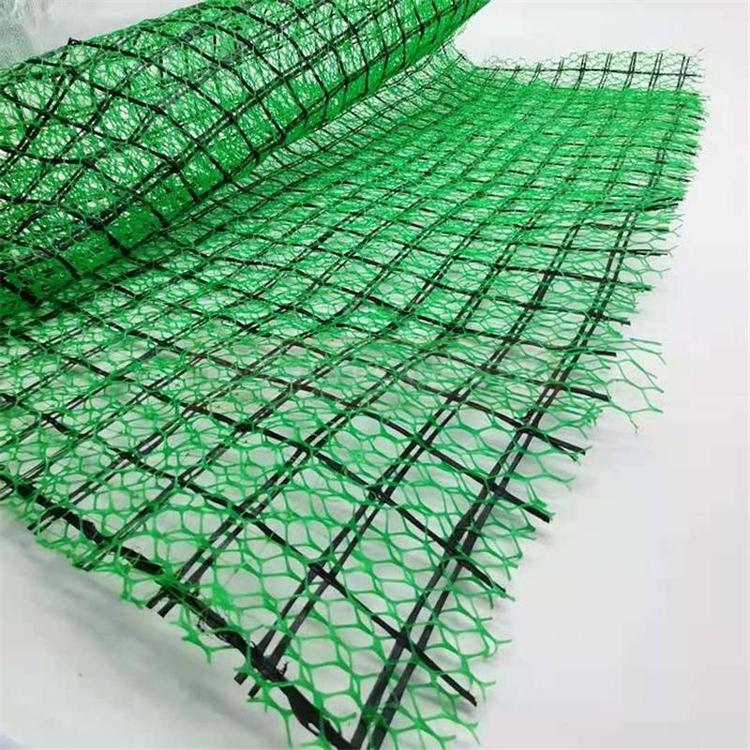
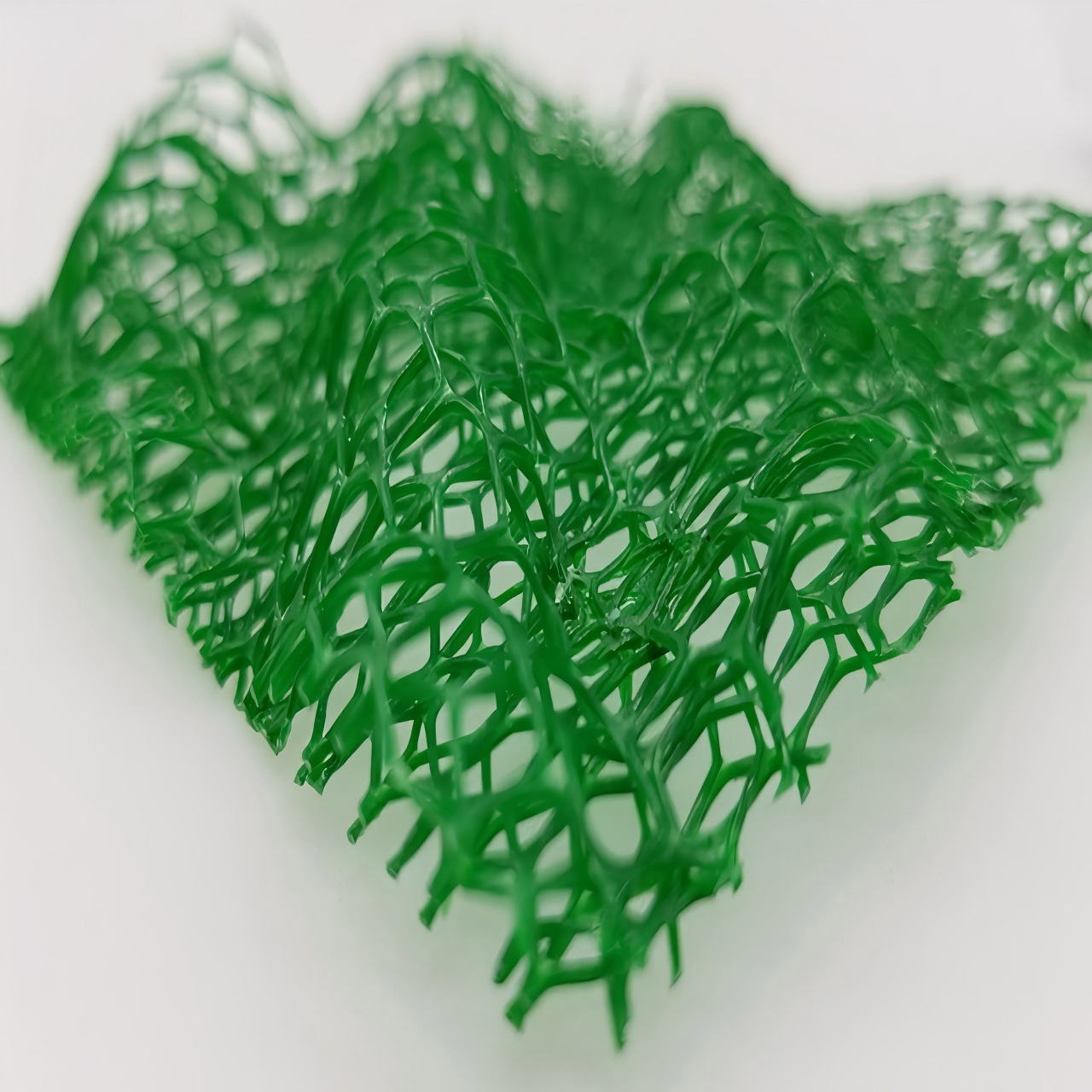
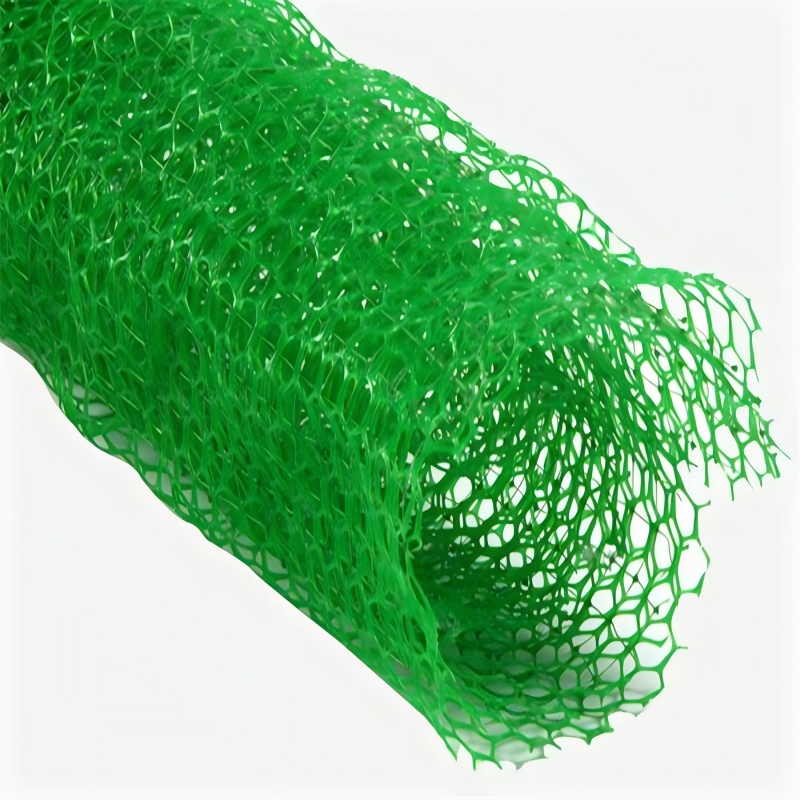
3D Geomat is a three-dimensional reticulated geosynthetic material made from polymer synthetic materials. It combines flexibility and structural properties and is a commonly used material in slope protection and soil and water conservation projects.
1. Material Composition: It mainly uses polyethylene (PE), polypropylene (PP) or high-density polyethylene (HDPE), with the addition of anti-ultraviolet agents and anti-aging agents to improve weather resistance and durability.
2. Structural Form: It is made into a three-dimensional mesh structure through extrusion, stretching, and heat setting processes. A large number of interlaced pores are formed inside the mesh pad, with a porosity of more than 90%, which can accommodate soil, sand, and plant roots.
3. Specification Parameters: Common models include EM2, EM3, EM4, EM5, etc. The thickness is 10mm-16mm, the weight per unit area is 220g/m²-430g/m², the tensile strength is 0.8Kn/m-3.2Kn/m, the conventional width is 2m, and the length can be customized according to engineering needs.
4. Applicable Scenario Properties: It is an environmentally friendly geotechnical material that can be naturally degraded (some modified materials can achieve long-term durability). It is compatible with the vegetation growth environment and is suitable for various projects such as soil slopes, river embankments, and mine reclamation.
II. Core Functions
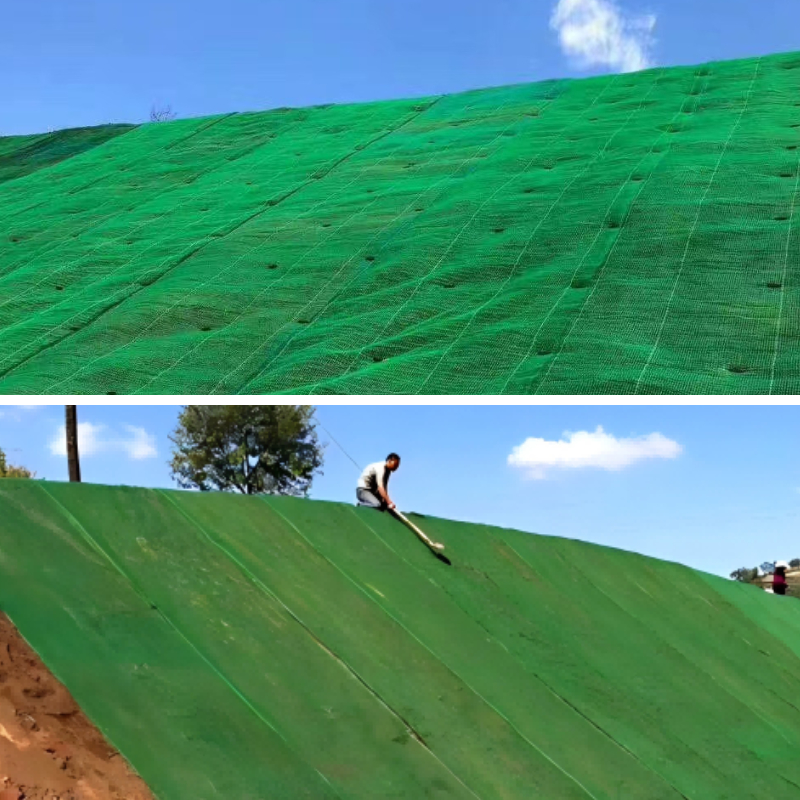
1. Initial Protection Function: Before the vegetation is formed, the three-dimensional mesh structure can directly cover the slope surface, disperse the rainwater scouring force, intercept soil particles, and prevent soil erosion; at the same time, it resists wind erosion and avoids soil desertification on the slope surface.
2. Medium-term Reinforcement Function: After filling with soil, the mesh pad and the soil form a composite structure, which enhances the shear strength of the slope surface and reduces the risk of slope collapse caused by water scouring and gravity; after being fixed with U-shaped nails, it can effectively restrict the displacement of the surface soil.
3. Long-term Ecological Function: It provides a stable implantation environment for plant seeds and promotes root growth; after plant roots penetrate the mesh pad and go deep into the soil layer, they form a three-dimensional protection system of "plant - mesh pad - soil" together with the mesh pad and soil, achieving the dual effects of engineering protection and ecological greening.
III. Main Features
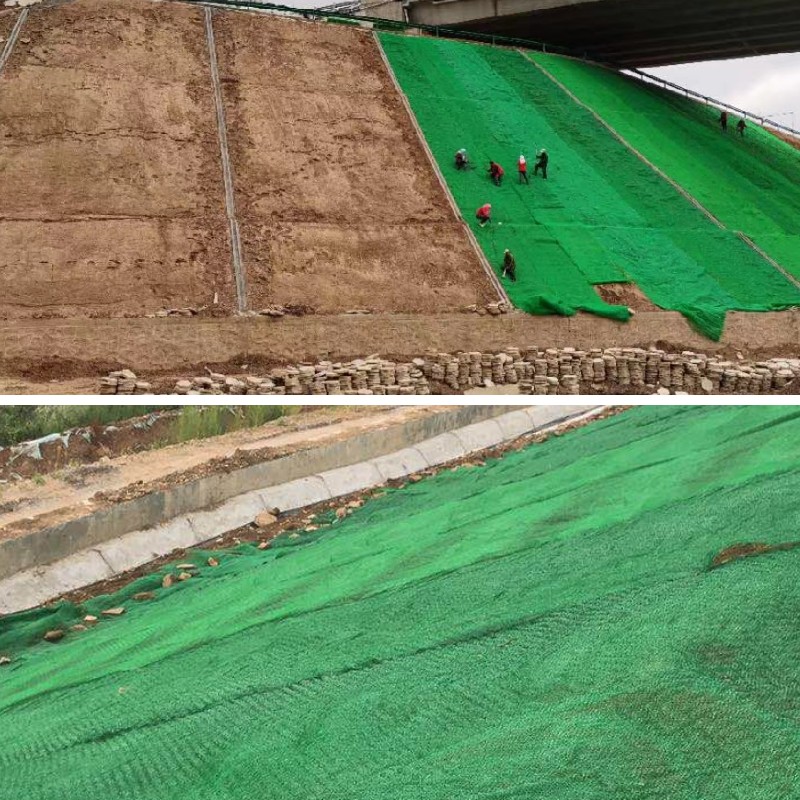
1. High Cost Performance and Convenient Construction: Compared with hard protective materials such as concrete and asphalt, the cost is lower; it is light in weight, can be directly laid without complex equipment, and can be fixed manually, shortening the construction period.
2. Weather Resistance, Durability and Strong Adaptability: It has excellent anti-ultraviolet, anti-acid and alkali corrosion, and anti-biological degradation capabilities, and can be used for a long time in harsh environments such as high temperature, high cold, and humidity; it is suitable for various soil slopes such as sandy soil, clay, and gravel soil.
3. Flexible Fitting and Comprehensive Protection: It has good flexibility, can closely fit irregular slopes, and has no protection dead corners; the porous structure is breathable and permeable, does not affect the normal water and gas cycle of the soil, and is conducive to plant growth.
4. Environmental Protection, Ecology and Strong Sustainability: The material itself is non-toxic and harmless, and does not pollute the soil and water; when combined with vegetation, it forms a natural ecological landscape, replacing the damage to the environment caused by hard slope protection, and meets the requirements of ecological engineering.
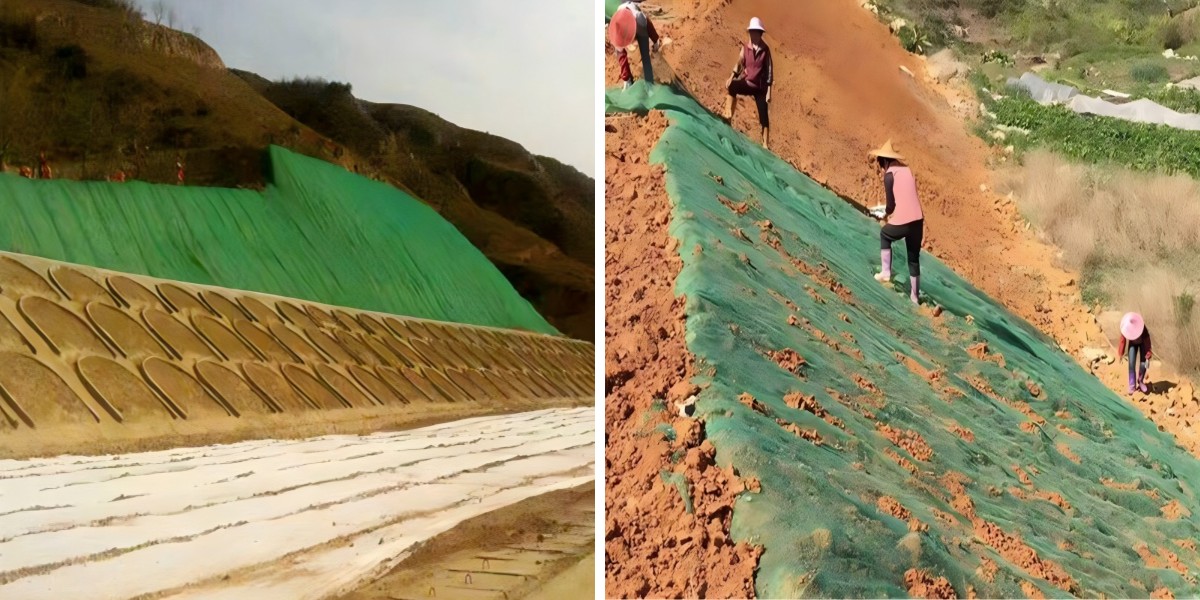
Product Parameters:
Item | EM2 | EM3 | EM4 | EM5 |
Unit mass per area / (g/m2) | ≥220 | ≥260 | ≥350 | ≥430 |
thickness /mm | ≥10 | ≥12 | ≥14 | ≥16 |
Width deviation /m | ±1.0 | |||
length variation /m | ±1 | |||
Longitudinal tensile strength/(KN/m) | ≥0. 80 | ≥1.4 | ≥2. 0 | ≥3. 2 |
Tensile strength in the transverse direction / (KN/m) | ≥0. 80 | ≥1.4 | ≥2. 0 | ≥3. 2 |
Product Applications:
1. Highway and railway slope protection
This is one of the core application scenarios of 3D Geomat. The subgrade slopes of highways and railways are prone to soil erosion and slope collapse due to rainwater scouring and wind erosion. After laying 3D Geomat, a protective layer can be quickly formed before vegetation takes shape to disperse the impact force of rainwater runoff. After the growth of plant roots, they combine with the mesh mat and soil to form a stable "ecological protection system", which is suitable for filled slopes and excavated slopes, especially soil slopes with a gradient within 1:1.5.
2. Ecological management of rivers and dams
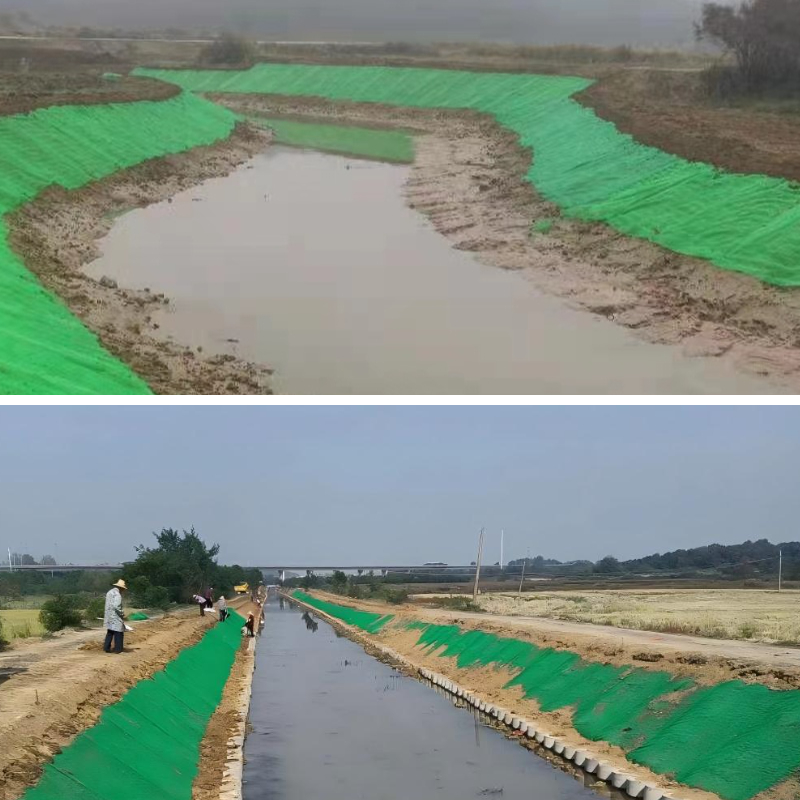
It is used for the protection and restoration of river banks, reservoir dams, and artificial lake slopes. Traditional hard slope protection (concrete, mortar masonry) will damage the water ecosystem, while 3D Geomat can achieve the dual goals of "slope protection + ecology": on the one hand, it resists water scouring to prevent bank collapse; on the other hand, its porous structure is conducive to the growth of aquatic plants and herbs, improving the ecological environment around the water body. It is often used in ecological river regulation and reservoir riparian zone management projects.
3. Mine reclamation and soil restoration
The slopes and waste dumps formed after mining have poor soil quality and are prone to desertification. 3D Geomat can serve as a "carrier" for vegetation restoration. After laying, improved soil is filled, and grass or shrub seeds that are tolerant to barrenness and have strong stress resistance are sown. The mesh mat can fix the seeds and soil, prevent them from being washed away by rainwater, promote the rapid coverage of vegetation, and realize mine ecological restoration and land reclamation.
4. Anti-seepage coverage of landfills
In the closure project of landfills, 3D Geomat can be used in conjunction with geomembranes for the protection of the top slope of the landfill. It can enhance the stability of the surface soil cover, prevent soil loss caused by rainwater scouring, and at the same time promote vegetation growth, reducing the visual and ecological impact of the landfill on the surrounding environment.
5. Landscaping and landscape engineering
It is used for slope greening in urban mountain parks, slope green spaces, and golf courses. 3D Geomat can fit irregular terrains, helping to quickly build green slopes and improve the landscape effect. At the same time, it prevents soil loss on green slopes during rainfall and irrigation, maintaining the stability of vegetation growth.
6. Farmland water conservancy and soil and water conservation
It is applied to the protection of terraced slopes and farmland drainage ditches. In the construction of agricultural terraces, laying 3D Geomat can protect the terrace ridge slopes, avoiding ridge slope collapse caused by irrigation water or rainwater scouring. Laying it on the inner wall of drainage ditches can prevent the soil on the ditch walls from being eroded by water flow, extending the service life of the ditches.
In conclusion, 3D Geomat, as a multi-functional geosynthetic material integrating engineering protection and ecological restoration, breaks the limitation of traditional hard slope protection which "emphasizes protection while neglecting ecology". Its applications cover multiple fields such as transportation infrastructure, water conservancy management, ecological restoration, and agricultural and forestry greening. It can not only quickly realize slope soil fixation and anti-scouring before vegetation takes shape but also work together with plant roots to form a long-term and stable ecological protection structure. It has the advantages of low cost, convenient construction, and environmental friendliness, making it an ideal material for achieving the coordinated development of engineering construction and ecological protection.