Recommended Infill Materials for HDPE Geocell: Soil, Gravel or Concrete?
1. Introduction: Why Infill Material Choice Matters for HDPE Geocell Performance
Geocell reinforcement technology has become a mainstream solution for modern geotechnical construction, covering slope protection, road foundation stabilization, channel lining, and embankment reinforcement projects. As the most widely used cellular confinement system,HDPE geocell features flexible three-dimensional grid structure, high tensile strength, and excellent terrain adaptability, which can effectively limit lateral soil displacement and improve overall foundation stability. The performance of geocell in actual engineering applications is not only determined by its own material quality but also highly dependent on the matching infill medium. Selecting the right geocell material infill is critical to maximizing structural rigidity, load-bearing capacity, and long-term service stability of the cellular system.
Soil, gravel, and concrete are the three most common infill options for HDPE geocell projects, each with unique advantages, application limitations, and applicable engineering scenarios. Many construction failures and performance deficiencies stem from mismatched infill selection rather than defective geocell products. Understanding the characteristics of each infill type helps contractors and project owners choose the optimal geocell material combination to meet project durability, cost, and functional requirements.
2. Working Principle of HDPE Geocell Cellular Confinement System
To better evaluate infill material suitability, it is essential to understand the basic working mechanism of HDPE geocell. This high-density polyethylene cellular structure forms a stable three-dimensional grid after unfolding and fixation on construction sites. Each independent cell unit can wrap and constrain the internal infill medium, turning loose granular materials into an integrated rigid structural layer. This confinement effect greatly enhances the overall stiffness and anti-deformation ability of the foundation or slope surface.
The core value of geocell lies in its synergistic interaction with infill materials. The cellular grid disperses external pressure, prevents infill particle sliding and settlement, and improves the overall shear resistance of the construction layer. Different infill materials will produce completely different mechanical feedback with the same geocell material, resulting in distinct engineering effects in terms of load bearing, drainage, anti-scour, and ecological performance.
Lightweight and flexible HDPE geocell can adapt to various terrain changes, while the infill material undertakes the main load-bearing and anti-erosion functions. The perfect combination of grid constraint and infill support forms a composite geotechnical system that is far more stable than single soil or stone paving.
3. Soil Infill: Eco-Friendly and Cost-Effective Geocell Material Solution
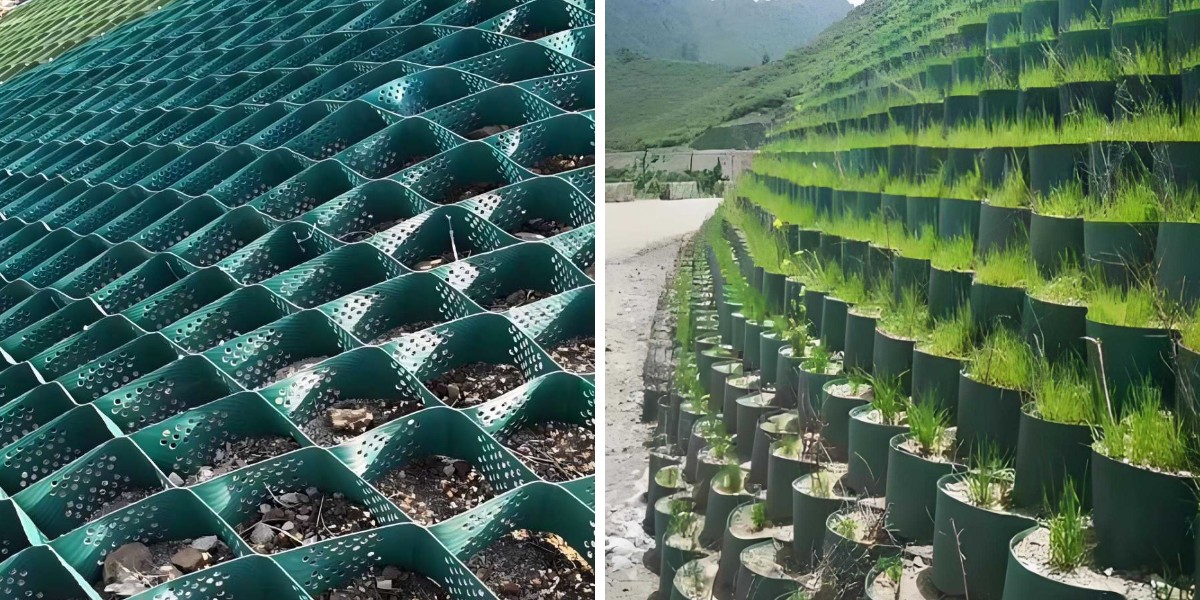
Soil is the most economical and environmentally friendly infill option for HDPE geocell, widely used in ecological restoration, gentle slope protection, and green infrastructure projects. Common filling soil includes local cohesive soil, planting soil, and sandy soil, which can be obtained directly on most construction sites to save material transportation and procurement costs.
When filled with qualified soil, geocell forms a stable soil-retaining structure that effectively prevents surface soil erosion and slope collapse. The cellular confinement fixes loose soil inside the grid units, avoiding soil loss caused by rainwater runoff and wind erosion. This filling method creates favorable growth conditions for vegetation, making it the preferred choice for ecological slope repair and landscape greening projects.
As a low-cost and sustainable geocell material, soil infill boasts outstanding ecological compatibility. It integrates perfectly with the natural environment, supports plant root growth, and realizes the organic combination of engineering reinforcement and ecological restoration. However, soil-filled HDPE geocell has relatively low rigidity and water resistance, so it is not suitable for high-load road foundations and steep slopes with strong water scouring.
4. Gravel Infill: High-Strength and Drainable HDPE Geocell Filling Option
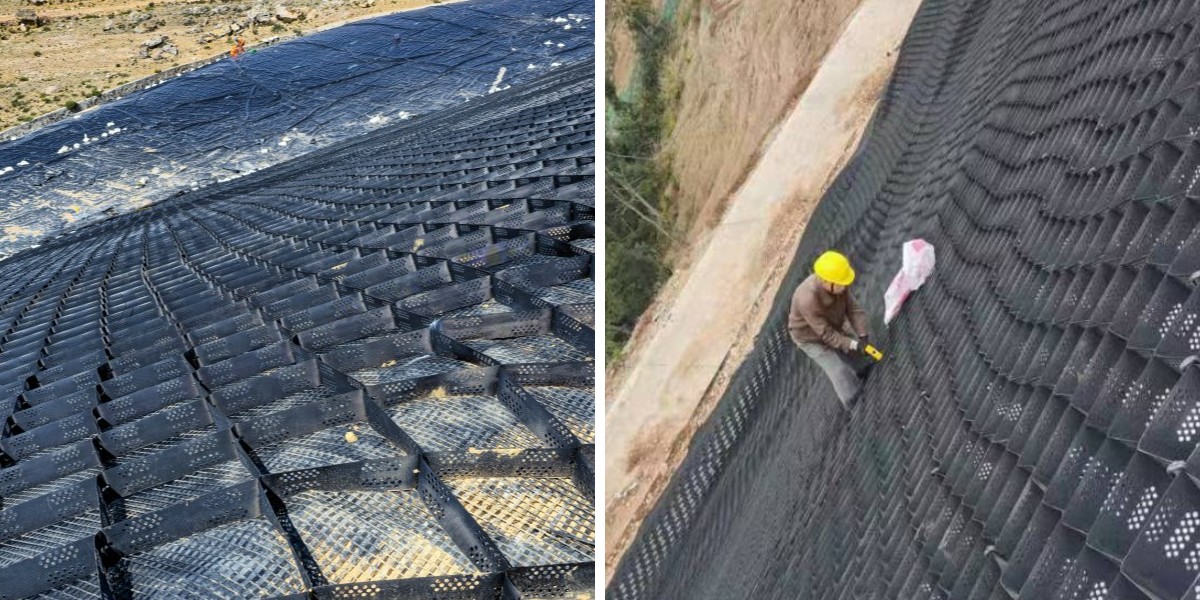
Gravel infill is the most versatile and practical filling medium for HDPE geocell, balancing structural strength, drainage performance, and construction convenience. Hard and wear-resistant gravel particles are tightly constrained by the cellular grid, forming a high-rigidity reinforced layer with excellent compression resistance and shear resistance.
In road foundation reinforcement, railway subgrade stabilization, and steep slope anti-scour projects, gravel-filled geocell shows irreplaceable advantages. The gap structure between gravel particles provides excellent drainage capacity, which can quickly discharge underground water and rainwater, avoid water accumulation and foundation softening, and effectively prevent road surface settlement and slope slippage.
This rigid granular geocell material can bear large external loads and adapt to heavy traffic and complex stress environments. Compared with soil infill, gravel filling greatly improves the structural durability of HDPE geocell in harsh conditions. It is also free from vegetation growth restrictions, making it suitable for functional engineering scenarios that prioritize structural stability over ecological greening.
5. Concrete Infill: Ultra-High Stability for Heavy-Duty Geocell Projects
Concrete is the high-strength customized infill material for HDPE geocell, dedicated to heavy-duty, high-stability engineering scenarios that require extreme structural firmness. After pouring concrete into the geocell grid and solidification, the whole system forms an integrated rigid protective layer with ultra-high compression resistance, impact resistance, and anti-scour performance.
Concrete-filled geocell is widely applied in channel hardening, dam slope protection, port foundation reinforcement, and heavy-load parking lot paving. The solid concrete structure completely eliminates material displacement and settlement risks, providing long-term stable protection for key infrastructure. The grid constraint of geocell also avoids concrete cracking and hollowing problems caused by uneven foundation settlement.
As a high-strength composite geocell material, concrete infill achieves the highest structural safety level among all filling schemes. However, it has obvious limitations such as high cost, long curing cycle, and poor ecological performance. It will completely block vegetation growth and change the original natural terrain environment, so it is only suitable for professional heavy-duty engineering rather than conventional ecological reinforcement projects.
6. How to Choose the Right Infill for Your HDPE Geocell Project
The selection of infill materials for HDPE geocell should be comprehensively judged according to project functional requirements, terrain conditions, environmental goals, and budget constraints. For ecological restoration, landscape slope protection, and low-load green engineering, soil infill is the most cost-effective and reasonable option, giving full play to the ecological advantages of geocell green reinforcement.
For traffic infrastructure, water drainage engineering, and common slope stabilization projects that require both strength and permeability, gravel infill is the most balanced choice. It maximizes the mechanical performance ofgeocell and ensures the long-term stability of the reinforced structure with moderate cost and convenient construction.
For key heavy-duty projects that pursue ultimate structural stability and strong anti-damage ability, concrete infill is the reliable geocell material solution. Project constructors need to match infill types accurately to avoid performance surplus or functional deficiency, so as to optimize project quality and economic benefits.
7. Conclusion: Match Geocell Material and Infill for Optimal Engineering Effect
Infill material selection determines the final engineering performance of HDPE geocell systems. Soil, gravel, and concrete each have unique application values in different construction scenarios, and there is no universal best option for all projects. Flexible and eco-friendly soil infill, durable and drainable gravel infill, and ultra-stable concrete infill form a complete matching system for geocell engineering applications.
Reasonable cooperation between professional geocell material and targeted infill medium is the key to giving full play to cellular confinement technology. Accurate selection according to project demands can effectively improve construction quality, extend service life, and reduce later maintenance costs, providing reliable technical support for various geotechnical reinforcement and protection projects.