Why Geomat Is the Best Choice for Construction Site Erosion Control
Introduction
Bare soil on a construction site is the weakest it will ever be. Once the machines have stripped the vegetation and reshaped the ground, every rain shower turns the surface into loose material waiting to be washed away. A 3d geomat gives that surface a structure to hold onto. An erosion control geomat keeps seed and topsoil where they were placed while vegetation establishes. Where the site meets a channel, a ditch or a shoreline, a revetment mesh protects the bank as well. The rest of this article explains why this combination has become the practical choice for site engineers, contractors and landscape teams.
The Real Cost of Unprotected Construction Slopes
Erosion is rarely a single dramatic event. It starts small: a few rills after the first storm, a washed-out silt trap, a slope that suddenly shows exposed subsoil. Each repair costs labour, material and time, and each delay pushes the planting season further away. The problem is that loose soil has no defence against raindrop impact or surface runoff, and once the fines are gone the remaining ground cannot support growth. A 3d geomat addresses the root cause instead of the symptom, because it holds the soil surface together while roots develop. An erosion control geomat does the same job on flatter areas and seed beds, keeping the growing medium stable through the vulnerable early weeks. On sites that border drainage channels, a revetment mesh covers the bank face so that water passing the site does not remove the fill it just placed. Used together, these three products form a layer of protection that stays in place from the first earthwork to the final handover.
What a Geomat Actually Is
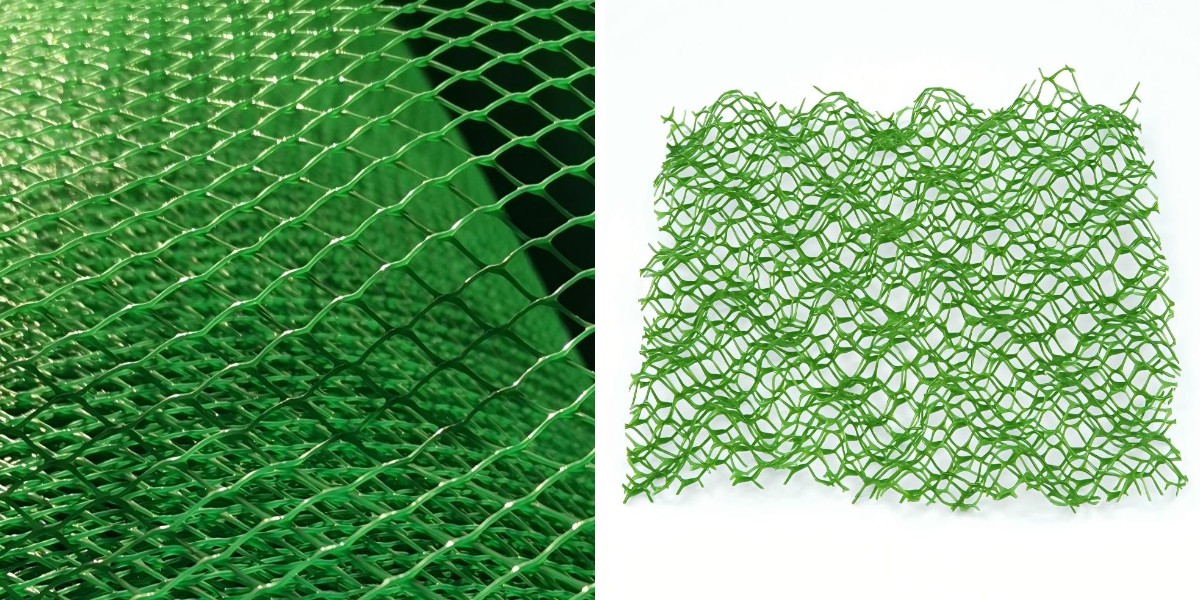
A geomat is a three-dimensional mat made from polymer filaments fused into an open, springy structure. It is not a solid sheet and it is not a plastic film. The open voids are the whole point: they trap soil, they hold a seed mix, and they let water pass through instead of running over the top. A 3d geomat is usually the thicker, more structured version, with a defined depth that creates small check dams across the slope. An erosion control geomat is often described in the same terms by suppliers, and the name usually refers to a mat specified for the surface protection role rather than for load bearing. A revetment mesh belongs to the same family but is designed for water-facing work such as bank and shoreline lining, where the mesh has to resist current and wave action as well as rainfall. Understanding these three roles makes specification much easier, because each one has a clear job on site.
How a 3D Geomat Controls Rain and Runoff
Rain damage happens in two stages. First, the drop itself breaks the soil surface and seals the pores, which reduces how fast water can infiltrate. Second, the runoff that follows carries those broken particles downhill. A 3d geomat interrupts both stages. The raised structure absorbs the impact of the drop and stops the surface from sealing, so more water enters the ground and less travels across it. The open cells also shorten the distance water can travel uninterrupted, which lowers its speed before it gathers volume. An erosion control geomat then keeps the seed mix and any applied topsoil in those cells, so germination is not washed out by the first heavy fall. In channels and along the bank edge, a revetment mesh handles the flow that arrives from upstream, spreading the energy across the face rather than letting it cut a single channel.
The Erosion Control Geomat Advantage on Steep Slopes
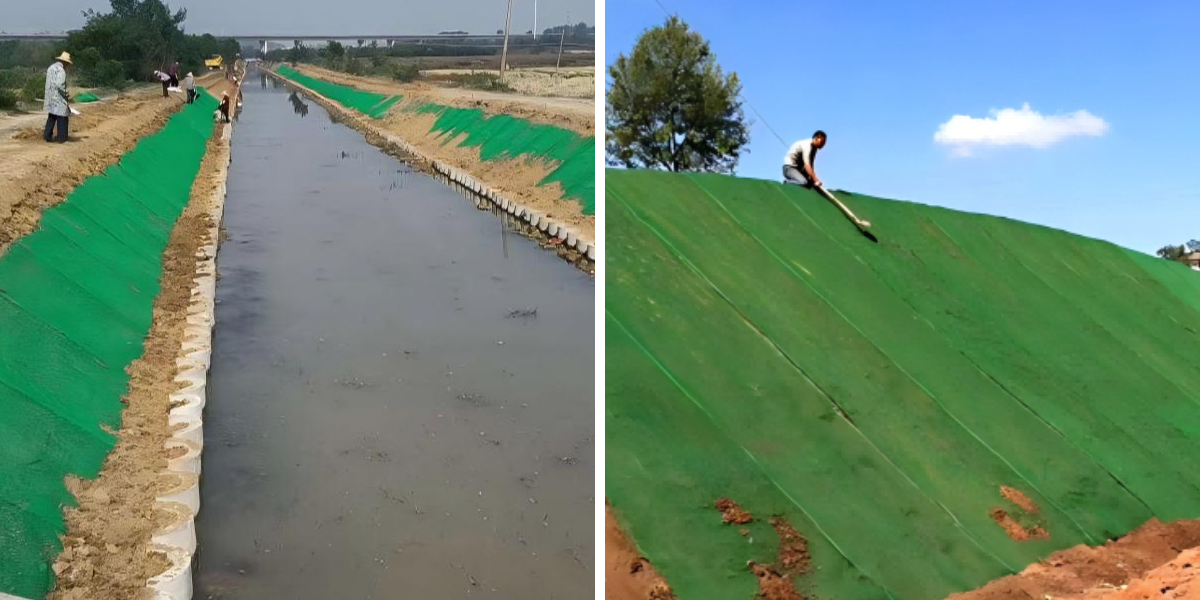
Steep ground brings a different problem. Gravity pulls water down fast, soil adhesion is poor, and vegetation struggles to root before it is removed. Conventional seeding on such faces usually fails, not because the seed is bad but because nothing holds it in place long enough. A 3d geomat is anchored with pins or staples and follows the contour of the face, creating a series of small barriers that slow the flow and hold the growing medium. An erosion control geomat used on the same face keeps the surface uniform and prevents the fill from sliding during establishment. Where a steep bank drops directly into water, a revetment mesh is normally placed as the outer layer so the toe of the slope is protected from scour. This layered approach is what allows steep sites to be stabilised with vegetation instead of hard concrete.
Revetment Mesh for Channels, Banks and Shorelines
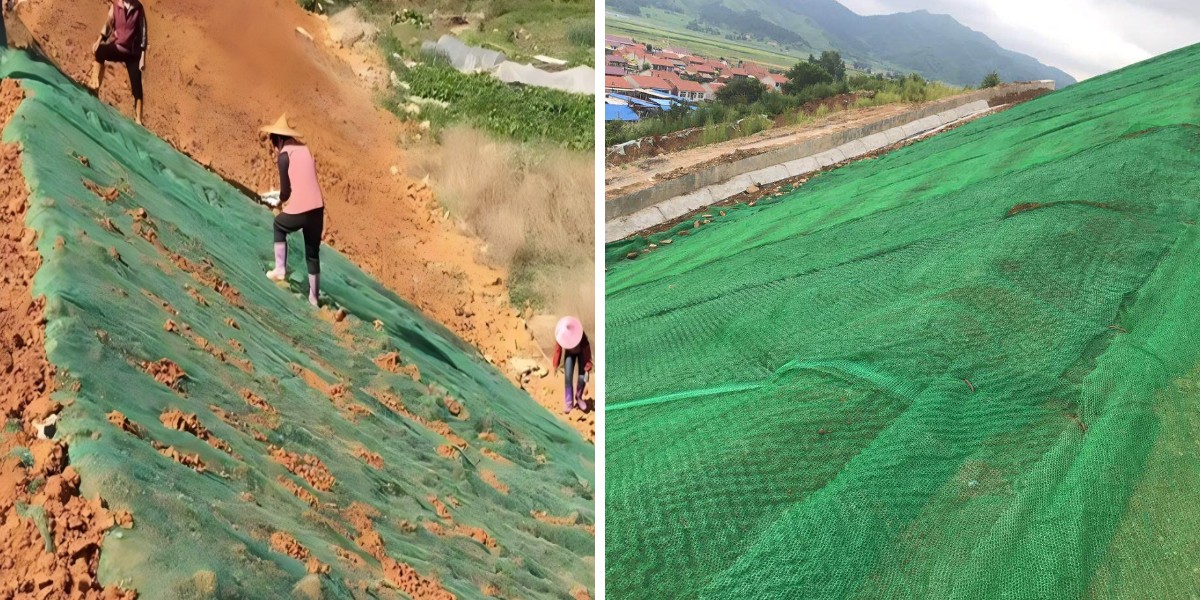
Water that moves continuously is harder on a slope than rain that arrives in bursts. Flow in a channel or along a shoreline creates constant drag on the surface, and any loose material is removed steadily rather than suddenly. A revetment mesh is built for this condition: its structure is specified to resist current, to hold a soil or aggregate infill, and to allow vegetation to grow through so the lining becomes stronger over time. A 3d geomat is often placed underneath to keep the soil in contact with the mesh and to prevent piping through the face. An erosion control geomat installed at the crest and the bank top stops the surrounding ground from washing into the lined section. Together these products protect the transition zones, which are usually where lining systems fail first.
Geomat versus Concrete, Riprap and Silt Fence
Hard linings do stop erosion, but they also commit the site to a permanent artificial surface, and they demand heavy plant, delivery access and skilled crews. Riprap works well in high-energy locations, yet it is difficult to place on steep, tight or landscaped areas and it cannot be seeded. A silt fence is a perimeter control device, not a slope solution, so it does nothing once soil movement has started on the face itself. A 3d geomat offers a lighter path: it can be handled by hand, it conforms to irregular ground, and it disappears into the landscape once vegetation covers it. An erosion control geomat keeps the option of a green finish open, which matters on projects with landscaping obligations. A revetment mesh covers the water-facing cases that a simple mat cannot handle, so the site is not forced into concrete simply because a channel runs through it. For most construction sites, the balance of protection, flexibility and finish favours the geomat approach.
Installation and Maintenance Made Simple
Installation follows a straightforward sequence. Prepare the surface, remove stones and fill ruts, then roll out the material from the top of the slope downward so each layer overlaps the one below in the direction of flow. Anchor the top edge in a trench or with a row of pins, then fix the body of the mat at the specified spacing. Fill the structure with soil or a seed mix, and water it in. A 3d geomat needs only hand tools and a small crew, which keeps the programme short. An erosion control geomat is checked after the first storm to confirm that anchors are holding and that no rills have formed beneath it. A revetment mesh is inspected at the waterline, where damage shows first, and any displaced section is re-anchored before the next high flow. Maintenance after establishment is minimal, mostly watching for damage and keeping vegetation healthy.
Choosing the Right Supplier
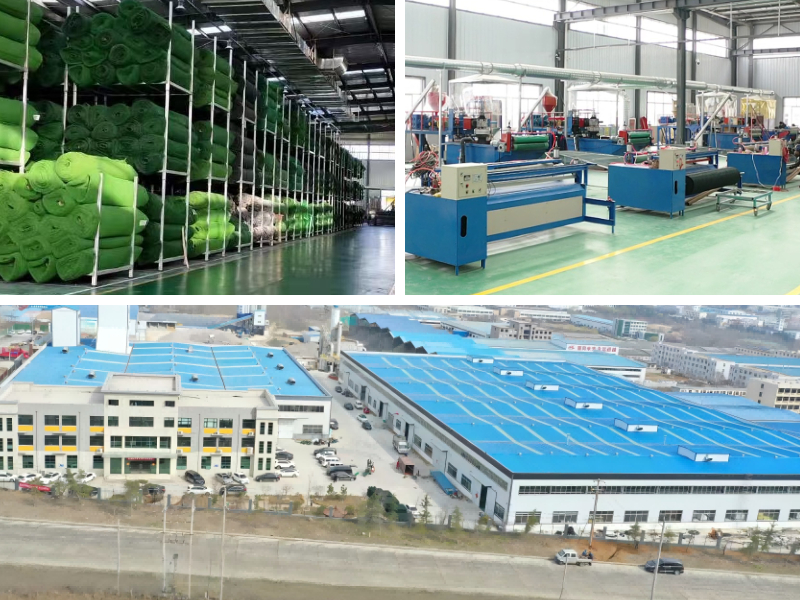
Product quality varies more than the marketing suggests. Look at the filament structure, the depth of the mat, the tensile strength, and how the material performs under ultraviolet exposure, since a mat that degrades too early will fail before roots bind the soil. Ask about roll dimensions and anchoring accessories, because a 3d geomat that arrives without the right pins slows the whole install. Confirm that the erosion control geomat you select is specified for the slope angle and soil type on your site, not just for a generic application. For water-facing work, check that the revetment mesh is rated for the flow conditions you expect, and ask for project references in similar locations. A supplier who can advise on specification, provide samples and support installation is worth more than a lower unit price.
Conclusion
Erosion control works best when the surface is protected rather than repaired. A 3d geomat holds soil and seed in place, an erosion control geomat secures the surface finish through establishment, and a revetment mesh covers the water-facing sections that rainfall-only products cannot handle. Together they give construction sites a flexible, plantable and maintainable solution that avoids the cost and permanence of hard lining. Specify them properly, install them correctly, and the slope will look after itself.