Geo Fabric for Pond and Reservoir Slope Protection
Geo Fabric for Pond and Reservoir Slope Protection
Pond and reservoir slopes fail quietly. Water rises and falls and wave wash works loose the fine particles that hold a bank together, and until the surface is protected the slope keeps losing material. A fabric geotextile laid between the subgrade and the armour layer is the cheapest insurance in earthworks, yet it is also the item most often left out of a bill of quantities. This guide walks through where a non woven geotextile earns its place, how the installation sequence should run, and what buyers should know before they price the material, including why so many first-time buyers end up typing geofabrics bunnings into a search bar.
Why Pond and Reservoir Slopes Keep Failing
A water-retaining bank is attacked from both sides. On the wet face, drawdown leaves the soil saturated one day and drained the next; that repeated loading loosens the surface and lets silt wash into the reservoir. On the dry face, rain rills cut small channels that widen every season. Once fines migrate, the slope loses support from below and the armour settles unevenly.
The fix is not more rock. It is separation. A fabric geotextile placed directly on the trimmed subgrade acts as a barrier that keeps the fine fraction in place while allowing water to pass. A non woven geotextile is normally the chosen grade because its needle-punched structure filters in both directions instead of clogging on one face. Where a designer specifies brand-name material, procurement teams frequently begin their price check with geofabrics bunnings catalogue pages before approaching trade suppliers.
What a Fabric Geotextile Actually Does on a Slope
Three jobs, and all three matter on a water-retaining bank. First, separation: it stops the stone armour from punching into the soft subgrade. Second, filtration: it lets seepage out without carrying soil with it, which keeps pore pressure from building behind the lining. Third, it protects the membrane. On lined reservoirs the fabric geotextile is the cushion between the geomembrane and the drainage gravel, and a puncture there is a leak that is very hard to trace.
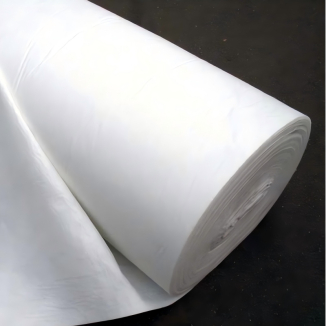
A non woven geotextile does all three because the fibre mat has no regular openings to align with the soil particles; the pores are tortuous, so soil arches across them and stays put. That behaviour is why specifiers accept it in place of graded filter gravel on sites where aggregate is expensive to haul in. Buyers comparing retail options often notice that geofabrics bunnings product pages describe garden-grade rolls rather than civil-grade material, and that distinction is worth understanding before ordering.
Selecting the Right Non Woven Geotextile
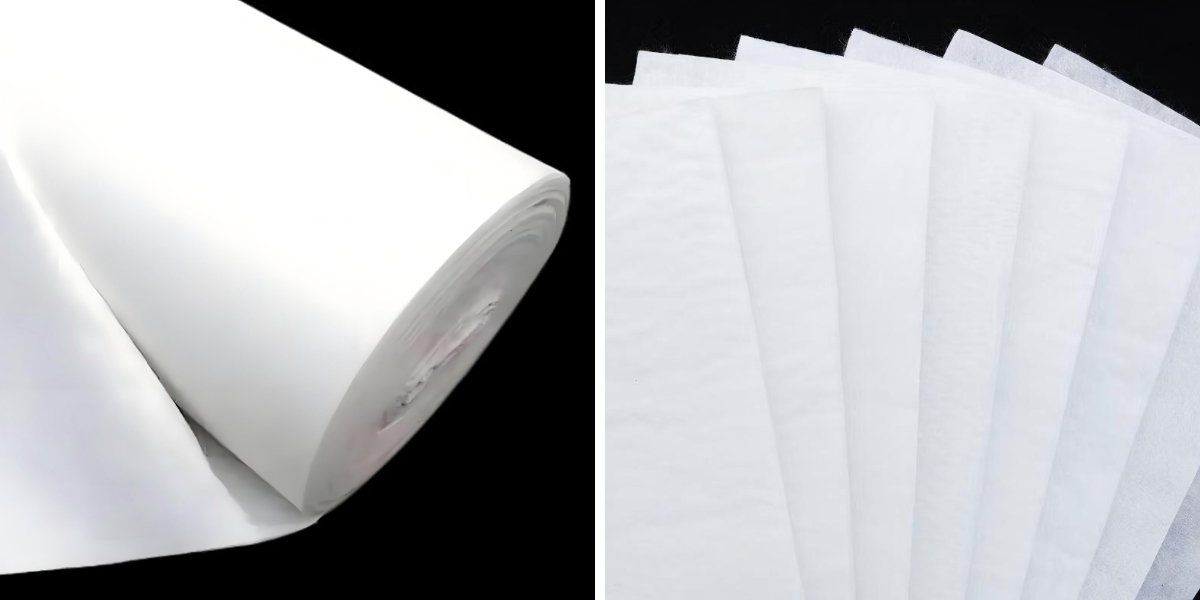
Selection should follow the soil, the armour and the hydraulic regime, not the price per roll. Silty and fine sandy subgrades need a heavier non woven geotextile with good retention, while gravelly banks can take a lighter grade. Where the armour is angular crushed rock dropped from a tipper, the cushioning requirement rises sharply, and a designer will normally call for a heavier mass per unit area to survive placement damage.
Survivability, not strength in isolation, governs the choice: the fabric geotextile must come out of installation without holes. Check the roll width against the slope geometry so that overlaps are manageable and waste stays low. Sample panels from the delivered lot are worth the effort. Anyone who has looked at geofabrics bunnings listings for small landscape ponds will have seen light rolls sold by area, and those products serve planting shelves and garden features well but should not be substituted for engineered slope protection without a designer's approval.
The Installation Sequence That Protects the Fabric Geotextile
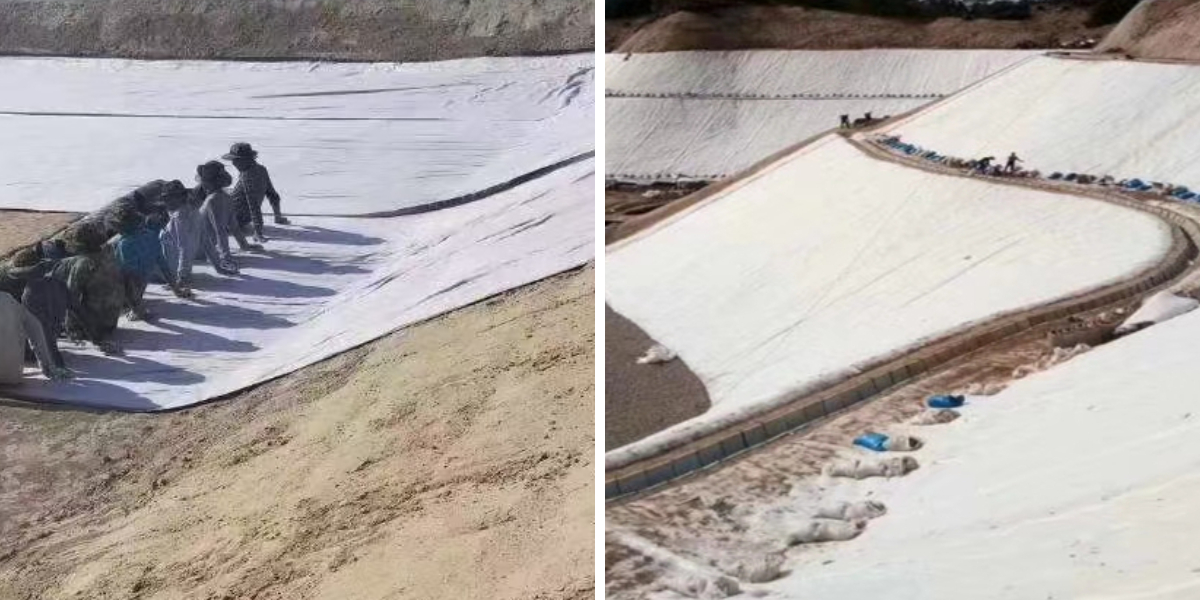
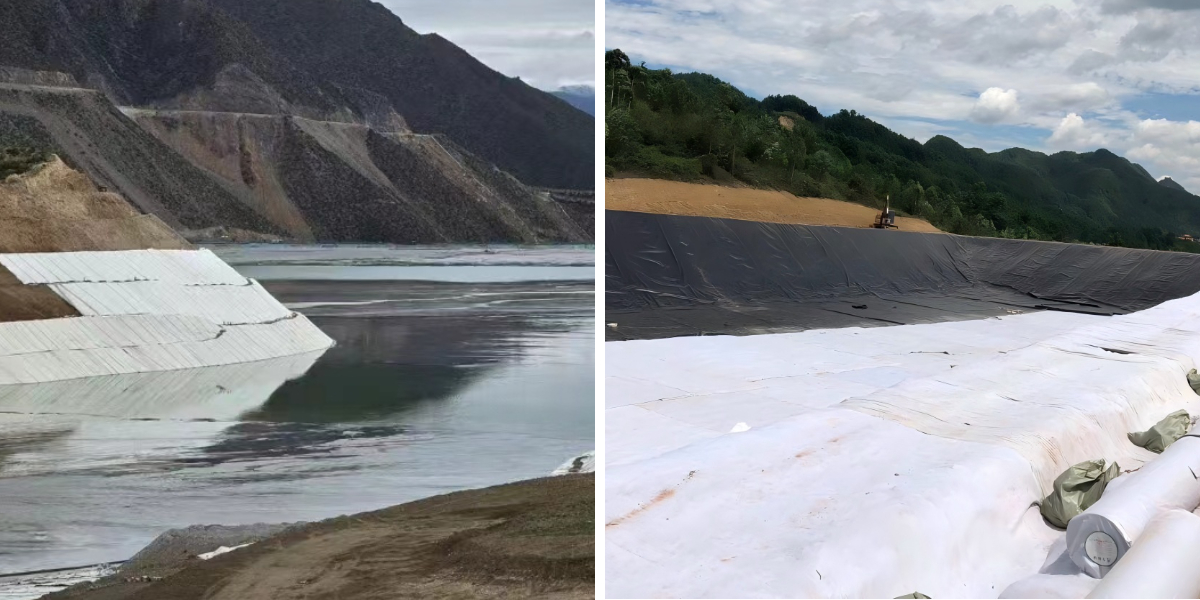
Timing matters as much as technique. Trim and compact the subgrade first, remove roots and sharp stones, and only then unroll. Lay the fabric geotextile downslope, not across the slope, so that overlaps face the direction of water flow and the panels cannot lift under drawdown. Anchor the top edge in a trench or under the crest detail, and keep the material slightly slack so it beds into surface irregularities rather than bridging them.
Placement of the armour is the step that damages most installations. Tracked plant should never run directly on the non woven geotextile; a layer of stone should be placed ahead of the machine and used as a running board. Where a membrane sits below, the sequence is subgrade, fabric, membrane, second fabric cushion, then drainage stone. Suppliers and site engineers sometimes discuss geofabrics bunnings retail stock as an emergency top-up source, but site quality records should always trace the material to a tested lot.
Mistakes, Checks and Handover
The recurring faults are predictable: overlaps too narrow, fabric left exposed at the waterline, panels cut for convenience rather than detailed, and material stored in sunlight for weeks before use. Ultraviolet exposure degrades a fabric geotextile faster than most site staff expect, so rolls should be kept wrapped and installed within a reasonable window.
Inspection should be piecewise, not at the end. Photograph each completed panel, record overlap positions, and reject torn sheets rather than patching them badly. A non woven geotextile that has been walked over by a loaded dumper has almost certainly lost its cushioning value even if it looks intact from a distance. Keep a sample of each delivered roll for the handover file; that is far more persuasive than a delivery docket.
It is also worth separating channels in procurement. Retail searches such as geofabrics bunnings serve small works and repairs, while engineered banks should be quoted against a specification, with test certificates attached to the submittal.
Sourcing Notes for Buyers
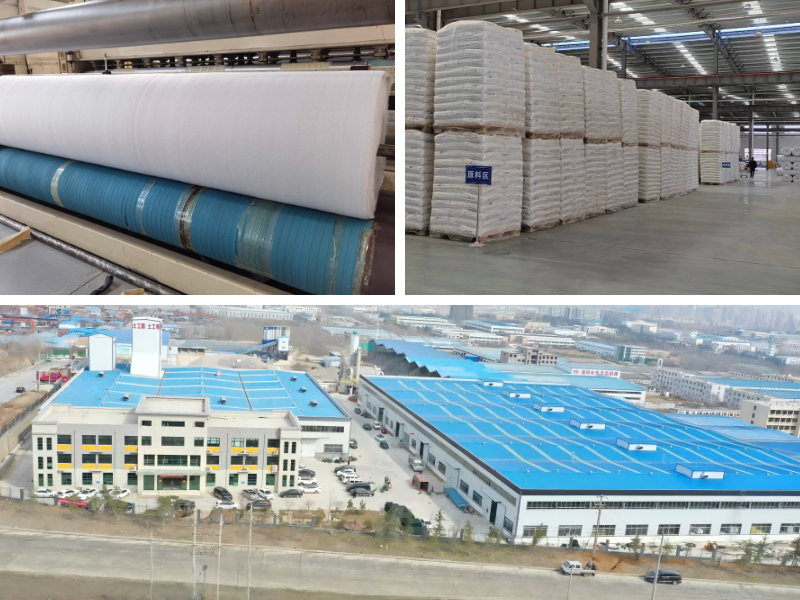
Ask three questions of any supplier: what is the tested mass per unit area, what is the filtration and retention performance on the intended soil, and what roll widths are available? A vendor who cannot answer the first question is selling a fabric geotextile of unknown grade. Ask also for the packaging condition, since sun-damaged stock is a common cause of early failure on site.
Compare landed cost, not unit price: haulage on wide rolls can exceed the material saving. For garden-scale work, geofabrics bunnings shelf stock is convenient and perfectly adequate for a planted pond margin. For a reservoir bank carrying wave action, the non woven geotextile should come from a producer who supplies civil projects and can document performance. Terms such as "heavy duty" carry no engineering meaning, so treat them as marketing until a test report arrives.
Conclusion
A slope that holds its shape is a slope that separates soil from water properly, and that is what a fabric geotextile is for. Choose a non woven geotextile that matches the subgrade and the armour, install it downslope with generous overlaps, and protect it from traffic during placement. Retail buyers searching geofabrics bunnings will find garden-grade material that suits small features, while engineered pond and reservoir slopes should be quoted against a written specification with test certificates. Get the separation layer right and the visible works will last; get it wrong and no amount of extra rock will compensate.