

The Key Roles of HDPE Geocell in Road Base Reinforcement
Introduction
Road and driveway construction often suffers from unstable subgrade, surface rutting, and frequent structural damage without reliable reinforcement solutions. Traditional paving methods rely on thick aggregate layers that fail to adapt to soft soil and complex terrain, leading to short service life and repetitive maintenance. Today, high-performance geosynthetic products including geocell fabric, professional silknet geocell, and standard geocell driveway systems have become mainstream choices for road base stabilization. Combined with premium HDPE materials, these geocell solutions deliver stable reinforcement performance for all types of pavement projects. This article elaborates on the core functions of HDPE geocell in road base reinforcement and why geocell-based systems dominate modern civil engineering.
What Is HDPE Geocell and Its Advantages for Road Construction
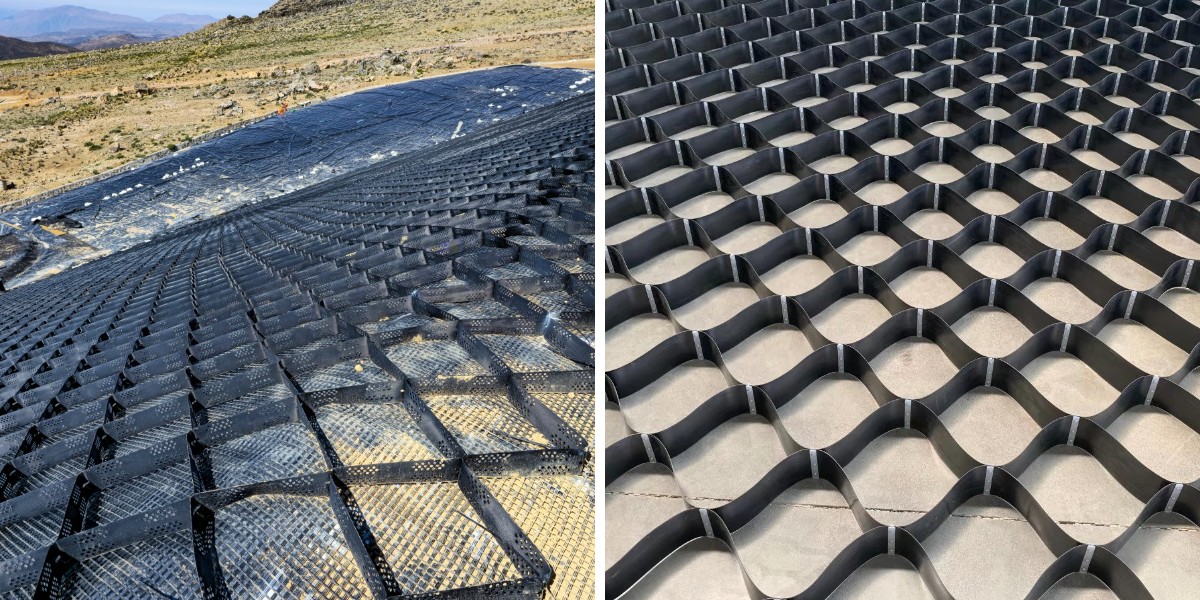
HDPE geocell is a three-dimensional cellular confinement structure manufactured from high-density polyethylene, featuring flexible expansion and strong structural integrity. As a versatile geosynthetic material,geocell fabric serves as the basic structural carrier of HDPE geocell, providing flexible tension and anti-tear performance for all base reinforcement projects. Different from ordinary flat geotextiles, the textured and welded design of geocell fabric locks fillers tightly and forms a rigid composite layer after compaction.
The upgraded silknet geocell optimizes surface texture and cell uniformity compared with regular models, offering better friction resistance and structural coordination for road base projects. Tailored for low-load and medium-load pavement scenes, the standard geocell driveway system simplifies traditional driveway construction by replacing thick aggregate bases with lightweight geocell reinforcement. All these HDPE geocell variants share excellent anti-aging, anti-corrosion and temperature-resistant properties, perfectly adapting to long-term outdoor road operation.
Efficient Lateral Confinement Prevents Road Base Displacement
One of the most vital functions of HDPE geocell in road base reinforcement is lateral confinement, which solves the loose displacement problem of traditional unconstrained fillers. The woven and stretched structure of geocell fabric enhances the overall tension of each cell unit, restricting the horizontal movement of sand, gravel and other fillers under dynamic vehicle loads.
With refined cell welding technology, silknet geocell provides more uniform confinement force, avoiding local deformation caused by uneven stress distribution. For residential and commercial pavement projects, the standardized geocell driveway structure locks surface fillers effectively, eliminating lateral spreading and subsidence that commonly occur in ordinary driveways. This confinement mechanism keeps the entire road base compact and integrated, preventing pavement cracking and rutting.
Optimized Load Distribution Reduces Subgrade Bearing Pressure
Concentrated load pressure is the leading cause of early road damage, especially on soft and weak subgrades. HDPE geocell builds a continuous stress dispersion layer for road bases, and the high-toughness geocell fabric evenly transfers local vehicle pressure to the entire reinforcement layer, avoiding excessive stress concentration on single subgrade areas.
The fine mesh surface of silknet geocell further balances vertical and horizontal stress transmission, improving the overall bearing uniformity of the base layer. In daily traffic scenarios, the practical geocell driveway system disperses frequent light and medium loads efficiently, protecting shallow subgrade soil from repeated compression deformation. This load optimization effect greatly improves the adaptability of roads to complex ground conditions.
Improved Structural Stability Minimizes Pavement Deformation
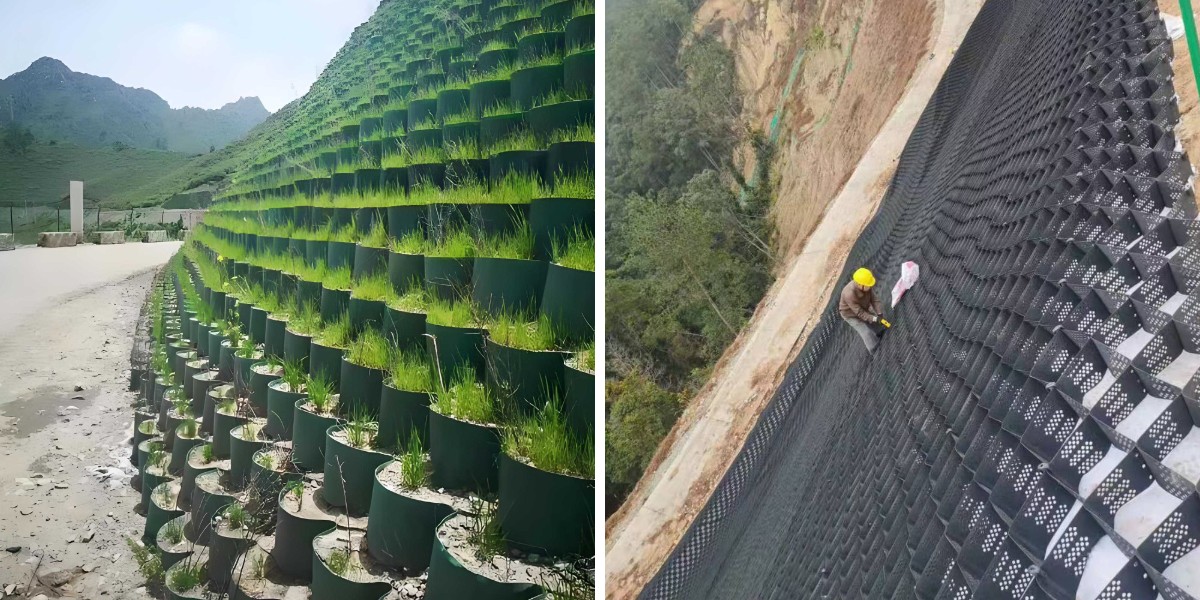
Uneven settlement and pavement deformation are common pain points in traditional road construction, especially in humid and soft soil areas. HDPE geocell integrates scattered fillers and loose soil into a unified stable structure, and the high-strength geocell fabric reinforces the overall rigidity of the base layer to resist vertical settlement and horizontal sliding.
With optimized structural flexibility, silknet geocell coordinates with subtle soil deformation without structural fracture, maintaining long-term base stability in seasonal temperature and humidity changes. For outdoor pavement scenes, the durable geocell driveway system effectively resists rainwater erosion and soil softening, avoiding loose base layers and irregular pavement deformation. This stable reinforcement performance greatly reduces various common road diseases.
Cost and Efficiency Optimization for Road Base Projects
HDPE geocell simplifies road base construction and cuts comprehensive engineering costs without sacrificing reinforcement quality. The lightweight and foldable geocell fabric reduces transportation difficulty and storage space, enabling rapid on-site deployment for all pavement projects.
The streamlined structure of silknet geocell allows the use of local on-site fillers instead of high-standard imported aggregates, lowering raw material investment. For residential and temporary pavement construction, the easy-install geocell driveway system shortens construction cycles and reduces manual operation complexity. Meanwhile, the stable reinforcement effect reduces later maintenance frequency, bringing long-term economic benefits for road engineering projects.
Enhanced Durability Extends Pavement Service Life
Long-term environmental erosion and load fatigue are the main reasons for pavement aging. HDPE geocell features excellent environmental adaptability, and the anti-aging geocell fabric maintains stable structural performance under long-term sun exposure, rain erosion and temperature alternation.
With upgraded anti-fatigue performance, silknet geocell resists repeated vehicle rolling and structural loosening, keeping the base layer compact for years. The weather-resistant geocell driveway system avoids cracking, aging and peeling of traditional pavement bases, effectively delaying the overall aging process of roads. By improving base durability, HDPE geocell greatly extends the service life of various road and driveway projects.
Typical Application Scenarios of HDPE Geocell Reinforcement
HDPE geocell with geocell fabric backing is widely applied in municipal roads, highways and industrial pavement stabilization, providing reliable base reinforcement for heavy-traffic engineering projects. The high-precision silknet geocell is suitable for complex terrain including mountain roads and rainy-area pavements, solving subgrade instability problems in harsh environments.
The practical geocell driveway solution is the ideal choice for residential driveways, park pavements and temporary construction roads, meeting light and medium load demands with high cost performance. Covering various pavement types and terrain conditions, these HDPE geocell series products have become universal reinforcement solutions for modern road base construction.
Conclusion
HDPE geocell delivers irreplaceable reinforcement advantages in road base stabilization through lateral confinement, load dispersion, deformation resistance and durability improvement. As core components, sturdy geocell fabric, high-preformance silknet geocell and user-friendly geocell driveway systems adapt to diverse road construction scenarios, solving the defects of traditional paving technology. With balanced performance and cost advantages, HDPE geocell will continue to be the preferred geosynthetic material for high-quality road base reinforcement worldwide.


