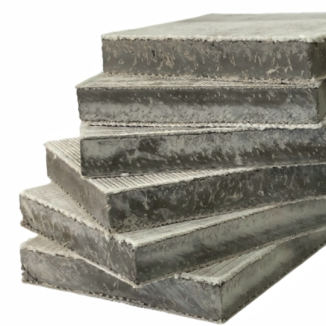
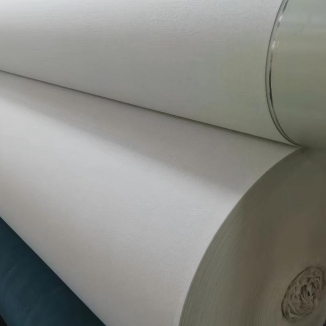
How to Weld Composite Geo-membrane Correctly for Seamless Seepage Prevention
Introduction
Reliable seepage prevention is the core requirement for many civil and environmental engineering projects. Among various anti-seepage materials, Composite Geo-membrane stands out for its combined structure of membrane and fabric layers. Impermeable Geotextile reinforces the membrane body, while HDPE Composite Geomembrane delivers stable chemical resistance and outstanding anti-seepage performance. The welding quality directly decides whether the whole anti-seepage system can stay intact under long-term service. Poor welding will create hidden leakage paths and reduce the service life of the whole project. This article shares standard welding procedures, common mistakes and practical skills to help constructors achieve seamless seepage prevention.
What Is Composite Geo-membrane and Its Anti-seepage Principle
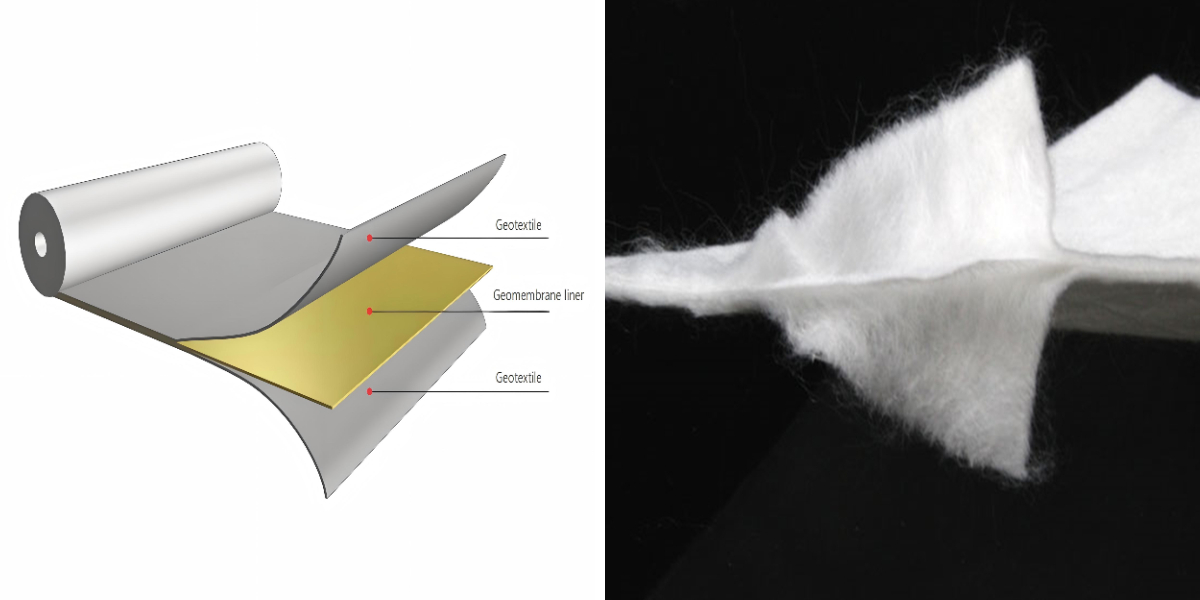
Composite Geo-membrane is a composite product formed by bonding geotextile and geomembrane together. The geotextile layer can be Impermeable Geotextile, which protects the thin membrane core from puncture and friction damage during installation. HDPE Composite Geomembrane is one of the most widely used types in landfill, pond, reservoir and chemical tank projects.
The geomembrane layer blocks liquid penetration, and the attached Impermeable Geotextile disperses external stress. Unlike single geomembrane, Composite Geo-membrane avoids direct contact between sharp base materials and the membrane. Welding connects separate sheets into an integrated liner. Only fully fused weld joints can maintain the continuous anti-seepage function of HDPE Composite Geomembrane.
Pre-welding Preparation for Composite Geo-membrane
Good preparation lays the foundation of qualified welding work. First, inspect the material condition of Composite Geo-membrane. Check surface defects including tears, pinholes and uneven thickness. Confirm the material type matches project requirements, whether it is standard Composite Geo-membrane or HDPE Composite Geomembrane. The Impermeable Geotextile layer should keep intact without local peeling away from the membrane.
Clean the overlapping area before welding. Dust, mud, water, grease and debris on the sheet surface will hinder thermal fusion. Both surfaces of the overlapping part must remain dry and clean. Trim loose threads of Impermeable Geotextile along the weld edge to prevent them from being trapped inside the weld seam.
Adjust the overlapping width of Composite Geo-membrane sheets. Reserve enough overlapping zone for thermal welding. Arrange the material layout reasonably to reduce the total number of weld seams. Avoid placing weld joints at high-stress positions of the liner system. Test the welding machine on leftover pieces of HDPE Composite Geomembrane to set proper temperature and speed before formal operation.
Standard Thermal Welding Steps for Composite Geo-membrane
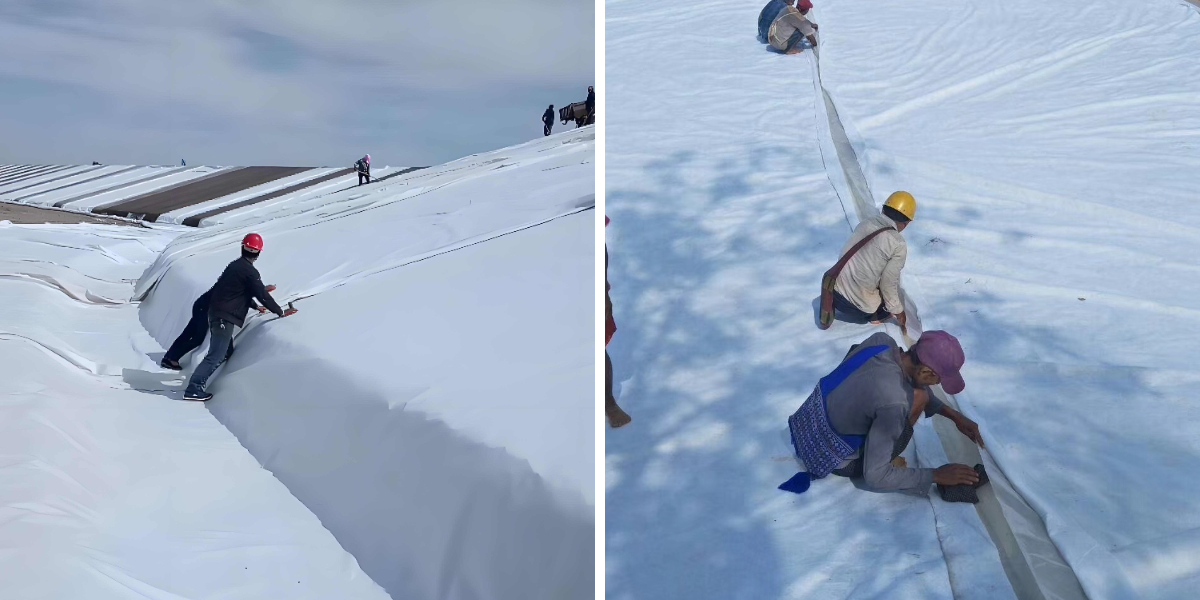
Start the welding process after all preparation work finishes. Align two sheets of Composite Geo-membrane steadily to keep consistent overlapping range. Keep the sheet flat without wrinkles or tension. Too much stretching will cause joint cracking after temperature change.
Turn on the thermal welder and wait for stable working temperature. Move the machine evenly along the overlapping zone. The heat melts the HDPE layer of HDPE Composite Geomembrane and makes two membrane surfaces fuse together. The Impermeable Geotextile on both sides stays outside the fused zone, offering protection instead of melting into the seam.
Keep uniform moving speed during welding. Fast movement leads to insufficient melting and weak bonding. Slow movement burns the geomembrane and forms holes. Monitor the fusion state continuously. A qualified seam shows continuous melted extrusion strip along both sides of the weld line.
Complete welding section by section. When stopping and restarting the machine, overlap the new weld with the finished segment for a short length to avoid gap between two weld sections. After finishing one weld seam, move to next sheet joint following the same operation for Composite Geo-membrane.
Inspection of Weld Seams of Composite Geo-membrane
Inspection cannot be skipped after welding Composite Geo-membrane. First carry out visual inspection. Check the whole weld line for discontinuity, bubble, burning hole and foreign inclusion. Confirm the Impermeable Geotextile does not fold into the fused membrane seam.
Conduct non-destructive air pressure test for the weld seams of HDPE Composite Geomembrane. Seal both ends of the double weld channel, inject air and hold pressure for required time. Pressure drop beyond standard range means leakage exists in the seam. Mark defective positions clearly.
For suspicious areas, take sample peel test or shear test. If the sample breaks at parent material rather than the weld joint, the welding quality meets requirement. Any failed part needs repairing immediately. Cut off the damaged section and re-weld new Composite Geo-membrane patch on the leakage area.
Common Welding Errors and Troubleshooting
Many construction faults affect the seamless seepage prevention effect of Composite Geo-membrane. Wet or dirty sheet surface causes incomplete fusion. The solution is to stop welding and clean the surface thoroughly until dry.
Excessive sheet tension is another frequent problem. HDPE Composite Geomembrane will shrink after construction, pulling apart overstretched weld joints. Relax the sheets properly during laying to release internal stress.
Improper machine temperature creates risks. Low temperature cannot melt HDPE layer fully, while high temperature burns the geomembrane. Re-test machine parameters on scrap Composite Geo-membrane when ambient temperature changes greatly.
Impermeable Geotextile fibers trapped inside the weld will form leakage channels. Trim excess geotextile fibers along the weld edge before thermal fusion. Keep the geotextile layer away from the melting zone of the membrane.
Tips to Maintain Long-term Seepage Prevention Performance
After welding and inspection of Composite Geo-membrane, take protective measures. Avoid heavy machinery and sharp tools moving directly on HDPE Composite Geomembrane liner. The Impermeable Geotextile layer provides physical protection against impact and abrasion.
Arrange protective covering work as soon as possible after acceptance of weld seams. Prevent long-time direct ultraviolet exposure, which degrades the material performance of Composite Geo-membrane. Avoid concentrated load on the anti-seepage liner.
Regular check on weld joints is necessary during project operation. Pay attention to deformation of the foundation. Foundation movement may apply extra force on weld seams of HDPE Composite Geomembrane. Timely maintenance can preserve the continuous anti-seepage function.
Conclusion
Correct welding determines whether Composite Geo-membrane can realize seamless seepage prevention. Every step including material check, surface cleaning, thermal fusion operation and seam inspection matters. HDPE Composite Geomembrane relies on intact fused joints, and Impermeable Geotextile protects the membrane from mechanical damage. Following standard welding procedure reduces leakage risks and maximizes the anti-seepage value of Composite Geo-membrane in different engineering projects.