The Application of HDPE Geocell for Riverbank and Shoreline Stabilization
Introduction
Riverbank and shoreline erosion is a persistent natural issue that gradually degrades waterfront terrains, triggers bank collapse, damages aquatic ecosystems, and endangers nearby infrastructure. Traditional shore protection methods such as stone stacking and rigid concrete revetments feature poor flexibility, high construction costs, and weak adaptability to terrain deformation, failing to achieve long-term stable protection. As a mature three-dimensional confinement system,geocell has become a core geosynthetic solution for modern waterfront stabilization. Reliable geocell material provides standardized structural reinforcement for various shoreline projects, while high-strength geocell silknet further enhances tensile and anti-scour performance for harsh waterfront environments. The combined application of these products effectively solves common shoreline instability problems and realizes ecological and durable riverbank protection.
Basic Overview of Geocell, Geocell Material and Geocell Silknet
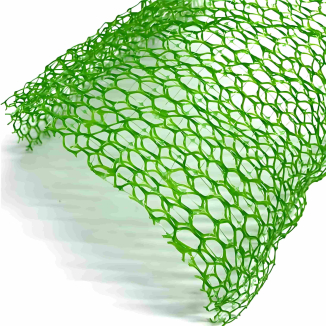
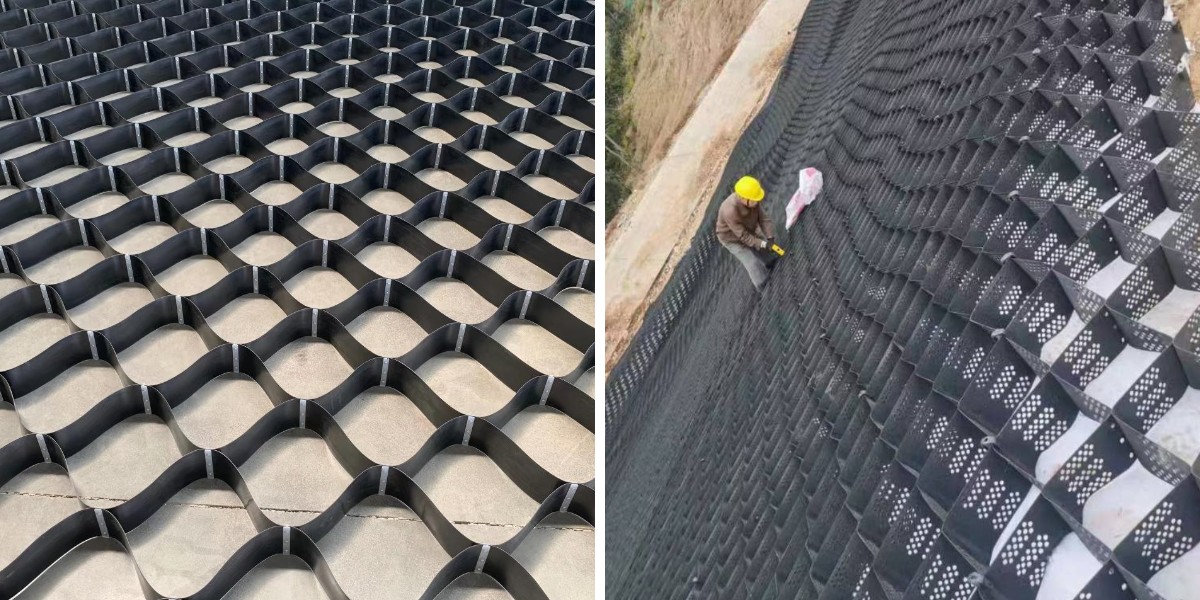
Geocell is a three-dimensional honeycomb cellular confinement system made of high-density polyethylene materials. After being stretched and deployed on site, geocell forms a stable grid structure that can hold infill materials tightly. It restricts lateral and vertical displacement of soil and gravel, delivering powerful soil fixation and slope stabilization capabilities. With flexible structural characteristics, geocell can adapt to irregular shoreline terrains and slight foundation deformation, avoiding structural cracking common in rigid protection systems.
High-quality geocell material is professionally formulated for outdoor and waterfront engineering scenarios. Qualified geocell material features excellent weather resistance, anti-aging performance and chemical stability, resisting long-term water soaking, ultraviolet exposure and temperature alternation. Standard geocell material maintains stable structural toughness and bonding strength, ensuring the overall integrity of the cellular structure during long-term shoreline operation, and serving as the fundamental guarantee for reliable bank stabilization.
Geocell silknet is an upgraded reinforced version of conventional geocell products. Geocell silknet integrates high-strength silk-like mesh structure on the cell wall, effectively improving the overall tensile strength, puncture resistance and structural toughness of the geocell system. Compared with ordinary styles, geocell silknet performs better in resisting strong water flow scouring and wave impact, making it specially designed for high-load and high-erosion riverbank and shoreline stabilization projects.
Core Functions of Geocell in Riverbank and Shoreline Stabilization
Soil Confinement and Anti-Erosion Protection
The core advantage of geocell lies in its powerful three-dimensional confinement effect. After deployment and filling, geocell locks surface soil and aggregate materials into independent cellular units, preventing soil particle loss caused by water flow scouring and wave washing. This structure turns loose surface soil into a stable integral protective layer, fundamentally reducing riverbank gully erosion and shoreline recession.
Professional geocell material enhances the long-term stability of the confinement structure. The tough and wear-resistant properties of geocell material prevent cell wall rupture and deformation under repeated water impact and sediment friction, maintaining complete cellular structure and continuous soil fixation capacity. It ensures the shoreline protective layer remains intact throughout seasonal water level changes.
Geocell silknet further strengthens anti-scour performance for severe erosion zones. The reinforced mesh structure of geocell silknet disperses concentrated water flow impact evenly, buffers wave pressure on the bank slope, and avoids local structural damage. It provides enhanced anti-erosion protection for curved shorelines, river bends and tidal fluctuation zones with severe water impact.
Slope Reinforcement and Foundation Stabilization
Unprotected river slopes are prone to sliding and collapse due to soft soil and water infiltration. geocell forms a flexible reinforced layer on the slope surface, improving the overall rigidity and shear resistance of the slope body. It restricts soil lateral sliding and effectively prevents shallow slope slippage and bank collapse risks.
Durable geocell material adapts to the alternating dry and wet environment of waterfront slopes. Geocell material will not soften, deform or age rapidly after long-term water soaking and outdoor exposure, maintaining stable reinforcement performance. It solidifies the slope foundation and improves the overall bearing capacity and structural stability of riverbank and shoreline slopes.
Geocell silknet optimizes slope stress dispersion. The high-toughness mesh structure of geocell silknet enhances the overall tensile coordination of the slope reinforcement system, uniformly dispersing soil pressure and water flow load. It effectively avoids local stress concentration and slope cracking, realizing comprehensive and reliable shoreline foundation stabilization.
Ecological Protection Advantages of Geocell Waterfront Stabilization System
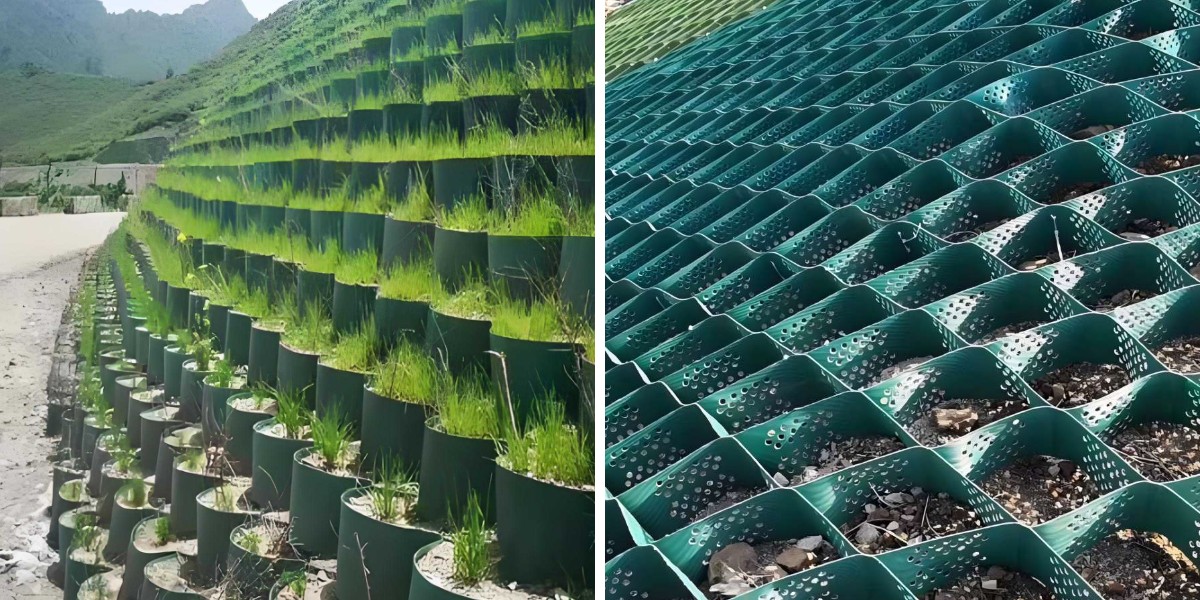
Different from rigid concrete protection that completely isolates soil and water, geocell features open cellular structure that reserves growth space for vegetation. After construction, plants can take root and grow in the geocell gaps, forming a composite protection system of cellular structure and plant roots. This ecological model balances shoreline stabilization and water ecological restoration.
Environmentally friendlygeocell material contains no harmful chemical components and will not pollute water bodies and soil. Stable and inert geocell material adapts to aquatic ecological environments, does not hinder water and nutrient exchange, and creates favorable growth conditions for shore vegetation and aquatic organisms.
Geocell silknet retains excellent ecological compatibility while strengthening structural performance. The permeable mesh design of geocell silknet does not block vegetation root growth and water circulation. It supports the gradual formation of permanent ecological protective layers, realizing green and sustainable riverbank and shoreline protection.
Practical Application Scenarios for Waterfront Projects
In river regulation and waterway renovation projects, geocell is widely used for slope protection and bank stabilization. It solves the problem of long-term water flow scouring on river slopes and maintains the integrity of river channel structures. The flexible geocell system adapts to natural river terrain changes, avoiding the rigid and monotonous defects of traditional protection works.
For coastal shoreline and lake bank restoration projects, high-standard geocell material copes with complex environmental conditions such as tidal fluctuation and wind wave erosion. Reliable geocell material provides long-term stable reinforcement protection, preventing shoreline retreat and landscape damage, and protecting waterfront ecological and landscape integrity.
For key sections with severe erosion and high protection requirements,geocell silknet is the optimal upgraded solution. Geocell silknet provides stronger structural toughness and impact resistance, effectively coping with extreme weather and strong water flow impact, ensuring the long-term safe and stable operation of key waterfront protection projects.
Conclusion
HDPE geocell stabilization system has become an indispensable solution for modern riverbank and shoreline protection. The flexible three-dimensional confinement structure of geocell realizes efficient soil fixation and anti-erosion stabilization. The stable and durable geocell material guarantees the long-term service performance of the whole protection system. The upgraded and reinforced geocell silknet provides targeted high-strength protection for harsh erosion environments. With the advantages of flexible construction, strong terrain adaptability and outstanding ecological performance, this geocell-based protection system perfectly replaces traditional rigid protection methods, delivering stable, economical and eco-friendly stabilization effects for various riverbank and shoreline projects.