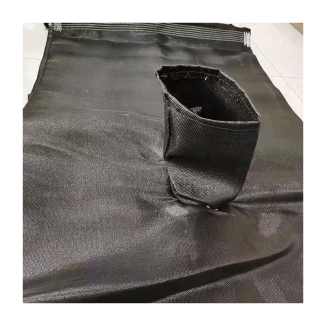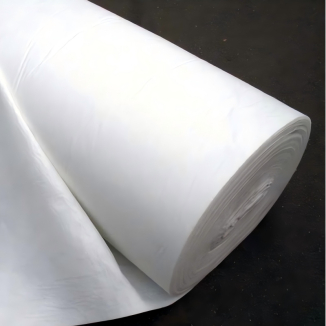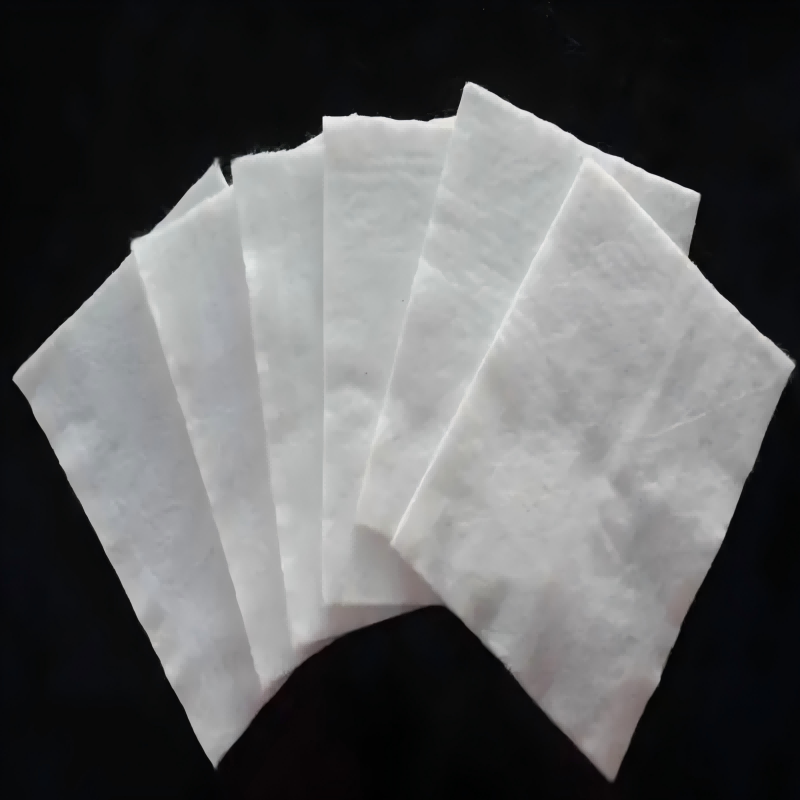
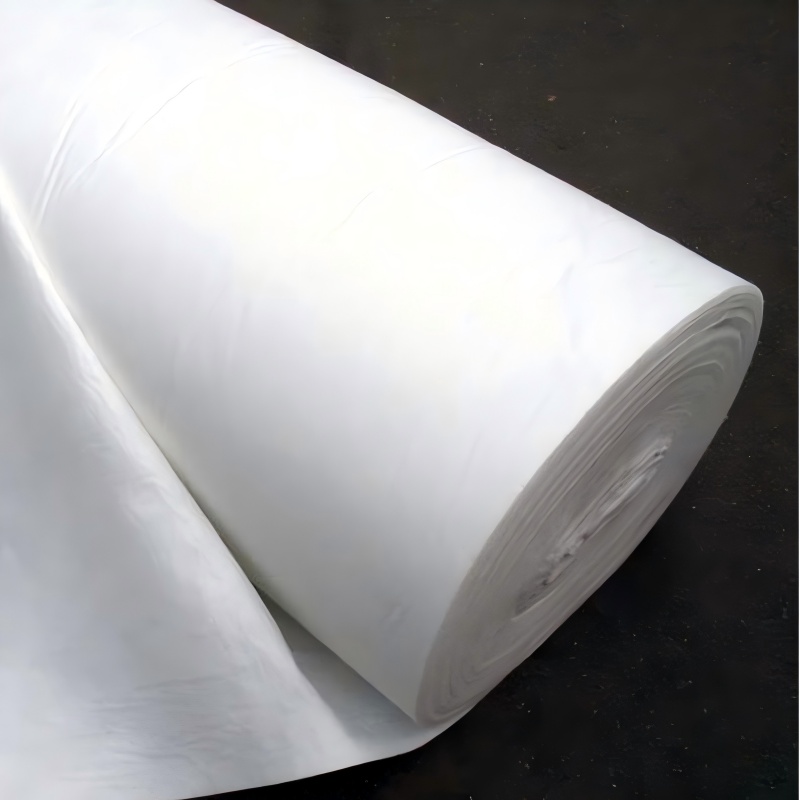
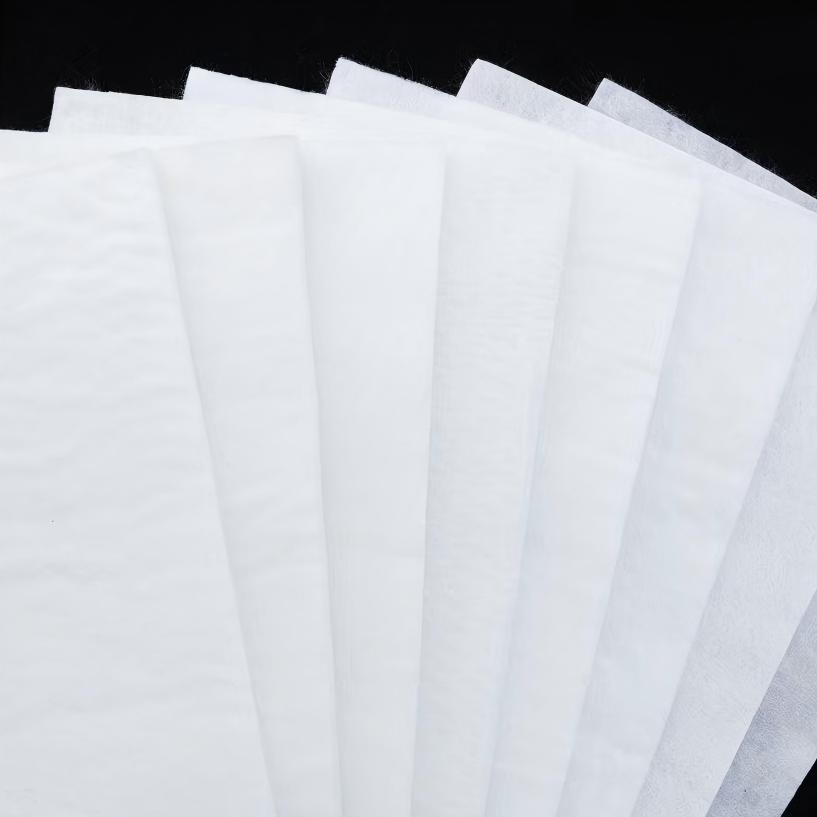
White Geotextile Fabric
High durability: Made of high-strength synthetic fibers, it is resistant to tearing, puncturing, and UV rays, ensuring stability for long-term use.
Functional and practical: good filtration (retaining soil and allowing water to permeate), smooth drainage, capable of preventing soil erosion and reducing material loss.
Convenient construction: lightweight, no special tools required, flexible cutting, saving time and labor.
Environmentally sustainable: Made from recyclable materials, it can protect the terrain and aligns with environmental protection concepts.
Product Introduction:
White Geotextile Fabric is a permeable geosynthetic material made of synthetic fibers through needle punching or weaving.Using high-strength polyester or polypropylene synthetic fibers as the core material, these fibers undergo special stretching and shaping processes, far exceeding traditional natural fiber materials. In terms of anti damage performance, it can effectively resist the friction and impact of stones and equipment during the construction process; At the same time, the fiber surface is treated with an anti ultraviolet coating to ensure stable performance during long-term use and avoid engineering failure caused by material aging.
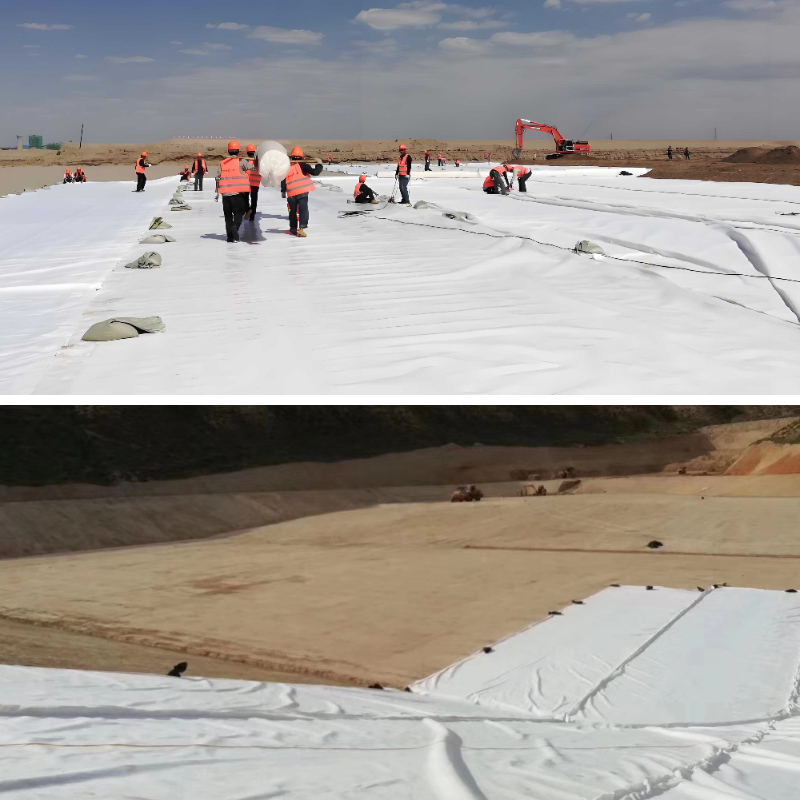
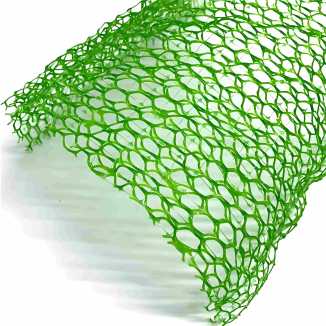
In terms of filtering function, the pore size of white geotextile is precisely controlled, which can allow water, air and other fluids to pass smoothly, and effectively block soil particles, forming a "permeable soil blocking" filtering effect, avoiding soil loss with water flow, and protecting the engineering foundation structure; In terms of drainage function, its three-dimensional network fiber structure forms dense drainage channels, which can quickly divert accumulated water inside the project, reduce pore water pressure, and prevent problems such as soil softening and structural settlement caused by accumulated water. In addition, this material also has a certain anti-seepage auxiliary function. When used in conjunction with anti-seepage membranes, it can reduce friction damage on the membrane surface and improve the reliability of the overall anti-seepage system.From a construction perspective, the white geotextile has a lightweight texture, making it easy to transport and lay; The cutting process does not require professional equipment, and a regular art knife can accurately cut. It can be flexibly adjusted according to the irregular dimensions of the project site (such as dam corners, roadbed slopes), greatly reducing material waste and shortening the construction period.
Product Parameters:
project | metric | ||||||||||
Nominal strength/(kN/m) | |||||||||||
6 | 9 | 12 | 18 | 24 | 30 | 36 | 48 | 54 | |||
1 | Longitudinal and transverse tensile strength / (kN/m) ≥ | 6 | 9 | 12 | 18 | 24 | 30 | 36 | 48 | 54 | |
2 | Maximum elongation at maximum load in longitudinal and transverse directions/% | 30~80 | |||||||||
3 | CBR top penetration strength /kN ≥ | 0.9 | 1.6 | 1.9 | 2.9 | 3.9 | 5.3 | 6.4 | 7.9 | 8.5 | |
4 | Longitudinal and transverse tearing strength /kN | 0.15 | 0.22 | 0.29 | 0.43 | 0.57 | 0.71 | 0.83 | 1.1 | 1.25 | |
5 | Equivalent aperture O.90(O95)/mm | 0.05~0.30 | |||||||||
6 | Vertical permeability coefficient/(cm/s) | K× (10-¹~10-), where K=1.0~9.9 | |||||||||
7 | Width deviation rate /% ≥ | -0.5 | |||||||||
8 | Unit area mass deviation rate /% ≥ | -5 | |||||||||
9 | Thickness deviation rate /% ≥ | -10 | |||||||||
10 | Thickness coefficient of variation (CV)/% ≤ | 10 | |||||||||
11 | Dynamic perforation | Puncture hole diameter/mm ≤ | 37 | 33 | 27 | 20 | 17 | 14 | 11 | 9 | 7 |
12 | Longitudinal and transverse fracture strength (grab method)/kN ≥ | 0.3 | 0.5 | 0.7 | 1.1 | 1.4 | 1.9 | 2.4 | 3 | 3.5 | |
13 | Ultraviolet resistance (Xenon arc lamp method) | Longitudinal and transverse strength retention rate% ≥ | 70 | ||||||||
14 | Ultraviolet resistance (fluorescence UV lamp method) | Longitudinal and transverse strength retention rate% ≥ | 80 | ||||||||
Product Applications:
Civil Engineering Field: Core Protection of Roadbeds and Dams
Application of roadbed construction: In highway and railway roadbed construction, white geotextile should be laid between the roadbed filling material (such as gravel layer, plain soil layer) and the foundation soil to form a "filtration drainage" dual protective layer. Specifically, when rainwater or groundwater infiltrates the roadbed, geotextiles can prevent fine particles in the foundation soil from entering the filling layer, avoiding blockage of filling pores and poor drainage; At the same time, excess water is diverted to the drainage blind ditches on both sides of the roadbed through its drainage channels, reducing the moisture content of the roadbed and preventing diseases such as frost heave and frost heave.
Application of embankment engineering: In the construction of earth dams and flood control embankments, white geotextile is mainly used for the filter layer and drainage body of the dam body. On the upstream slope of the dam body, geotextile can be laid on the outer side of the anti-seepage membrane as a protective layer to resist water flow erosion and debris impact, avoiding damage to the anti-seepage membrane; Within the dam body, geotextile drainage belts are laid along the dam axis direction, connected to the downstream drainage prism of the dam body, which can quickly discharge the seepage inside the dam body, reduce the infiltration line of the dam body, improve the stability of the dam body, and prevent dangerous situations such as piping and landslides. For example, in the reinforcement project of small and medium-sized earth dams, using white geotextile as the filter layer can reduce material usage, lower construction difficulty, and shorten the construction period compared to traditional sand and gravel filter layers.
Landscape greening and agriculture: soil protection and resource optimization
Landscape greening application: In the planting area, flower border, and lawn laying of the garden landscape, white geotextile can be laid under the planting soil and used in conjunction with the gravel drainage layer. On the one hand, it can filter impurities in the planting soil, prevent soil particles from blocking the pores of the drainage layer, ensure smooth drainage, and prevent plant roots from rotting due to accumulated water; On the other hand, geotextiles can prevent weed seeds from germinating from deep soil layers to the surface, reducing weed growth and lowering later maintenance costs. In addition, in roof greening projects, lightweight white geotextile can replace traditional heavy filter layers, reduce roof loads, and have good thermal insulation performance, improving the practicality and safety of roof greening.
Application in agricultural field: In agricultural water conservancy and planting operations, white geotextile is mainly used for irrigation system filtration and soil water retention. Laying a geotextile filter layer at the inlet of drip irrigation and sprinkler irrigation systems can filter out sediment and impurities in water, prevent clogging of irrigation nozzles, and improve irrigation efficiency; In the cultivation of farmland in arid areas, laying geotextiles on the soil surface (with crop growth holes reserved) can reduce soil moisture evaporation, block rainwater erosion of the soil, protect soil aggregate structure, and enhance soil fertility. In addition, white geotextile can also be used as a ground covering material in greenhouse cultivation, reflecting some sunlight, regulating the temperature inside the greenhouse, and creating a suitable environment for crop growth.
Environmental Protection and Water Conservancy Engineering: Ecological Protection and Pollution Prevention and Control
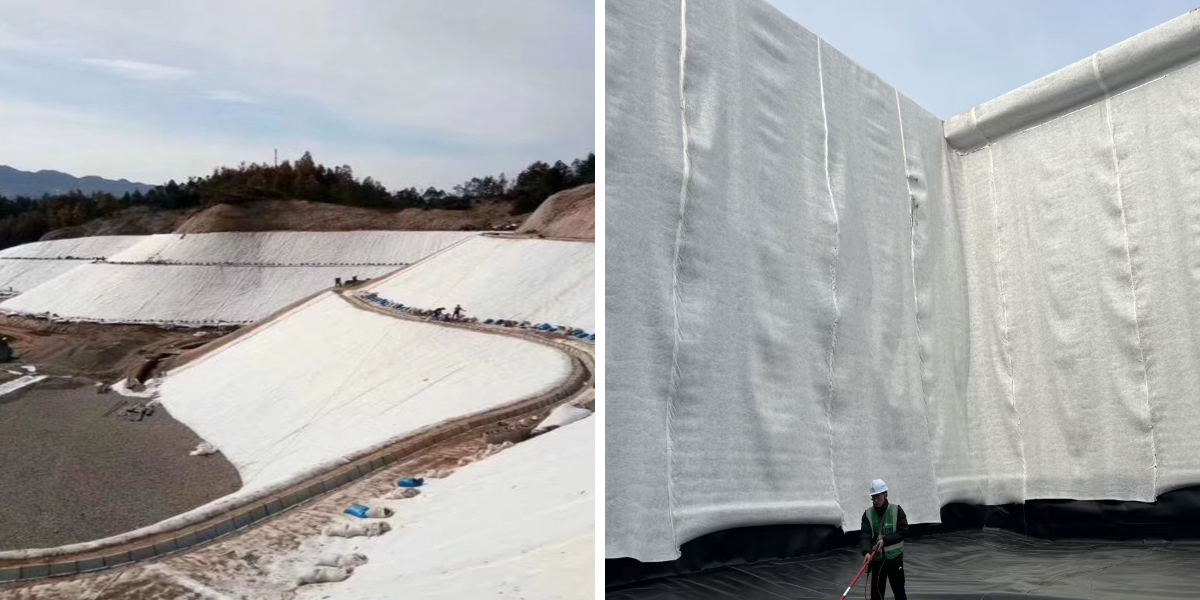
River and artificial lake remediation: White geotextile can be used as an "ecological isolation layer" in river ecological restoration and artificial lake excavation projects. In the remediation of river bank slopes, geotextiles are laid between the soil on the bank slope and ecological bags (or vegetation concrete), which can filter soil particles, prevent soil erosion on the bank slope, and provide breathable space for plant root growth, promoting the restoration of vegetation on the bank slope; In the construction of artificial lakes, geotextiles are laid between the anti-seepage membrane at the bottom of the lake and the soil at the bottom of the lake, which can reduce the friction damage between the soil and the anti-seepage membrane. At the same time, when a small amount of pollutants appear in the lake water, the adsorption performance of geotextiles can play a preliminary purification role and protect the water quality of the lake. In addition, in wetland ecological engineering, white geotextile can be used to construct filtration units for artificial wetlands, assisting in the purification of domestic sewage and agricultural non-point source polluted water, and improving the purification efficiency of wetlands.
Landfill engineering: In the anti-seepage system of the landfill, white geotextile plays a key role as the "protective layer and filtering layer". At the bottom of the landfill site, geotextile is laid above the HDPE anti-seepage membrane to prevent sharp objects (such as metal fragments and glass shards) from piercing the anti-seepage membrane during the landfill process, protecting the integrity of the anti-seepage system; In the landfill leachate collection system, geotextile is laid in the gravel layer around the leachate collection pipe to filter suspended solids in the leachate, prevent blockage of the collection pipe, and ensure smooth discharge of leachate to the treatment system. Meanwhile, due to the excellent chemical stability of white geotextile, it can withstand the corrosion of acid, alkali, and organic pollutants in leachate, ensuring that it does not degrade or damage during long-term use.
Road and Infrastructure Assistance: Structural Strengthening and Life Extension
Highway and railway construction assistance: White geotextile can be laid between the base and cushion layers of highways and railways (such as cement stabilized crushed stone base and plain soil cushion layer) to achieve "interlayer isolation". It can prevent fine particles in the base layer from penetrating downwards into the cushion layer, while also preventing moisture in the cushion layer from evaporating upwards to the base layer, thus avoiding shrinkage cracks in the base layer; In addition, the tensile performance of geotextile can disperse the vehicle load stress borne by the base layer, reduce the fracture caused by stress concentration in the base layer, and extend the service life of the road. In road construction in permafrost regions, white geotextile can also serve as a "thermal insulation layer" to reduce external heat transfer to permafrost roadbeds, delay permafrost melting, and prevent roadbed thaw settlement diseases.
Application of municipal infrastructure: In the construction of underground parking lots and underground comprehensive pipe galleries, white geotextile can be used as a waterproof auxiliary layer for the roof and side walls. Laying geotextile on the outer side of the waterproof layer of the roof can protect the waterproof layer from the impact damage of stones in the subsequent backfill soil; Laying geotextile between the side wall and the foundation pit enclosure structure can divert the rainwater seeping through the side wall, prevent rainwater from accumulating between the side wall and the enclosure structure, and reduce the risk of side wall leakage. In addition, in the pavement engineering of sidewalks and squares, laying geotextiles between the base and surface layers can reduce the mutual pollution between the base soil and surface materials, improve the stability of the pavement structure, and reduce problems such as surface cracking and sanding.
White geotextile, as a high-performance geosynthetic material, is made of high-strength polyester or polypropylene synthetic fibers. After special processing, it has significant advantages: it is not only durable and damage resistant, but also resistant to tearing and puncture. The fiber surface has an anti ultraviolet coating, which can resist external construction forces and long-term environmental aging, and has stable performance; It also has practical functions, with precise pore size to achieve a "permeable soil blocking" filtration effect. The three-dimensional mesh structure accelerates drainage and can assist in anti-seepage to reduce damage to the anti-seepage membrane; And the construction is convenient, the texture is light, and it can be cut without professional equipment, which can adapt to irregular engineering scenarios and save materials and time. With these characteristics, it plays a key role in multiple fields: in civil engineering, it is used as a "filter drainage" layer to prevent diseases in roadbeds, and as a filter layer and protective layer in dams; In gardens and agriculture, it can prevent soil from blocking the drainage layer, suppress weeds, reduce weight through roof greening, and filter irrigation water and retain water in agricultural scenes; In the fields of environmental protection and water conservancy, it is used as an ecological isolation layer, anti-seepage membrane, and initial water purification for rivers/artificial lakes, and as an anti-seepage membrane and filter for leachate in landfills; In road and municipal infrastructure, it is used as an interlayer isolation layer for highways/railways, and for underground infrastructure and sidewalk paving, it is used to protect and prevent water layers, leakage, and material pollution.