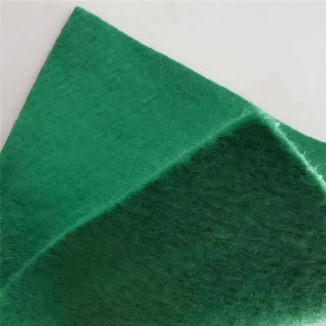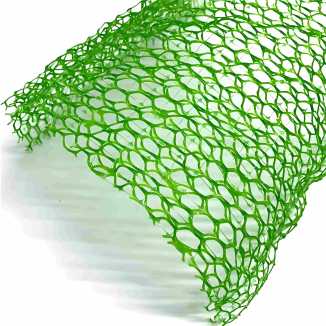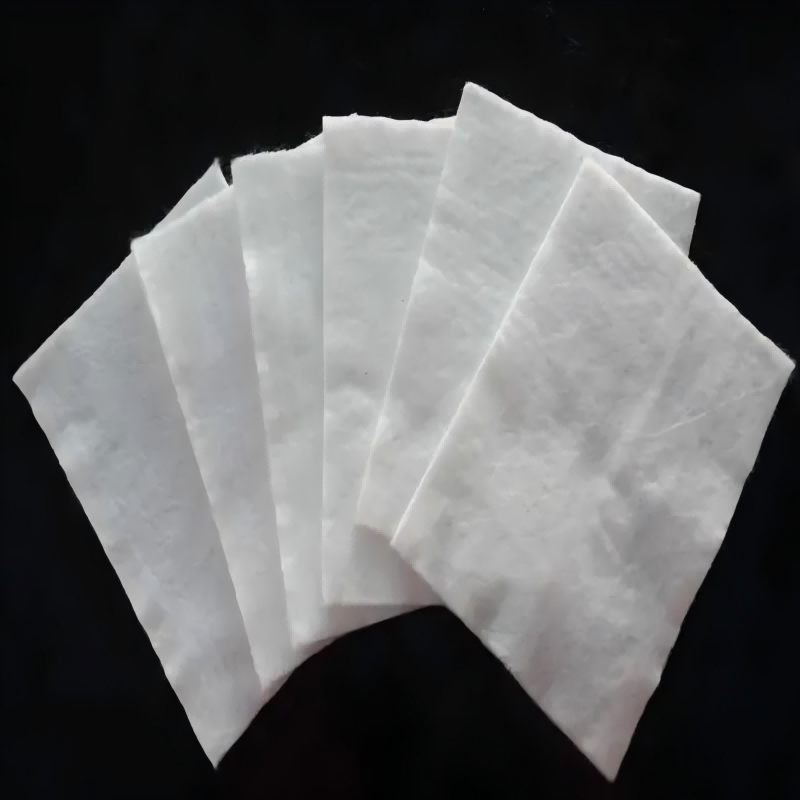
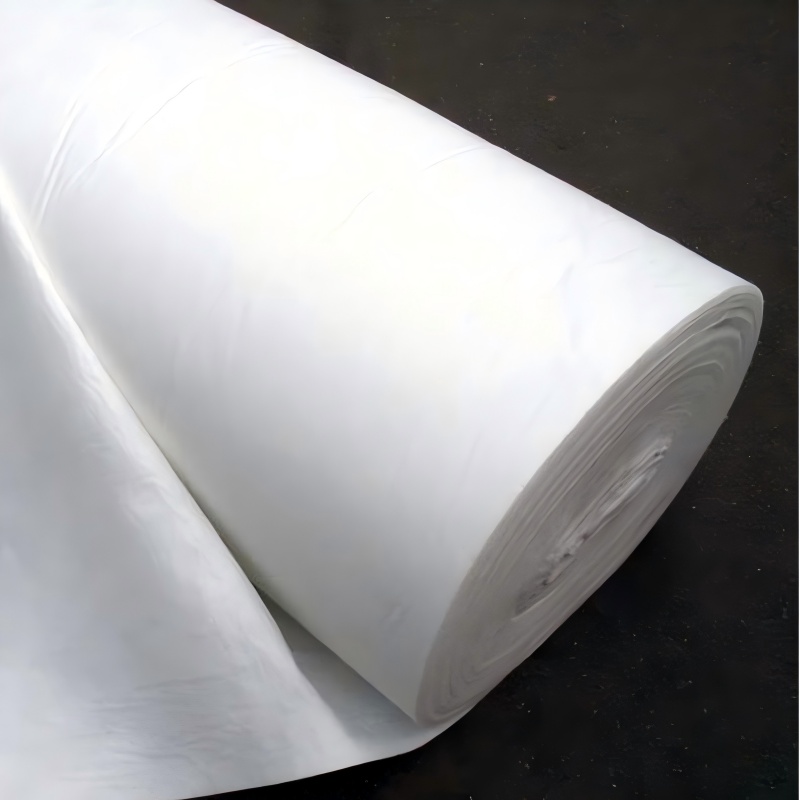
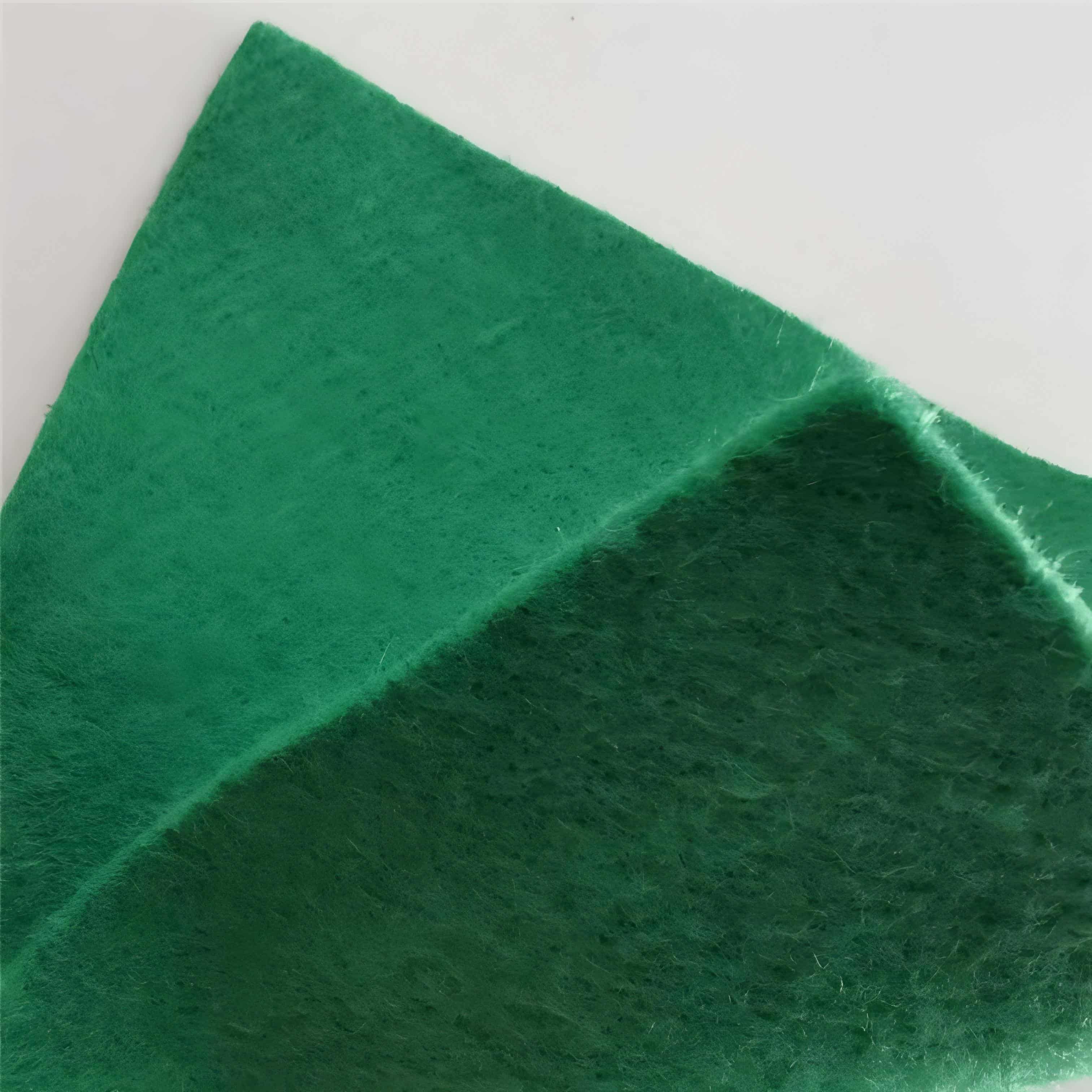
Geofabric Bidim
1.Filtering and drainage: Blocking soil and retaining particles, permeable and preventing water accumulation, protecting engineering structures;
2.Enhance stability: Disperse soil stress, limit displacement, and improve bearing capacity and deformation resistance;
3.Isolation and protection: Separate different materials to prevent mixing, and protect the structure from damage;
4.Convenient and economical: Lightweight and easy to lay, cost-effective, durable and requiring minimal maintenance, reducing overall costs.
Product Introduction
1、 Basic attributes
Geofabric Bidim are permeable geosynthetic materials made from synthetic fibers (such as polypropylene, polyester, etc.) or natural fibers through weaving, needle punching, non-woven and other processes. They have three basic properties: permeability (allowing water to penetrate), flexibility (adapting to soil deformation), and durability (resisting UV rays, corrosion, and aging). They can play a long-term stable role in engineering environments such as soil and rocks, and are lightweight, easy to process and cut, and suitable for the size requirements of different engineering scenarios.
2、 Core functions
Filtering and drainage: intercepting soil particles in the project to prevent soil loss, while allowing water and liquids to pass smoothly, avoiding pore blockage, solving the problem of water accumulation in structures such as roadbeds and dams, and reducing the damage of seepage to the project;
Soil reinforcement: Through friction with the soil, the stress on the soil is dispersed, the displacement of the soil is limited, the bearing capacity and deformation resistance of structures such as roadbeds, slopes, and landfills are improved, and the risk of collapse is reduced;
Isolation and Separation: Separate materials with different particle sizes and properties (such as soil and sand, soil and concrete) to prevent material mixing and pollution, ensure the stability of each layer's material function, and avoid mutual interference between different materials.
3、 Main features
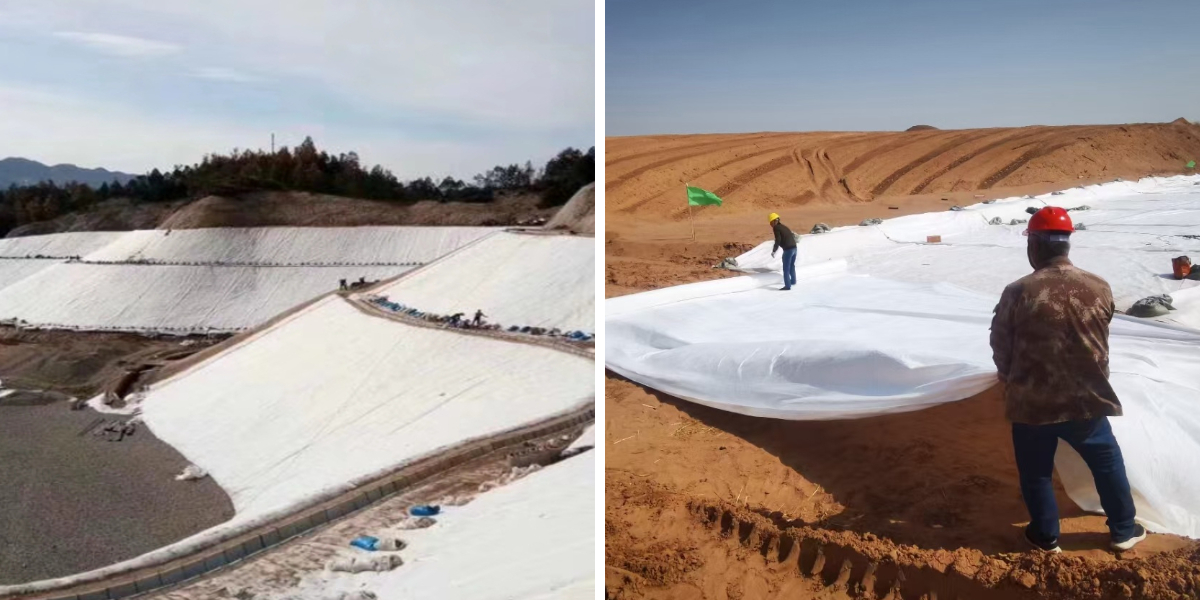
Convenient construction: light weight, good flexibility, can be flexibly cut and spliced according to engineering needs, high laying efficiency, greatly reducing the labor and time costs of traditional construction, especially suitable for complex terrains;
Economic advantage: Although the initial laying requires investment costs, it has strong durability and low maintenance requirements in the later stage, which can reduce the frequency of engineering repairs. Long term use can reduce the total cost, and the cost-effectiveness is higher than some traditional geotechnical materials;
Strong environmental adaptability: It has the characteristics of acid and alkali resistance, UV resistance, etc., and can be used in various harsh environments such as humidity, salt alkali, and open air. It is not easy to fail due to environmental factors and is suitable for various fields of engineering such as highways, water conservancy, and environmental protection.
Product Parameters
project | metric | ||||||||||
Nominal strength/(kN/m) | |||||||||||
6 | 9 | 12 | 18 | 24 | 30 | 36 | 48 | 54 | |||
1 | Longitudinal and transverse tensile strength / (kN/m) ≥ | 6 | 9 | 12 | 18 | 24 | 30 | 36 | 48 | 54 | |
2 | Maximum elongation at maximum load in longitudinal and transverse directions/% | 30~80 | |||||||||
3 | CBR top penetration strength /kN ≥ | 0.9 | 1.6 | 1.9 | 2.9 | 3.9 | 5.3 | 6.4 | 7.9 | 8.5 | |
4 | Longitudinal and transverse tearing strength /kN | 0.15 | 0.22 | 0.29 | 0.43 | 0.57 | 0.71 | 0.83 | 1.1 | 1.25 | |
5 | Equivalent aperture O.90(O95)/mm | 0.05~0.30 | |||||||||
6 | Vertical permeability coefficient/(cm/s) | K× (10-¹~10-), where K=1.0~9.9 | |||||||||
7 | Width deviation rate /% ≥ | -0.5 | |||||||||
8 | Unit area mass deviation rate /% ≥ | -5 | |||||||||
9 | Thickness deviation rate /% ≥ | -10 | |||||||||
10 | Thickness coefficient of variation (CV)/% ≤ | 10 | |||||||||
11 | Dynamic perforation | Puncture hole diameter/mm ≤ | 37 | 33 | 27 | 20 | 17 | 14 | 11 | 9 | 7 |
12 | Longitudinal and transverse fracture strength (grab method)/kN ≥ | 0.3 | 0.5 | 0.7 | 1.1 | 1.4 | 1.9 | 2.4 | 3 | 3.5 | |
13 | Ultraviolet resistance (Xenon arc lamp method) | Longitudinal and transverse strength retention rate% ≥ | 70 | ||||||||
14 | Ultraviolet resistance (fluorescence UV lamp method) | Longitudinal and transverse strength retention rate% ≥ | 80 | ||||||||
Product Application
1. Highway and railway engineering (core requirements: stable roadbed, anti settlement)
Roadbed reinforcement: Laying geotextiles in the roadbed fill to disperse stress and limit lateral displacement of the soil, improve the bearing capacity of the roadbed, and reduce settlement and cracking caused by vehicle loads;
Base isolation: Separate the roadbed soil from the sand and gravel base to prevent soil particles from mixing with sand and gravel and blocking pores, ensuring the permeability and strength of the base, and extending the service life of the road surface;
Slope protection: Lay in accordance with the slope, cooperate with vegetation or grid, prevent soil loss caused by rainwater erosion, and enhance slope stability.
2. Water conservancy and waterway engineering (core requirements: drainage, anti-seepage, erosion prevention)
Embankment/riverbank reinforcement: Lay on the upstream slope of the embankment to resist water flow erosion, and at the same time, discharge the accumulated water inside the dam body through drainage function to avoid landslides caused by seepage;
River/channel lining: Separate the bottom soil of the channel from the lining material (such as concrete slab) to reduce the damage of soil frost heave to the lining, while assisting drainage to prevent channel siltation;
Port terminal: Lay in the backfilling of the terminal foundation, isolate different fillers, enhance the overall integrity of the foundation, and reduce the deformation of the foundation caused by wave impact.
3. Construction and municipal engineering (core requirements: foundation stability, leakage prevention)
Foundation treatment: In the reinforcement of soft soil foundation (such as silt layer), it is combined with sand and gravel cushion layer to form a "composite foundation", accelerate the drainage consolidation of the foundation, improve the bearing capacity of the foundation, and avoid building settlement;
Underground engineering: In subway and tunnel construction, it is laid on the outside of the waterproof layer as a "filter layer" to prevent underground soil and water particles from blocking the waterproof layer, while protecting the waterproof layer from sharp rock scratches;
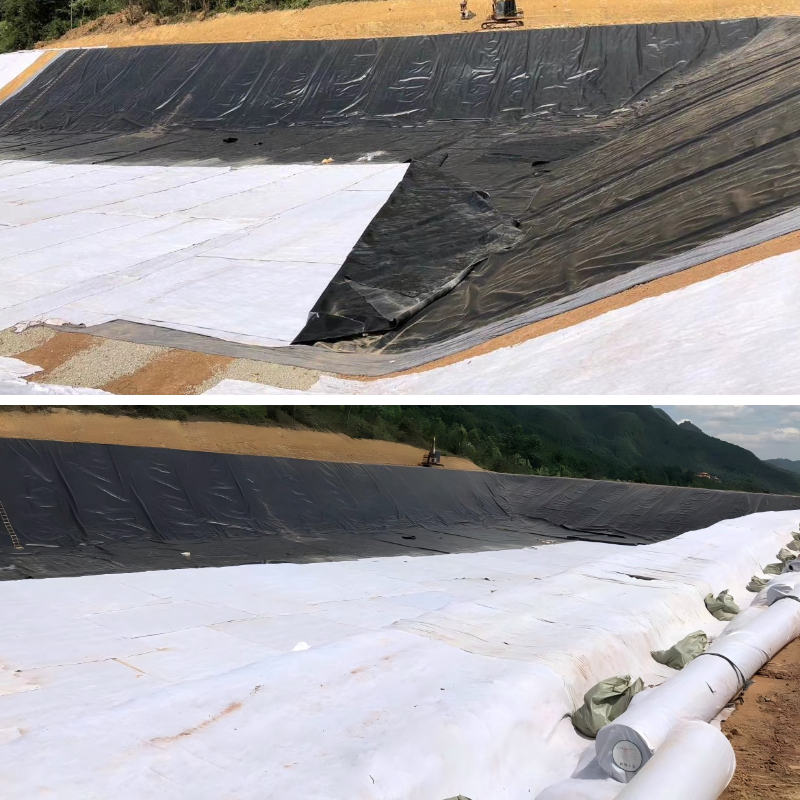
Landfill site: As the "protective layer" of the landfill lining system, it separates the leachate from the underlying soil, prevents leachate from polluting groundwater, and assists in the collection and discharge of leachate.
4. Environmental Protection and Ecological Engineering (Core Requirements: Soil and Water Conservation, Pollution Isolation)
Soil erosion control: Lay in reclaimed areas of barren mountains and mining areas, cover exposed soil, cooperate with vegetation restoration, reduce soil erosion caused by rainwater erosion, and intercept soil particles to promote vegetation rooting;
Artificial wetland/sewage treatment: As a separation layer for wetland fillers (such as gravel and soil), it filters suspended solids in sewage, improves sewage purification efficiency, and prevents mixed clogging of fillers;
Saline alkali land improvement: laid under the surface layer of saline alkali land, isolating deep saline alkali soil from surface planting soil, preventing saline alkali migration upwards, and cooperating with drainage system to reduce soil salt content, creating conditions for crop growth.
5. Mining and Energy Engineering (Core Requirements: Tailings Treatment, Foundation Reinforcement)
Tailings pond anti-seepage: It is laid at the bottom of the tailings pond to isolate the tailings from the underground water and soil, prevent heavy metal pollutants in the tailings from infiltrating into the groundwater, and assist in the collection and reuse of tailings water;
Coal seam mining area: In the land reclamation of coal mining subsidence areas, geotextiles are laid to reinforce the reclaimed soil layer, prevent soil collapse due to underground cavities, and restore land cultivation or construction functions.
In summary, as a multifunctional geosynthetic material, geotextiles are applied throughout key aspects of engineering construction, such as foundation treatment, structural reinforcement, and ecological protection. They can not only solve core pain points in different fields (such as roadbed settlement, dam leakage, and soil pollution), but also adapt to complex environments and diverse construction needs. From transportation infrastructure to ecological restoration, from municipal construction to mining management, geotextiles, with their advantages of high efficiency, economy, and durability, have become an important support for improving engineering quality, reducing maintenance costs, and ensuring ecological safety. They have irreplaceable application value in the field of modern engineering.