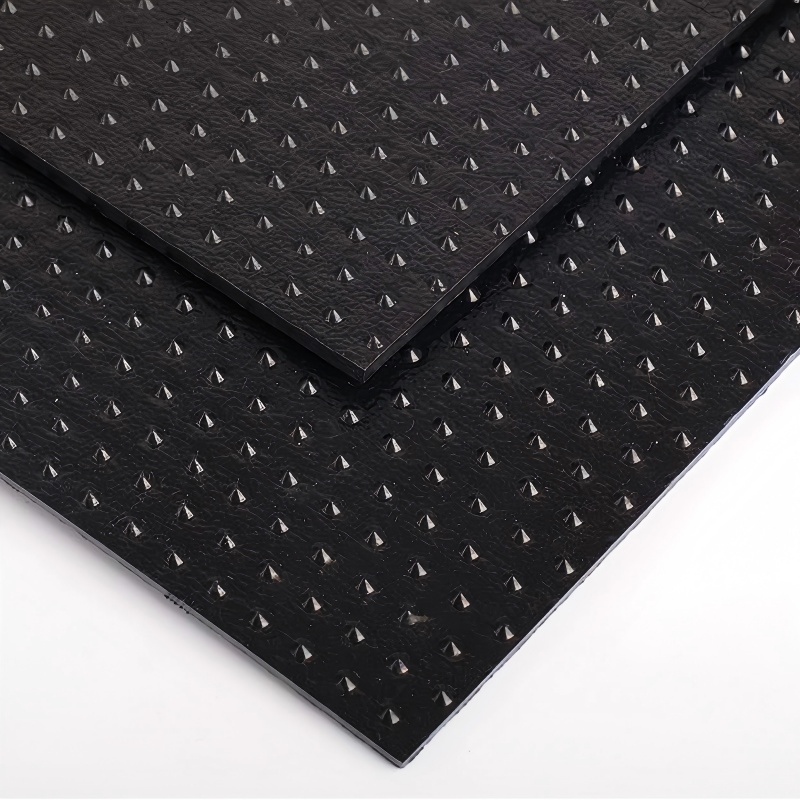
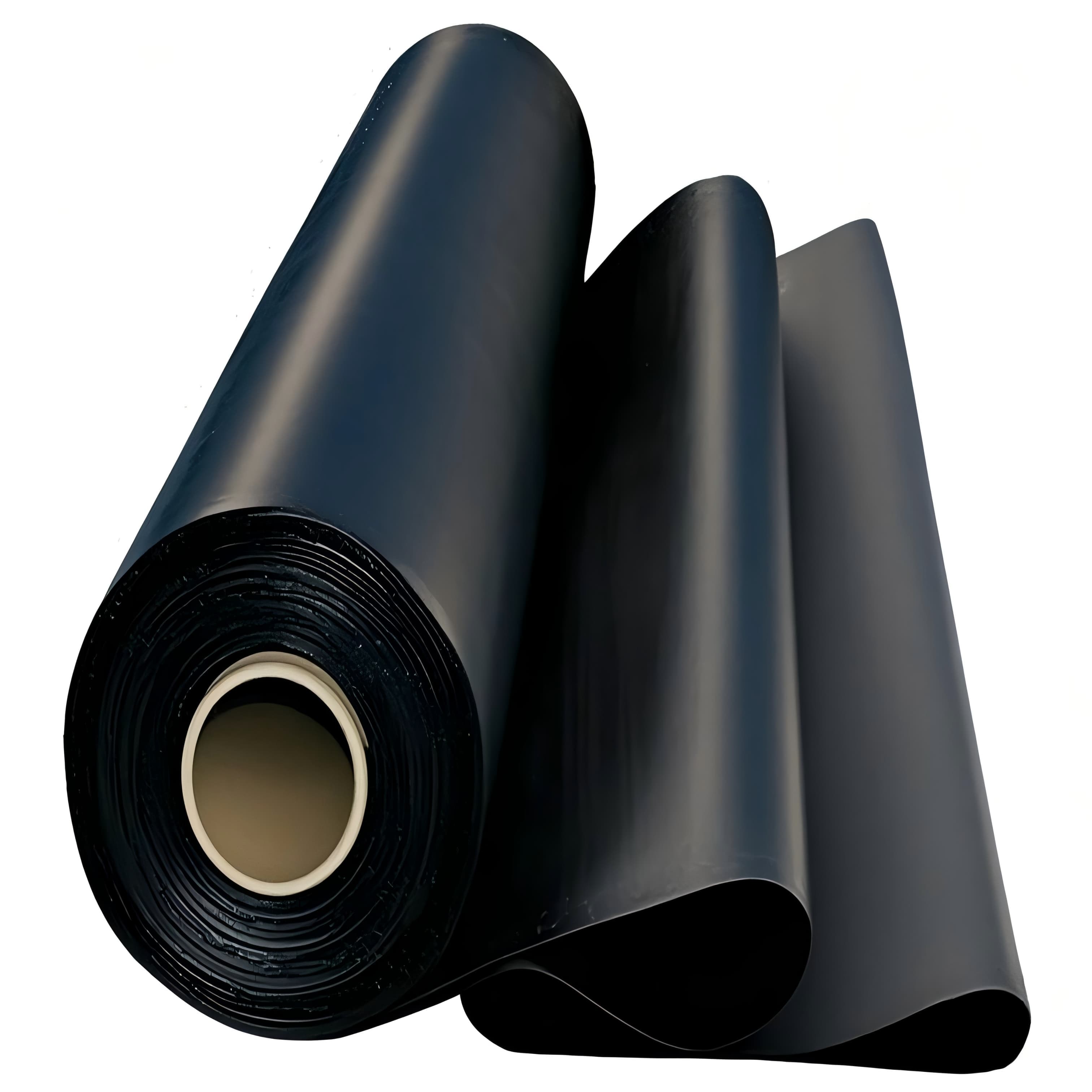
HDPE Concrete Liner
1. Excellent anti-seepage performance: Its permeability coefficient is extremely low, which can effectively block the penetration of liquids such as water, water vapor, oil, chemical solutions, etc., ensuring the sealing of engineering structures.
2. Strong chemical stability: It has good ability to resist acid, alkali, salt, and various oils and organic solvents corrosion
3. Durability and anti-aging property: by adding anti-aging agents such as carbon black, it can effectively resist ultraviolet radiation, slow down the aging process of materials, and has a long service life, up to decades or more.
4. Good mechanical properties: It has high tensile strength, fracture elongation, and tear resistance, can adapt to uneven settlement and certain deformation of the foundation, and is not easily broken.
Product Introduction:
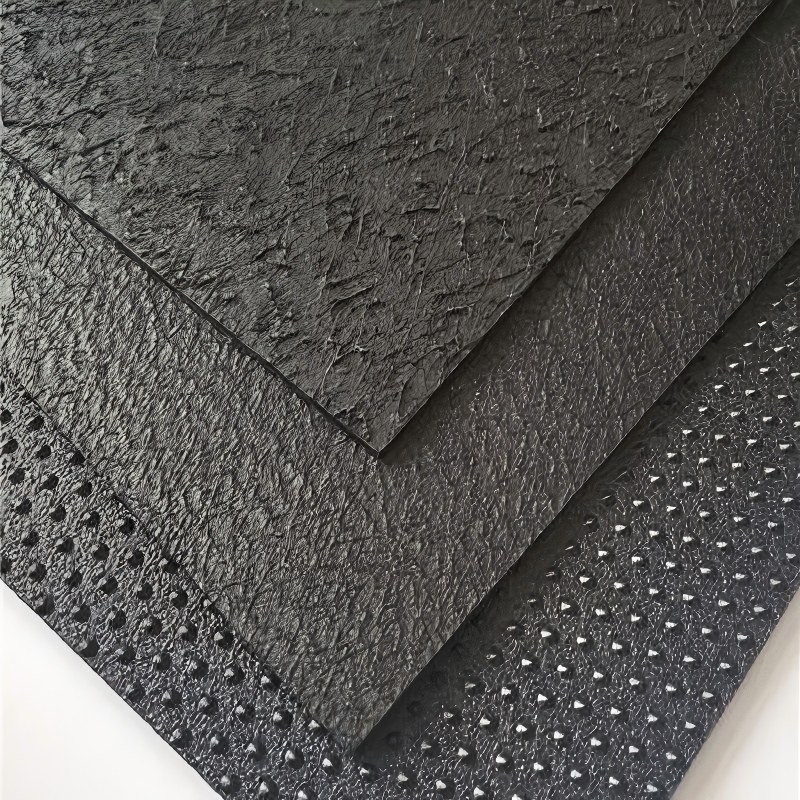
HDPE Concrete Liner is a high-performance protective membrane engineered to shield concrete structures from corrosion, chemical erosion and water infiltration. Made of premium high-density polyethylene raw materials, it features outstanding tensile strength, UV stability and aging resistance, adapting perfectly to complex terrain and structural deformation. The classic 40 mil HDPE specification is widely favored for its balanced thickness, sturdy toughness and cost-effectiveness, suitable for long-term outdoor and industrial scenarios. This versatile material doubles as reliable HDPE Tank Lining and HDPE Pool Liner, delivering seamless anti-leakage and anti-corrosion performance for storage tanks, swimming pools and sewage concrete projects. With easy installation, low maintenance and long service life, HDPE Concrete Liner meets global engineering standards and is an ideal lining solution for civil construction, environmental protection and industrial infrastructure.
1. Basic Properties
HDPE Concrete Liner is a high-performance composite geosynthetic material, made from high-density polyethylene (HDPE) resin combined with reinforced additives via extrusion molding. It features a smooth or textured surface (textured type enhances friction with concrete/soil), with customizable thickness ranging from 0.5mm to 3.0mm. It has excellent chemical stability, low temperature resistance (-60℃ to 80℃ operating temperature range), and ultra-low permeability coefficient (≤1.0×10⁻¹³ cm/s), meeting strict anti-seepage standards for engineering projects.
2. Core Functions
High-efficiency anti-seepage & impermeabilization: Acts as a barrier layer to block the penetration of water, chemical liquids, or harmful substances, preventing leakage of liquids in projects such as reservoirs, landfills, and chemical storage tanks, and avoiding soil and groundwater pollution.
Concrete structure protection: Isolates concrete from corrosive media (e.g., acid, alkali, salt solutions), reduces erosion and aging of concrete structures, and extends the service life of engineering facilities.
Enhanced structural integrity: Its good tensile strength and toughness complement concrete’s brittleness, resisting slight deformation of the base layer without cracking, and improving the overall stability of the liner system.

3. Main Characteristics
Durability & corrosion resistance: Resists erosion by acids, alkalis, salts, and organic solvents, and is UV-resistant, suitable for long-term outdoor or harsh working environments.
Easy construction & installation: Lightweight, flexible, and easy to cut and weld; can be laid on uneven surfaces, with hot-melt welding ensuring seamless joints and reliable anti-seepage effect.
Cost-effectiveness & eco-friendliness: Requires less maintenance during service, reducing long-term engineering costs; HDPE material is non-toxic, recyclable, and does not cause secondary environmental pollution.
Product Parameters:
Metric | ASTM | unit | Test value | Minimum test frequency | ||||||
test method | 0.75 mm | 1.00 mm | 1.25 mm | 1.50 mm | 2.00 mm | 2.50mm | 3.00 mm | |||
Minimum average thickness | D5199 | mm | 0.75 | 1 | 1.25 | 1.5 | 2 | 2.5 | 3 | Per volume |
Minimum value (any one of 10) | -10% | -10% | -10% | -10% | -10% | -10% | -10% | |||
minimum density | D 1505/D 792 | g/cm3 | 0.94 | 0.94 | 0.94 | 0.94 | 0.94 | 0.94 | 0.94 | 90,000 kg |
Minimum average tensile performance (1) | D638 Type IV | |||||||||
Breakage strength, | N/mm | 20 | 27 | 33 | 40 | 53 | 67 | 80 | 9,000 kg | |
yield strength | N/mm | 11 | 15 | 18 | 22 | 29 | 37 | 44 | ||
Strain extension, | % | 700 | 700 | 700 | 700 | 700 | 700 | 700 | ||
yield extension | % | 12 | 12 | 12 | 12 | 12 | 12 | 12 | ||
Minimum strength of right-angle tear | D 1004 | N | 93 | 125 | 156 | 187 | 249 | 311 | 374 | 20,000 kg |
Minimum puncture strength | D4833 | N | 240 | 320 | 400 | 480 | 640 | 800 | 960 | 20,000 kg |
Constant tensile load stress cracking (2) | D5397 | hour | 300 | 300 | 300 | 300 | 300 | 300 | 300 | Based on GRI GM-10 |
Carbon black content | D 1603(3) | % | 2.0-3.0 | 2.0-3.0 | 2.0-3.0 | 2.0-3.0 | 2.0-3.0 | 2.0-3.0 | 2.0-3.0 | 9,000 kg |
Carbon black dispersion | D5596 | Note (4) | Note (4) | Note (4) | Note (4) | Note (4) | Note (4) | Note (4) | 20,000 kg | |
Oxygen induction time (OIT) (5) | 90,000 kg | |||||||||
(a) Standard OIT | D3895 | minute | 100 | 100 | 100 | 100 | 100 | 100 | 100 | |
(b) high-handed OIT | D5885 | minute | 400 | 400 | 400 | 400 | 400 | 400 | 400 | |
85℃ Oven aging (minimum average) (5)(6) | Per formula | |||||||||
(A) Standard OIT is retained after 90 days | D 5721 | % | 55 | 55 | 55 | 55 | 55 | 55 | 55 | |
(B) High voltage OIT is retained for 90 days | D 3895 D5885 | % | 80 | 80 | 80 | 80 | 80 | 80 | 80 | |
Ultraviolet resistance (7) | Per formula | |||||||||
(a) standard OIT | D3895 | Note (8) 50 | ||||||||
(b) Retention of high pressure OIT after 1600 hours (9) | D5885 | % | ||||||||

Product Applications:
HDPE Concrete Liner serves as the core protective solution for all types of water treatment concrete structures, effectively solving the common pain points of traditional concrete facilities such as water seepage, chemical corrosion, and structural aging in long-term water contact scenarios. Most water treatment facilities, including sewage adjustment pools, clean water storage structures, and circulating water concrete tanks, operate in humid and chemically active environments all year round. Bare concrete is prone to erosion by acidic and alkaline water quality, microbial decomposition, and water pressure penetration, leading to cracking, peeling, and leakage, which shortens the service life of infrastructure and increases daily maintenance costs. This high-performance HDPE liner perfectly makes up for the inherent defects of concrete materials and has become the preferred lining material for water treatment engineering renovation and new construction.
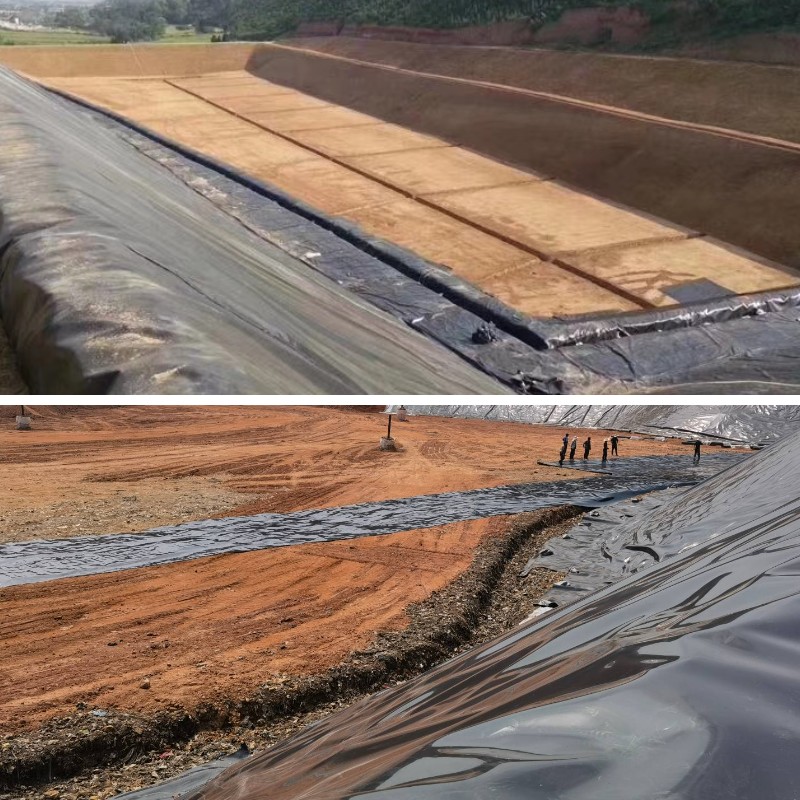
In conventional water treatment concrete projects, the 40 mil HDPE specification is the most widely adopted and cost-effective option. This thickness balances flexible toughness and structural stability, resisting daily water flow impact, temperature changes, and minor concrete structural deformation without cracking or delaminating. Different from thin liners that are prone to damage and ultra-thick materials with redundant costs, 40 mil HDPE maintains long-term structural integrity in continuous water immersion environments, providing stable waterproof and anti-corrosion barriers for concrete bases. It avoids the frequent repair problems of traditional anti-corrosion coatings and greatly reduces the later operation pressure of water treatment stations.
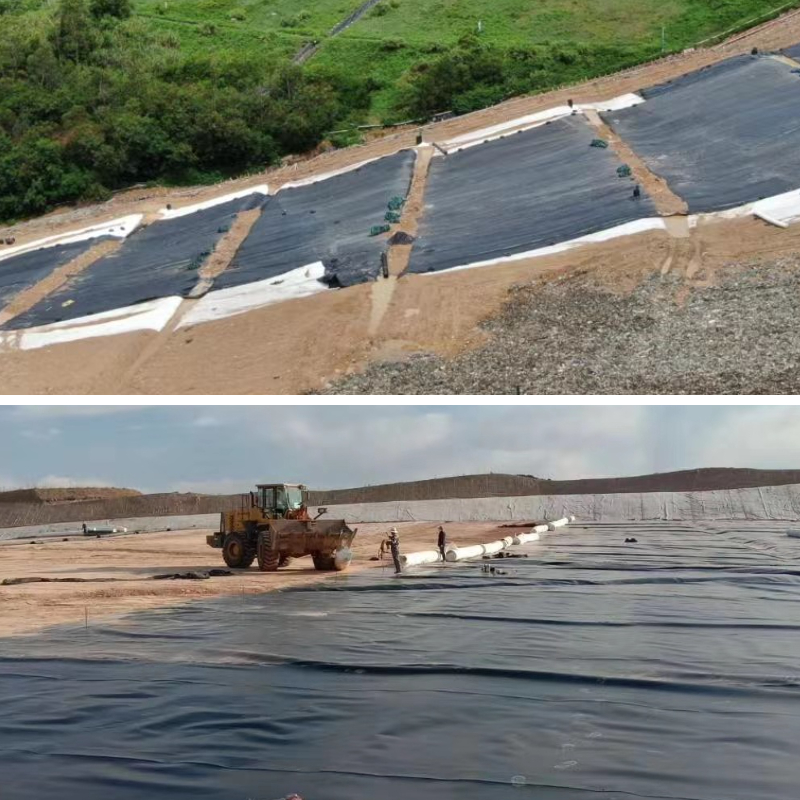
This versatile liner can be perfectly converted into professional HDPE Tank Lining for various concrete water storage tanks in water treatment systems. Whether it is industrial reclaimed water storage concrete tanks or domestic sewage buffer tanks, HDPE Tank Lining can form a seamless integral lining layer. It isolates corrosive substances in water from direct contact with concrete, prevents steel bar rusting and concrete carbonization, and ensures the tightness and structural safety of storage tanks for decades. Meanwhile, it is also applicable to the clean water isolation area of water treatment facilities as standard HDPE Pool Liner, providing non-toxic, tasteless, and pollution-free waterproof protection.
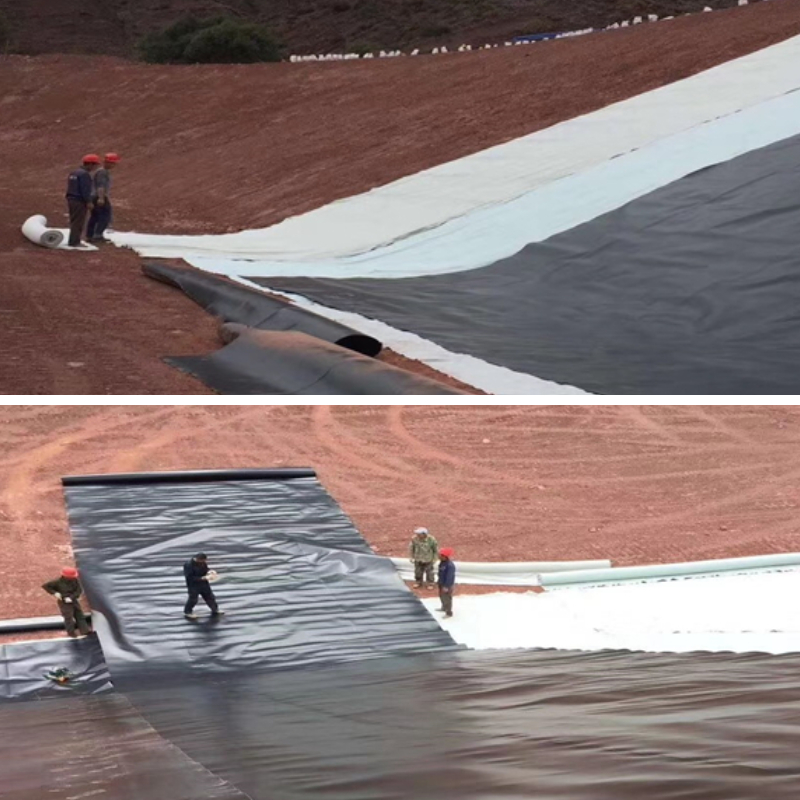
As a professional HDPE Pool Liner material, it complies with water safety standards, will not release harmful substances in long-term water contact, and effectively prevents clean water from seeping out and external impurities from infiltrating. Compared with traditional cement waterproof layers and paint coatings, HDPE Concrete Liner features simple installation, strong weather resistance, and zero maintenance in the later stage. It adapts to extreme temperature changes in outdoor and semi-underground water treatment environments, always maintains stable anti-seepage and anti-corrosion performance, and is a reliable durable protective material for modern water treatment concrete infrastructure.
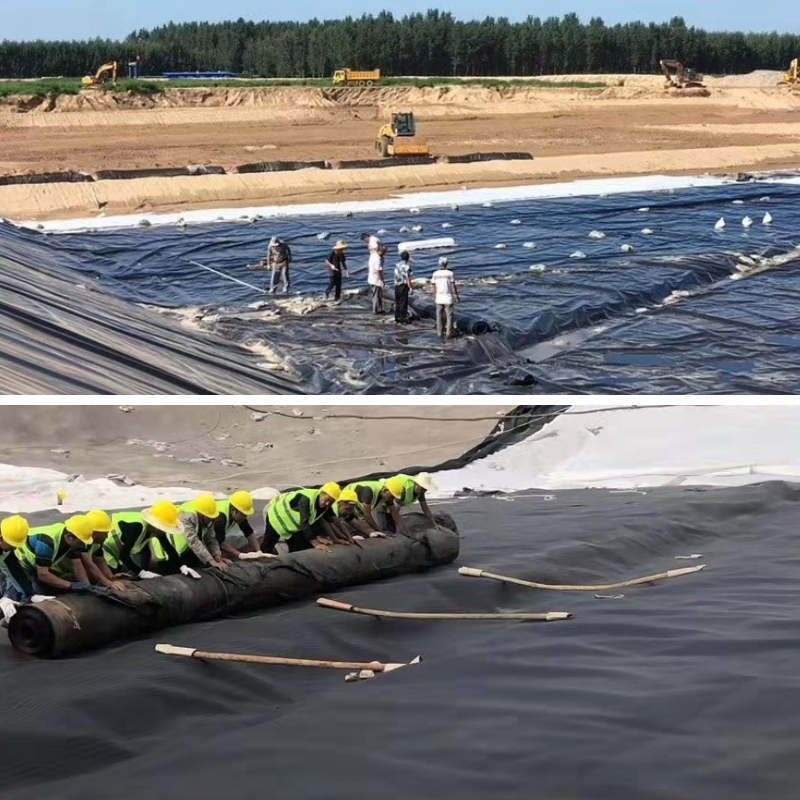
V. Agriculture and Aquaculture
Water Storage Tanks and Water-saving Irrigation
HDPE geomembrane is laid in agricultural irrigation water storage tanks to reduce water storage leakage and ensure the supply of irrigation water in dry seasons; it is also widely used in the anti-seepage of water sources in drip irrigation and sprinkler irrigation systems.
Aquaculture Ponds
As the inner liner of fish ponds, shrimp ponds, and sea cucumber culture ponds, HDPE geomembrane is smooth and corrosion-resistant, which can prevent the leakage of aquaculture water, facilitate pond cleaning and disinfection, reduce the occurrence of diseases, and improve aquaculture efficiency.
With core advantages such as excellent anti-seepage performance, corrosion and wear resistance, convenient construction, and low maintenance cost, HDPE geomembrane has been widely used in many key fields including water conservancy and hydropower, environmental protection, civil engineering and construction, mining, and agriculture and aquaculture, becoming an important material to ensure project safety, ecological environmental protection, and efficient production. Its application not only solves the pain points of traditional anti-seepage technologies such as large engineering volume, easy leakage, and poor adaptability, but also can optimize the structural design according to the special needs of different scenarios (such as chemical resistance for hazardous waste disposal and erosion resistance for water conservancy projects). It plays an irreplaceable role in saving resources, protecting the ecological environment, and extending the service life of projects. In the future, with the further improvement of anti-seepage standards in various industries, its application scenarios will continue to expand, and the market demand will also grow steadily.