The Full History & Development of HDPE Geocell in Civil Construction
Introduction
HDPE geocell stands amongst the most transformative geosynthetic improvements in current civil construction. As a three-d mobile confinement system, this bendy honeycomb shape reshapes how engineers cope with soil stabilization, load aid and slope restoration. The upward shove of HDPE geocell traces lower back from navy experimental checks to vast world civil works, with non-stop improvements to geocell fabric formulation and manufacturing techniques. Among its most identified applications, geocell slope safety and geocell slope erosion manipulate supply practical, eco-friendly options to typical challenging concrete and riprap solutions. This article evaluations the full timeline of HDPE geocell development, cloth evolution, core working ideas and mainstream civil engineering applications.
The Origin of Geocell: Military Birth and Early Stage Research
The thinking of mobile confinement was once first explored in the 1970s, initiated by means of the United States Army Corps of Engineers. Engineers wanted a fast, transportable approach to construct brief get entry to roads over weak, smooth floor for army movement. Early prototypes adopted easy polymer strips to shape related mobile units, aiming to lock free sand and soil to enhance bearing capability on unstable terrain.
In the beginning, the authentic geocell fabric was once no longer high-density polyethylene. The early polymer blends had constrained tensile electricity and terrible resistance in opposition to outside weathering, limiting long-term use in uncovered sites. These first merchandise have been designed for temporary tactical use only. After subject validation, producers started out trying out HDPE as the base substrate. HDPE added amazing tensile performance, chemical inertness and flexibility, laying the basis for present day HDPE geocell.
At this phase, the science used to be nevertheless restricted to navy scenarios. Civil enterprise consciousness remained low, and few engineers understood how to installation the machine for slope works. The core price of geocell slope erosion manage had no longer but been extensively diagnosed with the aid of mainstream civil sketch teams.
Commercialization Era: HDPE Becomes Standard Geocell Material
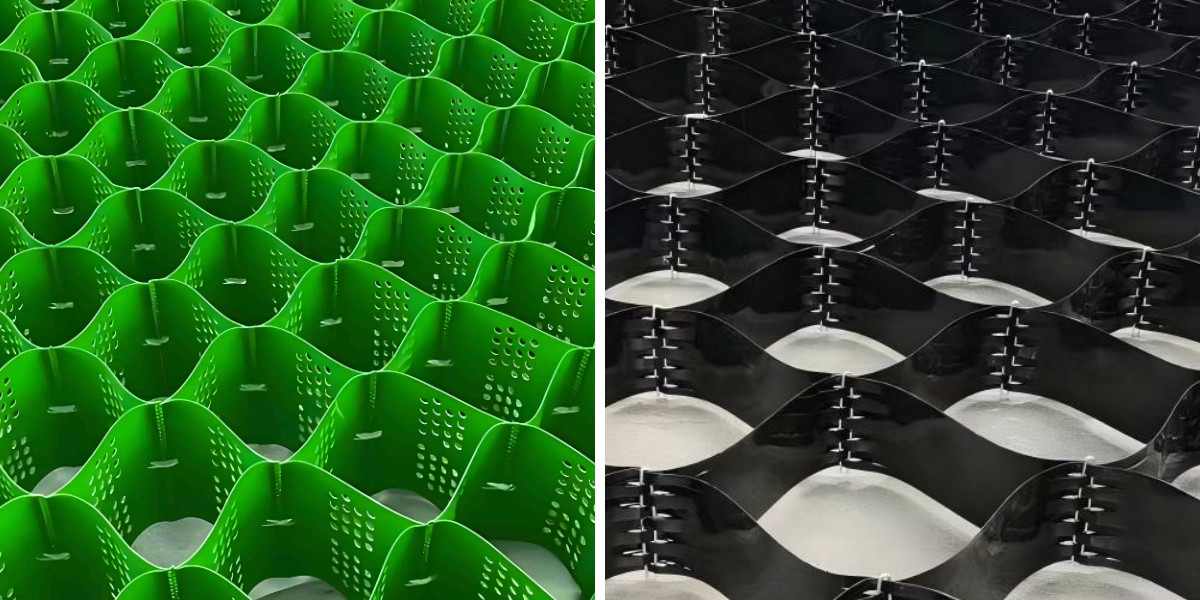
During the 1980s, geocell moved from army laboratories into business civil engineering markets. Manufacturers optimized manufacturing methods and chosen HDPE as the important geocell material. Ultrasonic welding science related HDPE sheets into expandable honeycomb panels, which may want to be folded flat for inexpensive transportation and stretched open shortly on development sites.
This fabric improve marked a vital turning point. Compared with older polymer options, HDPE resists degradation from acids, alkalis and underground chemicals. It continues structural integrity beneath long-term UV publicity and temperature fluctuation. Perforated HDPE designs have been later introduced, including drainage channels thru cellphone partitions to aid vegetation growth.
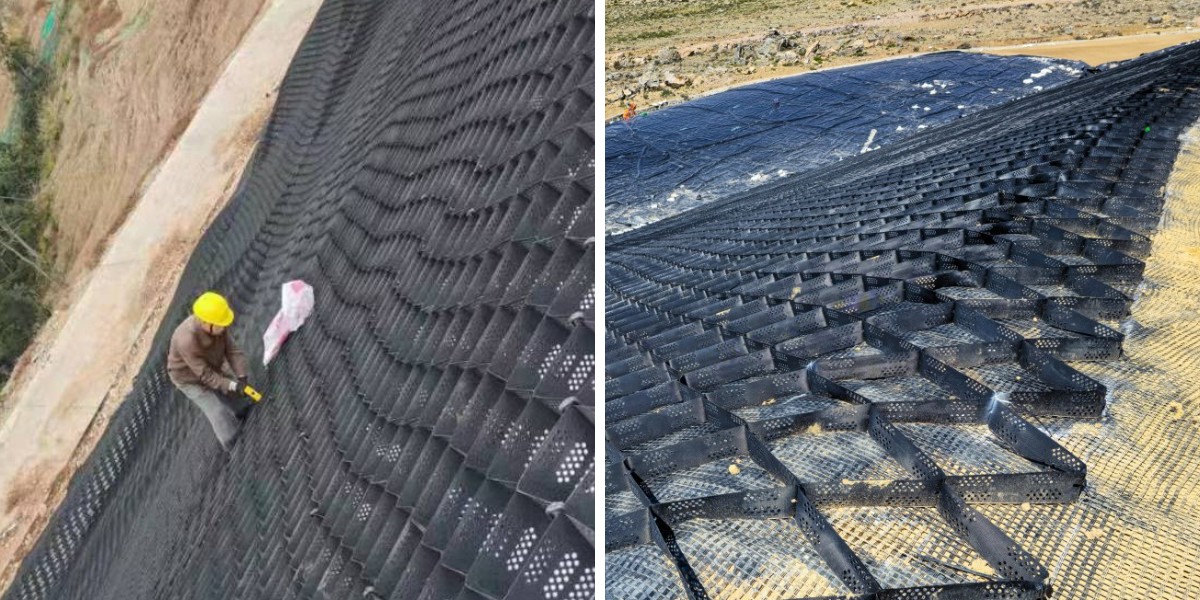
As product maturity grew, designers started out trying out HDPE geocell past street stabilization. Trials for geocell slope safety commenced on riverbanks and toll road embankments. Engineers located that stuffed geocell panels should keep topsoil firmly, give up floor soil sliding and allow grass roots to interlock inside the cell structure. This discovery pushed geocell slope erosion manipulate into actual civil assignment specifications.
Technology Upgrades: Modern HDPE Geocell and Global Application Expansion
From the Nineties onward, HDPE geocell entered a section of iterative refinement. Manufacturers adjusted sheet thickness, welding electricity and floor therapy of the geocell fabric to match numerous mission environments. Production traces scaled up, decreasing ordinary undertaking expenses and making HDPE geocell on hand throughout continents.
Design requirements step by step fashioned for one of a kind engineering conditions. For flat floor and street subgrade, geocell distributes automobile load and prevents soil lateral movement. For inclined terrain, geocell slope safety will become the desired solution. When hooked up on hillsides or river slopes, increased HDPE geocell is anchored to the base, then stuffed with nearby topsoil or aggregate. Each unbiased honeycomb phone locks infill substances and stops downhill moving below rainfall runoff. This mechanical confinement varieties the core common sense of geocell slope erosion control, combining mechanical reinforcement with herbal plant growth.
Compared with usual slope hardening, HDPE geocell structures maintain floor permeability intact. Rainwater infiltrates naturally as an alternative of going for walks off in targeted streams. Vegetation grows internal cells, forming a inexperienced defensive layer over time. This sustainable benefit helps HDPE geocell reap reputation in water conservancy, landfill, dual carriageway and ecological restoration projects.
Core Working Principle of HDPE Geocell in Civil Works
The overall performance of HDPE geocell comes from its three-d cell confinement mechanism. When the folded HDPE panel unfolds on site, it creates a community of related cells. Once filled, the infill cloth is trapped inside character honeycomb gadgets and can't shift sideways freely.
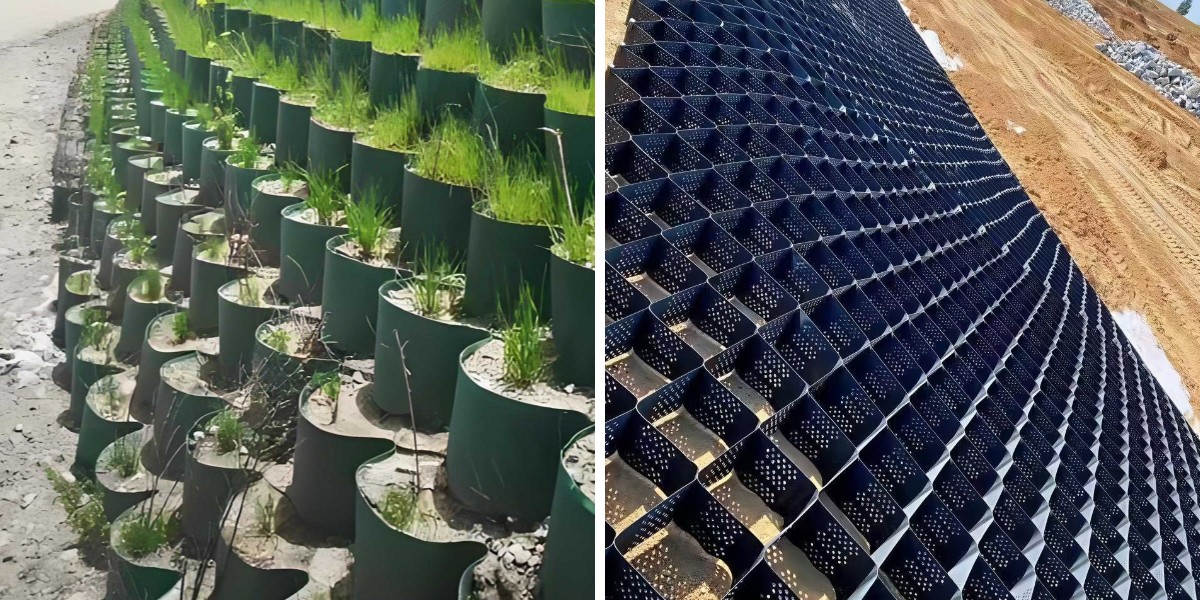
For geocell slope protection, this confinement will increase the normal shear resistance of slope cowl layers. Rain splash and flowing water conflict to wash away soil particles locked internal cells. With perforated geocell material, water passes thru mobile walls, decreasing pore water strain that in many instances triggers slope sliding.
Geocell slope erosion manipulate depends on the mixture of bodily confinement and organic stabilization. Topsoil inner cells helps seed germination. As plant roots develop thru phone perforations and weave throughout the whole geocell layer, vegetation and HDPE geocell structure an built-in shielding system. This hybrid shape grants long-term slope balance with much less environmental disruption than inflexible concrete structures.
Key Civil Construction Applications of HDPE Geocell
5.1 Highway and Railway Subgrade Stabilization
HDPE geocell reinforces susceptible subgrade soil for transportation infrastructure. The geocell fabric confines granular fill, spreads dynamic site visitors hundreds and reduces differential settlement. It extends pavement carrier existence and cuts renovation work for street projects.
5.2 Geocell Slope Protection for River, Reservoir and Highway Embankment
This is one of the most broadly adopted makes use of of HDPE geocell. Geocell slope safety works for steep river banks, slicing slopes alongside highways and reservoir shorelines. The hooked up HDPE cells maintain soil and create appropriate developing stipulations for native plants. It addresses geocell slope erosion manipulate needs, stopping financial institution crumple and sediment loss throughout flood events.
5.3 Retaining Wall and Landfill Engineering
HDPE geocell can be stacked layer through layer to construct bendy maintaining walls. In landfill projects, it stabilizes overlaying slopes and protects liner systems. The inert geocell cloth stands up to chemical leachate and continues long-term structural overall performance inner waste sites.
Conclusion
From army take a look at product to mainstream geosynthetic material, HDPE geocell has advanced progressively over decades. Continuous optimization of geocell cloth expands its boundary in civil construction. The validated overall performance of geocell slope safety and geocell slope erosion manage demonstrates HDPE geocell’s special fee for sustainable infrastructure. As ecological engineering necessities upward push worldwide, HDPE geocell will continue to be a dependable preference for soil stabilization, slope restoration and load reinforcement in future civil projects.