Composite Geo-membrane for Aquaculture Pond Lining: Benefits and Installation Tips
1. Introduction: Why Composite Geo-membrane Dominates Modern Aquaculture Pond Lining
Aquaculture pond lining is the core foundation of stable fish, shrimp, and crustacean farming operations. A reliable lining system maintains stable water levels, isolates external pollutants, prevents soil leakage, and creates a clean growing environment for aquatic products. Traditional lining solutions such as compacted clay, ordinary plastic films, and single-layer geotextiles often fail to balance impermeability, durability, and structural protection, leading to frequent water leakage, pond bottom erosion, and poor water quality stability. In modern standardized aquaculture construction, Composite Geotextile integrated lining materials have become the mainstream choice, while professional Impermeable Geotextile Membrane and upgraded Reservoir Composite Geomembrane are widely adapted for high-standard aquaculture pond renovation and new construction.
Composite geo-membrane combines the protective performance of geotextile and the waterproof performance of geomembrane, solving the common defects of single-function lining materials. It perfectly meets the long-term water storage and anti-seepage demands of aquaculture ponds, effectively reducing farming risks and later maintenance costs. This article systematically analyzes the core benefits of composite geo-membrane for aquaculture pond lining and shares standardized installation tips to help farmers and engineering teams achieve high-quality pond construction.
2. Basic Overview of Core Aquaculture Lining Materials
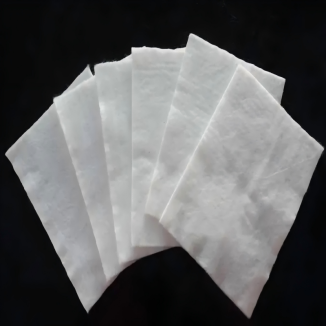
Composite Geotextile is the basic composite structure of aquaculture pond lining, composed of high-toughness fiber geotextile and compact waterproof membrane through integrated thermal compounding. The fiber layer provides physical protection and buffer performance, while the membrane layer undertakes core anti-seepage functions. This dual-structure design avoids the easy puncture, aging, and damage problems of single waterproof films, greatly improving the overall stability of the pond lining system.
As a professional waterproof and anti-seepage material for water body engineering, Impermeable Geotextile Membrane features excellent water blocking performance and environmental adaptability. It effectively isolates pond water from surrounding soil and groundwater, preventing mutual penetration of internal and external water bodies that may cause water quality deterioration and water level loss. Its flexible structural characteristics allow it to fit the irregular surfaces of aquaculture pond bottoms and slopes perfectly.
Reservoir Composite Geomembrane is an upgraded composite lining material optimized for long-term large-capacity water storage environments. With enhanced compounding technology and structural density, it adapts to long-term full water immersion and alternating dry-wet conditions. Originally designed for reservoir anti-seepage projects, it has been widely promoted in high-standard aquaculture ponds due to its superior durability and anti-erosion performance, becoming an ideal material for large-scale and intensive farming pond construction.
3. Core Benefits of Composite Geo-membrane for Aquaculture Pond Lining
3.1 Superior Anti-Seepage Performance Stabilizes Farming Water Environment
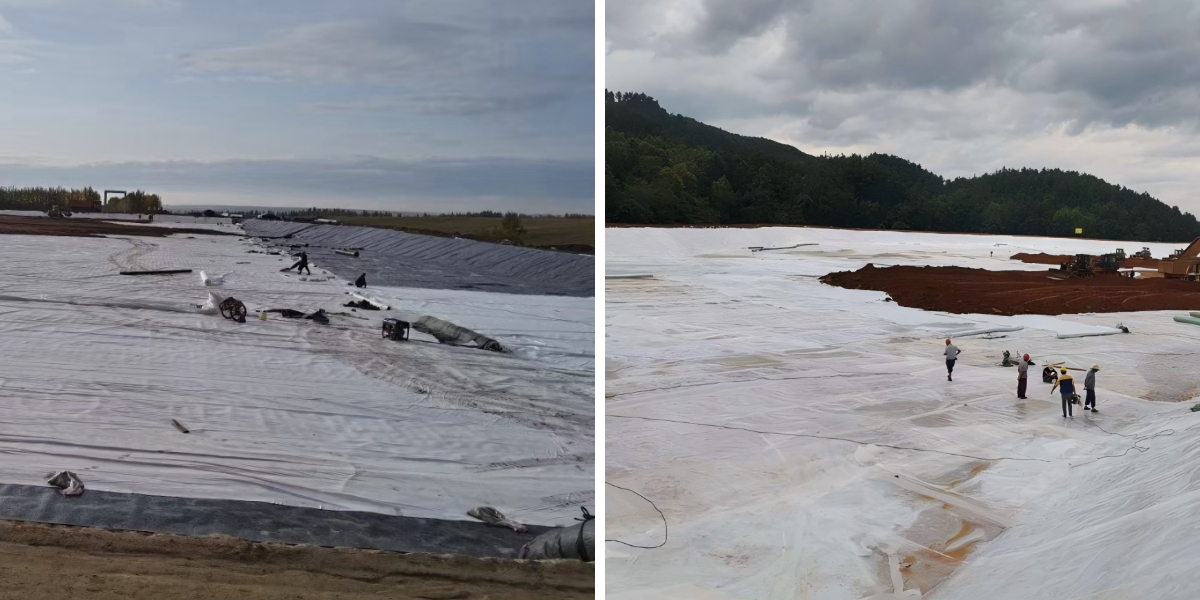
The primary advantage of applying composite geo-membrane in aquaculture ponds is reliable integral anti-seepage capability. The compact film layer of Impermeable Geotextile Membrane forms a fully enclosed waterproof barrier, completely blocking water leakage from pond bottoms and side slopes. It avoids invalid water resource loss and maintains stable water depth for aquatic creature growth, reducing frequent water replenishment operations in farming management.
Meanwhile, the tight isolation structure prevents external soil impurities, harmful substances, and underground salt alkali from penetrating into the pond water, effectively stabilizing water quality indicators. The dual-layer structure of Composite Geotextile ensures no seepage gaps at the material joints, avoiding local water leakage caused by single-layer material damage and laying a stable environmental foundation for healthy aquaculture growth.
3.2 Strong Physical Protection Extends Pond Service Life
Aquaculture ponds face long-term water flow scouring, aquatic organism activity friction, and soil foundation extrusion. Ordinary lining materials are prone to damage and failure in long-term operation. The fiber protective layer of Composite Geotextile provides excellent puncture resistance, tensile resistance, and anti-scouring performance, buffering external mechanical damage to the waterproof membrane layer.
Reservoir Composite Geomembrane inherits the high-strength structural characteristics of water storage engineering materials, resisting long-term water pressure impact and foundation slight deformation. It prevents pond bottom depression, slope soil loss, and lining cracking, maintaining the complete structural integrity of aquaculture ponds for a long time. This greatly reduces the frequency of pond renovation and maintenance, cutting long-term farming investment costs.
3.3 Eco-Friendly Material Ensures Safe Aquaculture Production
High-quality composite geo-membrane materials are made of environmentally friendly polymer raw materials, with no toxic and harmful substance precipitation in long-term water immersion. Impermeable Geotextile Membrane has stable chemical properties, resisting water body corrosion and microbial erosion, and will not cause water quality pollution or affect the survival and growth of aquatic products.
The smooth and flat surface of Composite Geotextile lining reduces the adhesion of algae and sludge, slowing down water quality deterioration caused by microbial reproduction. It simplifies daily pond cleaning and water quality management, helping farmers build a green, healthy, and low-consumption aquaculture ecosystem.
3.4 Cost-Effective and Widely Adaptive
Compared with traditional concrete pouring and clay lining, composite geo-membrane has lower comprehensive construction cost and higher construction efficiency. Reservoir Composite Geomembrane adapts to various terrain conditions and pond types, suitable for small household ponds and large-scale intensive farming ponds alike. Its flexible roll design supports arbitrary cutting and laying according to pond shapes, with strong engineering adaptability.
4. Professional Installation Tips for Aquaculture Pond Composite Geo-membrane
4.1 Strict Pre-Construction Site Preparation
Good foundation treatment is the premise of stable lining performance. Before laying Composite Geotextile, thoroughly clean the pond bottom and side slopes to remove sharp stones, tree roots, hard debris, and protruding objects that may puncture the material. Level and compact the pond foundation to ensure a flat, smooth, and solid base surface, avoiding local tension and damage of the membrane caused by uneven foundations.
Check the dryness and flatness of the base to create optimal construction conditions for the subsequent deployment of Impermeable Geotextile Membrane, ensuring the material fits closely with the foundation without hollowing.
4.2 Standard Material Deployment and Layout
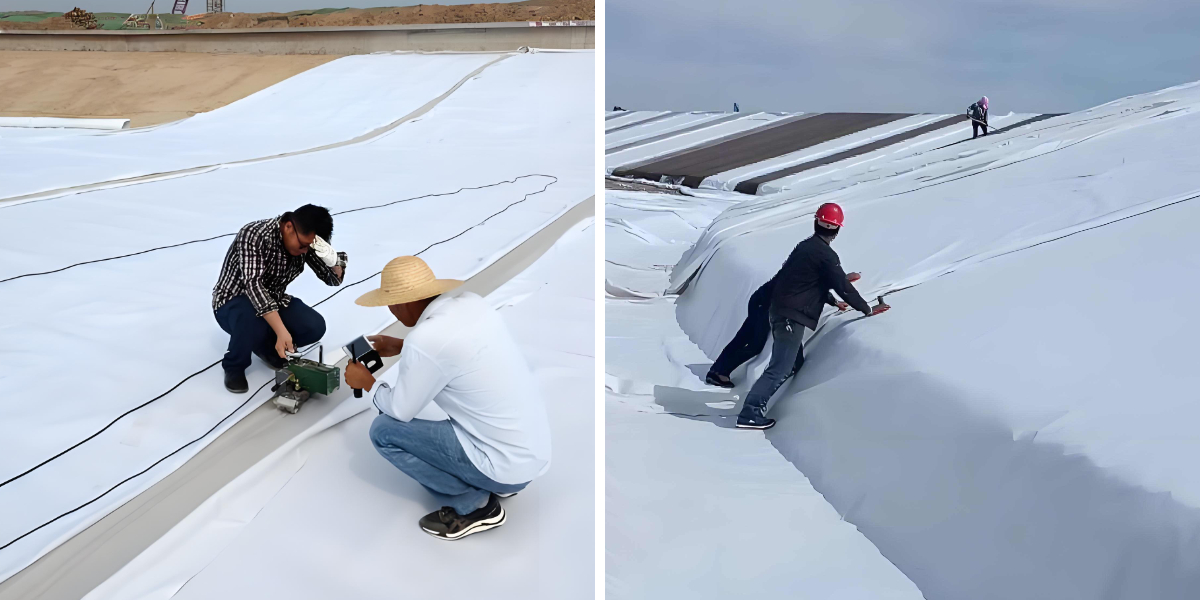
Unfold Reservoir Composite Geomembrane gently along the pond contour during construction, avoiding excessive stretching and rigid pulling. Reserve reasonable material margin according to temperature change characteristics to prevent membrane cracking caused by thermal expansion and contraction. Keep the material flat and tidy during deployment, reduce wrinkles and folds, and ensure the overall laying uniformity of the pond lining.
Plan the laying sequence reasonably, prioritize integral covering of key areas such as pond bottoms and slope corners, and minimize splicing times to improve the integrity of the anti-seepage system.
4.3 Reliable Seam Welding and Edge Fixing
Seam treatment is the key to ensuring the anti-seepage effect of Impermeable Geotextile Membrane. Adopt professional thermal welding technology for material overlapping joints to form a tight and leak-free welding seam. Check the firmness and compactness of all welding parts to avoid hidden leakage dangers caused by incomplete welding.
Fix the edges of Composite Geotextile into pre-set anchor trenches, compact and fix the edges with soil or concrete to prevent membrane sliding and edge warping. Complete closed fixing of the entire lining system to ensure long-term stable operation.
4.4 Post-Construction Inspection and Protection
After installation, conduct a comprehensive inspection on the whole Reservoir Composite Geomembrane lining surface, check for damage, missing welding, and unfixed parts, and repair hidden dangers in a timely manner. Avoid mechanical rolling and artificial trampling on the lining surface before formal water storage, and protect the complete structure of the composite lining layer.
5. Conclusion
Composite geo-membrane has become the optimal lining solution for modern aquaculture ponds with its excellent anti-seepage performance, strong physical protection, and eco-friendly characteristics. Composite Geotextile provides dual protection for the lining system, Impermeable Geotextile Membrane guarantees long-term stable water isolation, and upgraded Reservoir Composite Geomembrane meets the high-standard construction demands of large-scale aquaculture ponds. By mastering standardized installation specifications, aquaculture practitioners can give full play to the material’s advantages, optimize pond operation effects, reduce farming costs, and create a stable and healthy growth environment for aquatic products, bringing more stable economic benefits to modern aquaculture industries.