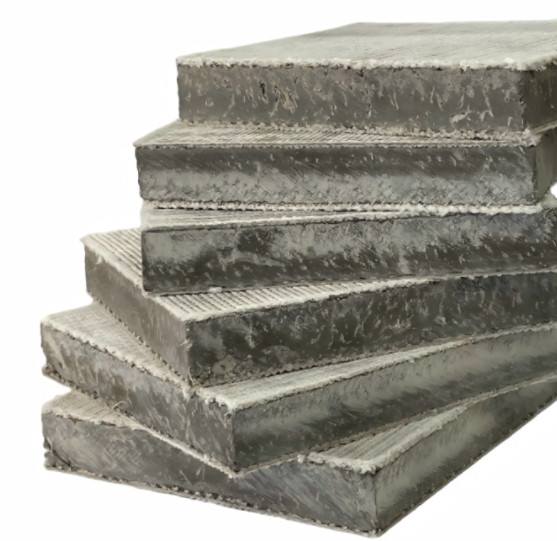
Insulated Tarps For Concrete
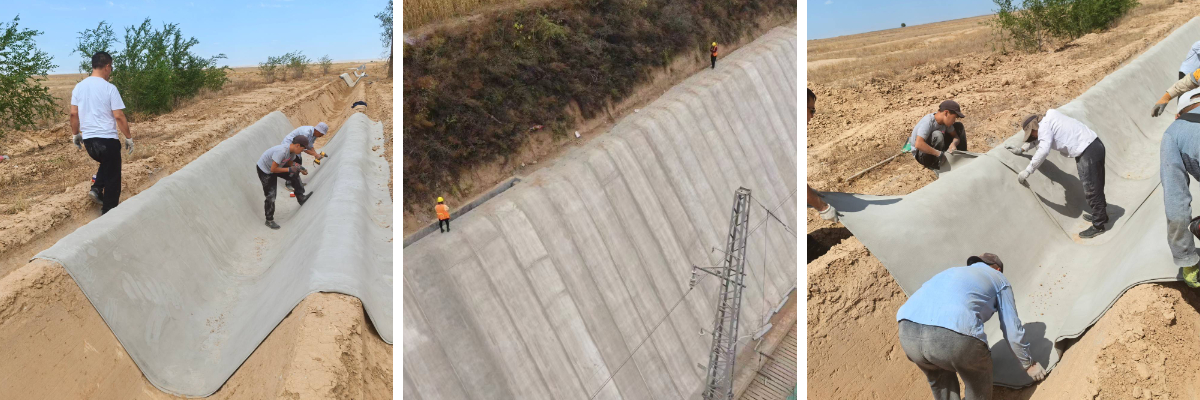
1.Convenient and efficient construction: Roll shaped supply, lightweight and easy to transport, can be manually laid without the need for large machinery; Watering after laying can solidify, greatly reducing construction time and labor costs.
2.Strong adaptability: good flexibility, able to cut and bend, able to fit complex terrain; After solidification, it is reinforced with fibers and has good crack resistance, which can adapt to slight foundation settlement.
3.Stable and excellent performance: After curing, it has high strength, good waterproofing, and is resistant to wind and rain erosion, chemical corrosion, and has a long service life.
4.Environmentally friendly economy: Compared to traditional concrete, the amount of materials used is significantly reduced, making it more environmentally friendly; Less material waste and lower overall cost during construction.
Product Introduction
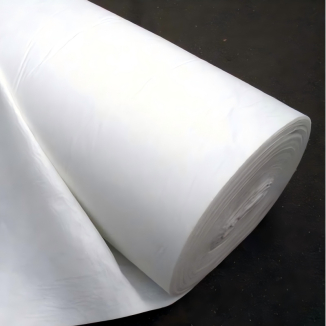
Insulated Tarps For Concrete is a new type of building material that combines cement powder with specially made fiber fabrics, combining the flexibility of textiles with the structural strength of concrete.
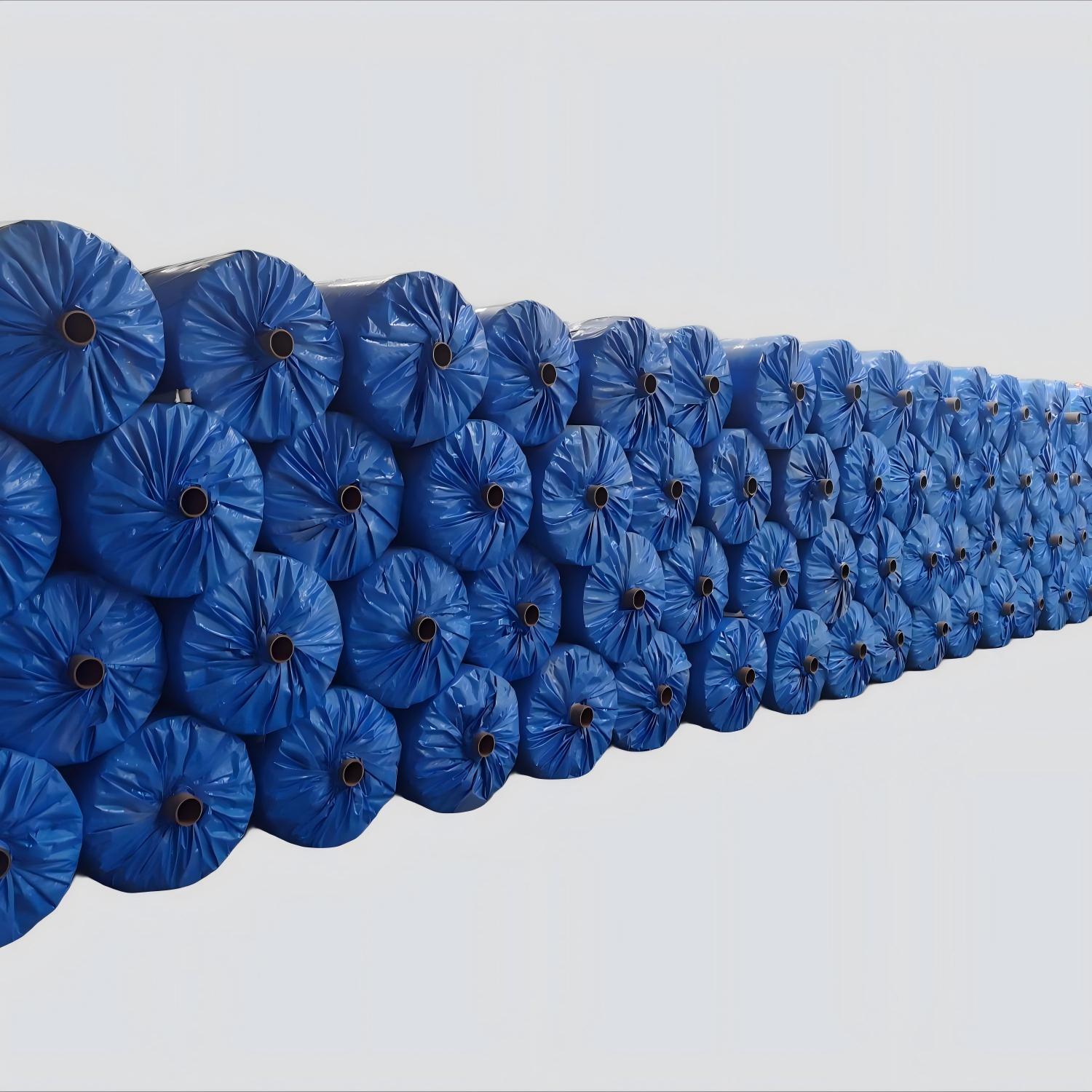
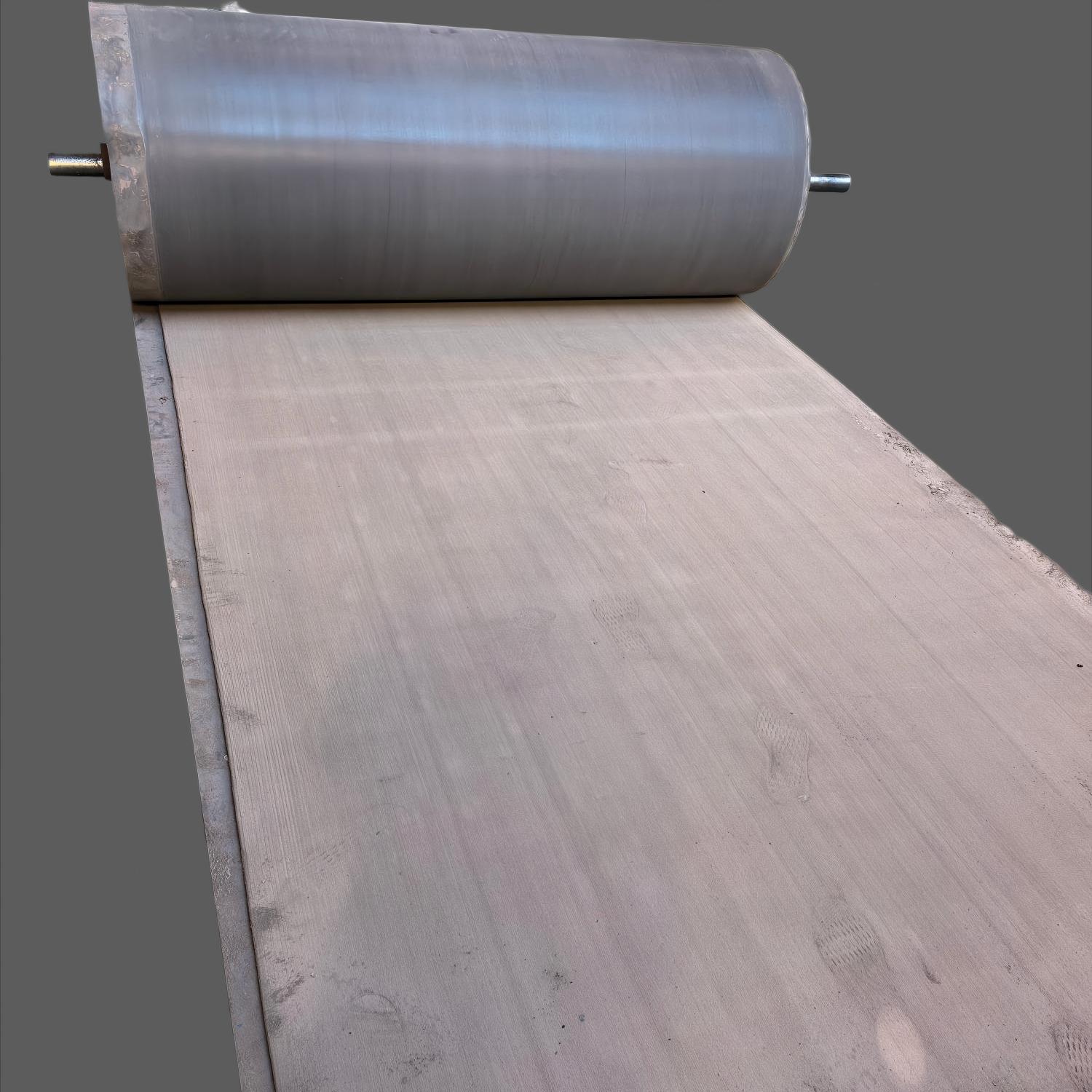
It is usually supplied in roll form, lightweight, and easy to transport and handle. During construction, there is no need for complex procedures. Simply cut and lay according to the requirements, and then water to trigger the hydration reaction of the cement components, allowing them to solidify and form a hard structure with a certain strength in a short period of time.
This material has excellent flexibility and can fit complex terrains such as curved surfaces and slopes. After curing, it is not easily cracked due to fiber reinforcement. At the same time, it has good waterproofing, durability, and corrosion resistance. It can play a role in various scenarios such as water conservancy, transportation, and emergency engineering, simplifying the construction process and ensuring project quality.
Product parameters
| Property | State | 8mm | 10mm | 12mm | 15mm | Test Method | |
| Compressive strength(MPa) | cured 28 days | 60 MPa | D8329 | ||||
| Flexural strength(MPa) | cured 28 days | 15 MPa | D8058 | ||||
| Pyramid puncture(kN) | cured 28 days | 4.0 kN | 4.5 kN | 5.0 kN | 6.0 kN | D5494,Type B | |
| Abrasion (maximum value) | cured 28 days | 0.3 mm/1000 cycles | C1353/C1353M | ||||
| Tensile strength | Final | uncured | 20 kN/m | 30 kN/m | 35 kN/m | 40 kN/m | D6768/D6768M |
| Initial | cured 28 days | 15 kN/m | 25 kN/m | 30 kN/m | 35 kN/m | D4885 | |
| Final | 25 kN/m | 35 kN/m | 40 kN/m | 45 kN/m | |||
| Freeze-thaw | Residual initial flexural strenath(D8058) | cured 28 days, 200 cycles | >80 % (Pass) | C1185 | |||
| Water quality requirements for hydration | Tap water、River water、Seawater | / | |||||
| Construction temperature conditions | Construction above 0℃ | ||||||
| Fire protecting performance | B1 | GB 8624-2012 | |||||
| Harmful substance leaching test items | Limitation index (mg/L) | GB 5085.3-2007 | |||||
| Copper (total copper) (mg/L) | ≤100 | ||||||
| Zinc (total zinc) (mg/L) | ≤100 | ||||||
| Cadmium (total) (mg/L) | ≤1 | ||||||
| Lead (total lead) (mg/L) | ≤5 | ||||||
| Total chromium (mg/L) | ≤15 | ||||||
| Nickel (total nickel) | ≤5 | ||||||
| Arsenic (total) | ≤5 | ||||||
Product Application
1.Water conservancy engineering: commonly used for channel lining, small reservoir anti-seepage, dam slope protection, etc. Its waterproofing and anti erosion ability can effectively reduce water leakage and protect the stability of bank slopes.
2.Transportation engineering: It can be laid on the base of rural roads, temporary access roads, or used for highway slope protection. The construction is fast and can adapt to slight settlement of the roadbed, ensuring the stability of the pavement structure.
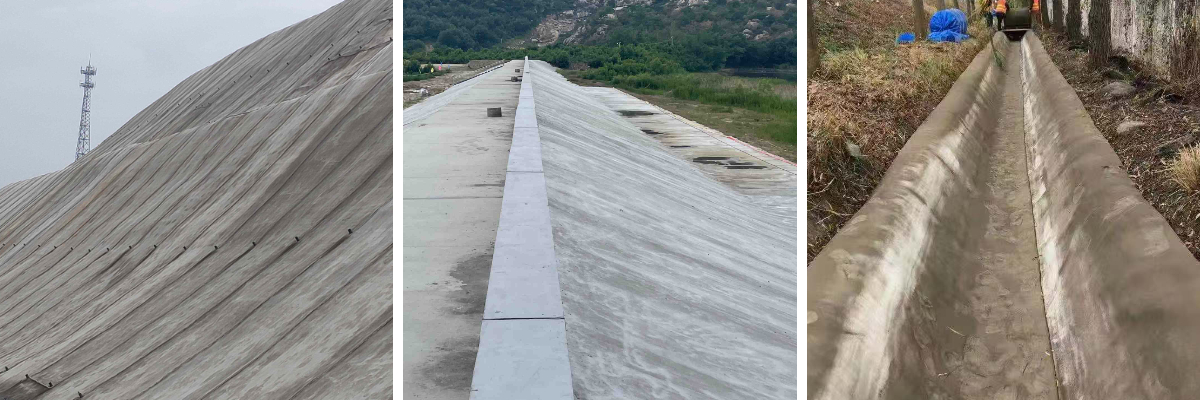
3.Emergency engineering: In flood prevention and rescue, it can quickly build temporary water retaining embankments and repair dam breach gaps; During post disaster reconstruction, it can be used for simple house roofs, temporary drainage channels, etc., to shorten emergency response time.
4.In the agricultural field, it is suitable for laying ditches and canals for farmland irrigation, preventing water infiltration and loss, improving irrigation efficiency, and can also be used for anti-seepage treatment of reservoirs.
5.Municipal and architectural: It can be used as a waterproof base for roofs, a moisture-proof layer for basements, or as an anti-seepage layer for small landscape water bodies. It is easy to construct and can fit complex structures.
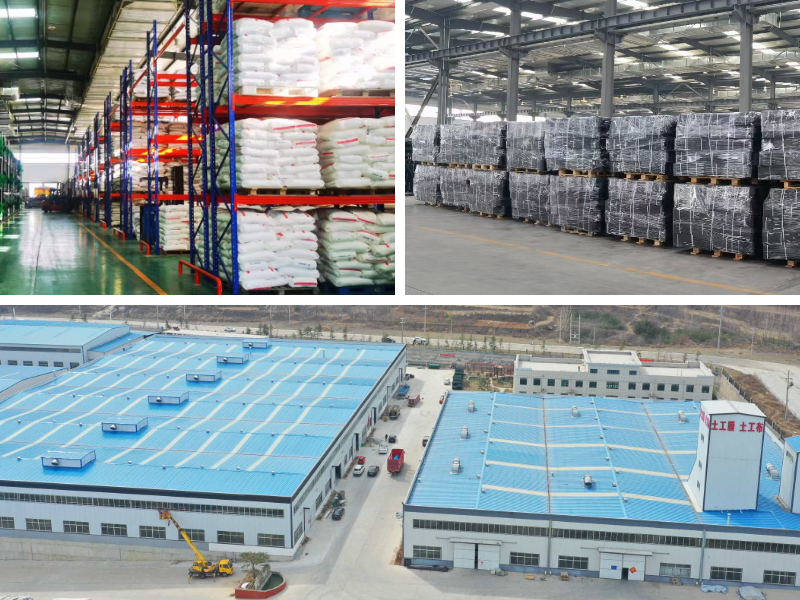
Cement blankets are widely used in water conservancy engineering for anti-seepage and slope protection, in transportation engineering to assist in road and slope stability, in emergency engineering for quick rescue and reconstruction, in the agricultural field to improve irrigation efficiency, and in municipal and construction applications for waterproofing and anti-seepage.