Geoweb Systems
1.Enhance the bearing capacity of the foundation:The three-dimensional grid constrains the soil, enhances the bearing capacity of the foundation, reduces settlement, and is suitable for soft foundation treatment.
2.Easy construction:Foldable transportation, quick on-site splicing and laying, saving labor and time, suitable for tight schedule projects.
3.Strong weather resistance:It is made of high-strength materials, resistant to aging and corrosion, and has a service life of decades in harsh environments.
4.Cost savings:Reduce the amount of earthwork and stone materials used, lower procurement and transportation costs, and lower maintenance investment in the later stage.
5.Widely used:Suitable for various engineering scenarios such as highways, railways, slopes, and rivers, with diverse functions.
Product Introduction
Basic Attributes
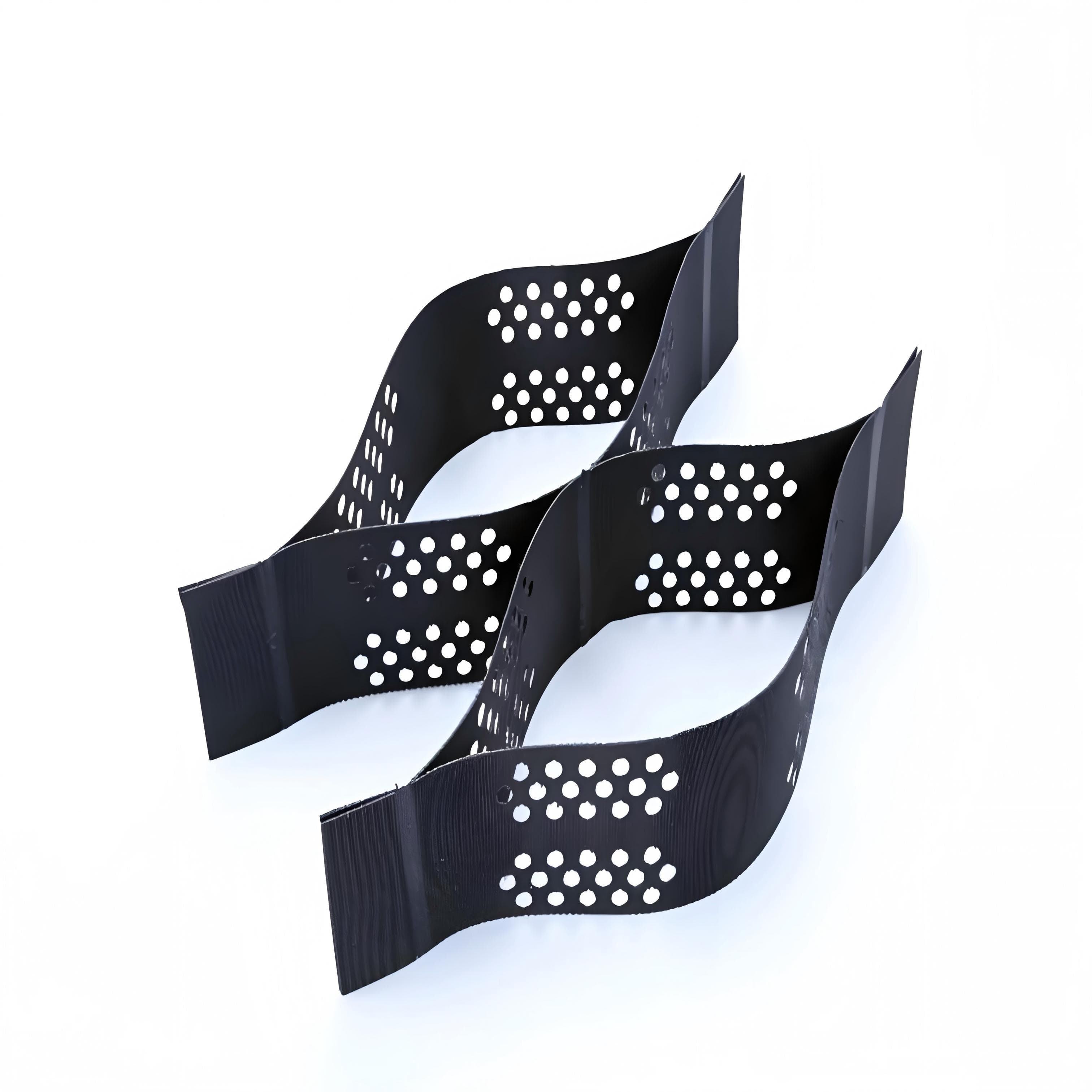
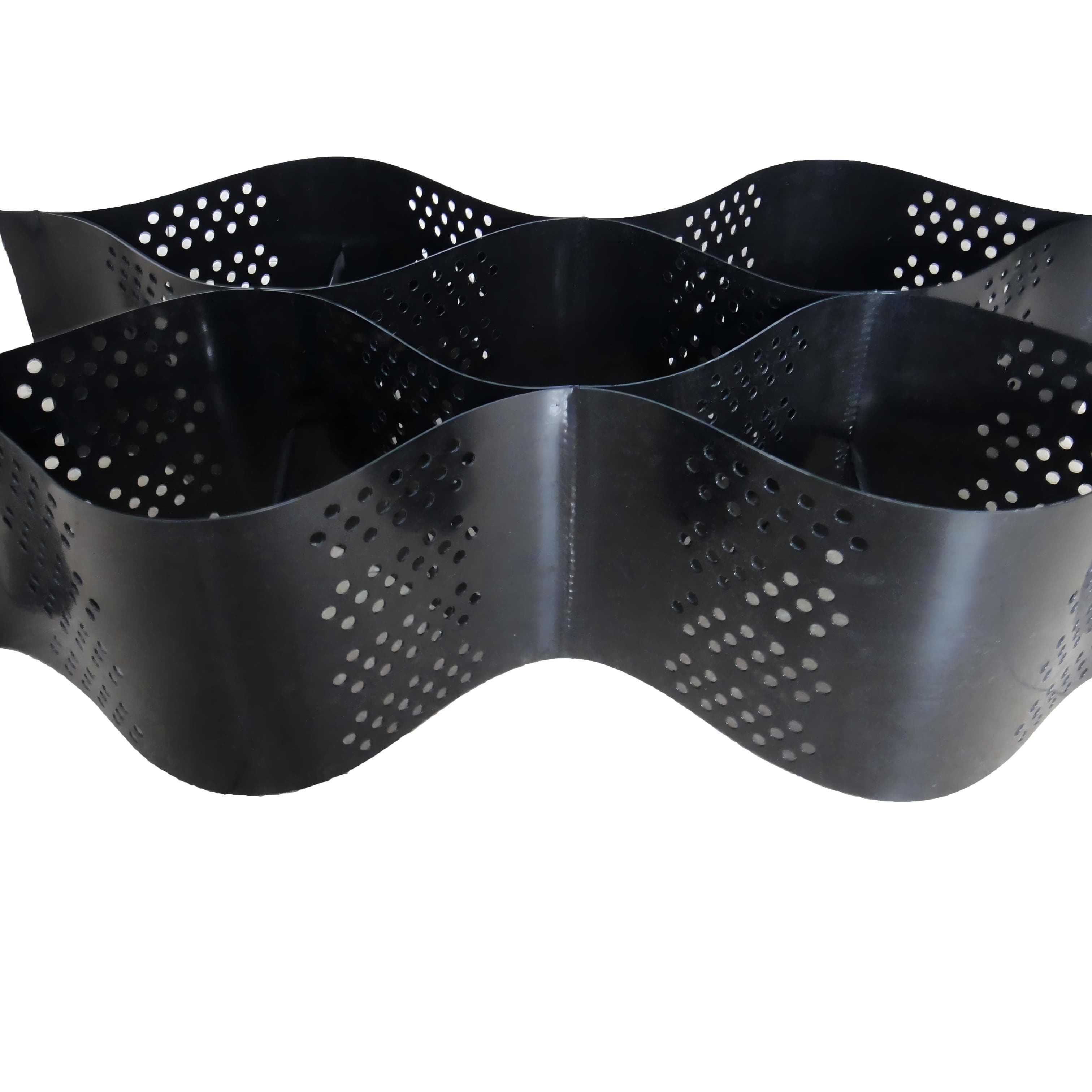
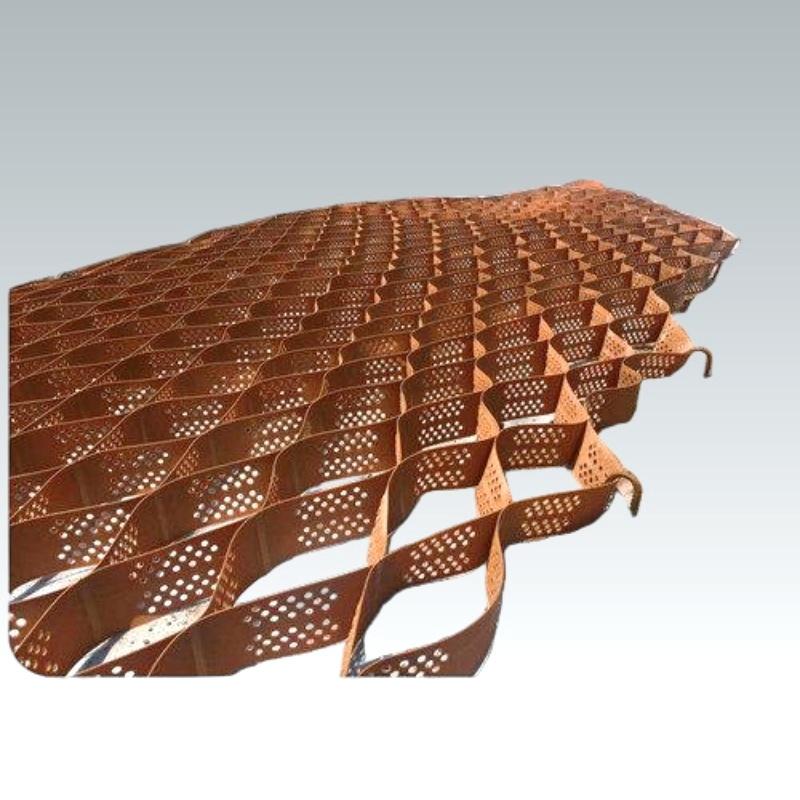
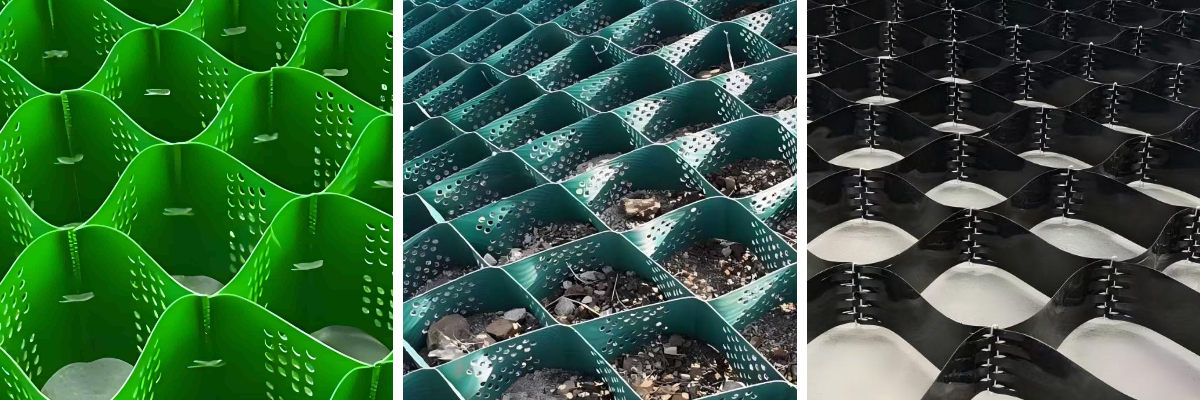
Geoweb Systems are honeycomb-shaped three-dimensional mesh panels made primarily of high-density polyethylene through high-strength welding. They can be freely folded and stored, and laid out on-site. Specifications, dimensions, cell height, and panel thickness can all be customized. The material possesses good flexibility and structural strength, is lightweight for easy transportation and storage, and is suitable for various geotechnical construction sites.
Core Functions
They possess strong lateral soil restraint capabilities, firmly locking in materials such as sand, gravel, and soil, effectively improving the overall bearing capacity of the foundation and reducing uneven settlement of the road surface and foundation. They can stabilize slope soil, resist rainwater erosion and water flow, and prevent slope collapse and soil erosion. Simultaneously, they optimize site drainage and aeration conditions, balancing engineering stability and ecological greening needs. They can also be used for lightweight retaining walls and soft soil foundation reinforcement.
Key Features
Sturdy and durable structure, resistant to acid and alkali corrosion, anti-aging and UV protection, not easily damaged or aged with long-term outdoor use; simple and quick construction process, no need for large heavy equipment, significantly shortening the construction period; environmentally friendly and energy-saving materials, reducing the amount of hard building materials such as cement and stone, lowering the overall project cost; highly adaptable to terrain, can be laid on complex terrains such as steep slopes, depressions, and soft soil foundations, applicable to a wide range of engineering scenarios.
Product Parameters
order number | raw and processed material | |||||||
test item | unit | polytene | sulan | polyester | ||||
Extruded type | Stretch type | Extruded type | Stretch type | Extruded type | Stretch type | |||
1 | tensile strength | kN/m | ≥20 | ≥100 | ≥23 | ≥100 | ≥30 | ≥120 |
2 | Tensile yield strain | % | ≤15 | — | ≤15 | — | ≤15 | - |
3 | Tensile fracture strain | % | — | 8~ 20 | — | 6~ 15 | — | 8~ 20 |
4 | Carbon black content a | % | 2. 0~ 3. 0 | |||||
5 | Carbon black dispersion a | — | There should be no more than one level 3 data item in ten data items and no level 4 or 5 data items | |||||
6 | 200℃ oxidation induction time | min | ≥20 | ≥20 | — | |||
7 | Tensile load stress cracking | h | ≥300 | — | ||||
8 | B. Resistance to artificial climate aging retention rateb | % | ≥80 | |||||
9 | Chemical resistance performance retention rate c | % | — | ≥80 | ||||
Product Application
Geocells are three-dimensional honeycomb-shaped geosynthetic materials made of high-strength polyethylene or polypropylene sheets through welding or riveting. They are widely used in highway and railway subgrade reinforcement projects. Their core function is clear: through three-dimensional lateral restraint and load diffusion effects, they effectively improve the overall stiffness of the subgrade, reduce post-construction settlement, and enhance subgrade stability, providing a fundamental guarantee for the safety of subgrade engineering.
The reinforcement principle of geocells is mainly reflected in three core aspects, which work together synergistically. First, it provides three-dimensional lateral constraint. After unfolding, the geocells form a continuous honeycomb structure. Filling them with aggregates such as crushed stone and gravel strongly restricts the lateral displacement of the soil, significantly improving its shear strength and bearing capacity. Second, it provides stress diffusion, evenly distributing the load from vehicles or trains over a wider area of the subgrade soil, reducing additional stress at the base and thus minimizing uneven settlement and deformation. Third, it provides overall reinforcement. The geocells and filler are tightly interlocked, forming a complete composite structure that enhances the overall integrity and stiffness of the subgrade while effectively inhibiting crack development and slope slippage.
Geocells have a wide range of applications in highway subgrade reinforcement, providing tailored solutions for the reinforcement needs of different road sections. In soft soil foundation reinforcement, such as on soft soil sections of highways and first-class roads, the combination of "sand cushion layer + geocells + surcharge preloading" can not only increase the bearing capacity of the subgrade by 30%–50% but also control post-construction settlement to within 10cm, while shortening the construction period. In bridge and culvert abutment backfilling projects, laying geocells can effectively reduce the stiffness difference between the subgrade and the structure, controlling differential settlement to within 5mm, fundamentally alleviating the problem of bridge approach slab settlement. In semi-fill/semi-cut, high-fill, and sloping sections, layered laying of geocells can reduce uneven settlement at the junction of new and old subgrades and prevent slope slippage in high-fill subgrades. Furthermore, in special geological areas such as wind-blown sand, frozen soil, and loess, geocells can fix loose fill material, prevent frozen soil heave, and treat the collapsibility of loess, comprehensively ensuring the strength and stability of the subgrade.
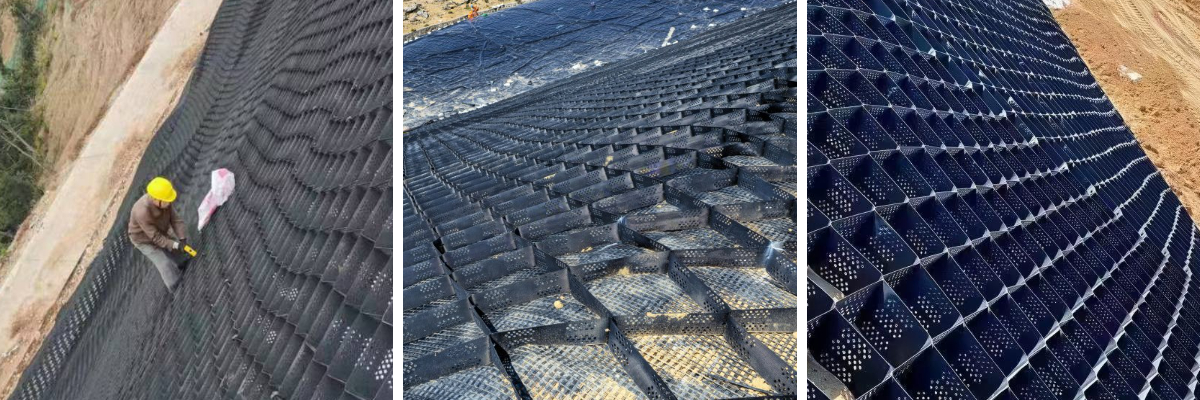
Geocells also play an irreplaceable and crucial role in railway subgrade reinforcement. In the reinforcement of weak subgrades for both conventional and high-speed railways, geocells filled with crushed stone can form a 30-50cm composite cushion layer, increasing the subgrade bearing capacity from 80kPa to over 220kPa. Post-construction settlement in high-speed railway sections can be controlled within 5mm, fully meeting the requirements for stable high-speed train operation. In the treatment of subgrade defects on existing railway lines, geocell-reinforced sand cushion layers are used to address common problems such as mud pumping, settlement, and deformation, with significant results. Cumulative settlement is reduced to 41% of that of traditional sand cushion layers, and annual settlement is reduced by 59%. The Chengdu-Kunming Railway and the Yang'an Railway, among others, have achieved effective treatment of subgrade defects using this method. Furthermore, in the reinforcement of high-speed railway bridge transition sections and station subgrades, the gradual stiffness design of geocells not only meets the requirements for stable high-speed train operation but also effectively improves the bearing capacity and fatigue resistance of the station subgrade.
Geocells possess many core advantages, enabling them to adapt to various complex construction scenarios. In terms of materials, the HDPE/HDPP material used is corrosion-resistant and anti-aging, capable of withstanding harsh construction environments such as saline-alkali soil and freeze-thaw cycles, with a service life of over 20 years. Regarding construction efficiency, it is foldable for transport and easy to deploy on-site, facilitating mechanized construction. Compared to traditional replacement or pile foundation construction methods, it can save 30%–50% of fill material and shorten the construction period by 20%–40%, demonstrating outstanding economic efficiency and effectiveness. In terms of adaptability, it has a wide range of applications, suitable for complex geological conditions such as soft soil, frozen soil, sandy soil, and loess, as well as special construction conditions such as high fills, steep slopes, and abutments.
During actual construction, the following key points must be strictly followed to ensure the reinforcement effect. First, the base must be leveled and compacted, and debris thoroughly removed. If it is a soft soil foundation, a sand cushion layer can be laid first as a base to solidify the foundation for subsequent construction. Subsequently, geocells are deployed longitudinally along the route, with their ends anchored to bridge abutments or foundations and the middle secured with anchors at a depth of no less than 60cm, ensuring the sheets are perpendicular to the roadbed direction. During the filling stage, graded crushed stone or improved soil is used for layered filling, with each layer controlled at 20–30cm thickness and a compaction degree exceeding 95%. If multiple layers are required, geogrids or geotextiles must be laid between layers to enhance interlayer adhesion and ensure overall reinforcement effectiveness.
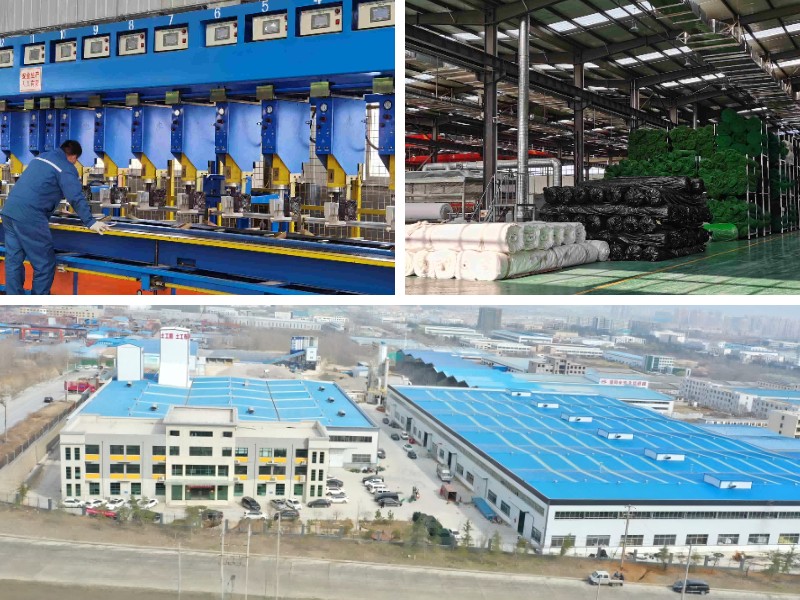
Geocells, with their strong lateral restraint and three-dimensional reinforcement capabilities, effectively improve the overall strength of the soil, stabilize roadbed slopes, and resist water erosion. They are widely used in highway and railway subgrade reinforcement, bridge abutment backfilling, riverbank protection, ecological slope greening, mine restoration, and soft soil foundation treatment projects. They reduce foundation settlement, extend the service life of projects, and offer ecological and environmental benefits, making them a highly cost-effective reinforcement and protection material in geotechnical engineering.