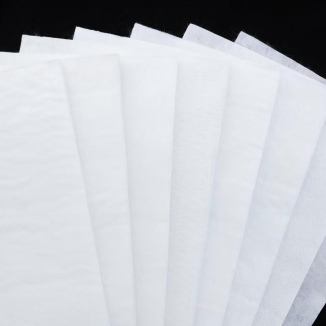
Future Trends: Innovations in Woven Geotextile Materials and Applications
The landscape of civil engineering, environmental protection, and construction is undergoing a silent revolution. At the heart of this transformation lies the evolution of geosynthetics, particularly woven geotextiles. For decades, these materials have served as the unsung heroes of infrastructure, providing separation, reinforcement, and filtration. However, as we look toward the future, the industry is shifting from traditional utility toward high-performance, smart, and sustainable solutions. This article explores the cutting-edge innovations in woven geotextile materials and their expanding applications, offering a glimpse into a future where infrastructure is more resilient, efficient, and environmentally integrated.
The Shift Toward High-Performance Polymers and Sustainability
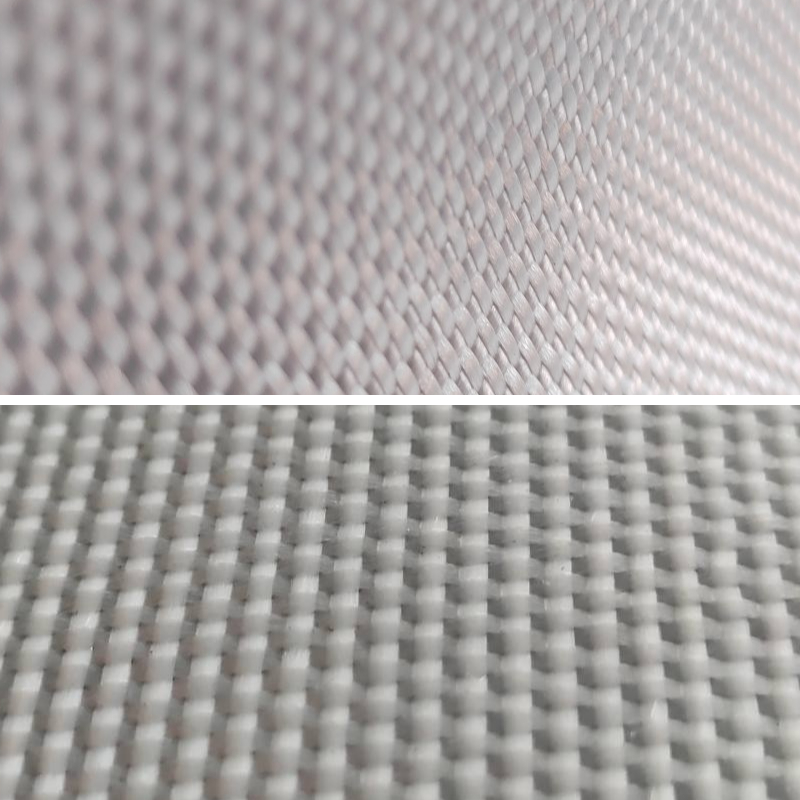
The foundation of any advanced woven geotextile lies in its raw materials. Historically, polypropylene and polyester have dominated the market due to their strength and chemical resistance. However, the future is defined by a move toward bio-based polymers and recycled content without compromising mechanical integrity.
Innovations in polymer science are yielding fibers that offer superior creep resistance and long-term durability under extreme temperatures and UV exposure. Manufacturers are now engineering woven geotextiles with multi-filament yarns that provide higher tensile strength at lower unit weights, reducing the carbon footprint associated with transportation and installation. Furthermore, the industry is embracing circular economy principles. We are seeing the rise of fully recyclable woven geotextiles designed for temporary applications, which can be recovered, reprocessed, and reintroduced into the manufacturing stream. This focus on sustainability is not just a trend but a necessity, as regulatory bodies increasingly mandate low-environmental-impact materials for public infrastructure projects.
Intelligent Geotextiles: The Integration of Sensor Technology
One of the most exciting frontiers is the development of "smart" woven geotextiles. Traditionally, geotextiles have been passive components—they hold soil in place or filter water, but they cannot communicate their status. Future systems are embedding fiber-optic sensors and conductive filaments directly into the weave structure.
These intelligent fabrics allow engineers to monitor strain, temperature, pore water pressure, and even detect early signs of rupture or clogging in real-time. For instance, in slope stabilization projects, a smart woven geotextile can send alerts when lateral earth movement exceeds safe thresholds, enabling proactive maintenance before a catastrophic failure occurs. This integration of structural function with monitoring capability transforms these materials from inert construction supplies into active components of a "digital twin" infrastructure model. As Internet of Things (IoT) technology becomes more cost-effective, the widespread adoption of sensor-enabled geotextiles will become a standard expectation for high-risk or high-value assets.
Advancements in Erosion Control Woven Geotextile Systems
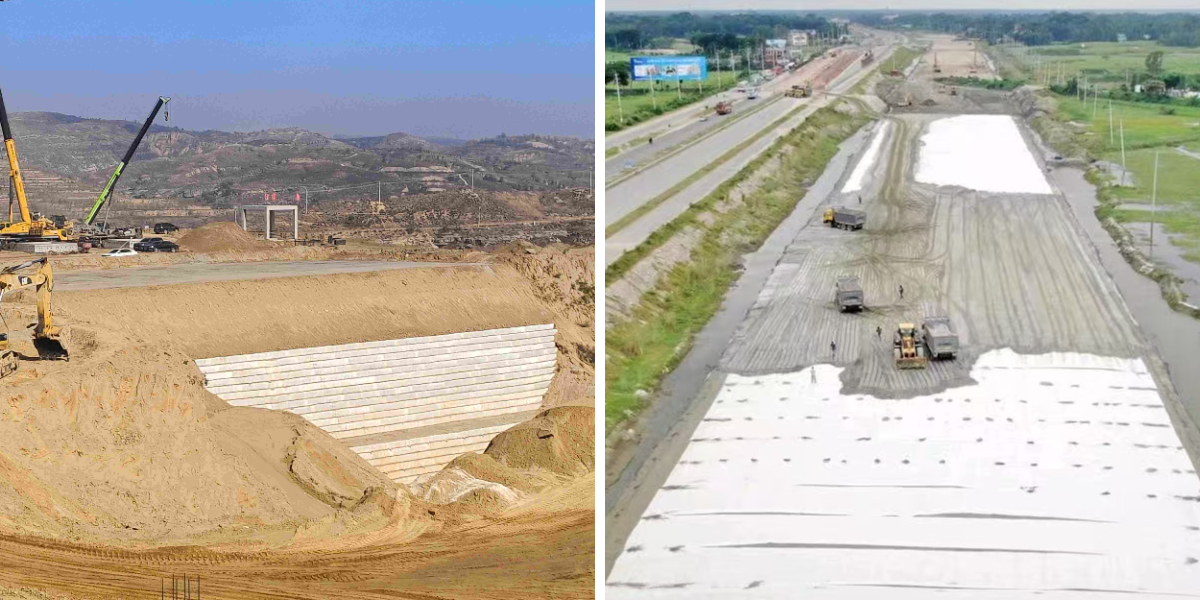
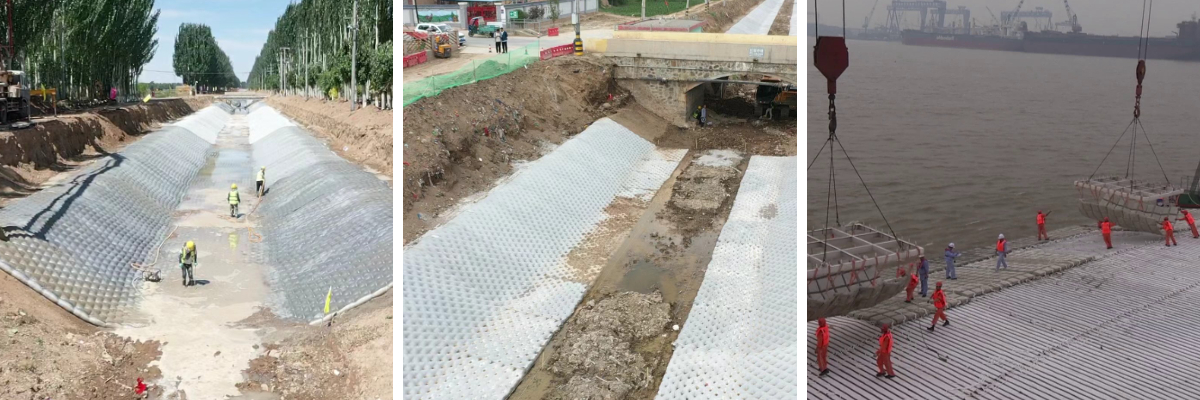
Erosion remains one of the greatest challenges to coastal resilience and land conservation. The future of Erosion Control Woven Geotextile technology is moving beyond simple slit-film fabrics toward sophisticated, three-dimensional woven structures.
These next-generation materials are designed to mimic natural root systems while providing immediate surface stabilization. Modern Erosion Control Woven Geotextile solutions now feature enhanced hydraulic permeability that allows for rapid pore pressure dissipation while maintaining a high soil retention capacity. This is critical in scenarios such as riverbank reinforcement and coastal dune restoration, where the interplay between water flow and soil stability is complex. Innovations include woven fabrics with variable aperture sizes that create a gradient filtration effect, preventing internal erosion (piping) better than conventional single-layer fabrics. Additionally, manufacturers are developing UV-stabilized versions capable of enduring prolonged exposure during vegetation establishment periods, ensuring that by the time the textile degrades (if designed as a temporary support), the root matrix of native plants has fully taken over the structural role.
Reinventing Waste Management with Landfill Woven Geotextile
The waste management sector demands materials that can withstand aggressive chemical environments, high tensile stresses, and long-term biological attack. The evolution of the Landfill Woven Geotextile is central to extending the lifespan and safety of modern landfills.
Future Landfill Woven Geotextile products are being engineered with enhanced chemical resistance to leachate, which often contains a cocktail of organic acids and heavy metals that can degrade standard polymers. Innovations include the use of high-modulus polyethylene (HMPE) fibers in woven constructions, offering exceptional strength-to-weight ratios that allow for steeper side slopes in landfill cells, thereby increasing airspace and capacity. Moreover, the integration of conductive yarns into Landfill Woven Geotextile layers is emerging as a breakthrough for leak detection. When combined with geoelectric leak location methods, these conductive woven layers allow for continuous monitoring of the geomembrane liner integrity. This active monitoring capability represents a significant leap forward from the current practice of periodic, labor-intensive leak surveys, offering regulators and operators real-time assurance that containment systems are functioning as intended.
Efficiency in Subsurface Water Management
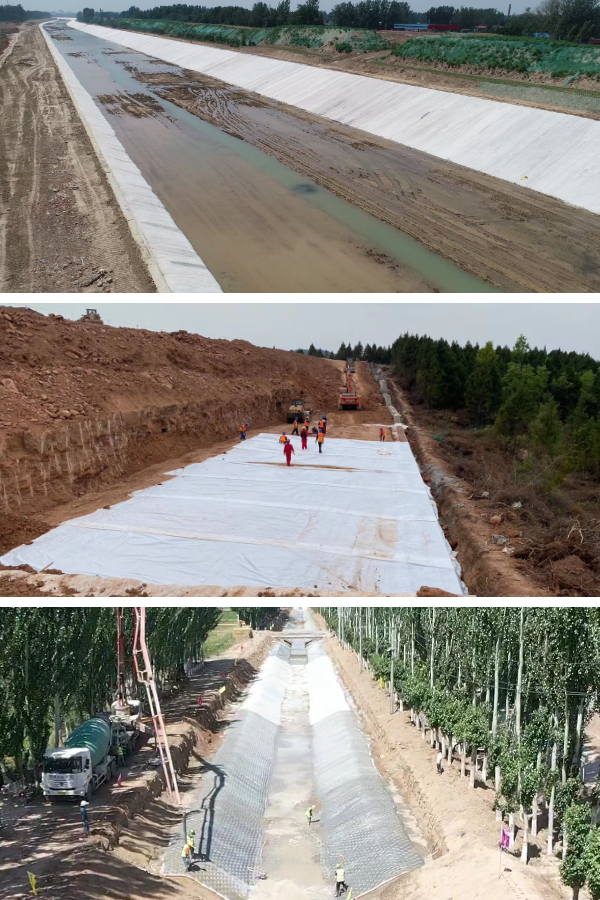
Water management is becoming more critical due to climate change-induced weather volatility. In subsurface drainage and filtration, the role of woven geotextiles is being redefined through innovations in aperture stability and flow efficiency.
The Drainage System Woven Geotextile of the future is not merely a filter; it is an engineered component that actively manages the transition between soil and drainage aggregate. Traditional drainage systems often suffer from clogging due to biological growth or soil migration (bioclogging and physical blinding). Advanced Drainage System Woven Geotextile products now incorporate antimicrobial additives within the polymer matrix to inhibit biofilm formation, ensuring long-term flow capacity. Furthermore, structural innovations such as "woven monofilament" fabrics provide a rigid, stable pore structure that resists compression under high overburden pressures. In applications like retaining wall drainage, agricultural tile drainage, and highway edge drains, these high-performance Drainage System Woven Geotextile solutions ensure that water is evacuated efficiently, reducing hydrostatic pressure and preventing pavement failure. The trend is moving toward prefabricated drainage composites where the woven geotextile is thermally bonded to drainage cores, simplifying installation and guaranteeing consistent performance that surpasses traditional sand and gravel filters.
Advanced Reinforcement for Geosynthetic-Reinforced Soil (GRS)
The construction industry is increasingly adopting Geosynthetic-Reinforced Soil (GRS) techniques for bridge abutments, retaining walls, and steep slopes. This methodology relies entirely on the interaction between compacted soil and woven geotextile reinforcement.
Future woven geotextiles for GRS are being optimized for interface friction. Through micro-mechanical surface texturing and the introduction of auxiliary yarns that create a "grippy" surface, new woven fabrics achieve higher pullout resistance than mechanically or thermally bonded non-wovens of similar strength. This allows for tighter layer spacing and faster construction times. Additionally, the development of high-tenacity, low-creep woven geotextiles specifically designed for modular block systems is enabling the construction of taller, more aesthetically pleasing retaining structures with a smaller footprint than traditional reinforced concrete solutions. As urbanization increases, the ability to build upwards rather than outwards using these advanced reinforcement materials will be crucial.
Durability Through Nanotechnology and Coatings
The longevity of woven geotextiles is being radically extended through nanotechnology and advanced coating techniques. Historically, the Achilles' heel of many geotextiles has been susceptibility to installation damage and long-term degradation in harsh environments.
The application of nano-clay and graphene-based coatings to woven geotextile filaments is a game-changer. These coatings enhance puncture resistance, allowing fabrics to be placed over sharp angular aggregates without micro-damage that could lead to premature failure. Additionally, these nano-coatings provide superior UV resistance, extending the allowable exposure time during construction from weeks to months. In marine environments, advanced anti-fouling coatings prevent the attachment of marine organisms to submerged Erosion Control Woven Geotextile structures, ensuring that hydraulic efficiency is maintained over decades rather than years. This focus on durability reduces life-cycle costs and makes woven geotextiles a more attractive option for long-term infrastructure investment.
Automation and Installation Efficiency
Innovation is not limited to the material itself; it extends to how these materials are installed. The future of woven geotextile deployment lies in mechanization and automation.
Large-format, roll-to-roll deployment systems are being developed for major infrastructure projects, allowing for rapid unrolling, seaming, and anchoring with minimal manual labor. Robotics and GPS-guided machinery are now capable of laying woven geotextiles with millimeter precision, ensuring that overlaps are consistent and that the fabric is tensioned correctly to achieve designed load-bearing capacity. For applications like landfill lining and reservoir construction, automated seam welding (thermal fusion) for woven geotextiles is replacing traditional sewing, creating seams with higher strength and lower permeability variance. This not only speeds up project timelines but also reduces the risk of human error, which is often the leading cause of geosynthetic system failure.
Conclusion: A Future Built on Smart and Sustainable Fabrics
The trajectory of woven geotextile technology is clear: we are moving from static, passive materials to dynamic, intelligent systems. Whether it is a Erosion Control Woven Geotextile that monitors coastal subsidence, a Landfill Woven Geotextile that detects chemical breaches, or a Drainage System Woven Geotextile that self-regulates to prevent clogging, the innovations on the horizon promise to deliver unprecedented levels of safety, efficiency, and sustainability.
For engineers, contractors, and environmental planners, staying abreast of these trends is not just about adopting new products; it is about rethinking the fundamentals of design. The integration of smart sensors, sustainable polymers, and automated installation techniques will enable the construction of infrastructure that is not only stronger and longer-lasting but also capable of communicating its health in real-time. As we face the challenges of aging infrastructure and climate change adaptation, these advanced woven geotextiles will undoubtedly form the fabric of our resilient future.
Contact Us
Company Name: Shandong Chuangwei New Materials Co., LTD
Contact Person :Jaden Sylvan
Contact Number :+86 19305485668
WhatsApp:+86 19305485668
Enterprise Email: cggeosynthetics@gmail.com
Enterprise Address: Entrepreneurship Park, Dayue District, Tai 'an City,
Shandong Province