Cold & Dry Climate Construction: Can Geomat Work in Low-Temperature Arid Zones?
Introduction: The Challenges of Construction in Cold and Arid Regions
Low-temperature arid zones pose unique and harsh obstacles for ecological construction, slope protection, and soil stabilization projects. These regions feature prolonged cold weather, intense wind erosion, extremely low humidity, rapid surface water evaporation, and fragile soil structures that struggle to retain moisture and resist external erosion. Traditional erosion control materials often fail to adapt to these extreme conditions, suffering from brittle cracking in low temperatures, poor soil fixation, and inability to support sustainable vegetation growth. This leads to repeated construction failures, increased project costs, and unstable ecological restoration results. For contractors and engineering teams working in these areas, choosing durable, climate-adaptive geosynthetic materials is the core of successful project delivery. This article explores whether geomat, 3d geomat, and 3d vegetation net can deliver reliable performance in cold and dry climate construction, and reveals their unique advantages for extreme environmental projects.
What Makes Geomat, 3D Geomat and 3D Vegetation Net Suitable for Extreme Climates?
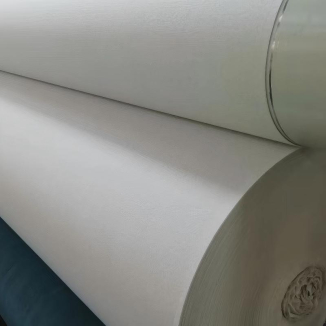
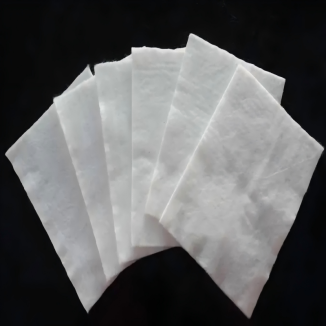
To solve the construction pain points of low-temperature arid zones, professional geosynthetic materials represented bygeomat have become a preferred solution, thanks to their specially optimized material properties and structural design. Ordinary flat geotextiles lack three-dimensional space to fix soil and seeds, making them ineffective in dry and cold environments. In contrast, standard geomat adopts flexible polymer composite structures with excellent low-temperature toughness and anti-aging performance, avoiding brittle fracture under freezing conditions. It can tightly wrap loose surface soil to resist persistent wind erosion, the most common geological hazard in arid regions.
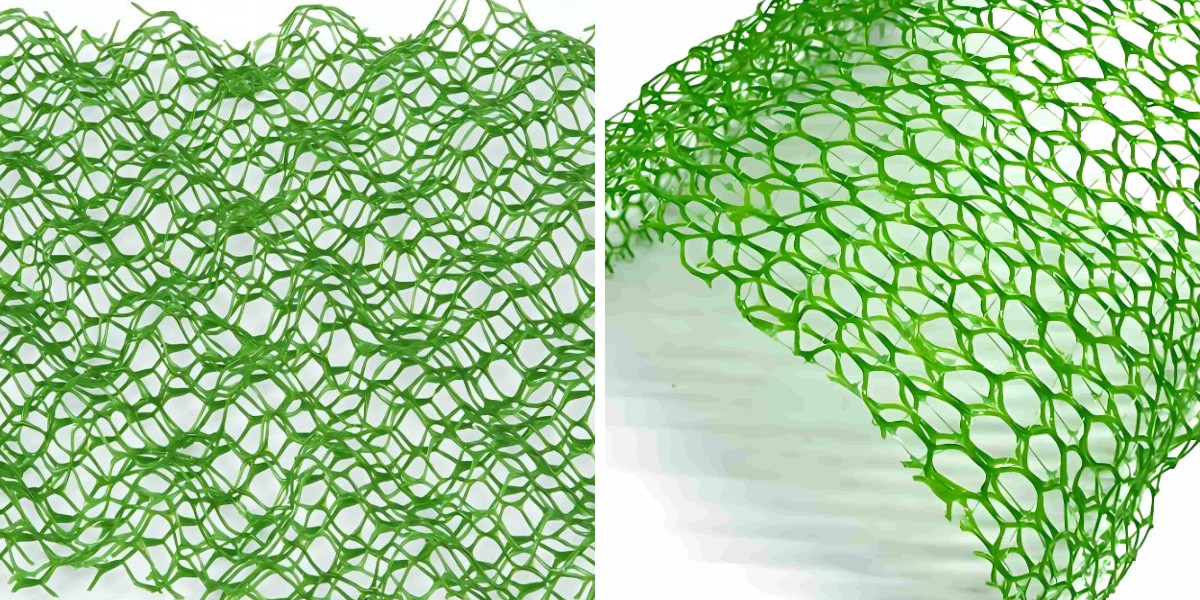
3d geomat upgrades the traditional geomat structure with a three-dimensional layered mesh design, featuring high void rates and flexible spatial structures. Manufactured with UV-stabilized and low-temperature resistant polymer materials, 3d geomat maintains complete structural flexibility even in long-term freezing environments. Its porous three-dimensional cavities can lock dry soil particles effectively, reduce wind-induced soil loss, and slow down surface water evaporation in arid weather. This structural advantage makes 3d geomat far more adaptable to barren, dry, and cold land than traditional flat protection materials.
As a specialized ecological protection material,3d vegetation net is tailored for vegetation restoration in harsh climates. The unique tangled three-dimensional fiber structure of 3d vegetation net creates a closed micro-growth environment on the soil surface. In low-temperature arid zones, this structure insulates surface soil from extreme temperature fluctuations, preserves limited soil moisture, and prevents seed loss caused by strong winds. Together, geomat, 3d geomat, and 3d vegetation net form a comprehensive protection system that adapts to the dual challenges of low temperature and drought.
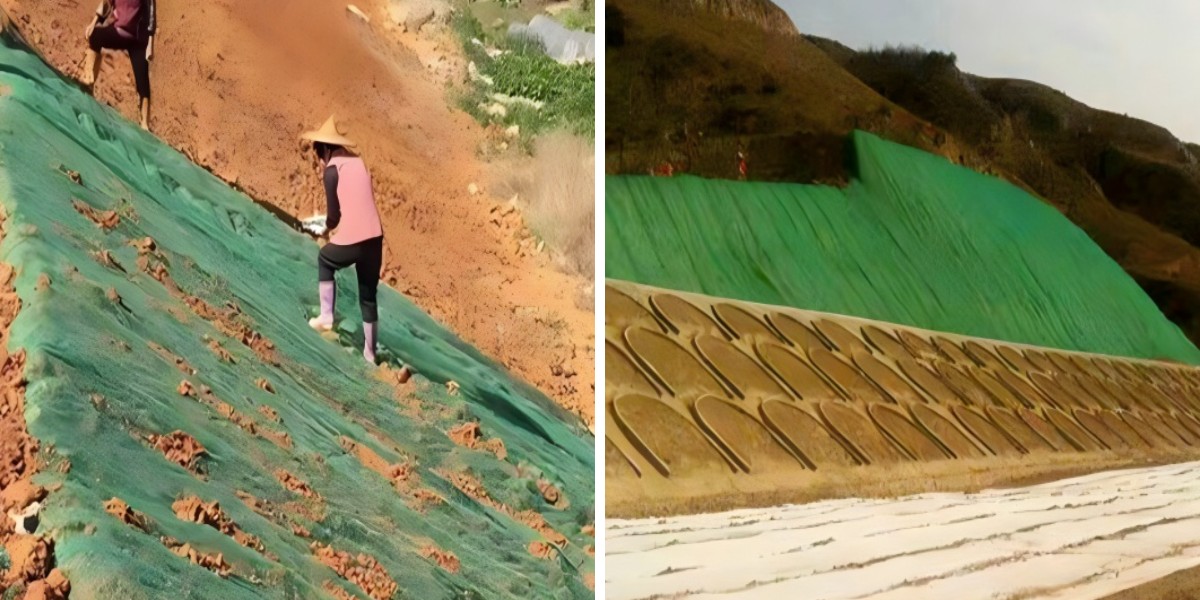
Core Advantages of 3D Geomat in Low-Temperature Arid Zone Construction
1. Excellent Low-Temperature Resistance and Structural Stability
The biggest advantage of 3d geomat in cold-dry construction is its outstanding low-temperature durability. Unlike ordinary building materials that harden and crack in freezing weather, 3d geomat retains its flexibility and structural integrity under long-term low-temperature exposure. Its polymer raw materials are blended with special cold-resistant additives, eliminating brittle failure risks in frigid environments. For outdoor slope protection, road embankment stabilization, and river bank reinforcement projects in arid cold regions, 3d geomat can maintain stable protection performance all year round without seasonal performance attenuation. As the basic protective material, geomat provides solid overall structural support, ensuring the entire protection system does not collapse under extreme cold conditions.
2. Efficient Moisture Retention and Anti-Erosion Performance for Arid Soil
Arid zones suffer from scarce rainfall and rapid soil water evaporation, making soil desertification and wind erosion the key problems in construction. The high-void three-dimensional structure of 3d geomat can cover and lock surface soil comprehensively, forming a breathable and moisture-preserving protective layer. It effectively inhibits vertical water evaporation of dry soil and retains sporadic precipitation and dew moisture in the mesh cavities, improving the surface soil humidity environment. Meanwhile, 3d geomat’s dense mesh structure blocks wind flow near the ground, weakens wind erosion force, and prevents fine soil particles from being blown away. Cooperating with the coverage of geomat, it realizes dual physical protection of wind resistance and moisture conservation for arid land.
3. Lightweight and Easy Construction in Harsh Field Conditions
Construction conditions in low-temperature arid zones are harsh, with inconvenient transportation and limited on-site construction time. Both geomat and 3d geomat are lightweight, flexible, and easy to cut and lay, requiring no complex construction equipment. Workers can complete laying and fixing operations efficiently in low-temperature and dry outdoor environments, greatly shortening the project cycle. The materials feature strong tensile strength and structural toughness, resisting external mechanical damage during construction and later extreme weather erosion, which perfectly matches the simple and efficient construction needs of remote arid cold zone projects.
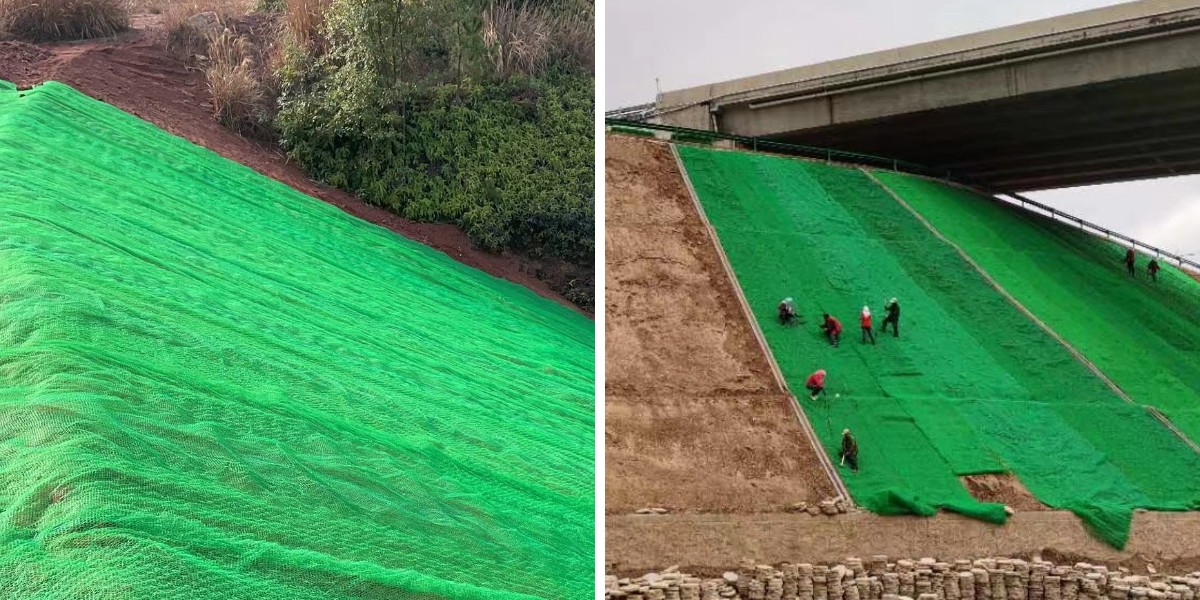
How 3D Vegetation Net Boosts Ecological Restoration in Cold Dry Zones
Ecological greening is the most difficult part of construction in low-temperature arid zones, as low temperatures inhibit seed germination and drought restricts plant growth. 3d vegetation net solves this industry pain point with its targeted ecological structural design. Different from single-functional protective geomat and structural 3d geomat, 3d vegetation net focuses on creating a suitable micro-ecological environment for vegetation growth in extreme climates.
The three-dimensional layered structure of 3d vegetation net can fix grass seeds, soil substrates, and water and fertilizer nutrients inside the mesh stably, avoiding seed blowing and nutrient loss caused by strong dry winds. In low-temperature environments, the stacked fiber structure of 3d vegetation net forms a thermal insulation layer on the soil surface, slowing down soil temperature drop at night and reducing frost damage to germinating seeds and young seedlings. In dry seasons, it locks limited soil moisture, maintains continuous water supply for plant roots, and greatly improves the survival rate of vegetation in arid and cold conditions.
With the growth of vegetation, plant roots will penetrate the mesh of 3d vegetation net and intertwine with the soil layer, forming a composite protection system of soil, mesh, and root systems. Combined with the basic stabilization of 3d geomat and the overall protection of geomat, it realizes the transformation from pure physical protection to permanent ecological protection, fundamentally improving the soil structure of arid cold zones and solving the problem of difficult sustainable greening in extreme climate areas.
Practical Application Scenarios of Geomat Series Materials in Cold & Dry Regions
The combined application of geomat, 3d geomat, and 3d vegetation net covers almost all mainstream construction projects in low-temperature arid zones. In highway and railway slope protection projects in alpine arid areas, 3d geomat is used for basic slope stabilization to resist wind erosion and freeze-thaw damage, while 3d vegetation net supports slope greening and ecological restoration, and geomat assists in overall anti-seepage and anti-scouring protection.
In desert edge governance and barren land restoration projects, the three materials cooperate to fix shifting sand, retain soil moisture, and cultivate surface vegetation, effectively curbing land desertification. In water conservancy projects such as cold-region reservoir banks and dry riverway renovation, geomat enhances overall structural stability, 3d geomat resists water flow scouring and freeze-thaw cycling damage, and 3d vegetation net realizes ecological greening of water conservancy slopes. All scenarios prove that geomat series materials have stable and reliable application value in low-temperature arid construction.
Conclusion: Geomat Products Are Ideal for Cold Dry Climate Construction
Low-temperature arid zone construction no longer needs to rely on high-cost and low-efficiency traditional materials. Professional geosynthetic solutions composed of geomat, 3d geomat, and 3d vegetation net perfectly adapt to the dual extreme tests of low temperature and drought. With excellent low-temperature structural stability, efficient wind and erosion resistance, superior moisture retention capacity, and professional ecological restoration functions, these materials solve multiple construction difficulties in cold and arid regions.
Whether for engineering stabilization or ecological greening, 3d geomat provides solid structural protection, 3d vegetation net supports sustainable vegetation growth, and geomat ensures long-term project stability. For all construction and ecological restoration projects in low-temperature arid zones, choosing these three matched materials can significantly improve project quality, reduce maintenance costs, and realize durable ecological and engineering benefits.