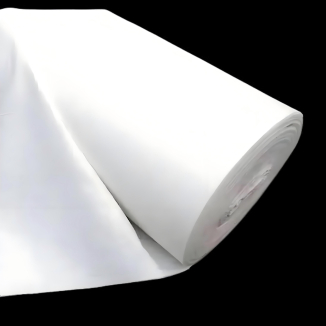
Case Study: Securing a Landfill Cap for Long-Term Stability with a Composite Geomembrane
In the realm of waste management, the closing closure of a landfill is a crucial operation that determines the long-term environmental security of the site. The foremost aim of a landfill cap is no longer simply to include waste, however to permanently separate it from the surroundings through managing rainfall, stopping fuel escape, and aiding restored vegetation. Achieving this stage of long-term balance requires state-of-the-art engineering solutions. This case find out about examines how contemporary geosynthetic engineering, mainly the use of a high-performance Landfill Composite Geomembrane, gives the durability, strength, and impermeability crucial for impenetrable landfill closure.
The Challenge: Environmental Risks and Steep Slopes
Our center of attention is on a regional landfill facility that had reached its licensed capacity. Facing strict environmental regulations, the operators wanted to graph and installation a ultimate capping device that would reduce leachate technology with the aid of successfully shedding precipitation. The foremost task was once the site"s topography; a giant element of the landfill featured steep slopes (up to 1:2.5 gradient). Traditional capping strategies relying entirely on thick clay layers have been impractical due to the threat of desiccation cracking, settlement, and slope instability.
According to long-term studies, compacted soil liners can degrade severely inside 5 years due to desiccation and root penetration . Therefore, the undertaking demanded a sturdy barrier system. The answer lay in a high-performance geosynthetic barrier that should grant immediate, low-permeability safety whilst preserving integrity on difficult slopes.
The Engineered Solution: The Composite Geomembrane System
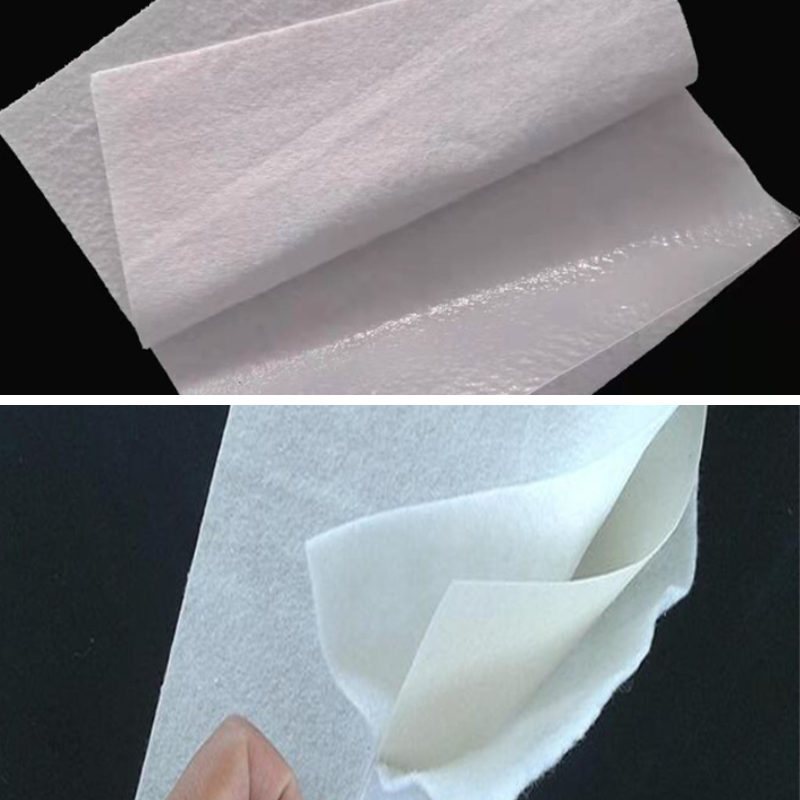
To tackle these steadiness and permeability concerns, the engineering group targeted a multi-layered capping machine situated round a Composite Geo-membrane. Unlike a easy single-layer liner, a composite device pairs a geomembrane with drainage composites to create an "all-in-one" capping answer . The chosen cloth used to be an HDPE Composite Geomembrane built-in with a drainage core, designed to exchange a couple of layers of stone and soil with a single, high-performance product .
1. Superior Barrier Performance
The core of the gadget utilized a textured HDPE Composite Geomembrane. High-density polyethylene (HDPE) was once chosen for its remarkable chemical resistance, low permeability, and demonstrated toughness in landfill environments . Regulatory requirements verify that composite liners with geomembranes function best, with subject research displaying really no leakage in contrast to different techniques . The 60-mil thickness supplied a sturdy protection in opposition to gasoline migration and water infiltration .
2. Integrated Drainage for Stability
A quintessential characteristic of a landfill cap is to shed water shortly to stop the buildup of a hydraulic head, which can compromise the underlying waste and liner steadiness . The detailed Landfill Composite Geomembrane featured a cuspated or three-d drainage core bonded between geotextile filters . This layout allowed water to glide effectively in all instructions closer to series points, casting off the want for thick drainage gravel and lowering the load on the underlying waste .
3. Ensuring Slope Stability
On the steep 1:2.5 slopes, interface shear energy used to be the paramount concern. The multilayer nature of sealing structures complicates slope stability, imparting a project to the shear power between layers . The answer used to be two-fold. First, the geomembrane featured a textured floor to beautify friction with adjoining geocomposites. Second, the drainage composite itself was once engineered with a lattice shape that furnished over 20% enchancment in the interface shear power with the cowl soil . This ensured that the 0.5m to 1m of restoration soil cowl remained securely in location at some point of and after building .
Installation and Quality Assurance
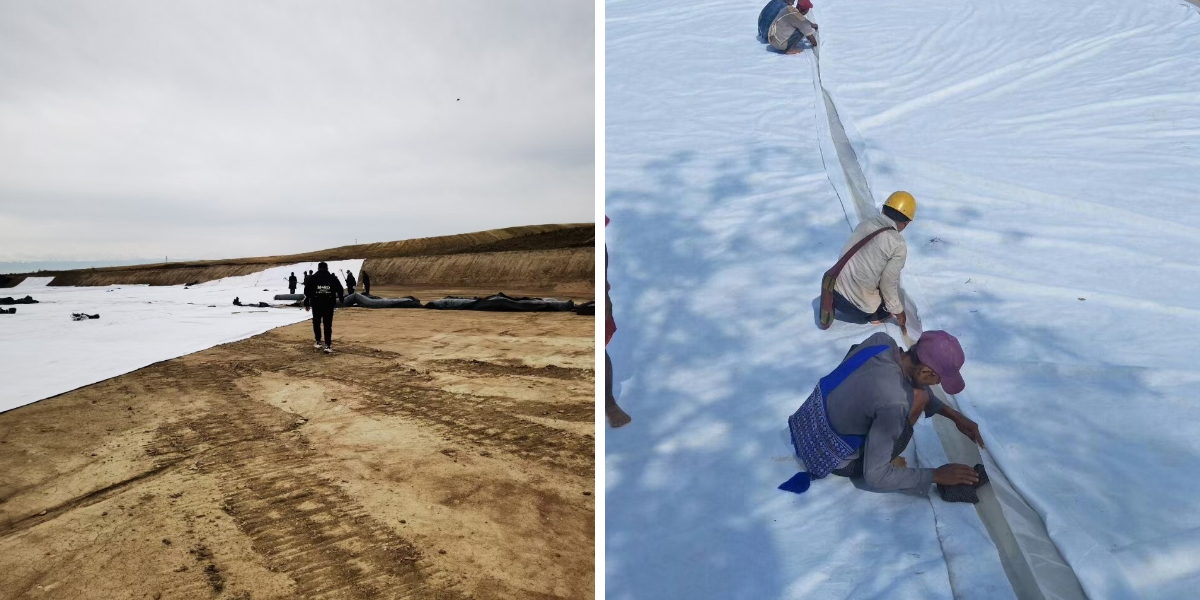
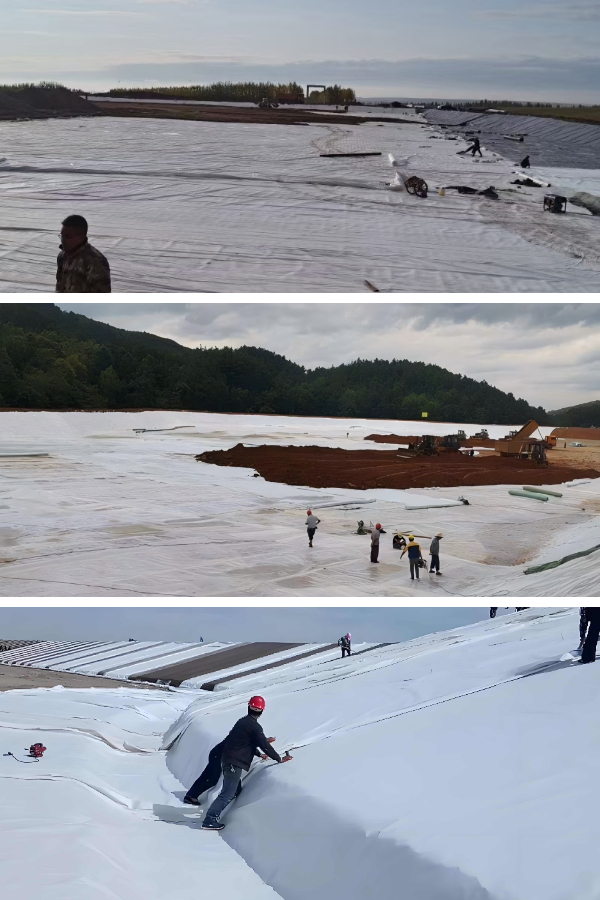
The success of a Landfill Composite Geomembrane depends closely on perfect installation. On this project, the set up crew observed strict protocols aligned with global standards. The floor of the assisting soil used to be organized to be free of stones and particles to stop puncture of the geomembrane .
Seams had been oriented parallel to the line of most slope to minimize stress, principally the usage of dual-track thermal fusion welding to create seams as sturdy as the fabric itself . Given the massive vicinity (over 40,000 m²), the large rolls of the composite fabric allowed for speedy deployment, considerably lowering set up time in contrast to compacted clay layers .
Quality assurance was once rigorous. Independent inspectors carried out non-destructive checking out on a hundred percent of the seams. Destructive seam samples had been taken regularly—approximately one per 1,000 ft of seam—and despatched to laboratories to affirm peel adhesion and shear electricity . Upon completion of the geomembrane placement, the cowl soil was once positioned quickly to shield the liner from wind uplift and UV degradation .
Long-Term Performance and Environmental Impact
The implementation of the Composite Geo-membrane cap has yielded fantastic long-term results. By diverting floor water run-off away from the waste mass, the machine has dramatically decreased the quantity of leachate requiring remedy . The high go with the flow capability of the built-in drainage layer prevents ponding, which is integral for the long-term fitness of the vegetative cowl and the prevention of erosion.
Furthermore, the sturdy nature of the HDPE Composite Geomembrane ensures resistance to the agreement that is inevitable in waste bodies. Unlike brittle mineral layers that may crack beneath differential settlement, the geosynthetic gadget flexes except dropping integrity. Academic lookup helps that these geotextile composites showcase secure long-term overall performance due to their creep conduct and resistance to UV and chemical degradation .
Conclusion
Securing a landfill cap for the lengthy haul requires a shift from normal "clay-only" options to superior geosynthetic engineering. This case learn about demonstrates that a Landfill Composite Geomembrane is now not basically a barrier; it is an built-in device combining impermeability, drainage, and reinforcement.
By making use of an HDPE Composite Geomembrane, the mission completed a stable, compliant, and sustainable closure that protects groundwater and approves the land to be safely back to neighborhood use. For engineers and website online operators going through the undertaking of landfill closure, the composite geomembrane stands out as the gold fashionable for making sure environmental safety and structural steadiness for a long time to come.
Contact Us
Company Name: Shandong Chuangwei New Materials Co., LTD
Contact Person :Jaden Sylvan
Contact Number :+86 19305485668
WhatsApp:+86 19305485668
Enterprise Email: cggeosynthetics@gmail.com
Enterprise Address: Entrepreneurship Park, Dayue District, Tai 'an City,
Shandong Province