Slope Protection
1. Highly Efficient Construction: Simple and quick installation, significantly reducing the construction period.
2. Strong Protective Power: Prevents seepage and erosion, stabilizing slopes and soil.
3. Durable and Long-Lasting: Weather-resistant and anti-aging, long outdoor service life.
4. Economical and Worry-Free: Saves on materials and reduces subsequent maintenance costs.
Products Introduction:
I. Basic Attributes
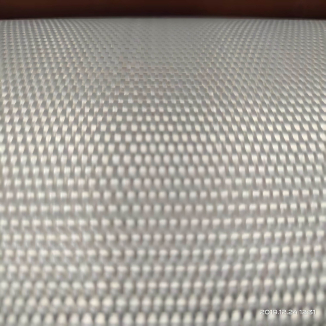
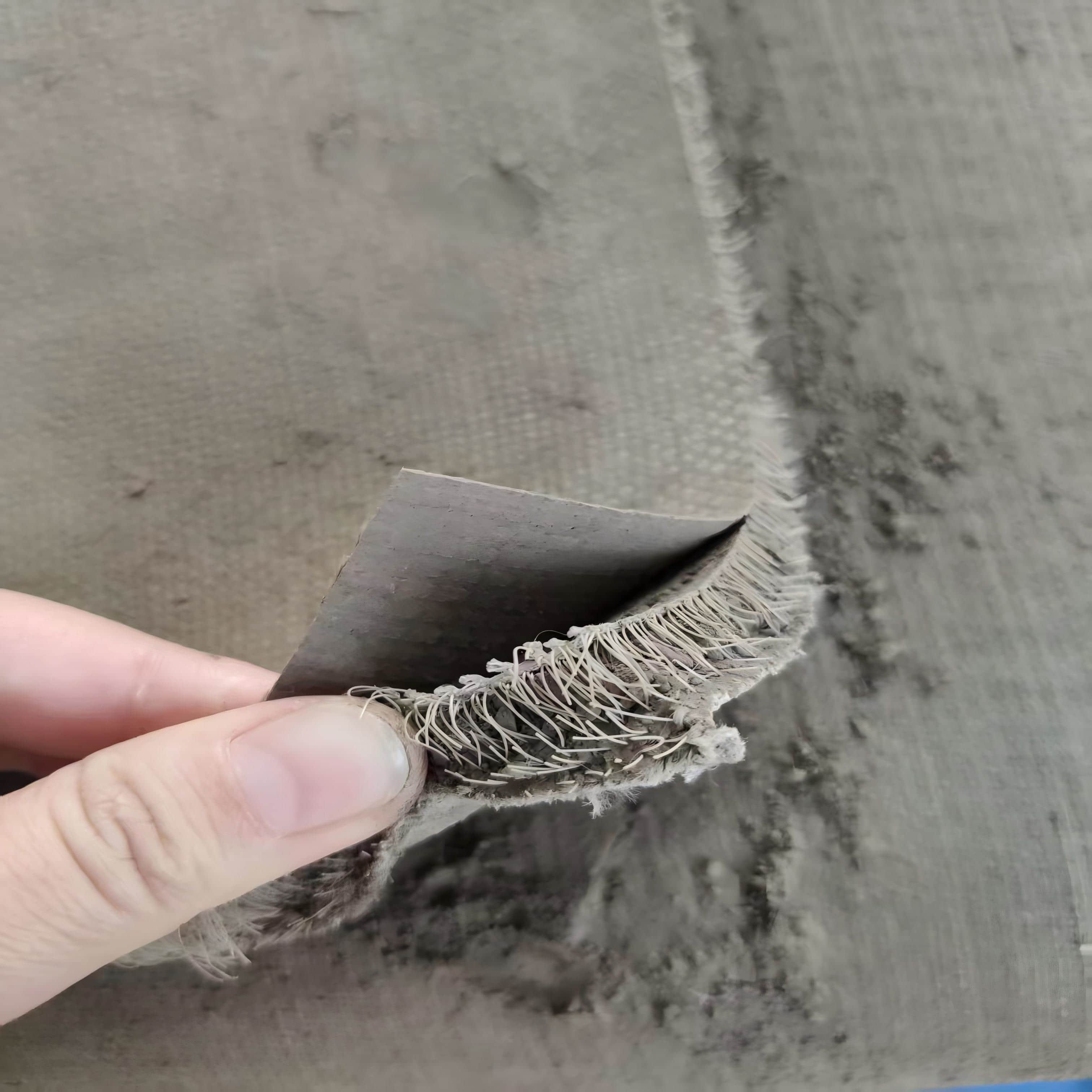
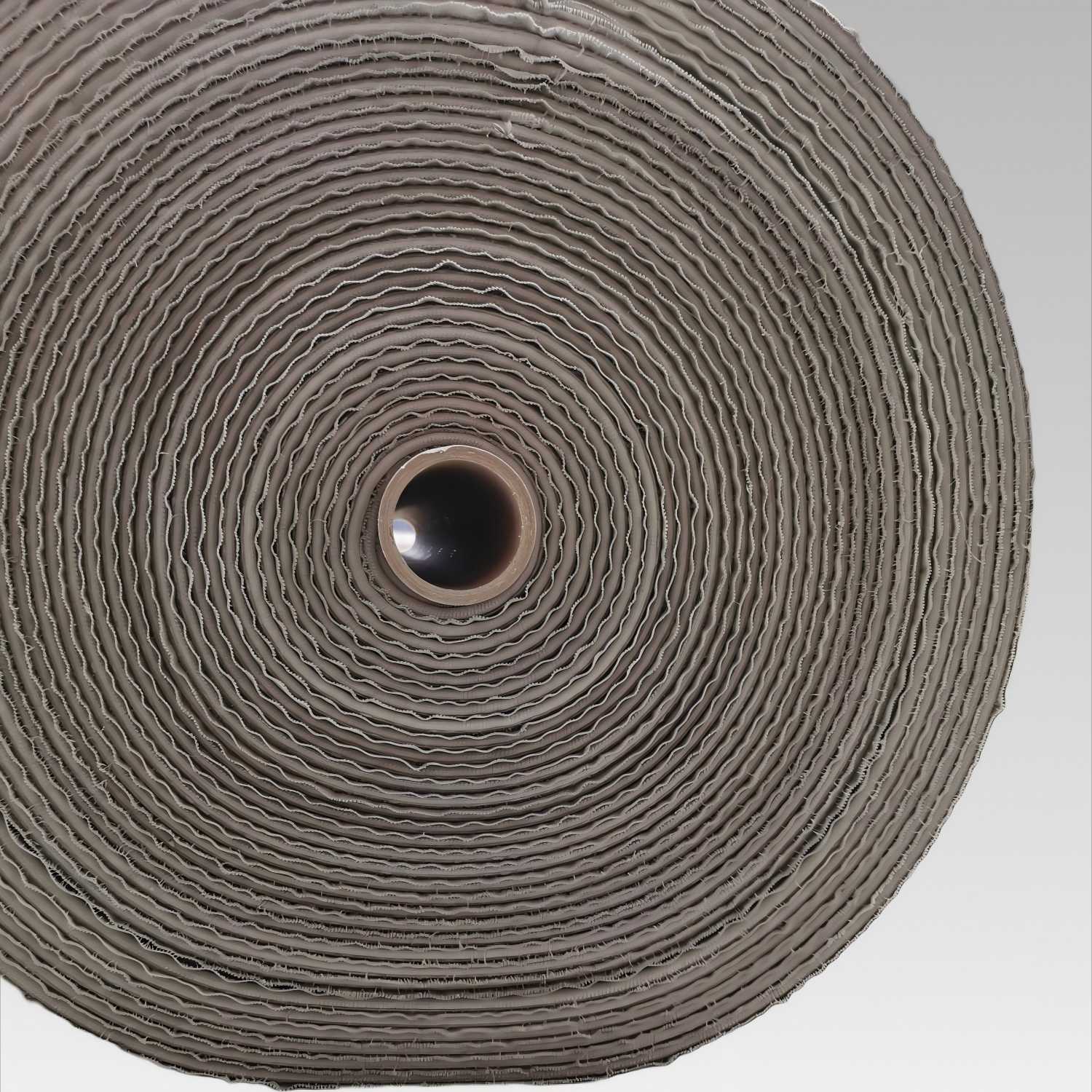
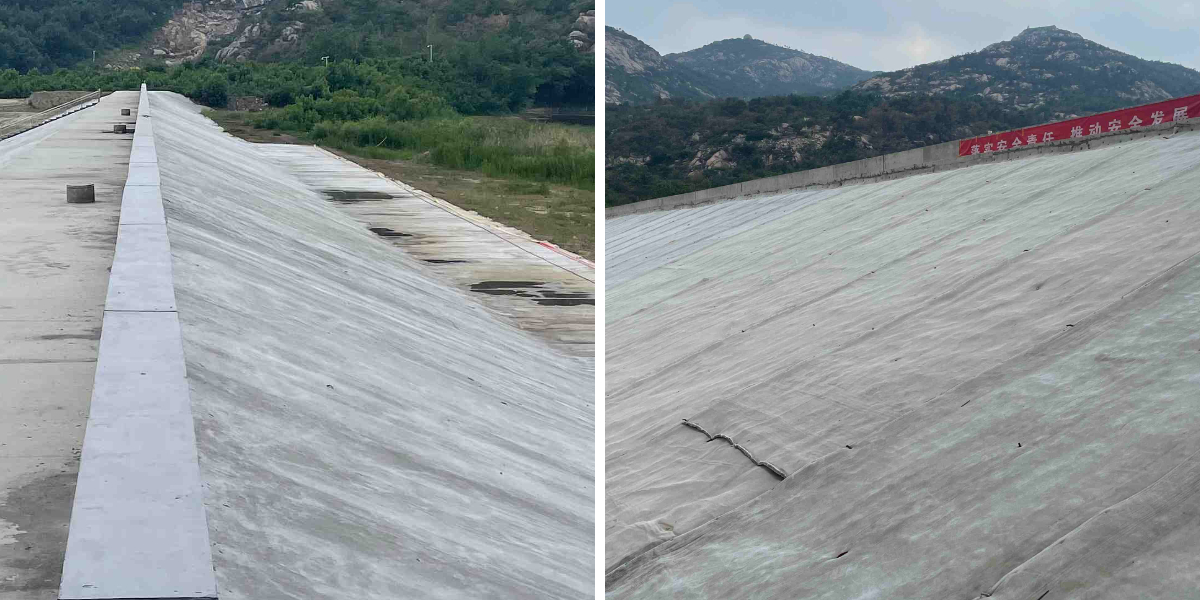
Slope Protection Cement Blanket is a popular new type of ecological slope protection material. It is made of flexible fabric combined with cement, making it lightweight and soft, easily rolled and folded, and convenient for transportation, loading, unloading, and on-site stacking. The product comes pre-mixed with raw materials, maintaining its soft shape for easy laying. Simply sprinkling water allows it to quickly harden, becoming a strong and durable protective layer. A complete range of styles and specifications are available, easily matching various sites such as riverbanks, roadside slopes, and fishpond embankments, suitable for various outdoor slope protection scenarios.
II. Core Functions
The primary function of this product is to stabilize the slope soil layer, strongly resisting the damage caused by heavy rain and river erosion, preventing soil loosening and landslides, and slope collapses from the root. It also has excellent water-proofing and seepage-proofing capabilities, preventing rainwater and accumulated water from seeping into the soil layer and avoiding damage to the foundation soil. It also effectively protects the natural environment of slopes, reduces soil erosion, and safeguards the structural stability of riverbanks, roadbeds, and mountain slopes, providing excellent slope protection and stabilization.
III. Main Features
The construction process is simple and easy to understand, requiring no complex or specialized large machinery. Manual laying is all that's needed, making it easy to learn and significantly shortening the overall construction period, saving considerable manpower and resources. The product is highly resistant to sun and frost, and has excellent weathering resistance. Even when placed outdoors for extended periods, it is not prone to cracking or damage, resulting in a very long service life. After laying, it closely conforms to the slope terrain, providing comprehensive protection. The overall cost is affordable and cost-effective compared to traditional slope protection methods. Once in use, it requires minimal maintenance, making daily use worry-free and labor-saving.
Product Parameters:
Property | State | 8mm | 10mm | 12mm | 15mm | Test Method | |
Compressive strength(MPa) | cured 28 days | 60 MPa | D8329 | ||||
Flexural strength(MPa) | cured 28 days | 15 MPa | D8058 | ||||
Pyramid puncture(kN) | cured 28 days | 4.0 kN | 4.5 kN | 5.0 kN | 6.0 kN | D5494,Type B | |
Abrasion (maximum value) | cured 28 days | 0.3 mm/1000 cycles | C1353/C1353M | ||||
Tensile strength | Final | uncured | 20 kN/m | 30 kN/m | 35 kN/m | 40 kN/m | D6768/D6768M |
Initial | cured 28 days | 15 kN/m | 25 kN/m | 30 kN/m | 35 kN/m | D4885 | |
Final | 25 kN/m | 35 kN/m | 40 kN/m | 45 kN/m | |||
Freeze-thaw | Residual initial flexural | cured 28 days, 200 cycles | >80 % (Pass) | C1185 | |||
Water quality requirements for hydration | Tap water、River water、Seawater | / | |||||
Construction temperature conditions | Construction above 0℃ | ||||||
Fire protecting performance | B1 | GB 8624-2012 | |||||
Harmful substance leaching test items | Limitation index (mg/L) | GB 5085.3-2007 | |||||
Copper (total copper) (mg/L) | ≤100 | ||||||
Zinc (total zinc) (mg/L) | ≤100 | ||||||
Cadmium (total) (mg/L) | ≤1 | ||||||
Lead (total lead) (mg/L) | ≤5 | ||||||
Total chromium (mg/L) | ≤15 | ||||||
Nickel (total nickel) | ≤5 | ||||||
Arsenic (total) | ≤5 | ||||||
Product Applications:
In water conservancy projects, slope erosion, seepage, and collapse are common hazards, especially in areas such as small and medium-sized rivers, irrigation canals, and reservoir drawdown zones. These areas are affected by water flow impact, rainwater erosion, and freeze-thaw cycles. Traditional slope protection materials (masonry, cast-in-place concrete) are cumbersome to construct, have long construction periods, and poor adaptability. Cement blankets, with their unique advantages, have become the preferred material for water conservancy slope protection, specifically applied in the following scenarios:
1. River/Ditch Slope Protection (Most Widely Used)
Suitable for slope protection of various rivers and ditches, including small and medium-sized rivers, farmland irrigation canals, drainage mains, and water diversion canals. It primarily addresses problems such as water flow erosion, slope seepage, and shoreline collapse, making it the most common application scenario in water conservancy projects.
Specific application points: For rivers and ditches with varying flow velocities and soil types, select cement blankets of appropriate specifications (12mm thickness is standard, thicker blankets can be used in areas with higher flow velocities). During installation, conform to the curved riverbank, requiring minimal cutting, effectively adapting to complex terrain. For irrigation and drainage ditches, it not only withstands the impact of water flow during farmland irrigation but also reduces water seepage and improves water resource utilization. For small and medium-sized rivers, it can withstand the impact of flow velocities of 3-5 m/s during the flood season, preventing shoreline erosion and collapse, and protecting the safety of surrounding farmland and villages. Furthermore, the cement blanket retains some porosity on its surface after curing, allowing for the spraying of grass seeds, combining water conservancy protection with ecological greening, avoiding the ecological imbalance caused by traditional hard slope protection.
2. Reservoir/Lake Bank Protection
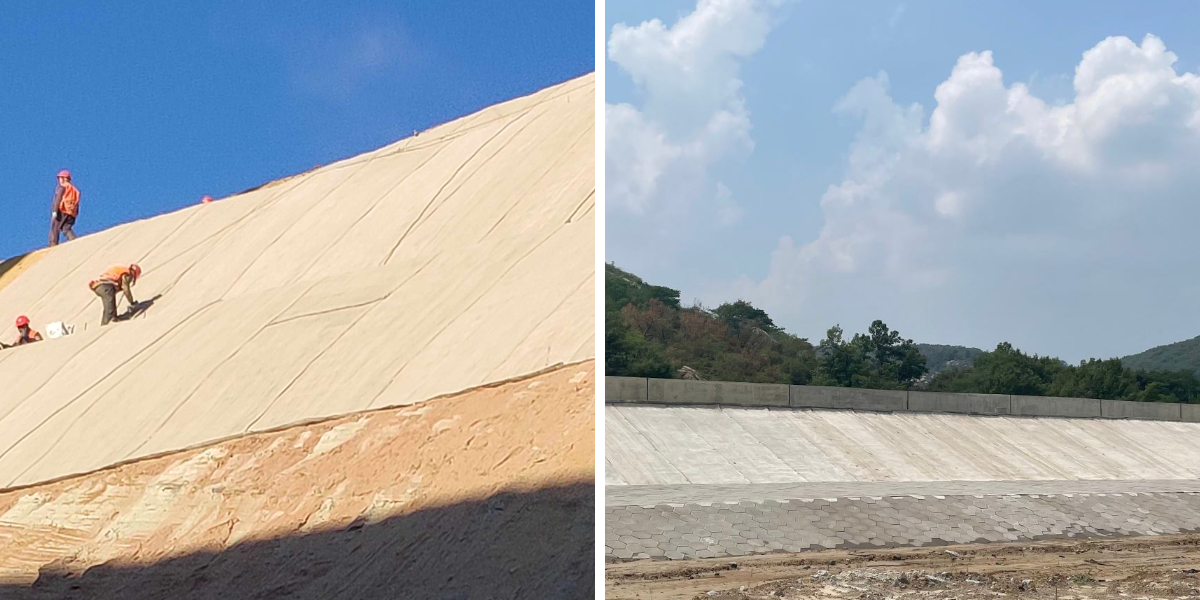
Primarily used for the protection of reservoir drawdown zones, lake shorelines, and artificial reservoir slopes. The core focus is on addressing issues such as wave erosion, freeze-thaw cycles, and saline erosion, balancing protection with ecological compatibility.
Key application points: Reservoir drawdown zones are areas of frequent water level fluctuations. Traditional slope protection materials are prone to cracking and detachment due to repeated wetting and drying, and freeze-thaw cycles. Cement blankets, after curing, have a compressive strength ≥20MPa, withstand ≥50 freeze-thaw cycles, and can adapt to temperatures as low as -20℃. They effectively resist erosion and freeze-thaw damage caused by water level fluctuations, preventing slope collapse and soil erosion in the drawdown zone. For lake shorelines, especially scenic lakes, the surface of the cement blanket can be planted with grass and moss, providing bank stabilization without damaging the lake's ecological landscape, avoiding the harshness of traditional masonry bank protection. For reservoirs and lakes in saline-alkali areas, cement blankets possess excellent salt and alkali resistance, preventing material aging caused by salt erosion and extending the service life of the bank protection, with a design life of over 15 years.
3. Dam/Cofferdam Protection
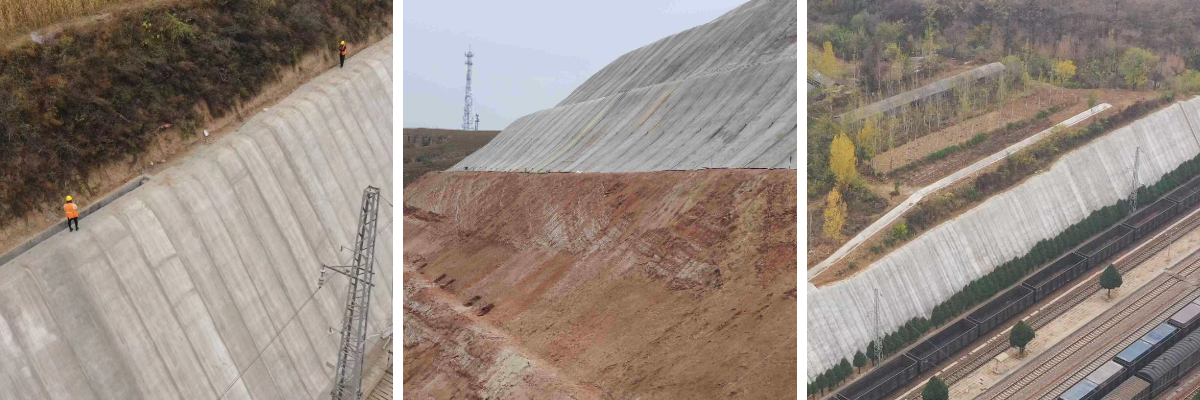
Suitable for slope protection, wave protection, and seepage prevention of various types of dams (earth dams, rockfill dams), as well as rapid construction and emergency sealing of temporary cofferdams. It is an important material for both emergency and routine protection in water conservancy projects.
Specific Application Points: Laying cement blankets on dam slopes forms a dense protective layer, preventing erosion by rainwater and wave impacts that could lead to seepage and landslides, while also reducing soil erosion on the dam slope. For temporary cofferdams, cement blankets can be laid quickly and solidify upon contact with water, reaching 80% strength within 24 hours. No formwork or mixing is required, allowing for rapid formation of temporary protective barriers to meet the protection needs of temporary construction in water conservancy projects. Furthermore, in water conservancy emergency scenarios, such as dam piping and slope collapse, cement blankets can be quickly laid to cover damaged areas, achieving rapid sealing and reinforcement, preventing the situation from escalating, significantly improving emergency response efficiency, and reducing costs.
4. Protection of Supporting Facilities in Water Conservancy Projects
Besides the core scenarios mentioned above, cement blankets for slope protection are also widely used in supporting facilities of water conservancy projects, such as the slopes of pump station inlets and outlets, the protection of culvert inlets and outlets, and the slope protection of reservoir spillways. In these areas, the water flow is fast and the impact is strong. Cement blankets can effectively resist the erosion of high-speed water flow, prevent slope damage and leakage, and ensure the normal operation of supporting facilities. At the same time, their flexibility allows them to adapt to the complex terrain of culvert inlets and outlets, conforming to the slope surface and avoiding protection gaps caused by irregular terrain.
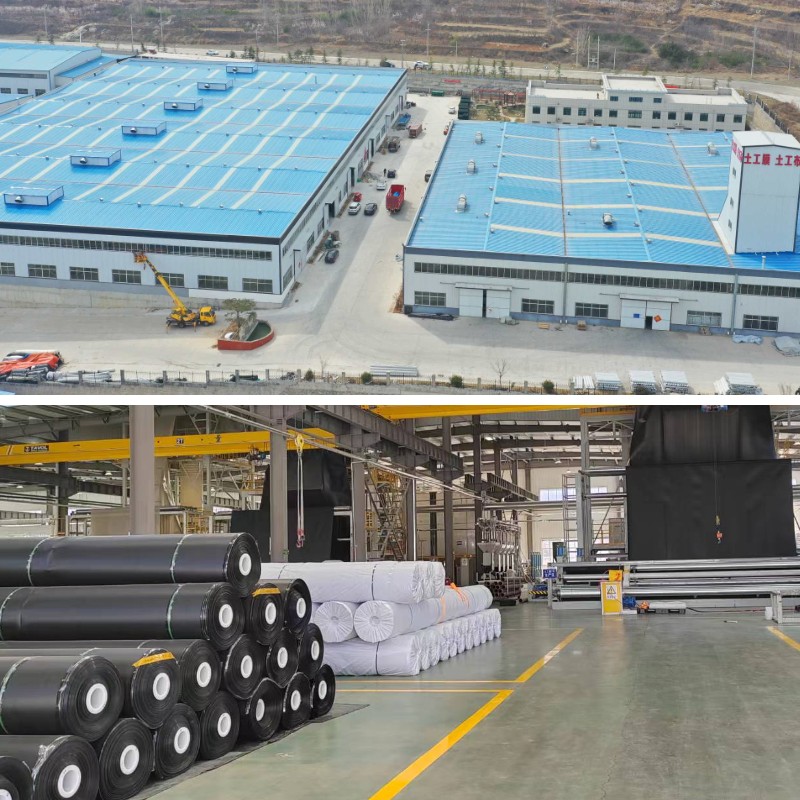
In summary, cement blankets for slope protection have wide applications and significant advantages in water conservancy projects. They are the preferred material for the regulation of small and medium-sized rivers, reservoir bank protection, ditch lining, dam protection, and water conservancy emergency response. With their high construction efficiency, erosion resistance, seepage prevention, and ecological compatibility, they effectively solve the core pain points of water conservancy slope protection, significantly improve the stability and service life of water conservancy facilities, and reduce construction and maintenance costs. In addition to water conservancy projects, slope protection cement blankets can also be applied to transportation (highway and railway subgrade slopes), municipal (landscape lakes and artificial wetlands), agriculture, animal husbandry and fishery (fish ponds and irrigation ponds) and ecological restoration (black and odorous water body treatment and landfill closure). It has the characteristics of both rigid protection and flexible adaptation, and can replace traditional slope protection materials to achieve multi-scenario and multi-functional slope protection with significant comprehensive benefits.