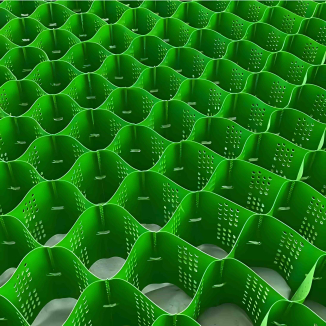
Soft Engineering Solution: Geomat as Alternative to Hard Concrete Revetment
Introduction: Limitations of Traditional Hard Concrete Revetment
Traditional hard concrete revetment has long been the mainstream choice for riverbank, slope and waterway protection in civil engineering. It delivers rigid structural stability but comes with undeniable drawbacks, including rigid and lifeless landscapes, damaged aquatic and terrestrial ecological systems, and poor adaptability to terrain deformation. Hard concrete structures are prone to cracking, peeling and hollowing under long-term water erosion, temperature changes and foundation settlement, requiring frequent repairs and high long-term maintenance costs. In response to the demand for sustainable and eco-friendly engineering construction, soft ecological protection solutions have gradually replaced rigid construction methods. As a core soft engineering material, geomat provides flexible and durable protection effects. Both 3d geomat and 3d vegetation net support ecological restoration while realizing anti-scour protection, becoming a high-quality substitute for traditional hard concrete revetment.
What Is Soft Engineering & Why Geomat Fits the Concept Perfectly
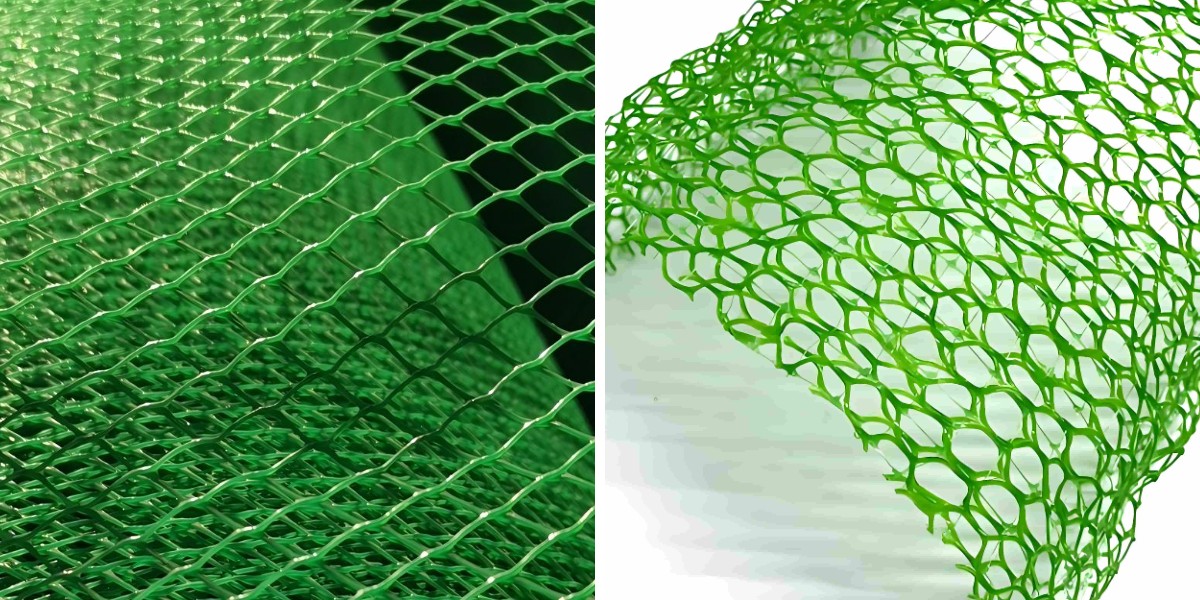
Soft engineering refers to a modern ecological construction method that combines structural protection with natural ecological restoration, abandoning single rigid reinforcement and focusing on harmonious coexistence between engineering facilities and the natural environment. Different from hard engineering that relies entirely on concrete and stone masonry, soft engineering uses flexible geosynthetic materials to assist natural vegetation growth and form self-stabilizing ecological protection systems. Geomat is a typical representative of soft engineering protective materials, designed with a three-dimensional porous structure to balance mechanical protection performance and ecological permeability.
3d geomat breaks the rigid protection mode of concrete revetment. Its layered stereoscopic mesh structure can wrap soil, fix slope surface and carry plant seeds, creating favorable conditions for vegetation growth on protected slopes. The matched 3d vegetation net further optimizes the surface protection effect, cooperating with geomat to build a flexible protective layer that integrates soil fixation, anti-scour and greening functions. This material combination enables soft engineering projects to retain natural ecological vitality while ensuring structural safety, which cannot be achieved by traditional hard concrete revetment.
Core Drawbacks of Hard Concrete Revetment in Modern Engineering
Poor Ecological Compatibility and Landscape Degradation
Hard concrete revetment completely isolates the connection between soil, water and vegetation, forming a closed hard surface that hinders the growth of plants and the survival of small organisms. Long-term concrete coverage will lead to barren slope surfaces, damaged water ecosystem cycles and monotonous engineering landscapes, failing to meet the green construction standards of modern infrastructure. In contrast, geomat opens up an ecological protection channel for engineering slopes. The porous structure of 3d geomat allows free exchange of water and air, provides living space for vegetation and microorganisms, and effectively repairs damaged ecological environments.
With the auxiliary protection of 3d vegetation net, vegetation can grow stably on the slope surface covered by geomat, forming a continuous green landscape. This ecological green protection mode completely avoids the rigid and barren defects of concrete revetment, realizing the integration of engineering protection and natural landscape.
Weak Terrain Adaptability and High Maintenance Risks
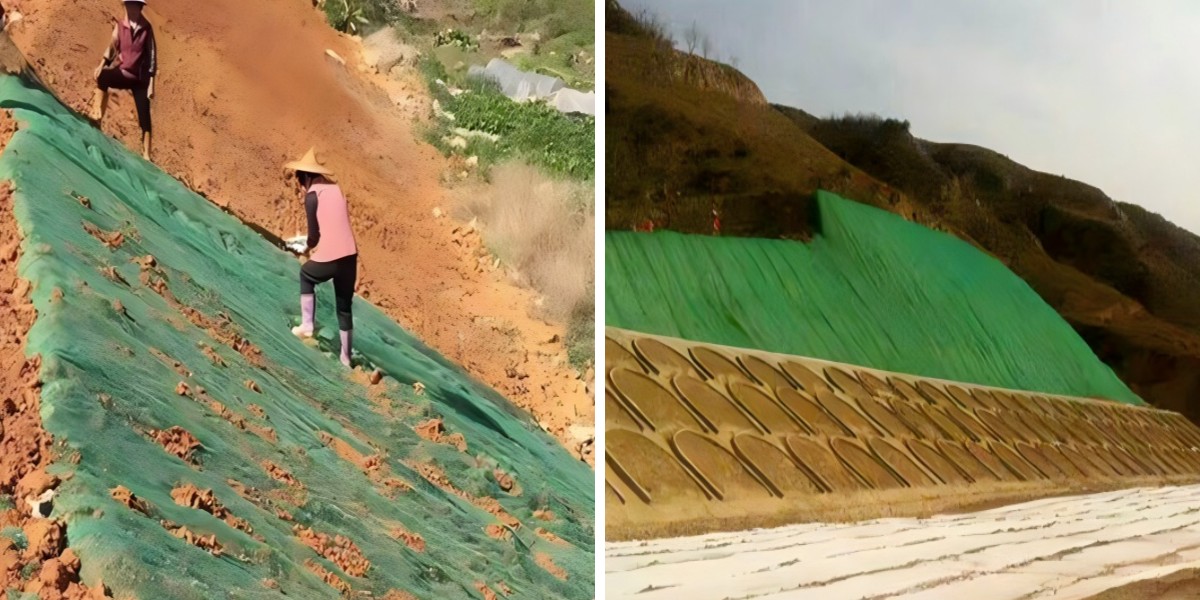
Concrete revetment is a rigid integral structure with poor deformation adaptability. When facing slight foundation settlement, slope displacement or seasonal temperature changes, concrete layers are easy to crack and peel off, resulting in structural failure and water seepage. Once damaged, the overall structure needs partial or full reconstruction, bringing huge maintenance costs and long construction downtime. Geomat, as a flexible soft engineering material, has excellent terrain fitting performance. 3d geomat can closely attach to various irregular slope surfaces and adapt to slight terrain deformation without structural damage.
The flexible protection system composed of geomat and 3d vegetation net has strong overall integrity. Local deformation will not affect the overall protection effect, effectively reducing structural damage risks and later maintenance pressure. Its durable and stable performance makes up for the fragile structural defects of hard concrete revetment.
Advantages of 3D Geomat Replacing Hard Concrete Revetment
Efficient Anti-Scour Performance for Long-Term Slope Stability
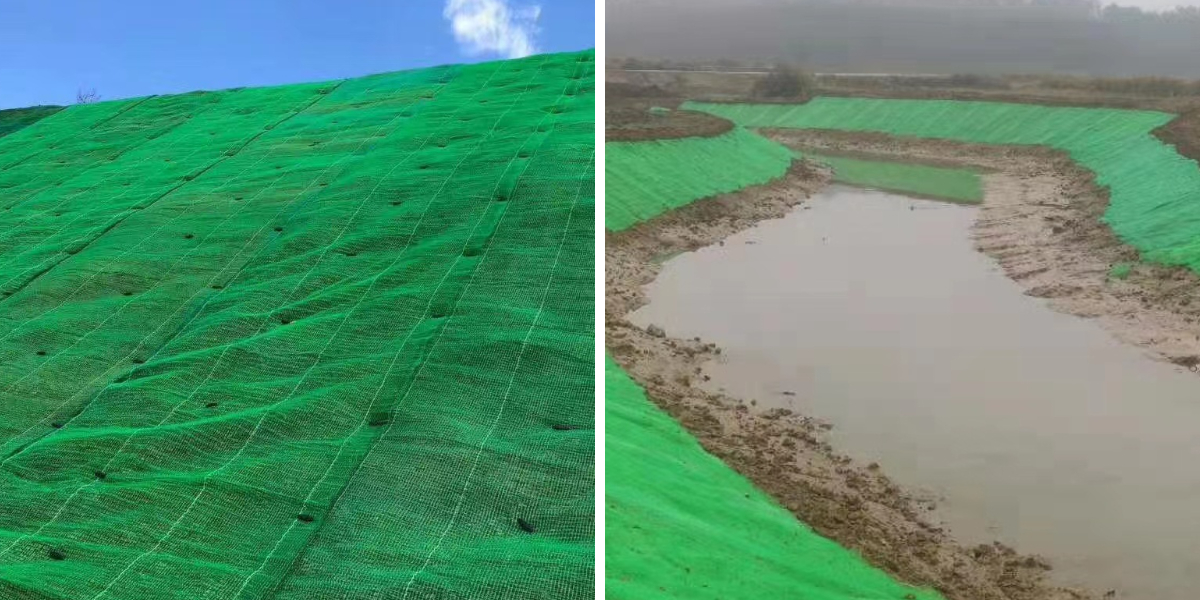
The core function of revetment engineering is to resist water flow scouring and prevent soil erosion. Many people mistakenly believe that rigid concrete has stronger anti-scour ability, while in fact, smooth concrete surfaces cannot buffer water flow impact, and turbulent water flow easily scours the foundation at the bottom of concrete structures, causing hollowing and collapse. 3d geomat forms a rough and stereoscopic protective layer on the slope surface. The mesh structure of geomat can effectively buffer water flow impact, disperse runoff velocity, and lock surface soil to prevent erosion and loss.
After the vegetation grows, the root system penetrates the 3d vegetation net and is tightly combined with 3d geomat to form a composite protection system of "mesh + soil + vegetation". This flexible composite structure has stronger anti-scour and anti-impact ability than single concrete structure, providing more stable long-term protection for riverbanks and waterway slopes.
Lightweight and Cost-Effective Construction
Hard concrete revetment requires complex procedures such as foundation trimming, formwork erection, concrete pouring and curing, relying on a large number of mechanical equipment and professional construction personnel, with long construction cycles and high overall engineering costs. Geomat adopts lightweight flexible design with convenient transportation and laying processes. 3d geomat can be cut and adjusted according to actual slope terrain, realizing rapid coverage protection without complex construction procedures.
The application of 3d vegetation net further simplifies the ecological greening process of revetment projects. While completing slope protection construction in one stop, geomat saves a lot of labor, machinery and time costs compared with concrete construction. The overall economic benefit of soft engineering solutions is far higher than traditional hard revetment.
Ecological Value of 3D Vegetation Net in Soft Revetment Projects
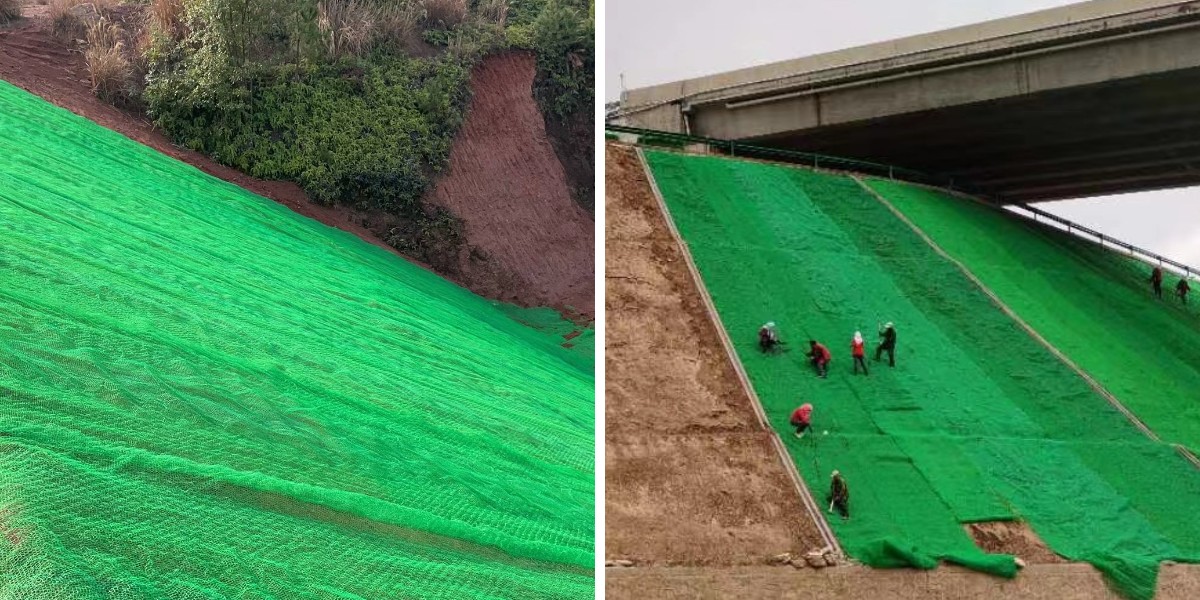
The biggest advantage of soft engineering represented by geomat is ecological restorability, and 3d vegetation net is the key material to realize green ecological revetment. In the early stage of construction, 3d vegetation net cooperates with geomat to fix soil and seeds, preventing seed loss and soil erosion during vegetation cultivation. It provides a stable and warm microenvironment for seed germination and seedling growth, greatly improving vegetation survival rate.
With the growth of vegetation, the green coverage formed by 3d vegetation net and 3d geomat can purify water quality, restore aquatic ecological balance, and improve the self-regulation ability of the water environment. Different from the permanent hard coverage of concrete revetment, the geomat ecological system can realize natural cycle and self-renewal, bringing sustainable ecological benefits for water conservancy and road slope projects.
Application Scenarios of Geomat Soft Engineering Revetment
The soft engineering solution with geomat as the core is suitable for all scenarios that originally adopt hard concrete revetment. It is widely used in river and lake bank protection, reservoir slope stabilization, waterway embankment protection, highway side slope restoration and urban water system ecological renovation. In all construction scenarios, 3d geomat can adapt to different slope gradients and terrain conditions, providing targeted flexible protection.
Cooperating with 3d vegetation net, geomat can complete rapid protection and greening construction in various climatic environments, effectively solving the problems of single function, high cost and poor ecology of traditional concrete revetment. It is a universal and efficient alternative material for modern ecological engineering construction.
Conclusion: Shift to Soft Engineering with Geomat for Sustainable Revetment
Hard concrete revetment is gradually unable to meet the dual requirements of modern engineering for structural safety and ecological sustainability. As an advanced soft engineering solution, geomat perfectly balances protection performance, ecological effect and economic benefit. 3d geomat provides stable anti-scour and soil fixation protection for slopes, while 3d vegetation net promotes rapid vegetation establishment and long-term ecological restoration.
Replacing traditional hard concrete revetment with geomat system can not only avoid various defects of rigid construction, but also create green, durable and low-maintenance engineering protection effects. For all ecological revetment and slope protection projects, soft engineering solutions based on 3d geomat and 3d vegetation net have become the mainstream development trend and the most reliable construction choice.