Permeable Geomat Erosion Control Solutions for Ecological Restoration Projects
Introduce
A graded slope looks finished until the first real rain. Water hits bare soil, rills open up, seed and topsoil slide to the toe, and a revegetation plan that read well on paper loses its growing medium before anything germinates. The weak point is usually not the seed mix. It is the surface.
Permeable geomat erosion control is built around that problem. Instead of sealing a slope, a geomat holds soil in place while letting water pass through, so rainfall soaks in rather than running off in a sheet. On restoration sites the goal is a self-sustaining plant community, and that difference often decides whether a slope settles down or keeps failing every season. A 3d geomat goes a step further by adding depth to the surface layer, which is what makes the system work on steeper ground.
Why Permeability Beats Full Cover
Sealing a slope feels safe. No rain reaches the soil, so nothing can erode. In practice, impermeable sheeting creates its own set of problems. Water that cannot enter the surface concentrates at the edges and along the toe, and that concentrated flow cuts gullies far faster than sheet flow ever would. The cover holds. The slope underneath it does not.
A permeable geomat works the other way. Rain passes into the mat and into the soil beneath it, and the open structure breaks the energy of the drops before they detach particles. Because the material stays permeable, there is no trapped water pressure behind it and no edge concentration to manage. On silty or fine-grained subgrades this matters even more, since those soils lose their surface structure quickly once water starts running across them.
The three-dimensional variant pushes the idea further. A 3d geomat has depth, so it creates a shallow layer of still water and trapped sediment at the surface instead of a flat plane for flow to skate across. That is why geomat erosion control holds up on slopes where a flat mat would simply pass the water downhill.
What a Geomat Is, and What It Is Not
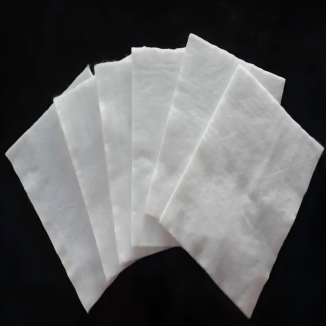
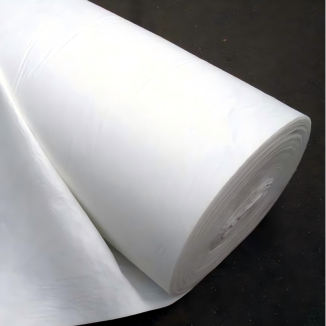
A geomat is made from polymer filaments extruded and bonded into an open, three-dimensional net. The good ones are UV stabilised, because a mat that embrittles in its first summer is worse than no mat at all. It lifts, tears, and takes the seedlings with it.
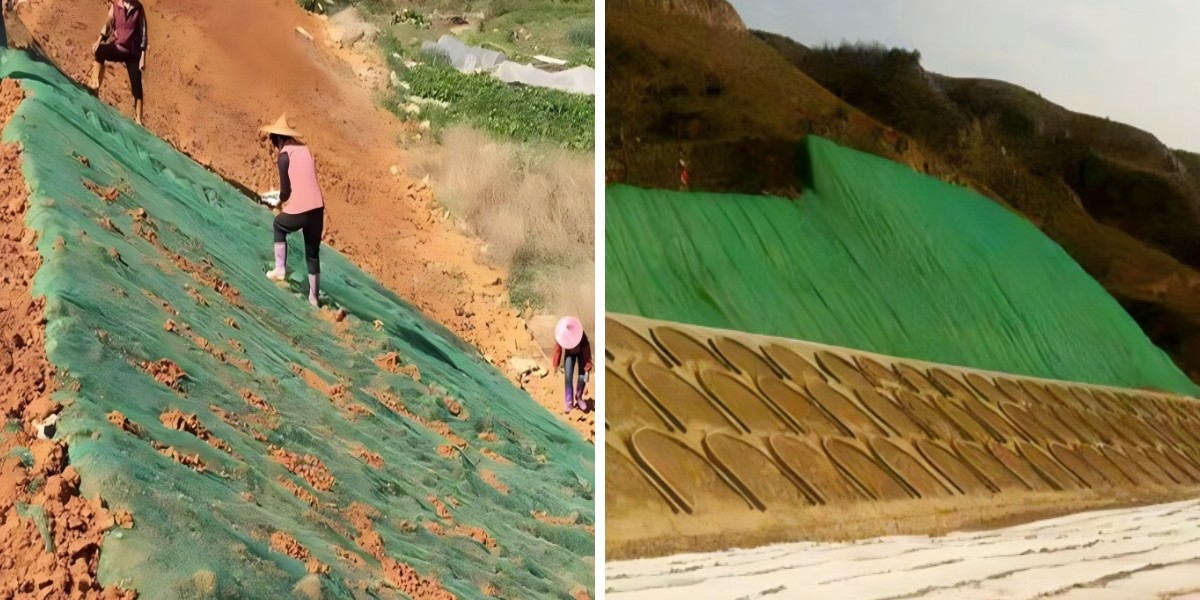
The distinction between a flat erosion blanket and a 3d geomat is depth. A flat mat is mostly surface protection. It shields soil from drop impact and holds mulch down. A three-dimensional mat adds volume, so seed, fertiliser and fine soil sit inside its voids instead of on top of it. That keeps them from washing off a steep face and gives germinating roots something to grip.
What a geomat is not is a structural element. It does not replace a retaining wall, a check dam or a drainage channel. Its job is to hold the surface together long enough for vegetation to take over. Any geomat erosion control design that forgets this is one storm away from being redesigned.
How 3D Geomat Works With Roots
Vegetation is the permanent solution on almost every restoration site. The mat is the bridge to it.
A 3d geomat gives roots a lattice to grow through. Filaments run in several directions and at different heights, so root hairs wrap around them within weeks of emergence. The result is a reinforced surface layer that behaves like a shallow root plate rather than loose soil. Once that plate forms, the mat's role changes. It is no longer carrying the load; it is keeping the surface rough and open underneath a developing sward.
Flow behaviour changes as well. Water still passes through the geomat, but the filaments and the sediment caught between them create a rougher boundary, and that drops velocity at the soil interface. Lower velocity means less transport capacity, and less transport capacity means particles stay where the seed was sown. That is the mechanism behind most successful geomat erosion control outcomes. Not the strength of the polymer, but the roughness and permeability it maintains, which keeps compost and seed sitting against the surface rather than sliding downslope.
Matching the Specification to the Site
Two slopes can look alike and need different products. The variables that matter are gradient, soil texture, rainfall intensity, and whether the surface will ever carry concentrated flow.
Steep faces shed water fast and are hard to seed. A 3d geomat with deeper voids usually makes sense there, because it holds material on the face long enough for cover to establish. Gentle batters with sandy soil are a different case. There the mat needs to be tight enough to stop particle movement but open enough to let seedlings through. Where a geomat erosion control job involves a channel or a toe of slope, and flow arrives concentrated rather than as sheet flow, anchorage becomes the governing factor and a companion structure is often needed.
It is easy to over-specify. Heavier is not automatically better. An over-built mat on a mild slope raises cost, slows the crew down, and can even hinder emergence if the openings are too small for the seed being used. Match the product to the failure mode you are actually trying to prevent, then confirm the choice on a trial panel before covering the whole site.
Installation: Where Most Failures Begin
Most geomat failures are installation failures, and they tend to follow a pattern.
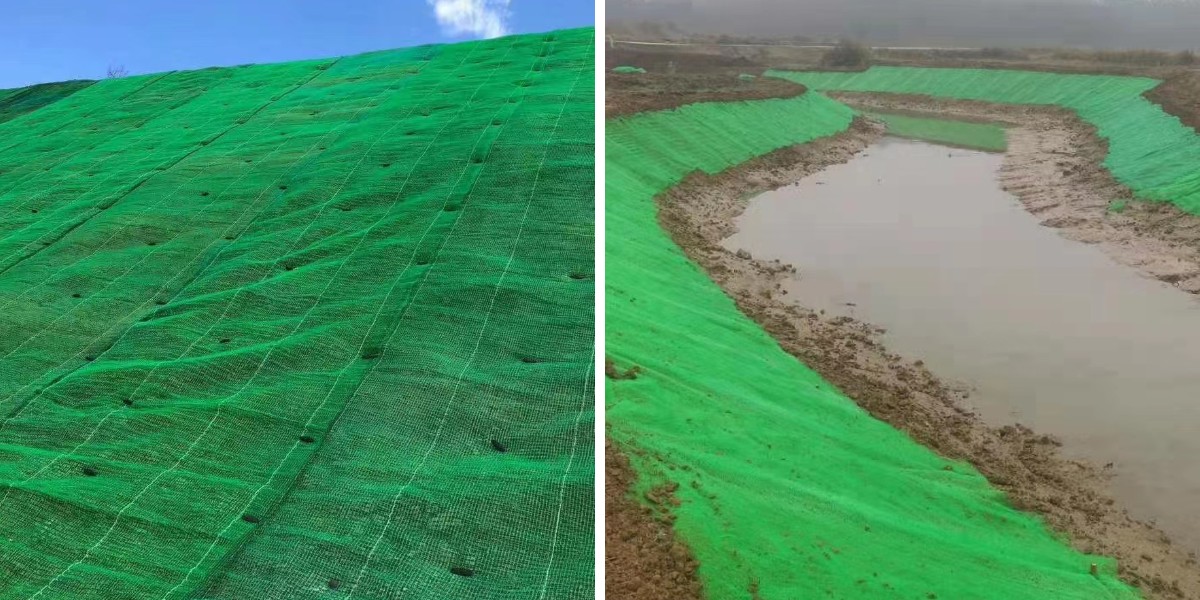
The first is surface preparation. A mat laid over loose fill, open rills or a smeared subgrade has nothing to grip. Regrade, scarify, and close the rills before anything is rolled out.
The second is anchorage. A permeable geomat that is not keyed into a trench at the crest and the toe will lift at the edges under the first significant runoff. Once water gets underneath, the mat becomes a sail. Anchor trenches, staggered staples and a proper overlap pattern, shingled in the direction of flow, matter more than the mat's own strength.
The third is contact and timing. Seed and soil need to sit inside the 3d geomat structure, not be broadcast over it afterwards. Hydroseeding onto a well-seated mat works. Hydroseeding a mat that is bridging a hollow does not, because the slurry runs straight underneath. On steep ground, a second pass of topsoil or compost worked into the voids is often what separates a green slope from a patchy one.
Walk the site after the first storm. Anywhere water has cut under the mat is a detail to fix now, not at handover. That single habit catches more geomat erosion control problems than any inspection checklist.
Where It Fits in Ecological Restoration
Permeable matting suits almost any site where the objective is vegetation rather than concrete. Highway and rail cuttings, landfill closure caps, mine spoil, riverbanks above the scour line, wetland margins and dune toe stabilisation all rest on the same principle: hold the surface, let the water through, give the plants a chance.
Dune and coastal work is a natural fit for a 3d geomat, since sand moves easily and the mat's depth keeps wind-blown and water-borne grains from migrating before marram or a similar species knits the surface together. Mine and quarry restoration often uses geomat erosion control as the first step on bare, compacted spoil, paired with ripping and organic amendment so roots have somewhere to go.
There are places to avoid. An active high-velocity channel, a rock face with no fine material, or a slope already failing at depth will not be fixed by surface matting. In those situations a geomat is part of the answer at best, and specifying it alone delays the real repair.
Buying Checks Before the Order
Ask suppliers for the basics in writing: filament material, UV stabilisation, mass per unit area, roll dimensions, and the test method behind any strength figure quoted. A sample roll and a small installed trial are worth more than a polished datasheet.
Check that the 3d geomat you receive has consistent void depth across the roll. Flattened or heat-damaged stock loses exactly the property you are paying for. On any sizeable geomat erosion control order, agree overlap allowances, staple quantities and delivery sequence up front. Crews that run short mid-slope tend to stretch what they have, and stretched matting fails at the first rain.
Conclusion
Geomat erosion control on restoration sites is a timing problem. Soil has to stay put until roots can do the work, and the surface has to stay open so water keeps moving into the ground instead of across it. A permeable geomat, and particularly a 3d geomat with enough depth to hold seed and sediment, solves that problem without sealing the site. Specify it for the failure mode you actually have, install it with the anchorage it needs, and check it after the first real rain. The vegetation will handle the rest.