

How 3D Geomat Systems Effectively Prevent Soil Erosion and Restore Ecological Slopes
Introduction
Slope soil erosion remains one of the most common and destructive ecological problems in infrastructure construction, land reclamation, and environmental restoration projects. Unprotected bare slopes suffer from raindrop impact, surface runoff, and wind scouring, leading to topsoil loss, slope collapse, and damaged regional ecological balance. Traditional hard slope protection methods, such as concrete and stone masonry, can stabilize slopes mechanically but isolate soil from vegetation and destroy natural ecological circulation. In contrast, modern ecological restoration solutions centered on 3D Geomat and professional Erosion Control Matting provide a dual-functional approach that achieves reliable anti-erosion protection and sustainable Slope Revegetation. This article explores how 3D Geomat systems work to control soil erosion fundamentally and rebuild healthy ecological slope environments.
What Is 3D Geomat and Erosion Control Matting for Slope Protection
3D Geomat is a three-dimensional flexible geosynthetic material with a stereoscopic mesh structure, uniquely designed for slope soil fixation and ecological restoration. Different from flat protective nets, its layered three-dimensional framework creates abundant internal space for soil accumulation, seed attachment, and root growth, making it a core material for modern ecological slope protection. Matching professional Erosion Control Matting further optimizes surface protection performance, forming a complete anti-erosion system that combines physical protection and ecological cultivation.
Traditional slope protection materials focus only on short-term mechanical stabilization, ignoring the long-term ecological recovery of slopes. The integrated system of 3D Geomat and Erosion Control Matting abandons rigid hard protection logic. It adheres to the concept of ecological priority, laying a solid foundation for smooth Slope Revegetation. The flexible and foldable features of 3D Geomat allow it to fit irregular slope surfaces perfectly, eliminating protection dead zones and ensuring comprehensive coverage of slope soil.
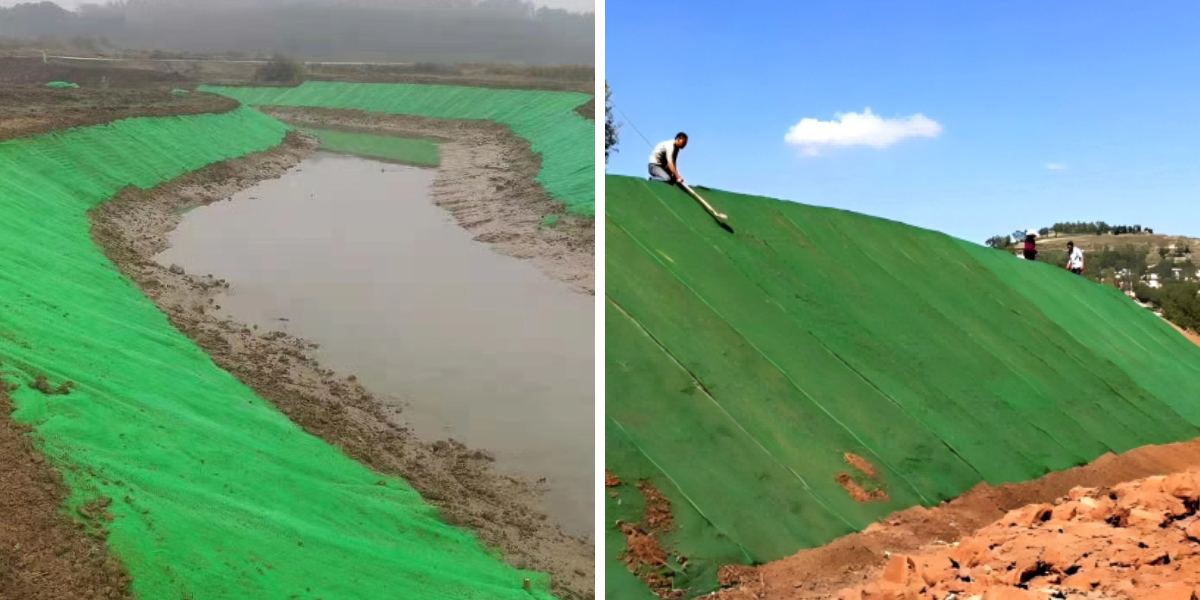
Core Mechanisms of 3D Geomat Systems in Preventing Soil Erosion
1. Blocking Surface Runoff and Reducing Water Scouring
Rainfall-induced surface runoff is the primary cause of slope soil erosion. Bare slopes cannot buffer raindrop impact or slow down flowing water, resulting in rapid loss of loose topsoil. The stereoscopic mesh structure of 3D Geomat acts as a flexible protective barrier on the slope surface. It effectively disperses raindrop impact force, avoids direct splashing and stripping of soil particles, and slows down the flow velocity of surface runoff. Paired with high-performance Erosion Control Matting, the system forms a dense surface protection layer that intercepts floating soil particles in runoff and prevents shallow soil loss.
This physical protection mechanism solves the core problem of early slope erosion. Before vegetation matures completely, the 3D Geomat system provides continuous and stable protection, avoiding slope damage during the vulnerable transition period of Slope Revegetation. It balances water permeability and soil retention, eliminates water accumulation on the slope surface, and reduces hydrostatic pressure that may trigger slope slippage.
2. Forming Soil-Mat Composite Structure to Enhance Slope Stability
The excellent structural toughness of 3D Geomat enables it to form a tightly integrated composite body with filled slope soil. The three-dimensional mesh framework locks loose soil firmly, restricts soil particle displacement, and significantly improves the overall shear strength and anti-slip performance of the slope. Unlike single soil layers that are prone to collapse under external forces, the composite structure reinforced by 3D Geomat can resist conventional wind and water erosion and avoid shallow slope sliding.
As a supporting Erosion Control Matting material, it enhances the surface integrity of the slope system, prevents local soil hollowing and peeling, and further consolidates the protection effect. This mechanical reinforcement creates stable terrain conditions for subsequent Slope Revegetation, ensuring that vegetation roots can grow in a stable soil environment without being affected by soil displacement.
How 3D Geomat Systems Boost Sustainable Slope Revegetation
1. Creating a Superior Growth Environment for Vegetation
Successful Slope Revegetation relies on stable soil, sufficient water retention, and safe seed germination conditions, all of which are perfectly provided by3D Geomat. The internal mesh space of 3D Geomat can store soil, organic matter, and grass seeds effectively, preventing seeds and young seedlings from being washed away by rainwater. The material’s breathable and water-permeable properties maintain good air and water circulation in the slope soil, avoiding hardening and waterlogging, and greatly improving the germination rate and survival rate of vegetation.
Coordinated with professional Erosion Control Matting, the system can effectively shield young seedlings from strong sunlight and wind erosion, reduce surface water evaporation, and maintain a stable microclimate on the slope. This gentle and protective growth environment accelerates vegetation growth and shortens the cycle of ecological slope restoration.
2. Realizing Mutual Reinforcement of Vegetation and Protection System
The biggest advantage of 3D Geomat-based slope protection is its synergistic ecological effect. In the early stage, 3D Geomat and Erosion Control Matting undertake all anti-erosion work to protect soil and seeds. As vegetation grows, plant roots penetrate the 3D mesh structure and intertwine with the geomat to form an integrated root-soil-mat protection system.
At this stage, vegetation replaces part of the physical protection function of the material, and the geomat continuously fixes the root system to improve vegetation stability. The organic combination of artificial materials and natural vegetation realizes long-term self-maintenance of the slope. This sustainable restoration mode makes Slope Revegetation no longer a superficial greening effect but a thorough ecological reconstruction of the slope.
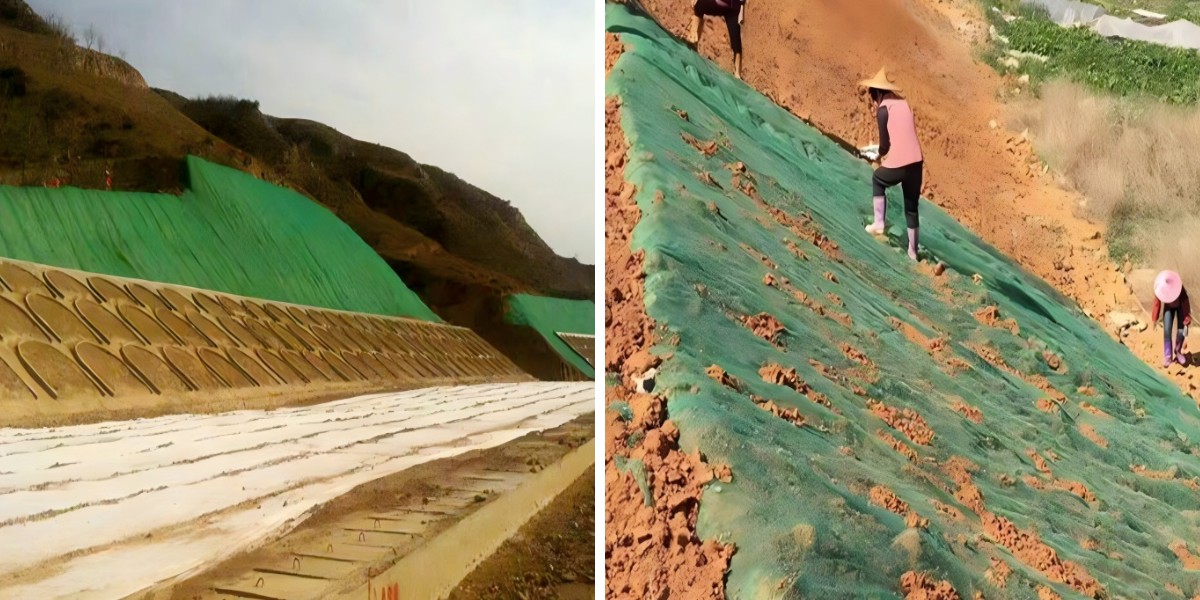
Key Advantages of 3D Geomat Erosion Control Solutions
Compared with traditional hard protection and ordinary greening methods, the integrated solution of 3D Geomat and Erosion Control Matting has irreplaceable advantages in slope ecological restoration. First, it features high environmental friendliness. The geosynthetic material is non-toxic, weather-resistant, and degradable in a controlled cycle, causing no damage to soil and water environments, and fully conforming to green ecological engineering standards.
Second, the construction of 3D Geomat systems is flexible and efficient. The lightweight and foldable material is easy to transport and cut, adapting to various complex slope terrains such as highway embankments, river slopes, and mountain restoration slopes. The simple construction process shortens the project cycle and reduces construction costs. Meanwhile, the long-term stable protection performance avoids frequent later maintenance.
Most importantly, this solution realizes the organic unity of protection and ecology. It solves the problem of short-term slope erosion while promoting long-term Slope Revegetation and ecological recovery. The restored slope can form a self-circulating ecological system, effectively improving regional landscape and ecological environment.
Common Application Scenarios of 3D Geomat Ecological Slope Restoration
3D Geomat and supporting Erosion Control Matting are widely used in various slope ecological protection and restoration projects. In highway and railway slope engineering, the system stabilizes road embankment slopes, prevents roadbed erosion and collapse, and realizes roadside greening and beautification. In river and lake bank protection projects, it controls water flow scouring on bank slopes, protects water and soil resources, and purifies the near-water ecological environment through Slope Revegetation.
It is also widely applied in mountain ecological restoration, mine reclamation, and park landscape slope renovation. For abandoned mine slopes with loose soil and severe erosion, the 3D Geomat system quickly fixes loose soil, creates conditions for vegetation growth, and gradually restores the damaged mountain ecology. For landscape slopes, it achieves uniform and stable greening effects while ensuring slope safety, balancing functional protection and landscape aesthetics.
Conclusion
Soil erosion and slope ecological damage are persistent environmental problems that require sustainable and efficient solutions. As a mature ecological protection technology, the 3D Geomat system relies on its unique three-dimensional structural advantages, cooperating with professional Erosion Control Matting to achieve dual protection of physical anti-erosion and ecological restoration. It effectively locks slope soil, blocks water and wind erosion, and creates excellent growth conditions for Slope Revegetation.
Different from traditional rigid protection that sacrifices ecology for stability, the 3D Geomat system adheres to the concept of ecological priority, realizes complementary advantages of artificial materials and natural vegetation, and builds long-term stable and self-repairing ecological slopes. With the increasing demand for green engineering and ecological restoration, 3D Geomat-based slope protection solutions will become the mainstream choice for various slope treatment projects, providing reliable support for water and soil conservation and ecological environment improvement.


