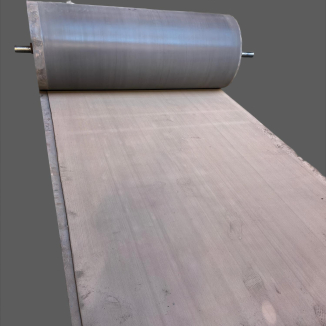
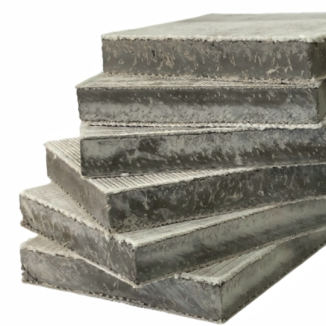
The Benefits of Cement Blanket for Temporary Road and Ground Protection
Introduce
Construction sites, temporary engineering zones, and municipal maintenance projects often require reliable ground reinforcement and surface protection to ensure safe access and stable site conditions. Traditional temporary ground treatment methods usually involve cumbersome procedures, poor adaptability, and short service cycles, failing to meet efficient construction demands. As an innovative flexible cement composite material, the cement blanket has become a preferred solution for temporary road paving and ground protection. It delivers stable structural reinforcement, durable surface defense, and flexible scene adaptation forSlope Protection and Ditch Lining scenarios. This article explores the core advantages of cement blanket in temporary road and ground protection projects.
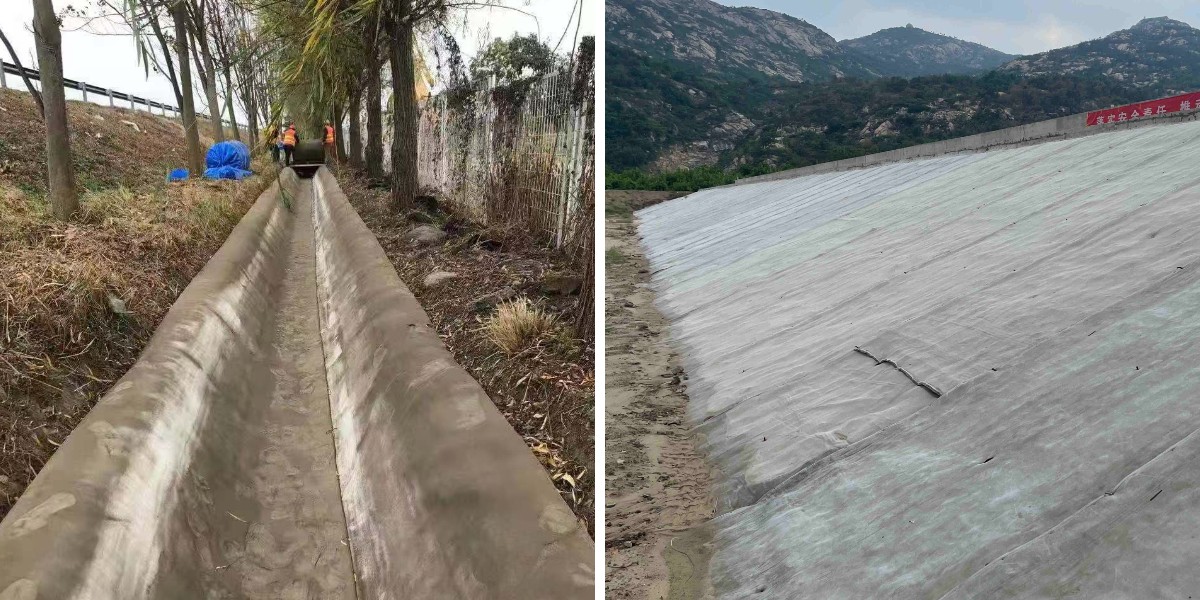
1. Fast and Tool-Free Installation for Rapid Site Deployment
One of the most prominent advantages of the cement blanket is its extremely simple and efficient installation process, which perfectly matches the fast-paced requirements of temporary road and ground protection projects. In a dry state, the cement blanket remains lightweight, foldable and easy to cut, allowing workers to complete on-site laying, trimming and splicing without heavy machinery or complex construction tools. It eliminates traditional procedures such as concrete mixing, formwork building and long-term curing.
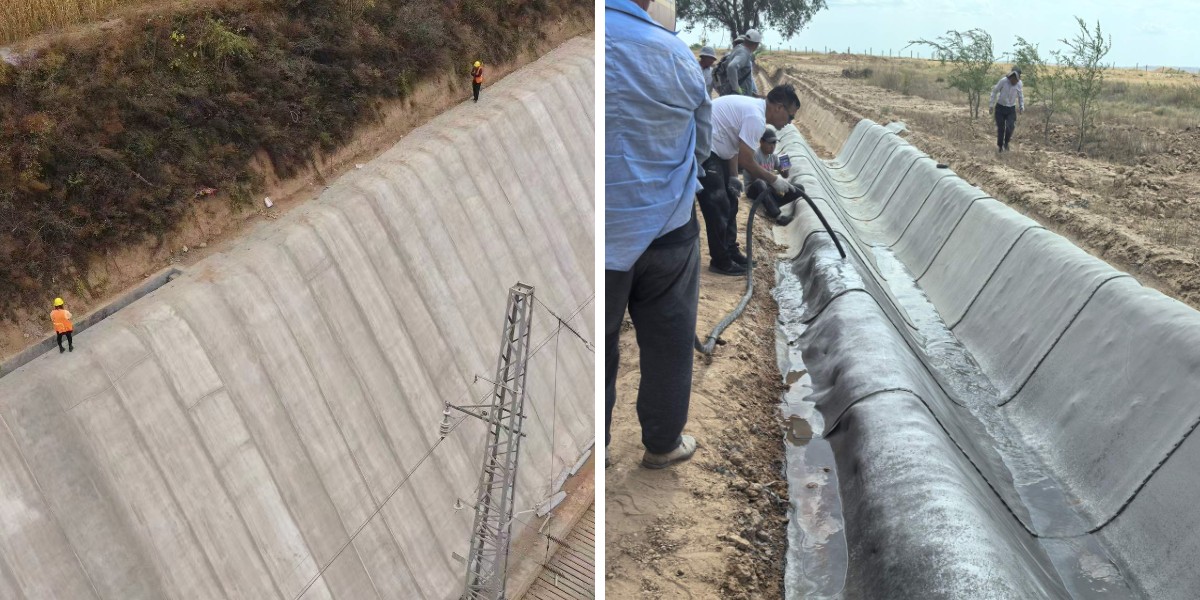
This rapid construction feature greatly shortens the preparation cycle of temporary roads and construction ground surfaces. Meanwhile, the flexible laying mode is also applicable to emergency Slope Protection treatment. It can be quickly deployed on unstable slope surfaces to form an effective protective layer and prevent sudden slope erosion and collapse. For temporary drainage systems on construction sites, quick Ditch Lining with cement blanket effectively standardizes water flow channels, avoids ground water accumulation and mud deposition, and maintains smooth site operation.
2. Excellent Terrain Adaptability for Complex Ground Conditions
Construction sites usually have uneven ground, undulating terrain and irregular slope structures, where rigid protective materials are prone to hollowing, cracking and falling off. The unique flexible performance of the cement blanket enables it to closely fit various irregular ground surfaces, terrain radiances and slope gradients. It maintains complete surface fitting without gaps or deformation after hydration and curing, forming an integrated stable protective layer.
In temporary road construction, the cement blanket adapts to slight ground undulations and uneven foundation surfaces, ensuring flat and solid road surfaces for pedestrian and vehicle passage. In terms of Slope Protection, it fits slope curves and local depressions perfectly, solving the problem of poor fitting of traditional rigid protective layers and improving the overall anti-erosion ability of slopes. For irregular drainage structures, flexible Ditch Lining with cement blanket adapts to different ditch widths and bending radiances, realizing seamless lining protection for temporary water delivery channels.
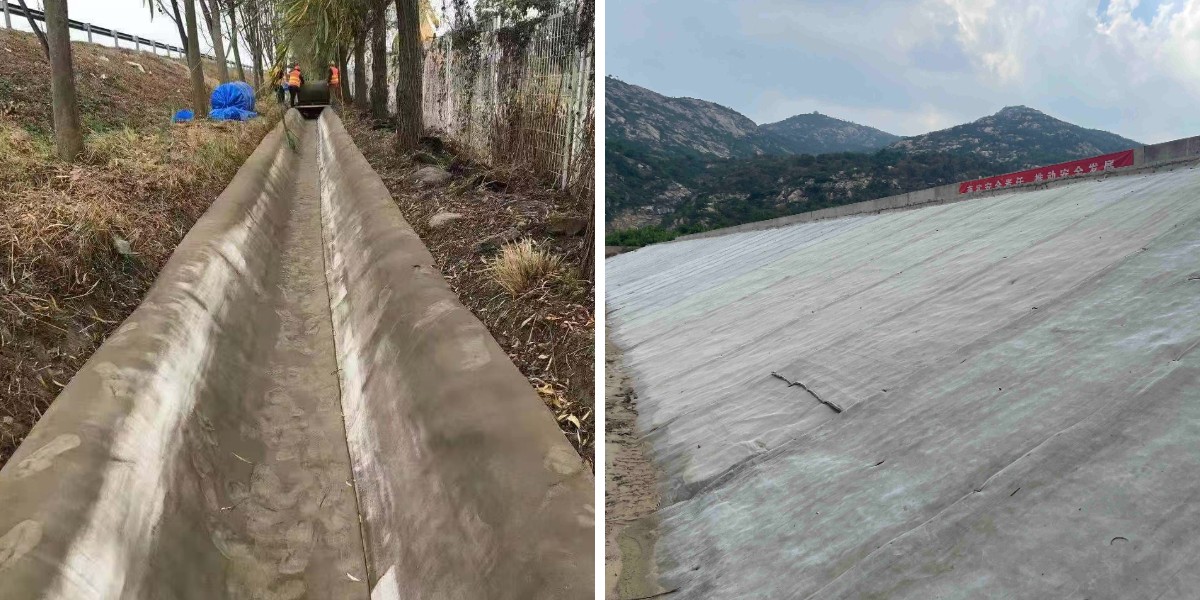
3. Superior Structural Strength and Durable Ground Protection
Although easy to construct, the cured cement blanket possesses high compressive strength, wear resistance and impact resistance, providing long-term stable protection for temporary roads and construction grounds. After simple water hydration and natural curing, the material forms a dense and rigid cement protective layer, which can resist frequent vehicle rolling, pedestrian trampling and external mechanical impact.
The solid surface structure of the cement blanket effectively prevents ground mud turning, sand loss and surface damage, maintaining the flatness and stability of temporary roads for a long time. In outdoor open environments, it resists ultraviolet aging, rain erosion and temperature changes, avoiding cracking and peeling of the protective layer. For slope engineering, robust Slope Protection performance helps resist rainwater scouring and wind erosion, stabilizing slope soil structure and preventing water and soil loss. Firm Ditch Lining can withstand long-term water flow scouring, avoiding ditch wall collapse and bottom sediment leakage.
4. Cost-Effective and Low-Consumption Engineering Solution
Compared with traditional concrete pouring, gravel paving and stone laying, the cement blanket significantly reduces comprehensive engineering costs for temporary road and ground protection. It saves a large amount of raw material consumption, mechanical equipment investment and labor costs, and does not require long-term maintenance and repeated repairs in the later stage.
The lightweight and compact storage feature of the cement blanket lowers transportation and storage costs, and its one-time laying and forming effect avoids material waste caused by repeated construction. For short-term temporary projects, it provides durable ground protection with lower investment. In auxiliary engineering links such as temporary Slope Protection and emergency Ditch Lining, the material’s high cost performance optimizes the overall project budget, making it an economical and efficient supporting material for construction site protection.
5. Eco-Friendly Performance for Green Construction Management
Modern construction projects have increasingly strict requirements for on-site environmental protection and green construction. The cement blanket is made of environmentally friendly cement composite materials, with no volatile harmful substances and no dust pollution during construction. The whole laying and curing process is clean and orderly, which will not cause secondary pollution to the construction site soil and water environment.
After curing, the dense structure of thecement blanket effectively isolates soil exposure, reduces site dust raising, and improves the overall environmental quality of the construction area. In temporary slope greening protection, stable Slope Protection structure fixes surface soil, creates stable conditions for later vegetation growth, and realizes the coordination of engineering protection and ecological restoration. Smooth and closed Ditch Lining avoids soil and sediment loss in the drainage process, protecting the on-site ecological environment while ensuring drainage efficiency.
6. Diverse Application Flexibility for Multi-Scenario Site Protection
The cement blanket has extremely high application flexibility, covering almost all temporary ground protection scenarios in construction projects. It can be used for temporary construction roads, vehicle passage platforms, equipment placement grounds and construction operation areas, providing safe and stable ground support for on-site construction.
Beyond conventional ground protection, it serves as a reliable auxiliary material for geotechnical and hydraulic auxiliary projects. It provides efficient temporary and permanent Slope Protection for foundation slopes, road side slopes and riverbank slopes, effectively preventing slope instability and soil erosion. At the same time, professional Ditch Lining capability enables it to be widely used for temporary drainage ditches, field water channels and rainwater collection ditches, ensuring unobstructed on-site drainage and avoiding water accumulation hazards.
Conclusion
The cement blanket stands out in temporary road and ground protection projects with its fast construction speed, strong terrain adaptability, durable structural performance, low comprehensive cost and eco-friendly advantages. It not only solves various pain points of traditional temporary ground protection technologies, but also provides reliable technical support for on-site Slope Protection and Ditch Lining work. With outstanding practical value and wide scene adaptability, cement blanket has become an indispensable high-efficiency protective material for modern construction site temporary engineering.