HDPE Geocell for Railway Embankment Reinforcement & Settlement Control
Railway embankments face long-term structural challenges from dynamic train loads, soil displacement, and changing climatic conditions, making stable reinforcement and reliable settlement control core priorities in railway infrastructure construction. Traditional embankment reinforcement solutions often fail to deliver long-term stability, leading to uneven settlement, slope deformation, and frequent maintenance issues. Today, hdpe geocell has become a mainstream geosynthetic solution for modern railway projects, thanks to its unique three-dimensional honeycomb structure and superior mechanical performance. As a high-performance geocell material, it effectively optimizes embankment stress distribution, restricts soil movement, and minimizes long-term settlement risks. This article explores the functions, advantages, and practical applications of geocell in railway embankment reinforcement and settlement control, providing professional guidance for infrastructure contractors and engineering designers.
1. Why Railway Embankments Need Professional Geocell Reinforcement
Railway embankments operate under continuous cyclic loads generated by high-speed and heavy-haul trains, which impose strict requirements on foundation rigidity, uniformity, and deformation resistance. Ordinary soil embankments lack structural restraint, making them prone to gradual compression, lateral soil spreading, and uneven settlement during long-term operation. These defects directly affect railway running stability and traffic safety, requiring continuous maintenance and repair.
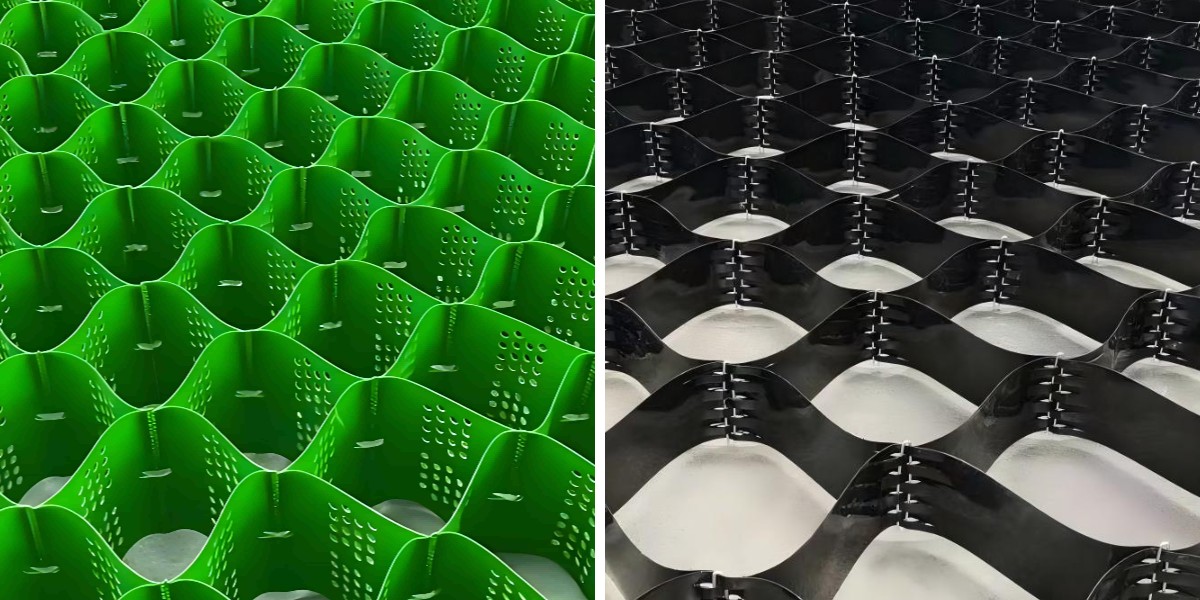
The application ofgeocell solves the inherent structural defects of traditional embankment systems. This flexible three-dimensional grid structure forms a stable integrated system with filled soil, gravel, or other fillers, greatly improving the overall rigidity and bearing capacity of the embankment. Unlike flat geosynthetic materials that only provide two-dimensional reinforcement, hdpe geocell delivers three-dimensional confinement force, which perfectly adapts to the stress characteristics of railway embankments under dynamic loads.
As a durable and weather-resistant geocell material, it can adapt to complex geological conditions including soft soil foundations, uneven terrain, and variable soil layers. It effectively inhibits lateral displacement of embankment fillers, disperses concentrated train loads, and fundamentally reduces the probability of differential settlement and slope collapse in railway embankments.
2. Core Advantages of HDPE Geocell for Railway Embankment Projects
hdpe geocell stands out among various embankment reinforcement materials due to its unique material properties and structural design, making it highly suitable for strict railway engineering standards. Every performance feature of this geocell material is tailored to solve the pain points of railway embankment stability and settlement control.
First, geocell provides powerful three-dimensional soil confinement. Its honeycomb grid structure locks internal fillers tightly, preventing particle displacement and shear deformation under repeated train vibration. This integrated locking effect greatly enhances the overall shear strength and stability of the embankment, avoiding loose deformation caused by long-term dynamic load impact.
Second, hdpe geocell features excellent durability and environmental adaptability. Made of high-density polyethylene with professional anti-aging and anti-corrosion treatments, the material resists ultraviolet erosion, temperature changes, and soil chemical corrosion. It maintains stable structural performance in long-term outdoor and underground buried environments, avoiding performance attenuation that affects embankment safety.
In addition, this lightweight geocell material simplifies on-site construction procedures. It can be freely stretched and spliced to adapt to different embankment shapes and terrain conditions, reducing construction difficulty and shortening project cycles. Compared with traditional stone filling and concrete reinforcement, geocell reinforcement also reduces project comprehensive costs while ensuring engineering quality.
3. Working Mechanism of Geocell in Embankment Reinforcement
The stable reinforcement effect of hdpe geocell stems from its scientific force-bearing and constraint mechanism, which completely changes the stress mode of traditional loose soil embankments. When applied to railway embankments, the geocell material forms a rigid composite layer with fillers, realizing efficient load dispersion and deformation control.
After deployment and filling, geocell units form an interconnected whole structure. Under the vertical pressure of train loads, the honeycomb grid generates uniform lateral restraint force on internal fillers, limiting vertical compression and lateral expansion of soil. This restraint effect avoids local stress concentration and uneven compression, laying a solid foundation for settlement control.
Moreover, the composite layer formed by hdpe geocell and fillers has strong flexural and anti-deformation capabilities. It can transfer concentrated dynamic loads to a wider embankment area, reducing unit pressure on the foundation. This uniform stress distribution effectively slows down foundation compression and achieves long-term stable settlement control for railway embankments.
4. How Geocell Controls Long-Term Embankment Settlement
Uneven settlement is one of the most common and harmful problems in railway embankment operation, and targeted application of geocell can effectively suppress this hidden danger. The settlement control ability of hdpe geocell runs through the entire construction and operation cycle of railway embankments.
During the embankment filling stage, the constraint effect of geocell material optimizes the compaction uniformity of fillers. It eliminates loose gaps and uneven compaction areas inside the embankment, avoiding differential settlement caused by inconsistent compactness. The fixed grid structure ensures that fillers remain stable and dense without gradual loosening or sinking under long-term vibration.
In the long-term operation stage, hdpe geocell continuously resists soil creep deformation and external environmental interference. It inhibits slow settlement of soft soil foundations and local sinking caused by water erosion and soil loss. Even under frequent cyclic train loads, the integrated structure of geocell can maintain embankment flatness and structural uniformity, ensuring long-term settlement stability of railway infrastructure.
5. Practical Application Scenarios of HDPE Geocell in Railway Projects
hdpe geocell has wide applicability in various railway embankment construction scenarios, adapting to different geological and engineering requirements. The versatile geocell material provides targeted reinforcement and settlement control solutions for complex railway engineering conditions.
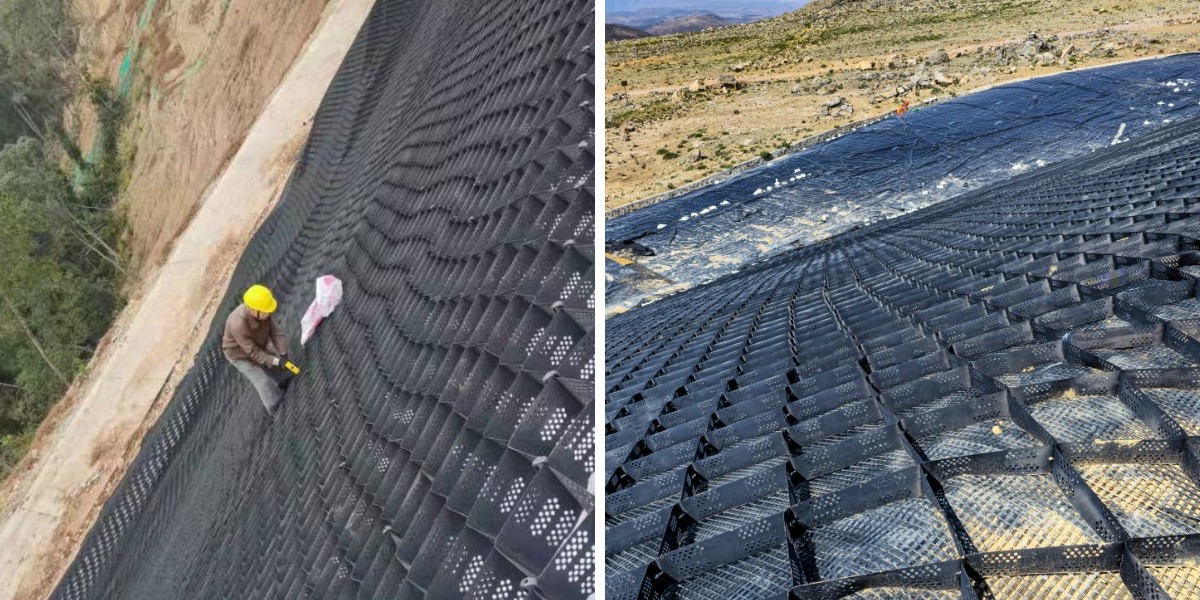
For soft soil foundation railway sections, geocell serves as an excellent foundation reinforcement layer. It improves the bearing capacity of soft soil foundations, restricts foundation soil deformation, and avoids excessive overall settlement of the embankment. For slope sections of railway embankments, it reinforces slope stability, prevents side slope sliding and collapse, and eliminates settlement risks caused by slope deformation.
In road-rail transition sections and new-old embankment splicing sections, hdpe geocell solves the problem of inconsistent rigidity and uneven settlement at structural junctions. It connects different structural layers into a stable whole, ensuring smooth and uniform force transmission. For railway sections in seasonal frozen and rainy areas, the anti-corrosion and anti-aging properties of geocell material resist environmental erosion, maintaining stable settlement control effect all year round.
6. Conclusion
hdpe geocell has become an indispensable key material for modern railway embankment reinforcement and settlement control by virtue of its three-dimensional confinement effect, excellent durability and flexible construction performance. As a high-performance engineering geocell material, it effectively solves common railway engineering problems such as uneven settlement, soil displacement and slope instability. Reasonable application of geocell in railway embankment construction can significantly improve structural stability, reduce long-term maintenance costs, and provide safe and reliable operational guarantees for railway transportation infrastructure.