Geotextile Fabric vs. Plastic Sheeting: Why Fabric is Superior for Drainage and Durability
When designing a project that involves soil stabilization, drainage, or erosion control, engineers and contractors often face a fundamental choice: should they use a simple plastic sheeting or an engineered geotextile fabric? At first glance, both materials appear similar—they are thin, flexible sheets used to separate or contain soil. However, their performance over time could not be more different. Plastic sheeting (polyethylene film) is essentially an impermeable barrier, while geotextile fabric is designed to allow water to pass through while retaining soil particles. For any application that requires drainage, filtration, or long-term durability under load, fabric is the clear winner. This article explains why, exploring the roles of geonet geotextile, geofabric cloth, and geotech drainage fabric in modern construction and environmental projects.
Understanding Plastic Sheeting: A Basic Barrier
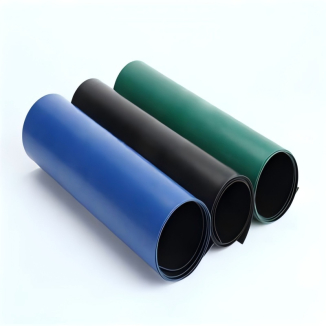
Plastic sheeting, typically made from polyethylene (LDPE, LLDPE, or HDPE), is a continuous film with very low permeability. Its primary function is to block water, vapor, or gas migration. Common uses include vapor barriers under concrete slabs, pond liners, and temporary weather protection. Plastic sheeting is inexpensive and readily available, which makes it attractive for simple applications where complete impermeability is required. However, when used in contact with soil, plastic sheeting suffers from several critical limitations. It has no filtration capability; any water that accumulates on top of the sheet cannot drain through it. It is also prone to punctures from sharp stones or roots, and once punctured, the hole can enlarge under stress. Moreover, plastic sheeting offers no friction or interaction with soil—it is smooth, which can lead to sliding on slopes. For drainage applications, plastic sheeting is fundamentally the wrong tool. This is where engineered fabrics become indispensable.
What Is Geotextile Fabric? The Engineered Alternative
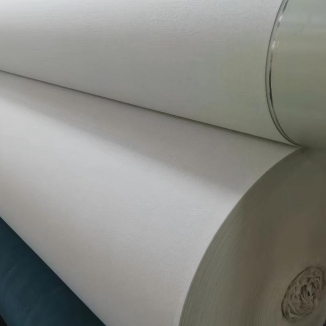
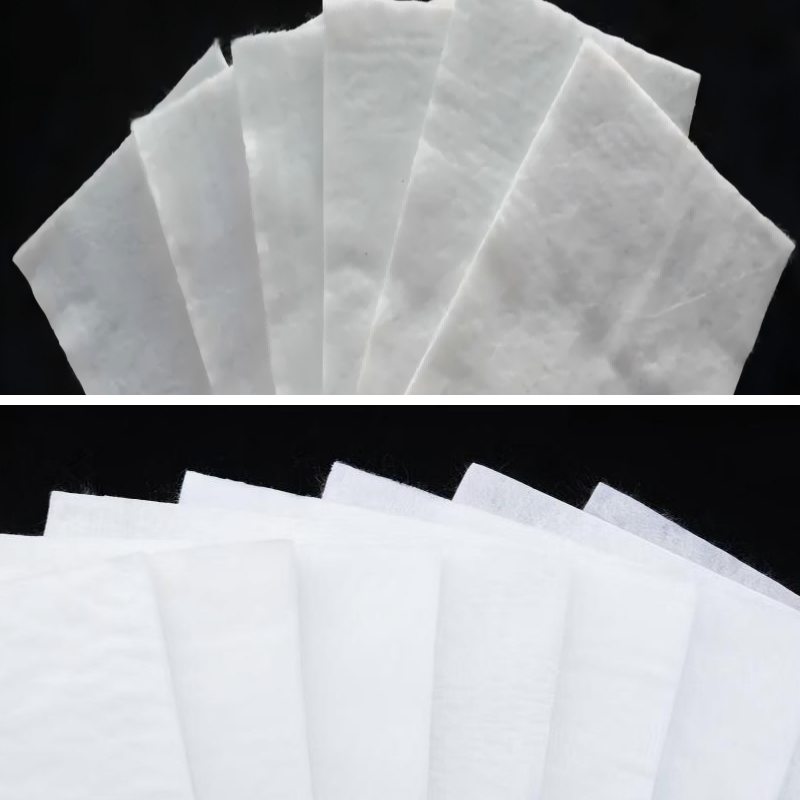
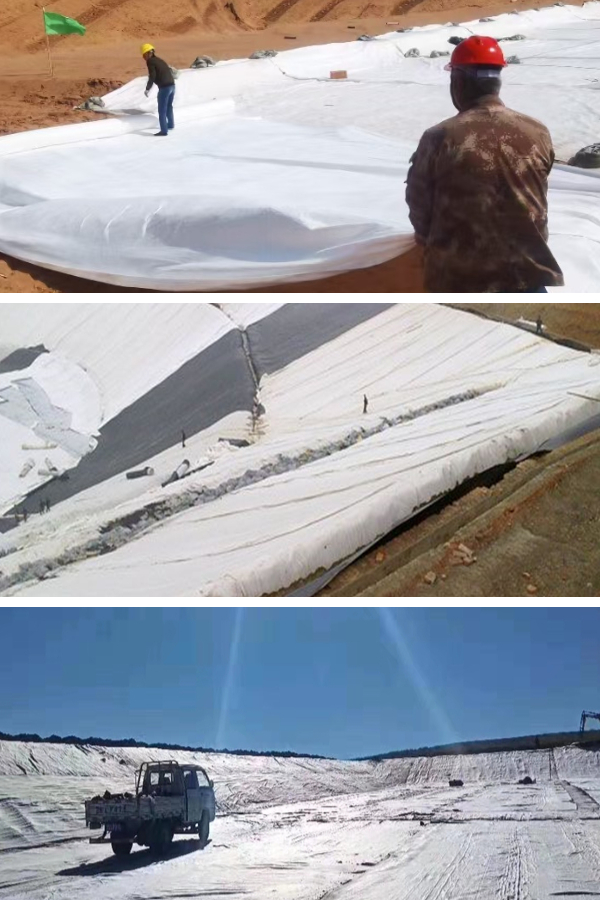
Geotextile fabric is a permeable textile material made from polypropylene or polyester fibers, either woven or nonwoven. Unlike plastic sheeting, geotextiles are designed to allow water to pass through while retaining fine soil particles. This property, known as filtration, is essential for preventing clogging of drainage systems and maintaining long-term soil stability. Among the many types available, geonet geotextile represents a composite product where a geonet (a mesh-like drainage core) is laminated with geotextile layers on one or both sides. This combination provides in-plane flow capacity far exceeding that of any plastic sheeting. Another common term is geofabric cloth, which is often used interchangeably with geotextile fabric, particularly in erosion control and road construction. For projects specifically focused on subsurface water management, geotech drainage fabric refers to nonwoven needle-punched geotextiles optimized for high permittivity and soil retention. These fabrics are not barriers; they are filters and separators.
Drainage Performance: Where Fabric Excels
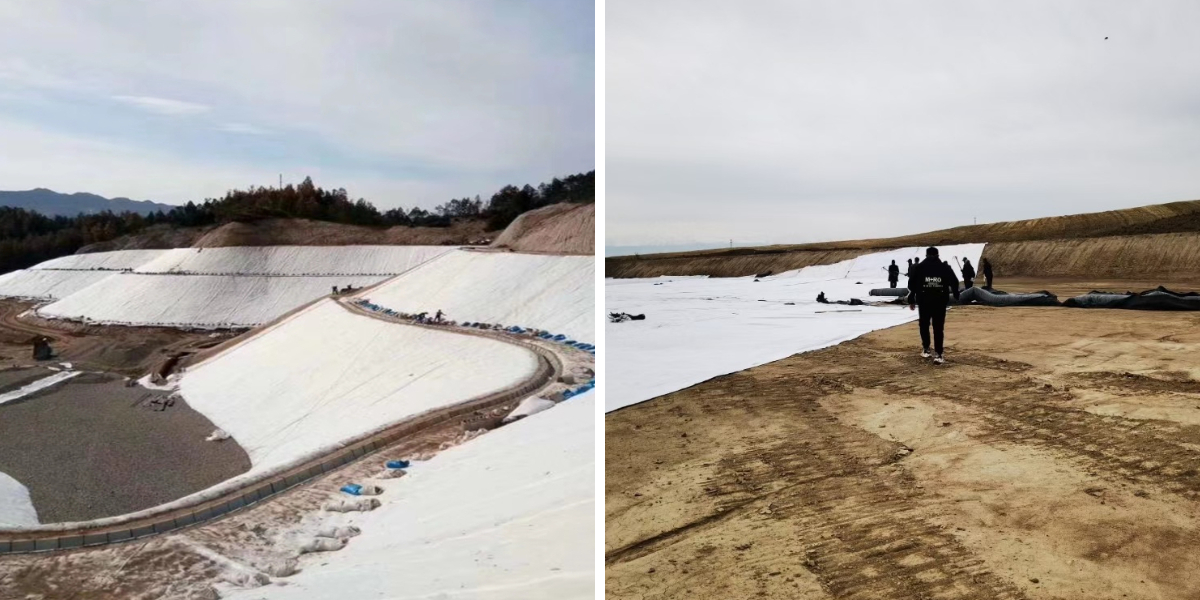
The most critical difference between plastic sheeting and geotextile fabric is drainage capability. Plastic sheeting is impermeable—water cannot pass through it. If placed on a slope or beneath a drainage layer, plastic sheeting will create a water barrier, causing ponding, lateral water migration, or hydrostatic pressure buildup. This can lead to slope instability, frost heave, or failure of pavement systems. In contrast, a geotech drainage fabric allows water to flow freely through its thickness (perpendicular flow) while preventing soil migration. For applications requiring both filtration and in-plane drainage, geonet geotextile provides a dedicated drainage core that can transmit large volumes of water horizontally to collection pipes. For example, behind a retaining wall, a geofabric cloth placed against the backfill will allow groundwater to seep through and exit via weep holes, preventing hydrostatic pressure on the wall. Plastic sheeting would trap that water, eventually causing wall failure. In landfill leachate collection systems or sports field drainage, geotextiles are essential; plastic sheeting has no role.
Durability and Long-Term Behavior Under Load
Plastic sheeting is vulnerable to several forms of degradation when buried or exposed. Puncture from angular aggregates is a common failure mode. Once a small hole forms, the sheet tears easily because it has low tear resistance. Additionally, plastic sheeting can undergo creep deformation under sustained loads, thinning out over time. UV exposure degrades unprotected polyethylene within months. Geotextile fabric, on the other hand, is engineered for durability. A woven geofabric cloth has high tensile strength and excellent puncture resistance due to its interlocking fiber structure. Nonwoven geotech drainage fabric is needle-punched, creating a felt-like material that resists tear propagation even if punctured. For extreme drainage and load applications, geonet geotextile combines a stiff geonet core with protective fabric layers, distributing loads and preventing intrusion of fines. In road base stabilization, geotextiles have been proven to extend pavement life by years compared to using plastic sheeting or no separator. Plastic sheeting would allow water to accumulate at the subgrade interface, leading to pumping and failure.
Filtration vs. Impermeability: A Critical Distinction
Many specifiers mistakenly believe that a barrier should be as impermeable as possible. This is true for containment (pond liners, landfill caps) but false for drainage and separation. In drainage systems, you need filtration, not a barrier. Filtration means allowing water to pass while holding soil particles. This is exactly what geotech drainage fabric provides. Its apparent opening size (AOS) is designed to be smaller than the D₈₅ of the protected soil, ensuring that fines do not wash out. Over time, a natural filter cake forms on the fabric’s upstream side, further improving retention without clogging. Plastic sheeting cannot filter—it either blocks everything (if intact) or allows un-filtered soil migration through holes. In a French drain, wrapping the perforated pipe with geofabric cloth prevents sand and silt from entering the pipe while allowing water to flow. Using plastic sheeting would either block water entirely or fail catastrophically. For slope drains or chimney drains in embankments, geonet geotextile products provide a high-flow drainage path that plastic sheeting cannot mimic.
Applications That Demand Fabric Over Plastic
Several common construction and environmental applications specifically require geotextile fabric, not plastic sheeting. In roadway construction, a geotech drainage fabric placed between the subgrade and aggregate base prevents intermixing of fines while allowing pore water to drain upward or downward. Plastic sheeting would trap water, leading to a “bathtub” effect and premature failure. In retaining walls and abutments, geofabric cloth functions as a drainage composite behind the wall, relieving hydrostatic pressure. Plastic sheeting would increase pressure and risk overturning. In landfill gas collection layers or leachate drainage, geonet geotextile composites are specified to maintain flow capacity under high compressive loads—plastic sheeting would collapse and block flow. For erosion control on slopes, geotextile fabrics are used as temporary cover or as part of turf reinforcement mats; plastic sheeting would prevent vegetation establishment and create runoff issues. Even in green roofs and subsurface drainage for athletic fields, geotextiles are standard. Plastic sheeting is only appropriate where complete impermeability is desired—vapor barriers, pond liners, or caps.
Cost and Installation Considerations
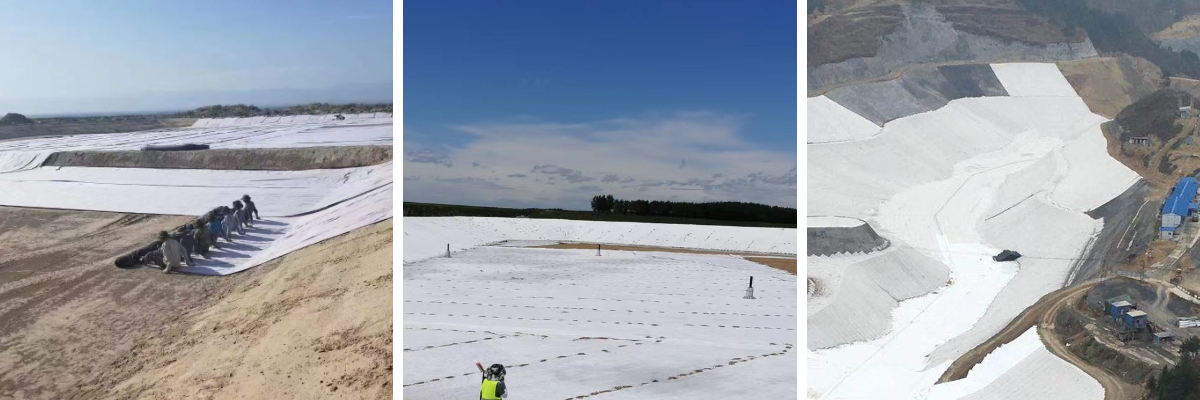
Initial material cost often favors plastic sheeting, which is cheaper per square meter than most geotextile fabrics. However, total installed cost and life-cycle performance tell a different story. Plastic sheeting requires careful subgrade preparation to avoid punctures, and any repair is difficult because patches may leak. Geotextile fabric is more forgiving; it can be overlapped (typically 300–500 mm) without needing seaming, and overlaps function as filters. Geofabric cloth is lightweight and easy to unroll, even on slopes. Geotech drainage fabric can be cut with a knife and field-modified without specialized tools. Geonet geotextile composites are more expensive upfront but replace multiple layers (separate drainage core plus filter fabrics), often reducing overall system cost. Moreover, the long-term durability of fabric means fewer repairs and a longer design life. When a project fails because plastic sheeting clogged or tore, the cost of remediation far exceeds any initial savings. For drainage-critical applications, fabric is the more economical choice in the long run.
Common Misconceptions
One common misconception is that all flexible sheets perform similarly. In reality, plastic sheeting and geotextile fabric are opposites in terms of permeability. Another myth is that plastic sheeting can be used as a “moisture barrier” in drainage systems—this will create ponding and failure. A third misconception is that geonet geotextile is just plastic mesh; in fact, it is a sophisticated drainage composite with specific flow rate and crush resistance ratings. Some specifiers believe that geofabric cloth is only for filtration, but it also provides separation, reinforcement, and protection. Finally, geotech drainage fabric is sometimes confused with landscaping fabric, which is typically weaker and has different opening sizes; proper geotextiles must meet ASTM or ISO standards for permittivity, tensile strength, and puncture resistance.
Conclusion
When comparing geotextile fabric to plastic sheeting for drainage and durability applications, the superiority of fabric is clear. Plastic sheeting is an impermeable barrier that blocks water, resists puncture poorly, and offers no filtration capability. In contrast, geotech drainage fabric allows water to pass while retaining soil, preventing clogging and maintaining long-term hydraulic performance. Geofabric cloth provides separation and reinforcement in roads, walls, and slopes. For high-flow applications requiring in-plane drainage, geonet geotextile composites deliver unmatched performance under load. While plastic sheeting has its place as a vapor or liquid barrier, it should never be used where drainage, filtration, or soil retention is required. Engineers, contractors, and landowners who choose geotextile fabric over plastic sheeting will benefit from longer-lasting structures, lower maintenance costs, and reliable water management. For your next project involving subsurface drainage, retaining walls, roadways, or erosion control, specify geotextile fabric—and leave plastic sheeting for covering lumber piles or lining temporary ponds.
Contact Us
Company Name: Shandong Chuangwei New Materials Co., LTD
Contact Person :Jaden Sylvan
Contact Number :+86 19305485668
WhatsApp:+86 19305485668
Enterprise Email: cggeosynthetics@gmail.com
Enterprise Address: Entrepreneurship Park, Dayue District, Tai 'an City,
Shandong Province