Emergency Flood Protection: Using Cement Blanket to Reinforce Levees & Barriers
Floods stay one of the most unfavorable herbal mess ups globally, threatening lives, infrastructure, and livelihoods. For flood manipulate engineers, emergency administration agencies, and constructing cloth enterprises, discovering rapid, reliable, and low in cost flood safety options is a pinnacle priority. Among quite a number flood manipulate materials, Cement Blanket (also acknowledged as Cement Canvas) has emerged as a game-changer in emergency levee reinforcement and transient barrier construction. This article explores the core benefits of Cement Blanket, step-by-step levee reinforcement processes, special advantages in barrier construction, and real-world software cases, highlighting why it has come to be a go-to cloth for current flood emergency response.
1. Core Characteristics of Cement Blanket: Why It’s Ideal for Emergency Flood Protection
Traditional flood manage substances such as sandbags, concrete blocks, and geomembranes regularly have barriers like gradual deployment, heavy weight, and bad adaptability to complicated terrains—shortcomings that can be deadly in emergency flood scenarios. Cement Blanket, through contrast, combines the flexibility of material with the energy of concrete, boasting traits that flawlessly align with emergency flood safety needs.
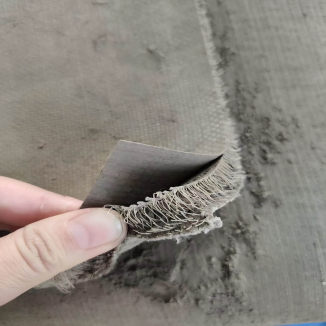
First and foremost, speedy curing is a standout function of Cement Blanket. Unlike traditional concrete that requires on-site mixing and takes hours to set, Cement Blanket is a prefabricated fabric consisting of a cement-impregnated fabric. When uncovered to water (either from the flood or guide spraying), it treatment options into a hard, long lasting concrete layer inside 24 hours—some high-performance variations can gain preliminary power in simply 2-4 hours. This fast putting approves engineers to whole reinforcement work in imperative windows, preventing levee breaches or barrier failures.
Secondly, choicest flexibility and adaptability make Cement Blanket appropriate for various terrains. Levees and flood-prone areas frequently have uneven surfaces, slopes, or irregular shapes, and inflexible substances like concrete slabs conflict to match tightly, leaving doable leakage points. Cement Canvas, however, can be reduce to measurement on-site and conforms carefully to the floor contour, making sure full contact with the levee floor and doing away with gaps. It can additionally be folded or rolled for effortless transportation to far flung areas, a key gain over cumbersome standard materials.
Additionally, extraordinary sturdiness and erosion resistance make sure long-term protection. Once cured, Cement Blanket types a dense concrete shape that resists scouring from fast-flowing floodwater, wave impact, and chemical corrosion from sediment-laden water. Unlike sandbags that degrade over time or geomembranes that are inclined to punctures, Cement Canvas keeps structural integrity for years, making it appropriate for each emergency response and semi-permanent flood safety projects.

2. Step-by-Step Guide to Levee Reinforcement with Cement Blanket
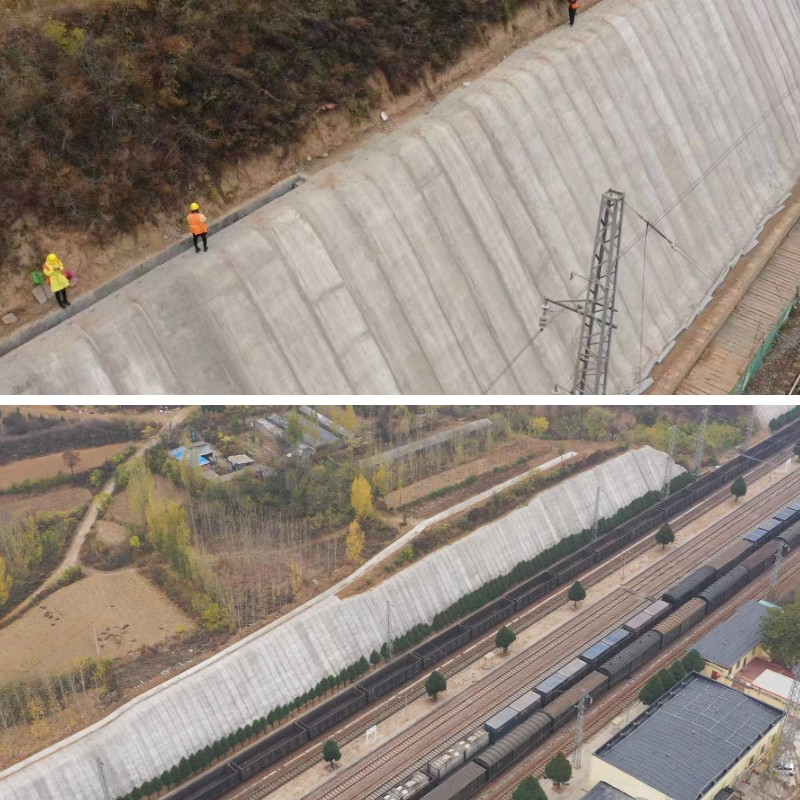
Levee breaches are the main reason of catastrophic flood damage, so speedy and nice reinforcement is imperative throughout flood emergencies. Using Cement Blanket for levee reinforcement follows a streamlined manner that minimizes on-site labor and tools requirements, making it handy even in high-pressure scenarios. Below is a distinct step-by-step information tailor-made for flood manipulate engineers.
Step 1: Site Assessment and Preparation – First, behavior a speedy inspection of the levee to perceive susceptible factors such as cracks, erosion areas, or seepage zones. Clear the floor of debris, vegetation, and unfastened soil to make certain tight adhesion of the Cement Blanket. For severely eroded areas, fill small potholes with gravel or quick-setting mortar to create a easy base. This step is necessary to keep away from air pockets or uneven stress distribution after curing.
Step 2: Cutting and Layout of Cement Blanket – Unroll the Cement Canvas (typically provided in rolls of 2m width and 5-10m length) and reduce it to healthy the measurement of the reinforcement place the usage of a utility knife. Overlap adjoining sheets via at least 15cm to stop leakage between seams. For sloped levees, begin laying from the pinnacle and work downward, securing the pinnacle aspect with anchor pins or concrete nails to forestall slipping at some stage in installation.
Step 3: Activation and Curing – Once laid, spark off the Cement Blanket via spraying or pouring water evenly over the surface. Ensure the whole cloth is completely wetted—under-wetting will end result in incomplete curing, whilst over-wetting may additionally decrease strength. For large-scale projects, use a water truck or high-pressure sprayer for environment friendly activation. During curing, shield the floor from direct daylight or sturdy winds to forestall fast water evaporation. Mark the region to limit foot visitors till full curing is achieved.
Step 4: Seam Treatment and Inspection – After preliminary curing (usually 4-6 hours), seal the overlapping seams with a cement-based mortar or specialised sealant to beautify water tightness. Conduct a thorough inspection to test for bubbles, cracks, or unbonded areas. For crucial sections, fortify the seams with metal mesh embedded in the mortar to make certain uniform stress switch throughout the complete reinforcement layer.
3. Advantages of Using Cement Canvas for Flood Barrier Construction
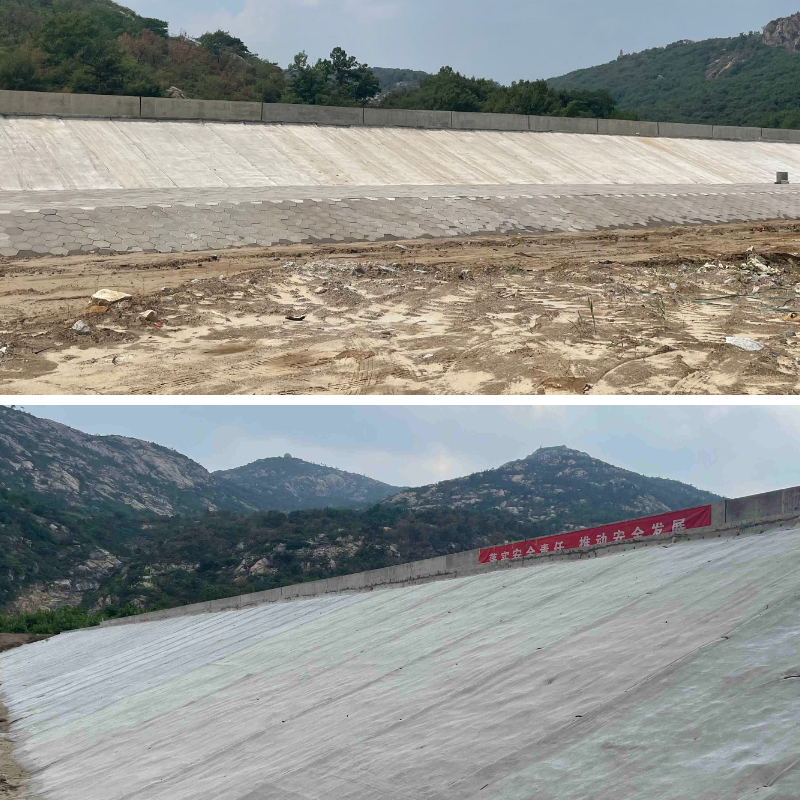
In addition to levee reinforcement, Cement Canvas is rather positive for setting up brief or semi-permanent flood barriers—essential for defending residential areas, industrial parks, and necessary infrastructure at some point of floods. Compared to usual barrier substances like sandbags or steel sheets, Cement Canvas boundaries provide special benefits that enhance flood safety effectivity and reliability.
One of the most tremendous benefits is quickly deployment. Assembling sandbag limitations requires a giant labor pressure and takes hours to construct a single meter of height, which is impractical in emergency situations. Cement Blanket barriers, with the aid of contrast, can be deployed by using a small crew in minutes. Pre-cut sheets are unrolled and fashioned into a U-shape or rectangular structure, secured with stakes, and wetted to cure. A 10-meter-long, 1-meter-high barrier can be absolutely hooked up and activated in much less than an hour, shopping for treasured time for flood mitigation.
Another key advantage is excessive load-bearing potential and stability. Sandbag boundaries are susceptible to collapsing underneath robust wave have an impact on or extended water pressure, requiring consistent maintenance. Cured Cement Canvas boundaries have a compressive power of up to 20 MPa—equivalent to popular concrete—able to stand up to floodwater speeds of up to three m/s. Their low core of gravity and tight adherence to the floor additionally stop lateral displacement, making sure steadiness even in turbulent flood conditions.
Cost-effectiveness is additionally a predominant draw for companies and authorities agencies. While the preliminary fee of Cement Blanket is barely greater than sandbags, it eliminates long-term substitute prices (sandbags want to be discarded after one use) and reduces labor expenses. Moreover, unused Cement Canvas can be saved for up to 12 months in a dry environment, making it a comparatively cheap stockpile fabric for emergency preparedness. For large-scale projects, bulk buying similarly lowers the unit cost, making it aggressive with normal materials.

4. Real-World Cases: Cement Blanket in Emergency Flood Response
The effectiveness of Cement Blanket and Cement Canvas in flood safety is now not simply theoretical—numerous real-world purposes have verified their price in imperative scenarios. Below are two standard instances that exhibit their overall performance in levee reinforcement and barrier construction, offering realistic references for flood manage professionals.
In 2023, a extreme flood hit the Mississippi River Basin in the United States, threatening to breach a 2-kilometer part of levee defending a rural community. Local emergency administration groups at the start used sandbags however struggled to preserve up with the rising water level. They switched to Cement Blanket, deploying 50 rolls (1,000 rectangular meters) in eight hours. The fabric used to be laid over the eroded levee sections, wetted with water from fireplace trucks, and cured inside 12 hours. The bolstered levee withstood the flood top (water depth of three meters) except any breaches, saving two hundred residences and agricultural lands really worth $5 million. Post-flood inspections confirmed no symptoms of erosion or structural injury to the Cement Canvas layer.
Another case comes from China’s Henan Province, which suffered historical floods in 2021. A chemical plant in Zhengzhou wanted to construct a transient barrier to defend its storage tanks from floodwater. Using common sandbags would have taken 24 hours and 50 workers, however the plant opted for Cement Canvas. A crew of 10 employees set up a 50-meter-long, 1.5-meter-high barrier in three hours. The barrier cured rapidly and avoided floodwater from getting into the plant, keeping off workable chemical leaks and a $10 million loss. The barrier used to be later repurposed as a everlasting drainage ditch lining, showcasing its reusability.
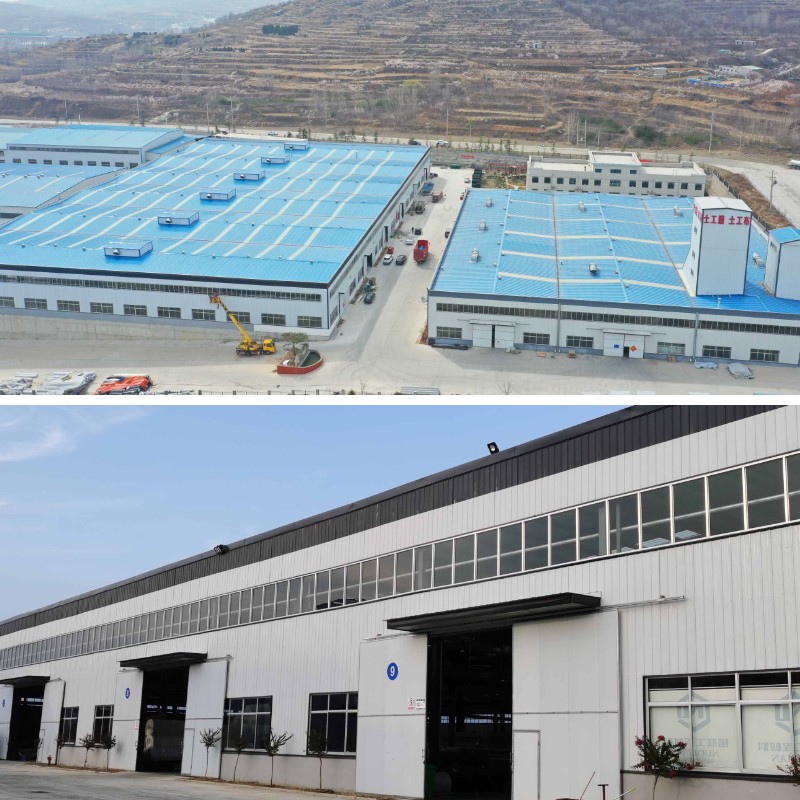
Conclusion: Cement Blanket – A Must-Have Material for Modern Flood Protection
As local weather alternate intensifies, intense floods are turning into greater frequent, disturbing faster, extra dependable flood safety solutions. Cement Blanket and Cement Canvas tackle the obstacles of ordinary substances with their speedy curing, flexibility, durability, and ease of deployment—making them perfect for levee reinforcement and barrier construction. For flood manage engineers, they limit on-site workload and enhance venture safety; for emergency administration agencies, they shorten response instances and beautify catastrophe resilience; for constructing fabric enterprises, they characterize a high-potential product line aligned with market demand.
Whether for emergency response or semi-permanent protection, Cement Blanket grants steady overall performance that has been validated in real-world disasters. As the flood safety enterprise evolves, adopting modern substances like Cement Canvas will be key to minimizing flood injury and defending communities. Contact us nowadays to examine greater about how our Cement Blanket merchandise can guide your flood safety projects.
Contact Us
Company Name: Shandong Chuangwei New Materials Co., LTD
Contact Person :Jaden Sylvan
Contact Number :+86 19305485668
WhatsApp:+86 19305485668
Enterprise Email: cggeosynthetics@gmail.com
Enterprise Address: Entrepreneurship Park, Dayue District, Tai 'an City,
Shandong Province