Slope Stabilization with Geomat: Best Practices for Highway and Railway Projects
Slope balance is a essential difficulty in motorway and railway construction, as unstable slopes can lead to landslides, street closures, and even catastrophic accidents. Geomat, a versatile geosynthetic material, has come to be a desired answer for slope stabilization in these infrastructure projects, thanks to its remarkable erosion resistance, soil reinforcement capabilities, and compatibility with vegetation growth. Among the a number of types, Geomat for Slope Protection, 3D geomat, and landslide safety vegetation internet are extensively used to beautify slope steadiness whilst minimizing environmental impact. This article explores quality practices for slope stabilization with geomat from three key perspectives—selecting the proper geomat kind for mission needs, enforcing perfect set up techniques, and conducting high-quality post-installation maintenance—providing actionable preparation for engineers, contractors, and undertaking managers concerned in motorway and railway projects.
1. Selecting the Right Geomat Type: Matching Material to Project Requirements
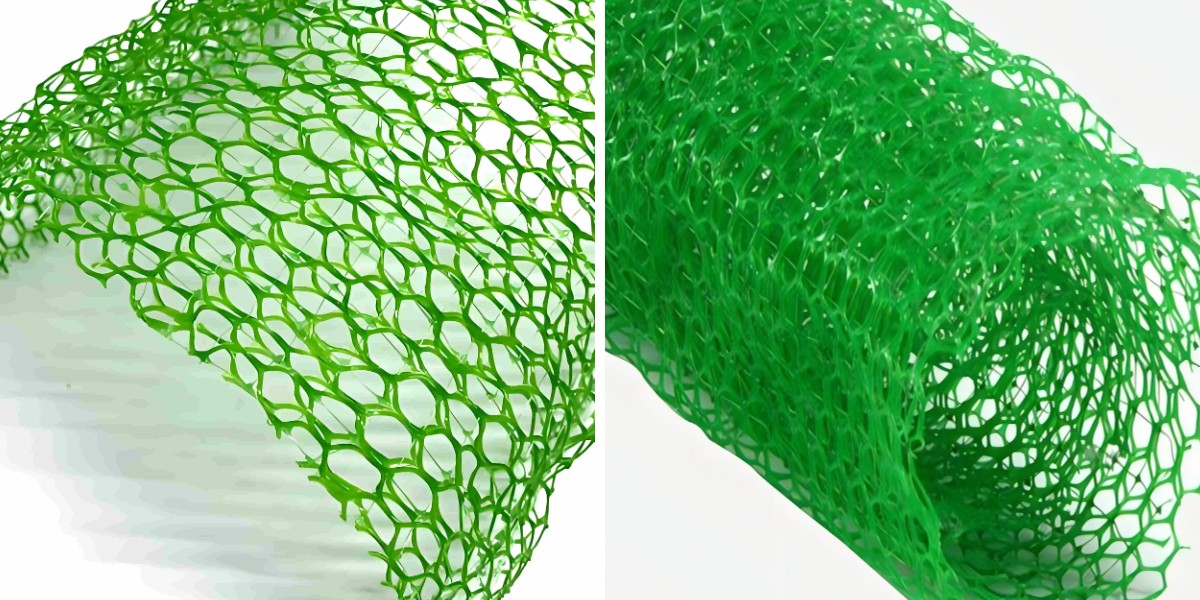
The success of slope stabilization with geomat begins with choosing the splendid kind that aligns with the unique stipulations of the dual carriageway or railway project, such as slope gradient, soil type, climate, and site visitors load. Geomat for Slope Protection, 3D geomat, and landslide safety vegetation internet every have special houses that make them appropriate for specific scenarios. Understanding their traits and software scope is integral to make certain most advantageous overall performance and cost-effectiveness.
1.1 Geomat for Slope Protection: Ideal for Moderate Slope Conditions
Geomat for Slope Protection is a non-woven or woven geosynthetic cloth designed to stop soil erosion and support shallow slopes. It points a porous shape that lets in water penetration whilst protecting soil particles, developing a steady surroundings for vegetation growth. This kind of geomat is perfect for dual carriageway and railway slopes with gradients between 1:1.5 and 1:3, the place erosion from rainwater runoff is the important concern. It is well matched with a extensive vary of soil types, such as sandy loam and clay loam, and can stand up to average traffic-induced vibrations. When deciding on Geomat for Slope Protection, think about elements such as tensile energy (minimum 10 kN/m), thickness (3-5 mm), and UV resistance—critical for long-term overall performance in out of doors environments.
1.2 3D Geomat: Enhanced Reinforcement for Steeper Slopes
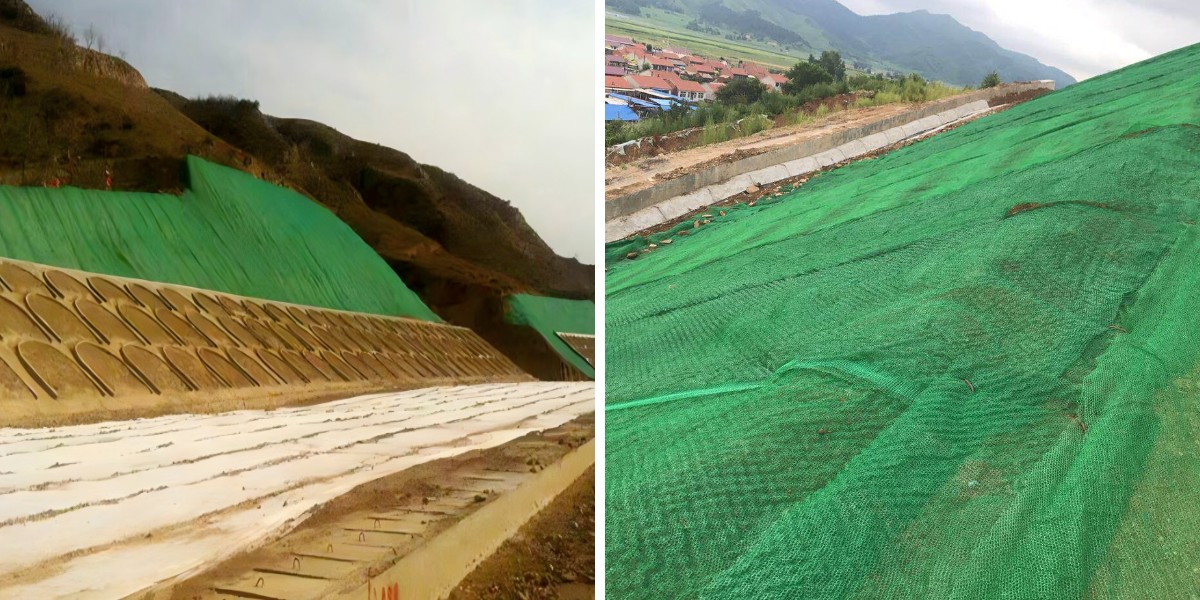
3D geomat, characterised with the aid of its third-dimensional community structure, provides most appropriate soil reinforcement and shear resistance in contrast to typical flat geomats. The 3D shape interlocks with soil particles, growing a composite machine that appreciably improves slope stability. This makes it an fantastic desire for steeper slopes (gradients up to 1:1) regularly observed in mountainous dual carriageway and railway projects. 3D geomat additionally offers robust aid for vegetation roots, advertising fast greening and similarly bettering slope stability. When choosing 3D geomat, prioritize merchandise with excessive modulus of elasticity, correct creep resistance, and a pore measurement that allows root penetration (0.5-2 cm). For initiatives in areas with heavy rainfall, choose for 3D geomat with excessive water permeability to forestall water accumulation at the back of the slope.
1.3 Landslide Protection Vegetation Net: For High-Risk Landslide Zones
Landslide safety vegetation net, a specialised geomat bolstered with high-strength fibers (e.g., polyester or glass fiber), is designed for slope stabilization in high-risk landslide zones. It combines the erosion manage advantages of common geomats with the structural reinforcement wished to withstand landslide forces. This kind of geomat is appropriate for toll road and railway slopes with unstable soil layers, steep gradients (exceeding 1:1), or a records of landslides. Landslide safety vegetation internet is regularly used in conjunction with different stabilization measures, such as soil nails or anchor bolts, to grant complete protection. Key resolution standards encompass tensile power (minimum 20 kN/m), tear resistance, and compatibility with vegetation growth—ensuring long-term balance whilst minimizing environmental disruption.
2. Proper Installation Techniques: Ensuring Geomat Performance
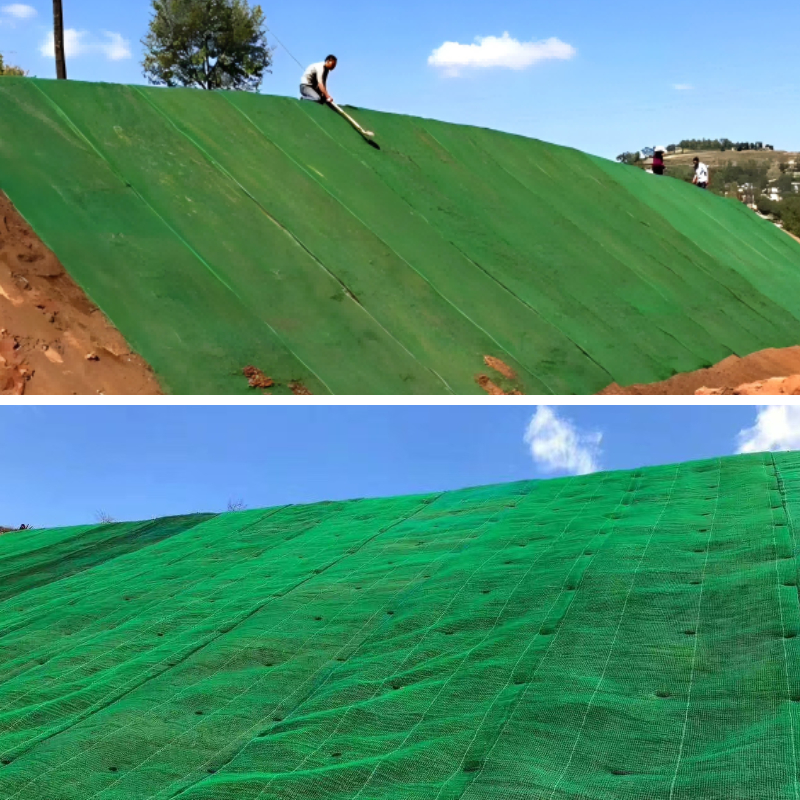
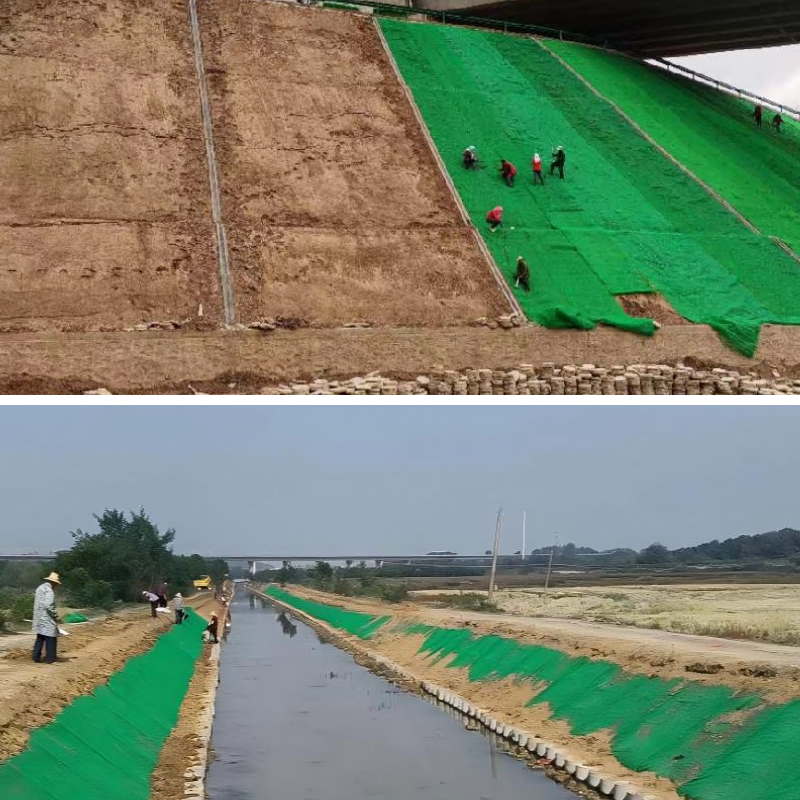
Even the great geomat kind will underperform if mounted incorrectly. Proper set up is imperative to make certain that the geomat totally adheres to the slope, interlocks with the soil, and features as intended. For motorway and railway projects, set up should be carried out in strict accordance with sketch specs and enterprise standards, taking into account slope preparation, geomat placement, fixation, and vegetation seeding. Below are the key set up quality practices for slope stabilization with geomat.
2.1 Slope Preparation: Creating a Stable Foundation
Before putting in any geomat, put together the slope to make sure a smooth, steady foundation. Start by means of clearing the slope of debris, rocks, vegetation roots, and sharp objects that ought to puncture the geomat. Level uneven areas and compact the soil to a density of at least 95% to forestall agreement after installation. For slopes with free soil, practice a skinny layer of graded sand or gravel to enhance soil stability. If the slope has present cracks or gullies, restore them with soil-cement combinations earlier than proceeding. Proper slope training is mainly essential for Geomat for Slope Protection and 3D geomat, as any irregularities can minimize the material’s contact with the soil and compromise reinforcement effectiveness.
2.2 Geomat Placement and Fixation: Ensuring Secure Adhesion
Install the geomat from the pinnacle of the slope downward to forestall water from flowing underneath the material. Overlap adjoining geomat rolls by way of 15-20 cm to create a seamless barrier; for 3D geomat and landslide safety vegetation net, enlarge the overlap to 25-30 cm for improved stability. Fix the geomat to the slope the use of anchor pins or U-shaped nails made of galvanized metal to withstand corrosion. Place the pins at intervals of 1-1.5 meters alongside the edges and overlaps, and 2-3 meters in the center of the geomat. For steep slopes or high-risk areas, use extra anchor bolts to enhance vital sections. Ensure that the geomat is stretched tightly at some point of set up to keep away from sagging, which can lead to water accumulation and fabric damage.
2.3 Vegetation Seeding: Promoting Long-Term Slope Stability
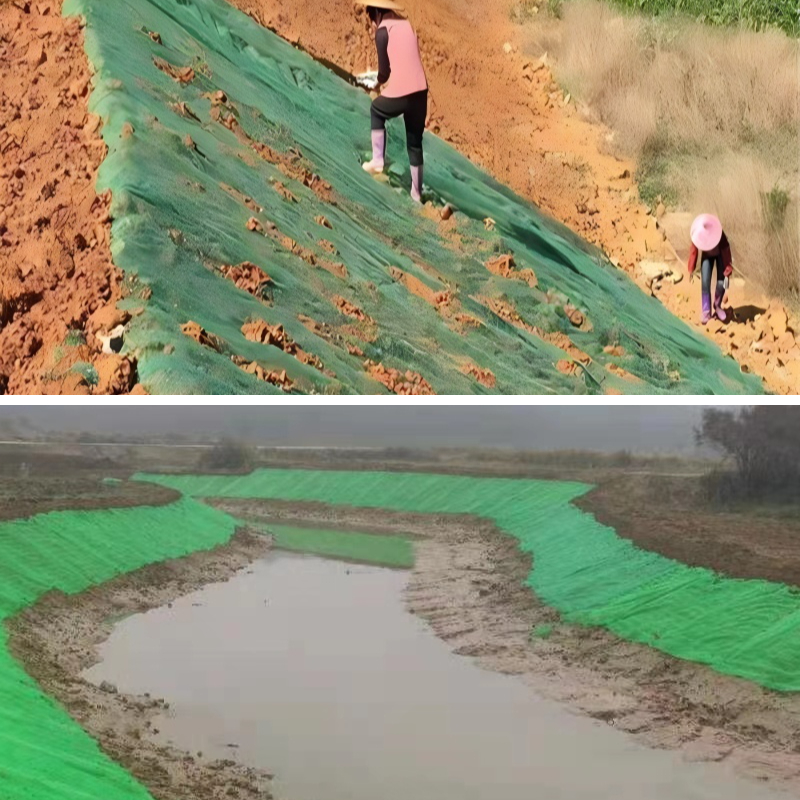
Vegetation performs a key function in improving slope balance by means of reinforcing soil with roots and lowering erosion. After putting in the geomat, sow appropriate grass or shrub seeds without delay onto the geomat surface. For Geomat for Slope Protection and 3D geomat, use a hydroseeding approach to make certain uniform seed distribution and adhesion. Cover the seeds with a skinny layer of topsoil or natural mulch to hold moisture and defend in opposition to birds. For landslide safety vegetation net, pick deep-rooted vegetation that can penetrate the geomat and anchor into the soil, such as vetiver grass or shrubs. Water the seeded region in many instances till the vegetation is mounted (usually 4-6 weeks). Avoid demanding the geomat or vegetation for the duration of this duration to make sure profitable growth.
3. Post-Installation Maintenance: Sustaining Slope Stability Over Time
Highway and railway slopes are uncovered to non-stop environmental stressors, such as rain, wind, and site visitors vibrations, which can step by step degrade geomat performance. Regular post-installation upkeep is quintessential to observe and tackle problems early, making sure long-term slope stability. Maintenance things to do have to focal point on monitoring geomat condition, vegetation growth, and slope stability, with well timed repairs to stop minor troubles from escalating into essential failures.
3.1 Regular Inspection and Monitoring
Conduct ordinary inspections of the stabilized slope at least as soon as each and every three months, and extend the frequency after heavy rainfall, storms, or earthquakes. Check the geomat for signs and symptoms of damage, such as tears, punctures, or loosening of anchor pins. For 3D geomat and landslide safety vegetation net, investigate the 3D shape and fiber reinforcement for symptoms of degradation. Monitor vegetation boom to make certain that it is dense adequate to grant advantageous reinforcement; if vegetation is sparse, reseed the location promptly. Additionally, display the slope for symptoms of instability, such as cracks, settlement, or water seepage, and use monitoring equipment (e.g., inclinometers) for high-risk slopes to music slope movement.
3.2 Timely Repairs and Reinforcements
Address any detected problems at once to stop in addition damage. For small tears or punctures in Geomat for Slope Protection, restore them the use of a geomat patch of the equal type, overlapping the broken vicinity with the aid of at least 10 cm and fixing it with extra anchor pins. For large harm or loosened geomat sections, get rid of the broken component and reinstall a new section, making sure appropriate overlap and fixation. If the vegetation is broken or destroyed, reseed the vicinity and cowl with mulch to promote regrowth. For slopes displaying symptoms of instability, such as immoderate contract or cracks, support the vicinity with extra landslide safety vegetation internet or soil nails, and seek advice from a geotechnical engineer for a complete steadiness assessment.
3.3 Long-Term Maintenance Practices
Implement long-term renovation practices to maintain slope stability. Trim overgrown vegetation often to stop it from negative the geomat or blockading drainage channels. Clear particles and sediment from drainage ditches at the base of the slope to make certain appropriate water runoff, decreasing the danger of water accumulation at the back of the geomat. For geomat in coastal or corrosive environments, check out anchor pins and hardware often for corrosion and exchange them as needed. Additionally, behavior a complete balance evaluation each and every five years to consider the overall performance of the geomat and vegetation, and regulate protection techniques for this reason to make certain the slope stays steady for the lifespan of the toll road or railway project.
Conclusion
Slope stabilization with geomat is a dependable and environmentally pleasant answer for motorway and railway projects, however its success relies upon on choosing the proper geomat type, imposing perfect set up techniques, and conducting everyday post-installation maintenance. By deciding on Geomat for Slope Protection, 3D geomat, or landslide safety vegetation net primarily based on project-specific conditions, making sure impenetrable geomat placement and fixation, and sustaining vegetation increase thru normal maintenance, engineers and contractors can correctly beautify slope stability, minimize the danger of landslides, and make sure the protection and toughness of infrastructure projects. As the demand for sustainable and long lasting slope stabilization options grows, geomat will proceed to play a imperative position in current motorway and railway construction.
Contact Us
Company Name: Shandong Chuangwei New Materials Co., LTD
Contact Person :Jaden Sylvan
Contact Number :+86 19305485668
WhatsApp:+86 19305485668
Enterprise Email: cggeosynthetics@gmail.com
Enterprise Address: Entrepreneurship Park, Dayue District, Tai 'an City,
Shandong Province