How to Install a Composite Geomembrane for Landfill Lining Projects
Introduction
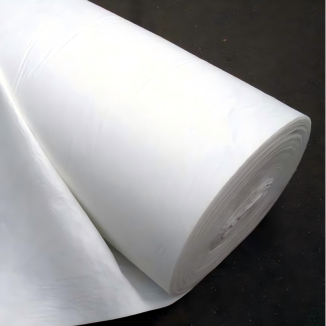
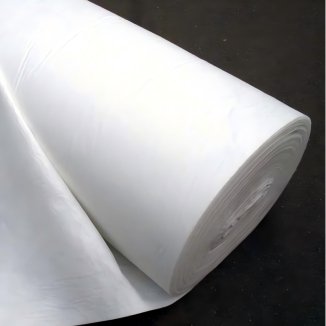
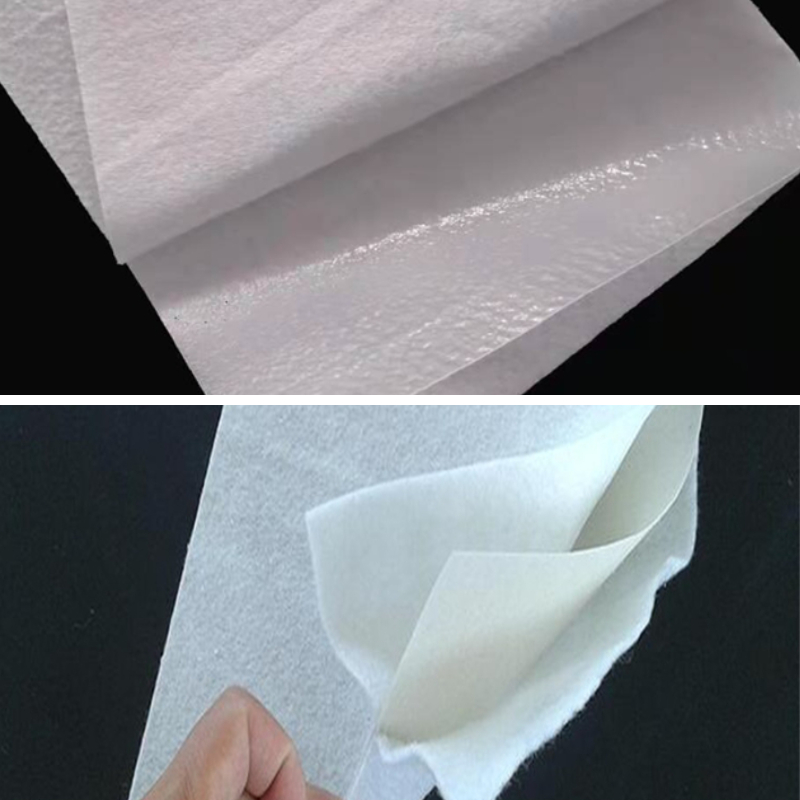
Modern landfill lining structures should furnish a long time of dependable containment to stop groundwater contamination. Among the reachable solutions, the Composite Geo-membrane has grow to be the enterprise preferred due to the fact it combines a geomembrane with a geotextile layer in one product. This diagram presents greatest puncture resistance, friction performance, and hydraulic isolation in contrast to single-layer liners. This information explains step by means of step how to set up a PE Composite Geomembrane—a polyethylene-based composite liner—for landfill projects. Following these strategies will assist contractors, engineers, and website supervisors reap a durable, leak-proof barrier that meets environmental regulations.
Pre-Installation Planning and Site Assessment
Success starts offevolved earlier than any fabric arrives on site. A thorough planning section ensures that the Composite Geo-membrane set up proceeds barring expensive delays. Start by means of reviewing engineering drawings and the particular necessities for the landfill cell. Identify subgrade conditions, anchor trench locations, and seam alignment patterns. A specified web site survey helps affirm grades and hit upon manageable obstructions such as rocks, roots, or particles that should injury the liner.
Weather prerequisites play a essential role. PE Composite Geomembrane ought to no longer be set up all through heavy rain, snow, or when temperatures fall outdoor the advocated range, usually between 4°C and 40°C (40°F to 104°F). High winds make panel managing unsafe and can reason misalignment. Therefore, time table set up for dry, calm climate windows. In addition, put together a pleasant assurance layout that consists of checking out protocols for incoming materials, subgrade verification, seam testing, and remaining acceptance criteria. Assign clear roles to the set up crew, welding technicians, QA inspector, and protection officer, and make certain that all personnel keep applicable coaching certificates for geosynthetic liner installation.
Subgrade Preparation: The Foundation of a Reliable Liner
The subgrade below your Composite Geo-membrane should be smooth, firm, and free of sharp objects. Begin by means of stripping topsoil and natural rely from the landfill base. Compact the native soil to at least ninety percent of preferred Proctor density. For areas requiring drainage, deploy a granular layer or geocomposite drainage internet earlier than intending with the liner. The subgrade have to comprise no rocks large than 12 mm (0.5 inches), and any protrusions need to be no greater than 6 mm (0.25 inches). Transitions at grade adjustments must be smooth, except surprising bumps or depressions, and moisture content material ought to be uniform to forestall drying or softening.
After compaction, run a proof curler over the whole floor to discover gentle spots or hidden debris. Follow this with a visible inspection and, if specified, a magnetic or digital survey for metal objects. For introduced protection, many specs now require a cushion layer positioned at once over the organized subgrade. A nonwoven composite geotextile works very properly for this purpose, as it absorbs nearby stresses and prevents punctures from angular particles that can also migrate upward over time. Install this composite geotextile with overlap seams of three hundred to 450 mm (12 to 18 inches), and invulnerable the overlaps with sandbags or soil anchors to stop wind uplift.
Material Receiving, Handling, and Storage
Your PE Composite Geomembrane rolls are heavy and touchy to damage. Upon delivery, look at every roll for transport damage, manufacturing defects, or moisture intrusion. Check the roll label towards venture specifications, confirming the thickness (typically 1 to two mm or forty to 80 mils for landfill liners), width, length, and the presence of the bonded geotextile layer. Store rolls on a level, dry floor away from standing water, sharp objects, and direct sunlight. If storage exceeds two weeks, cowl the rolls with opaque tarps. Never stack rolls greater than three high, as this can deform the material. When transferring rolls, use cloth slings or padded forks instead than chains or hooks that ought to gouge the liner.
Allow the rolls to acclimate to ambient temperature for at least 24 hours earlier than deployment. Cold rolls emerge as stiff and susceptible to cracking, whilst warm rolls may additionally stretch unevenly. Keeping the Composite Geo-membrane inside the advocated temperature vary ensures constant managing and welding results.
Deployment and Panel Layout
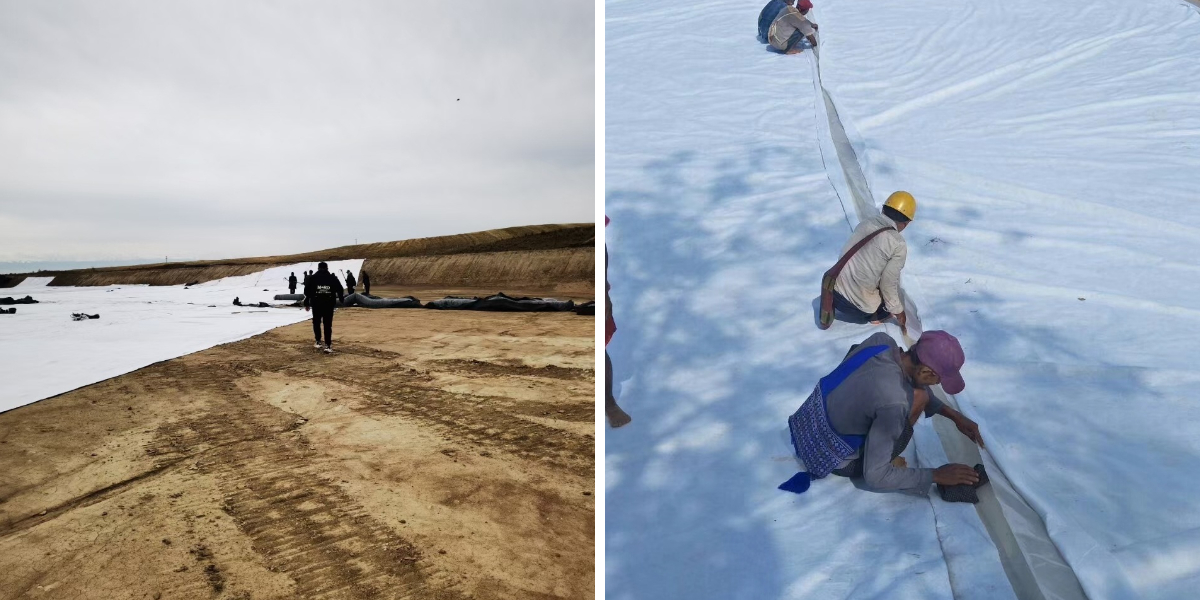
Deploying Composite Geo-membrane panels requires cautious coordination. Unroll panels downwind to decrease the danger of wind catching the material. Orient panels so that seams run down the slope, parallel to the path of most slope, as a substitute than throughout it. This orientation reduces stress on seams from agreement and waste loading. For landfill base floors, begin from the lowest elevation and work upward. For aspect slopes, set up panels from the crest towards the toe. Leave enough fabric at the pinnacle of slopes to prolong into anchor trenches, generally six hundred to 900 mm (24 to 36 inches) past the crest.
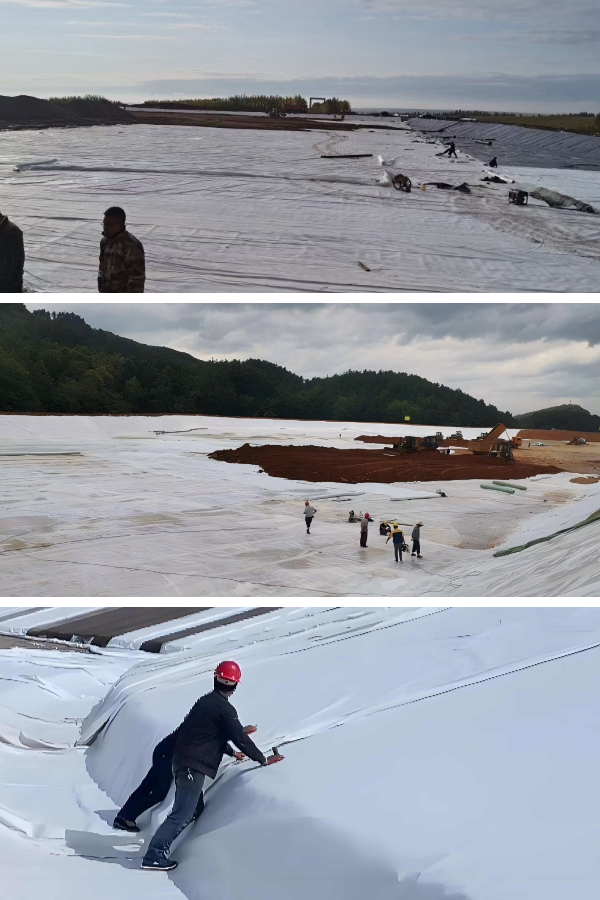
When deploying manually, function the roll at the beginning point, unroll three to 5 meters (10 to 15 feet), and weigh down the free cease with sandbags. Continue unrolling whilst crew participants information the panel to keep away from folds, then enable the panel to loosen up for 15 to 30 minutes earlier than tensioning. Avoid dragging panels throughout tough subgrade. If repositioning is necessary, fold the panel lower back onto itself alternatively than sliding it. For massive projects, mechanical deployers connected to excavators or dozers can take care of rolls up to six meters (20 feet) broad and ninety meters (300 feet) long. However, even with machinery, keep away from overstretching the PE Composite Geomembrane, due to the fact residual anxiety can lead to stress cracking or seam failure over time.
Seaming and Welding Techniques
Seaming transforms man or woman panels of Composite Geo-membrane into a continuous, impermeable barrier. Two predominant welding strategies are used: thermal fusion (hot wedge) and extrusion welding. For most landfill applications, thermal fusion welding is desired for straight, lengthy seams, whilst extrusion welding handles repairs and important points round penetrations.
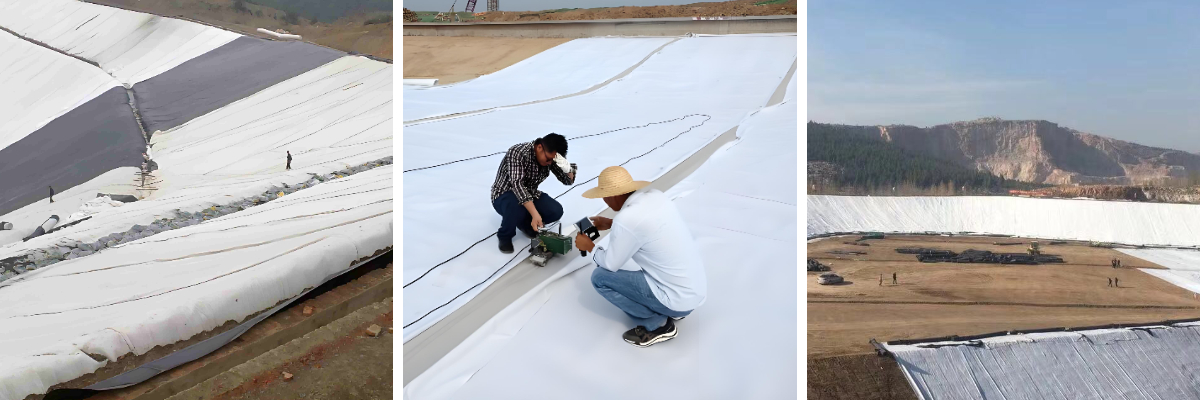
For thermal fusion welding, commence through cleansing the seam place with non-woven rags and isopropyl alcohol to cast off dust, dirt, or moisture. Overlap adjoining panels by using seventy five to a hundred mm (3 to four inches). Set the welding computer temperature, normally between 200°C and 260°C (400°F to 500°F), and alter the velocity based totally on fabric thickness and ambient conditions. Perform a trial weld on scrap cloth and peel-test it to affirm suited bonding. Then weld continuously, preserving constant velocity and pressure. Immediately after welding, inflate the double-track seam’s air channel to 207 kPa (30 psi) for a preliminary leak check.
Extrusion welding is used for seams round penetrations, in anchor trenches, or the place thermal welding is impractical. Bevel the edges of the overlapping sheets, grind a easy surface, then extrude molten polyethylene rod into the joint. Allow applicable cooling earlier than handling. Every seam should be examined non-destructively. Common techniques encompass air channel checking out for double-track seams, vacuum container checking out for single-track or extrusion seams, and spark trying out for conductive geomembranes. Document all take a look at results. Any failed seam part need to be reduce out and re-welded, now not actually patched.
Anchor Trenches and Termination Details
No liner is entire barring impervious termination. Anchor trenches forestall wind uplift, thermal growth movement, and aspect pull-out. Excavate a trench alongside the perimeter of the landfill cell, commonly six hundred to 900 mm (24 to 36 inches) extensive and 450 to 750 mm (18 to 30 inches) deep. The precise dimensions rely on neighborhood wind prerequisites and the predicted waste height. To set up the PE Composite Geomembrane into the anchor trench, drape the liner aspect into the trench with a minimal of three hundred mm (12 inches) of more length. Fold the liner returned on itself at the trench backside to create a bathtub-style seal, then backfill with compacted clay or concrete in accordance to the design. Ensure that no wrinkles or bridging appear at the factor the place the liner exits the trench.
For steep slopes, think about a concrete anchor block or a mechanical batten bar system. When the liner have to join to concrete constructions such as leachate risers or pump stations, use compression gaskets or waterstop profiles embedded in the concrete earlier than pouring. Never clearly clamp the Composite Geo-membrane to concrete, due to the fact thermal biking will loosen the connection over time.
Protection Layer Installation
After welding and testing, the Composite Geo-membrane have to be blanketed from development equipment, drainage stone, and the waste that will ultimately be positioned above it. A safety layer consisting of composite geotextile is positioned without delay over the liner. This composite geotextile serves two purposes: it cushions the liner in opposition to punctures and separates the liner from overlying granular materials. Select a composite geotextile with enough mass per unit area, generally 270 to 540 g/m² (8 to sixteen oz/yd²), and with excessive puncture resistance. Unroll the geotextile without delay after liner acceptance, due to the fact leaving the PE Composite Geomembrane uncovered to ultraviolet radiation for extra than 30 days can purpose degradation until the cloth consists of UV stabilizers.
Overlap geotextile panels with the aid of three hundred to 450 mm (12 to 18 inches). For slopes steeper than a 3H:1V ratio, tack the geotextile down with sandbags or biodegradable pins till the cowl soil is placed. On the landfill base, mild gear such as dozers or compactors can pressure over the safety layer, however operators must keep away from turning or unexpected braking. Maintain a minimal soil cowl of three hundred mm (12 inches) earlier than permitting heavy traffic.
Quality Assurance and Final Acceptance
Quality assurance does now not give up with seam testing. The executed Composite Geo-membrane device should endure a ultimate integrity survey. Two frequent techniques are electrical leak area and water pond testing. Electrical leak region requires a conductive layer under the liner; a technician walks the floor with a probe, and voltage adjustments point out holes. Water pond trying out entails flooding a area of the liner with one hundred to a hundred and fifty mm (4 to 6 inches) of water and watching for drawdown. While greater laborintensive, water ponding is very accurate. Conduct these checks earlier than setting the safety layer. Any leaks located need to be patched with a PE Composite Geomembrane patch that extends at least one hundred fifty mm (6 inches) past the defect in all directions. Reweld and retest every repair.
Documentation for ultimate acceptance need to consist of asbuilt drawings displaying panel sketch and seam locations, weld take a look at files for each and every seam roll, nondestructive check consequences (air, vacuum, spark), an electrical leak place map with a restore log, and cloth certifications with transport tickets.
Common Installation Mistakes to Avoid
Even skilled crews can make blunders that compromise the Composite Geo-membrane. Inadequate subgrade practise is a widely wide-spread issue—a single rock the dimension of a pea can puncture the liner below landfill pressure. Welding in damp stipulations additionally reasons problems, as moisture trapped in the seam vaporizes at some point of welding, growing bubbles and susceptible bonds. Overtensioning panels leads to skinny spots and doable tearing at anchor trenches in the course of temperature drops. Skipping the trial weld is any other frequent mistake; day by day adjustments in temperature and humidity have an effect on welding parameters, so a new trial weld need to be carried out every day. Finally, delaying the safety layer invitations UV degradation, chook pecks, or wind injury that can damage weeks of work.
Conclusion
Installing a Composite Geo-membrane for landfill lining tasks requires discipline, interest to detail, and rigorous great manage at each and every stage. From subgrade guidance to remaining electrical testing, every step builds upon the last. The aggregate of a long lasting PE Composite Geomembrane with a sacrificial composite geotextile layer creates a redundant barrier machine that outperforms singlecomponent liners. By following the techniques outlined in this guide—planning, handling, deployment, seaming, anchoring, protection, and testing—you can construct a landfill liner that meets regulatory requirements and protects groundwater for decades. Always refer to projectspecific specs and seek advice from with a certified geosynthetic engineer when website online prerequisites deviate from general practice. With suitable installation, your Composite Geo-membrane will serve as a silent guardian of environmental safety.
Contact Us
Company Name: Shandong Chuangwei New Materials Co., LTD
Contact Person :Jaden Sylvan
Contact Number :+86 19305485668
WhatsApp:+86 19305485668
Enterprise Email: cggeosynthetics@gmail.com
Enterprise Address: Entrepreneurship Park, Dayue District, Tai 'an City,
Shandong Province