Flood Disaster Slope Repair: Fast Deployment Geomat for Temporary Soil Locking
1. Introduction: Urgent Slope Stabilization Needs After Flood Disasters
Flood disasters severely damage natural and engineered slopes, triggering surface runoff erosion, topsoil loss, shallow landslides, and embankment collapse. Post-flood slope repair faces core challenges: rapid on-site deployment, immediate soil fixation, and transitional protection before permanent ecological restoration. Traditional repair methods such as concrete pouring and stone riprap require long construction cycles, heavy machinery support, and cannot adapt to emergency disaster relief scenarios. In contrast, flexible and efficient geosynthetic solutions have become the mainstream choice for post-flood emergency slope treatment. Among them, geomat, 3d geomat, and 3d vegetation net stand out for their fast deployment performance and reliable temporary soil locking capacity, providing critical short-term slope stabilization while laying a solid foundation for long-term ecological recovery.
Post-flood slopes feature loose soil structure, poor water permeability, and weak anti-scour ability. Without timely temporary locking, secondary erosion and slope failure will occur repeatedly, delaying subsequent reconstruction work. The lightweight and flexible structural design of geomat perfectly matches emergency repair demands, enabling rapid coverage and fixation of damaged slopes under complex post-disaster terrain conditions.
2. Core Advantages of Geomat for Post-Flood Temporary Soil Locking
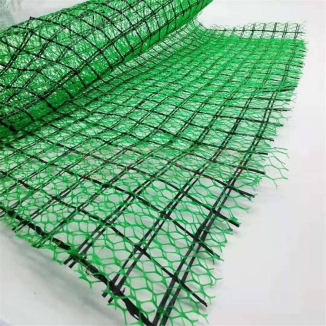
Geomat is a professional geosynthetic erosion control material tailored for slope protection and soil stabilization. Different from rigid protection materials, standard geomat adopts a flexible mesh structure that closely fits uneven slope surfaces, eliminating hollow layers between the protective material and soil. In flood disaster slope repair, geomat delivers outstanding temporary soil locking effects by restraining loose topsoil, intercepting sediment particles, and dispersing surface water flow impact.
The key strength of geomat in emergency scenarios lies in its ultra-fast deployment. The material comes in roll packaging, easy to transport, cut, and lay on-site without complex construction procedures or professional equipment. After flood disasters, construction efficiency directly determines the control effect of secondary disasters. Geomat can be quickly laid on damaged river slopes, road embankments, and hillside slopes to form an immediate protective layer, locking loose soil in a short time and blocking rainwater and runoff erosion.
In addition to rapid construction, geomat boasts excellent weather resistance and structural stability. Made of high-polymer materials with anti-ultraviolet and anti-aging additives, it maintains stable physical performance in harsh post-flood environments with high humidity and strong sunlight. It can continuously provide effective temporary soil locking support during the transitional period from emergency repair to formal ecological restoration.
3. Why 3D Geomat Outperforms Traditional Materials in Flood Slope Repair
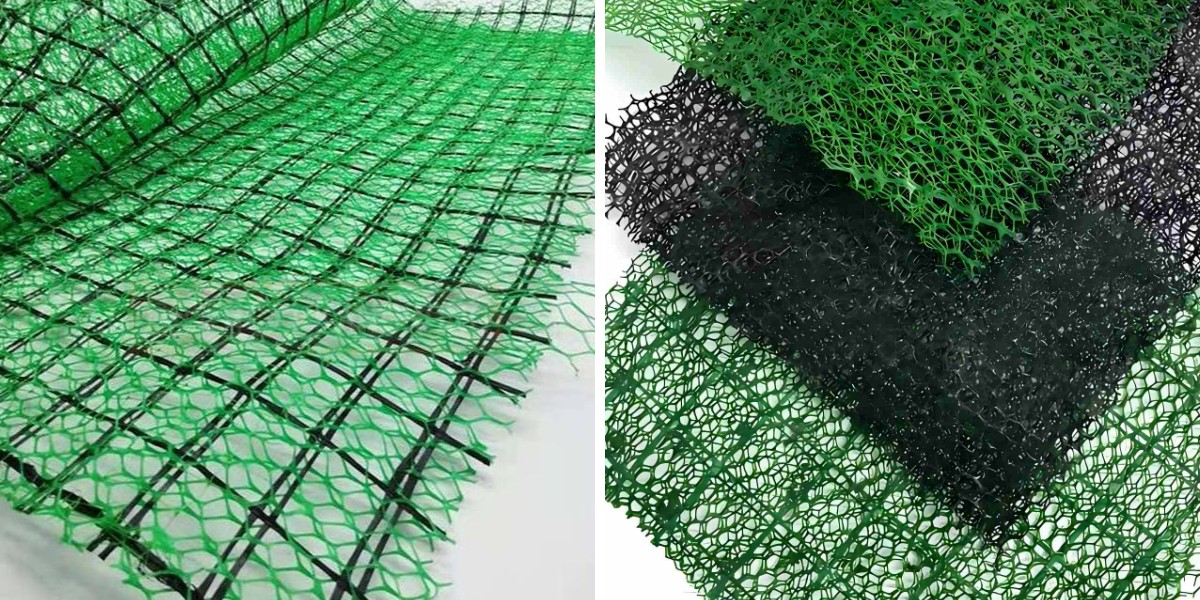
As an upgraded version of traditional planar geomat, 3d geomat adopts a three-dimensional spatial network structure composed of multi-layer flat nets and vertical supporting ribs. This stereoscopic structure creates a three-dimensional protective space that planar materials cannot match, greatly improving temporary soil locking and anti-scour performance in post-flood slope repair.
The unique spatial structure of 3d geomat can effectively buffer the kinetic energy of flood runoff and scattered rainwater. When surface water flows through the slope covered by 3d geomat, the layered mesh structure disperses water flow pressure, avoids concentrated scouring on local soil, and locks loose soil particles inside the mesh gaps. This structural advantage solves the common pain point of traditional materials: insufficient soil holding capacity for severely loose post-flood slopes.
3d geomat also has excellent soil adhesion and terrain adaptability. It can closely fit irregular slope surfaces, steep slopes, and broken terrain formed after floods, realizing full coverage protection without dead angles. In emergency repair projects, this adaptability avoids secondary trimming of damaged slopes, further shortening the construction cycle. While completing rapid temporary stabilization, 3d geomat reserves sufficient growth space for subsequent vegetation planting, realizing seamless connection between emergency protection and ecological restoration.
4. 3D Vegetation Net: Integrating Temporary Soil Locking and Long-Term Ecological Restoration
3d vegetation net is a specialized ecological protection material derived from 3d geomat technology, focusing on dual functions of emergency soil locking and slope greening. In post-flood slope repair, it not only meets the urgent demand for temporary slope stabilization but also builds a favorable growth environment for slope vegetation, achieving integrated disaster repair and ecological reconstruction.
In terms of temporary soil locking, the dense three-dimensional mesh structure of 3d vegetation net firmly wraps and fixes loose topsoil and sediment. It can effectively resist repeated scouring of residual flood and post-flood rainfall, prevent soil particle loss and slope slumping, and maintain the overall stability of repaired slopes in the early stage. Compared with ordinary geomat, 3d vegetation net has a more uniform mesh layout and better structural toughness, suitable for medium and severe flood-damaged slope scenarios.
In terms of long-term value, 3d vegetation net provides stable attachment points and growth space for plant roots. With the growth of slope vegetation, plant roots will intertwine with the 3d vegetation net mesh to form a composite protection system of mesh and vegetation. This system gradually replaces temporary mechanical protection with permanent ecological protection, realizing sustainable slope stability. This eco-friendly model abandons the rigid and non-ecological defects of traditional concrete repair, helping restore the natural ecological landscape of flood-damaged areas.
5. Fast Deployment Workflow of Geosynthetic Materials for Flood Slope Repair
The core advantage of geomat, 3d geomat, and 3d vegetation net in post-flood repair is efficient and simplified deployment, which is suitable for rapid construction in emergency disaster relief. The entire workflow requires minimal manpower and equipment, greatly improving emergency repair efficiency.
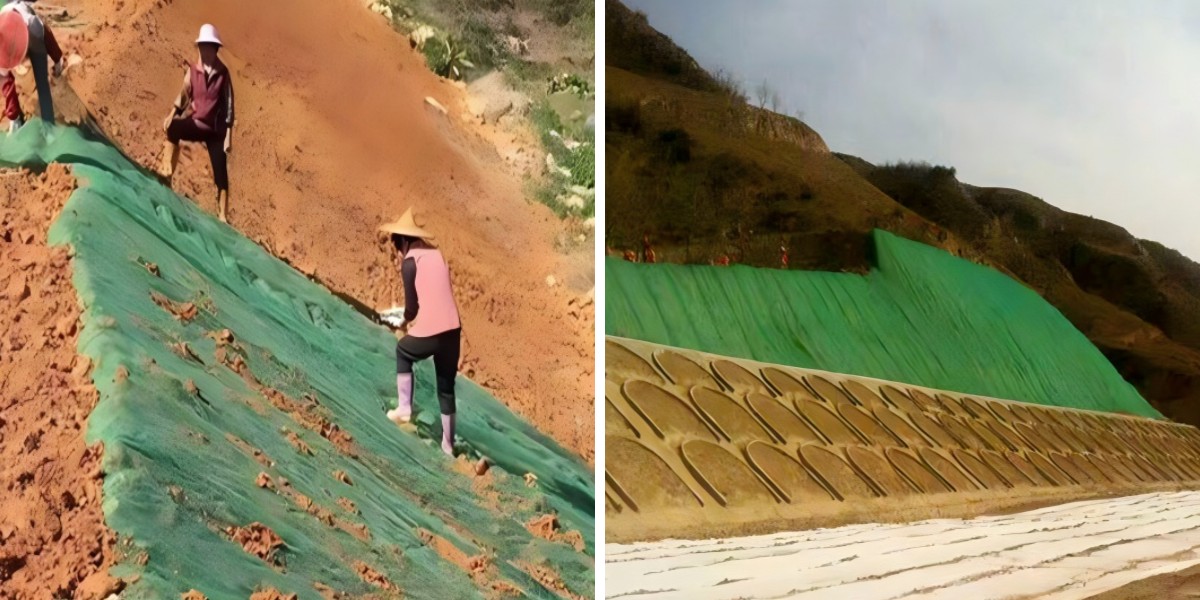
First, simply clean the floating debris and obvious collapsed soil on the flood-damaged slope surface without large-scale earthwork trimming. Second, unfold and lay geomat or 3d geomat along the slope from top to bottom, with overlapping joints to ensure overall sealing. Third, fix the material edges and middle positions with special fixing nails to make the material closely fit the slope surface and complete temporary soil locking. For slopes needing subsequent greening, laying 3d vegetation net can directly cooperate with hydraulic seeding and soil covering to complete one-stop construction of stabilization and greening.
The whole process is time-saving and labor-saving, enabling large-area slope reinforcement in a short time. It effectively controls the risk of secondary slope disasters after floods and creates safe construction conditions for subsequent permanent repair projects.
6. Conclusion: Optimal Emergency Solution for Post-Flood Slope Stabilization
Flood disaster slope repair requires a balance of rapid emergency response, reliable temporary protection, and sustainable ecological development. Traditional repair methods are difficult to adapt to the efficient and low-carbon repair needs of modern disaster relief. Geomat, 3d geomat, and 3d vegetation net have become the preferred materials for post-flood temporary soil locking and slope stabilization by virtue of fast deployment, excellent anti-scour performance, strong terrain adaptability, and ecological compatibility.
Geomat provides basic rapid soil locking protection for mild flood-damaged slopes, while upgraded 3d geomat copes with complex and severely damaged slope stabilization scenarios. As an ecological upgraded product, 3d vegetation net perfectly combines emergency protection and long-term green restoration. Together, these three geosynthetic materials form a comprehensive solution system for post-flood slope repair, effectively solving the problems of loose soil, easy erosion, and difficult rapid stabilization of flood-damaged slopes. For flood disaster emergency repair and slope ecological reconstruction projects, choosing these efficient and eco-friendly geosynthetic products can significantly improve repair efficiency, reduce secondary disaster risks, and realize sustainable slope protection effects.