3D Geomat: Material Composition, Working Principle & Core Technical Features
1. Introduction to 3D Geomat Technology
Modern slope protection and ecological restoration projects require flexible, durable and vegetation-friendly geosynthetic materials that balance structural stability and environmental compatibility. As a core ecological protection material, 3d geomat has replaced many traditional rigid protection methods in landscape renovation, hydraulic slope stabilization and civil erosion control. Professional projects that focus on earth reinforcement and anti-erosion effects widely adopt Geomat for Slope Protection as a complete solution, often paired with auxiliary 3d vegetation net to maximize greening and stabilization performance. This article systematically analyzes the material composition, working mechanism and core technical advantages of 3D geomat, explaining why it has become the mainstream material for modern ecological slope engineering.
2. Basic Material Composition of 3D Geomat
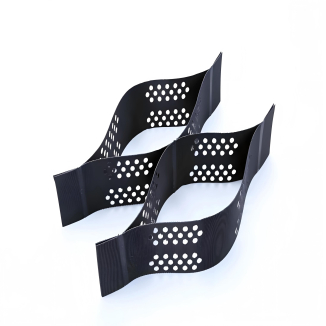
3d geomat is a three-dimensional flexible mesh composite material formed by high-polymer fiber extrusion and hot-melt bonding technology. Its structural composition abandons flat single-layer weaving and adopts a stereo layered structure with uniform mesh gaps and stable fiber connections. The raw materials feature strong weather resistance, tensile toughness and anti-aging properties, ensuring long-term stable performance in outdoor and humid environments.
As the main body of Geomat for Slope Protection, 3D geomat’s integrated fiber framework provides continuous supporting force for surface soil and vegetation. When matched with 3d vegetation net, the two materials form a composite layered structure that complements physical fixation and ecological protection. The material composition avoids brittle cracking and structural aging defects of traditional hard materials, making it highly adaptable for various slope protection scenarios.
3. Scientific Working Principle of 3D Geomat
3.1 Soil Locking and Anti-Erosion Mechanism
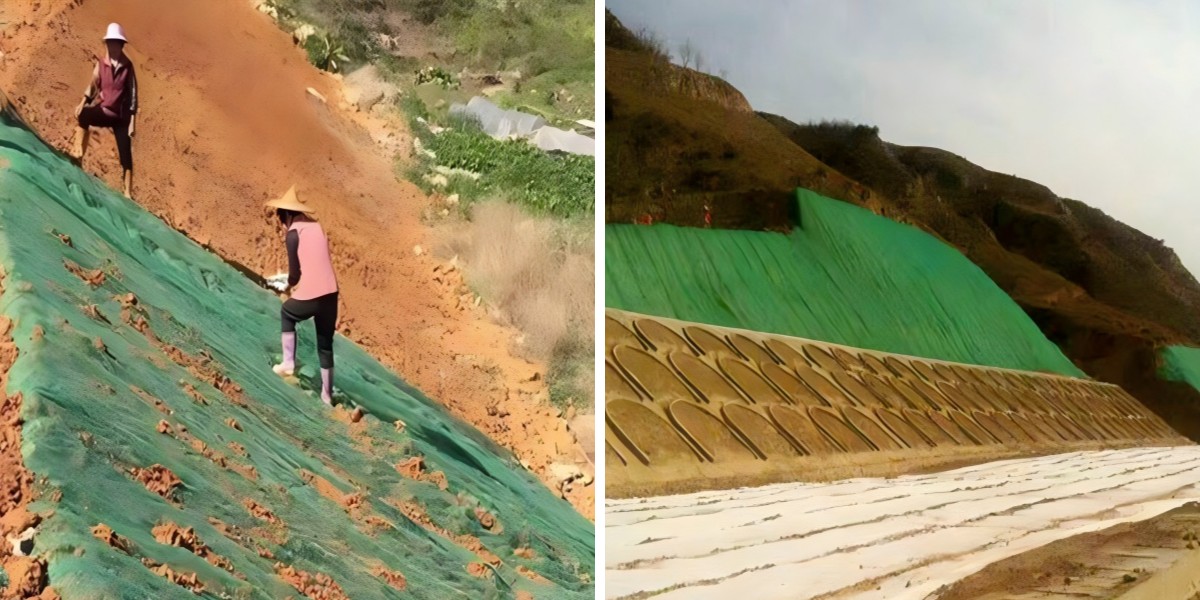
3d geomat relies on its unique three-dimensional stereo mesh structure to lock loose surface soil effectively. The layered mesh gaps wrap and fix topsoil, preventing rainwater runoff from directly scouring slope surfaces and causing soil loss. The stereo structure disperses concentrated water flow pressure and slows down surface flow velocity, realizing passive anti-erosion protection for slopes.
This core working principle forms the technical basis of Geomat for Slope Protection. It changes the traditional rigid isolation protection mode and retains the natural permeability of slope soil. With the auxiliary coverage of 3d vegetation net, surface soil and seed layers are further stabilized, avoiding shallow slope sliding and local hollowing in the early construction stage.
3.2 Vegetation Growth and Root Reinforcement Mechanism
The open and breathable structure of 3d geomat reserves sufficient growth space for slope vegetation. After sowing and germination, plant roots penetrate the mesh structure and intertwine with the geomat fiber framework. As vegetation grows, the root system and 3D geomat form an integrated soil-fixing system, transforming single material protection into ecological self-reinforcement.
This long-term working mechanism greatly improves the durability of Geomat for Slope Protection. The cooperative use of 3d vegetation net ensures stable attachment of grass seeds and young seedlings in the early stage, preventing seed loss caused by wind and rain erosion and accelerating the formation of slope green coverage.
4. Core Technical Features of 3D Geomat
4.1 Excellent Flexible Terrain Adaptability
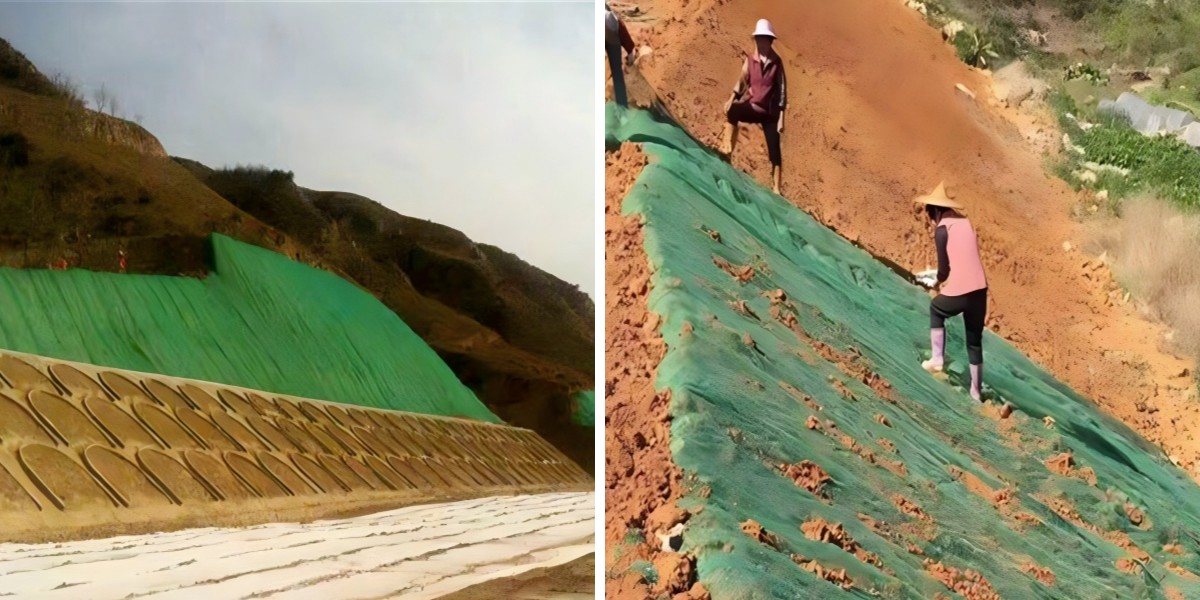
3d geomat features outstanding flexibility and ductility, which can fit undulating terrains, curved slopes and irregular slope surfaces closely without gaps or structural deformation. It can adapt to subtle soil settlement and terrain changes without cracking or peeling, solving the poor fitting problem of rigid concrete and stone protection materials.
This feature enables Geomat for Slope Protection to adapt to complex residential hillsides, river slopes and garden terrains. Combined with the soft wrapping performance of3d vegetation net, it achieves full coverage and seamless protection of all slope areas.
4.2 High Structural Toughness and Long-Term Durability
The hot-melt integrated molding process of 3d geomat ensures overall structural uniformity and high tensile strength. The material resists ultraviolet aging, temperature alternation and long-term humid erosion, maintaining stable structural performance under long-term outdoor exposure. It will not rot, deform or loosen in complex natural environments.
For long-term slope protection projects, the durable performance of Geomat for Slope Protection reduces repeated maintenance and renovation work. The auxiliary protection of 3d vegetation net further optimizes the surface protection effect, avoiding early-stage soil erosion before vegetation matures.
4.3 Ecological Permeability and Environmental Compatibility
Different from fully enclosed rigid protective layers, 3d geomat has highly breathable and water-permeable mesh gaps. It maintains normal water and gas exchange between slope soil and the external environment, retaining soil moisture and nutrients required for vegetation growth. It does not damage the original ecological environment of the slope and supports natural ecological cycle restoration.
The eco-friendly technical attribute makes Geomat for Slope Protection widely used in landscape and water ecological projects. Paired with3d vegetation net, it builds a green and sustainable protection system that integrates engineering stability and landscape aesthetics.
4.4 Lightweight Structure and Convenient Application
3d geomat adopts lightweight fiber structure with convenient transportation and flexible cutting performance. It can be freely cut and spliced according to different slope sizes and shapes, adapting to diversified engineering needs. The material requires no complex mechanical equipment during application, realizing efficient and low-labor construction.
This practical technical advantage improves the construction efficiency of Geomat for Slope Protection in small and medium-sized slope projects. The matching use of 3d vegetation net simplifies the overall greening process and shortens the cycle of slope ecological restoration.
5. Synergistic Advantages of 3D Geomat and Supporting Materials
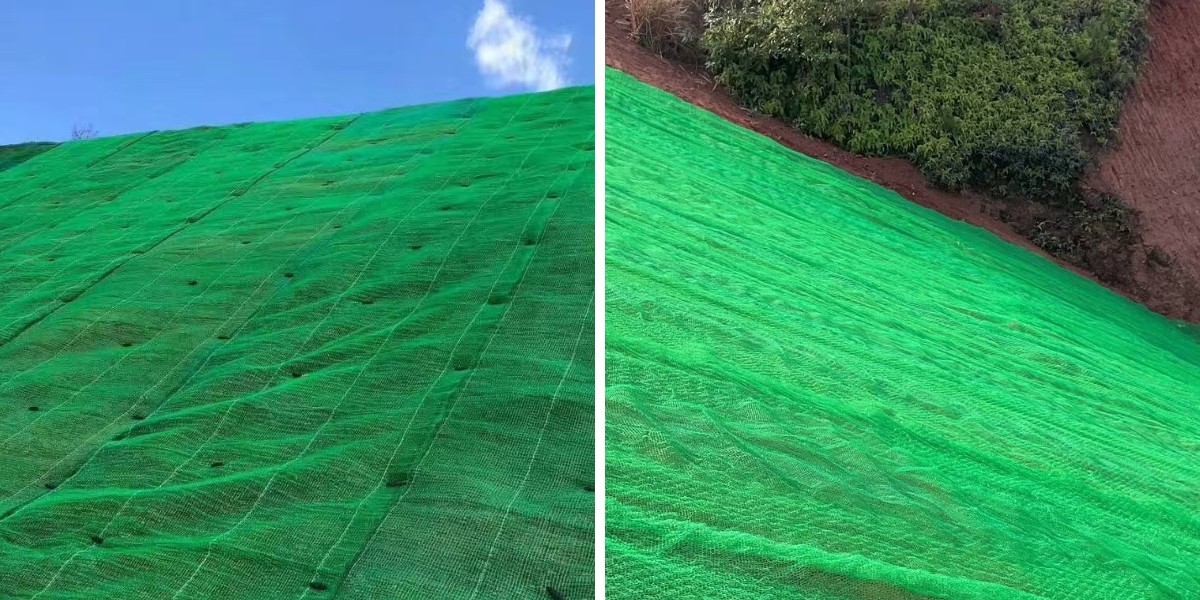
Independent3d geomat can realize basic slope anti-erosion and soil fixation functions, while the composite matching system with 3d vegetation net greatly improves the overall protection effect. The 3D geomat serves as the bottom stable skeleton to fix deep soil, and the 3D vegetation net covers the surface to protect seeds and seedlings. The two materials coordinate and complement each other to form a dual protection system of physical reinforcement and ecological greening.
This mature composite system has become the standard construction scheme of Geomat for Slope Protection, which is suitable for residential landscape slopes, river bank protection, highway slope greening and various ecological renovation projects.
6. Conclusion
With scientific material composition, reliable working principle and unique technical advantages, 3d geomat has become an indispensable core material in modern ecological slope engineering. It abandons the defects of traditional rigid protection and realizes organic integration of structural stability and ecological restoration. The standardized application of Geomat for Slope Protection, together with the auxiliary cooperation of 3d vegetation net, provides efficient, durable and eco-friendly solutions for various slope protection and landscape greening projects, representing the mainstream development direction of modern geosynthetic ecological engineering.