How Does Composite Geo-membrane Improve Project Seepage Prevention Effect
Introduction
Seepage failure is one of the most common hidden dangers in civil engineering, water conservancy and environmental protection projects. Uncontrolled water penetration and internal liquid leakage can lead to foundation softening, structural deformation, material loss and overall project instability. Traditional single anti-seepage materials often have obvious defects in protection, adaptability and durability, failing to form a long-term stable waterproof barrier. With the upgrading of engineering anti-seepage standards, composite geosynthetic materials have become the core solution for high-standard seepage control. The integrated structural design of composite geotextile provides dual protection and drainage performance, professional impermeable geotextile fabric builds dense waterproof barriers, and customized Landfill Composite Geomembrane solves complex seepage problems in environmental containment projects. Together, these materials greatly optimize and upgrade the overall seepage prevention effect of modern engineering projects.
Basic Structure and Anti-Seepage Principle of Composite Geosynthetic Materials
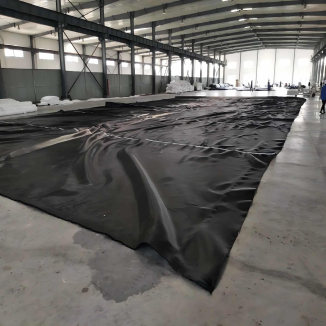
composite geotextile adopts a composite structure of geotextile and geomembrane, integrating the protective, drainage and filtering functions of fabric materials with the ultra-low permeability barrier performance of membrane materials. Different from single-layer geotextile or plastic membrane, composite geotextile achieves complementary advantages in structure and performance. The outer fabric layer resists external friction and puncture impact, while the inner membrane layer blocks liquid penetration fundamentally, laying a solid foundation for efficient seepage prevention of engineering structures.
impermeable geotextile fabric is a functional composite material specially optimized for anti-seepage scenarios. With compact fiber weaving and composite sealing technology, impermeable geotextile fabric eliminates the tiny gap penetration problem of ordinary geotextile materials. It maintains flexible deformation adaptability while possessing stable waterproof and anti-leakage capabilities, which can fit various irregular base surfaces and avoid seepage loopholes caused by poor material fitting.
Landfill Composite Geomembrane is a high-standard anti-seepage material developed for harsh environmental engineering scenarios. Landfill Composite Geomembrane features excellent chemical stability and structural integrity, which can resist long-term erosion of complex leachate and sewage. Its integrated composite structure effectively prevents internal toxic liquid leakage and external groundwater infiltration, realizing double-sided seepage control protection for special containment projects.
Optimize Structural Barrier Performance to Eliminate Hidden Seepage Dangers
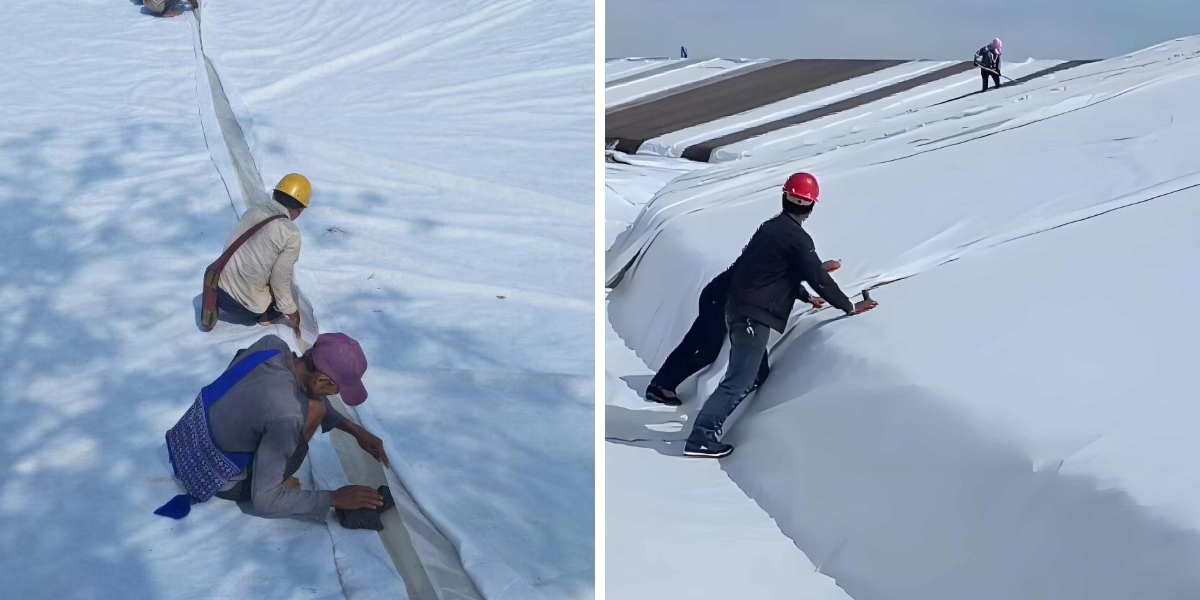
Single-layer anti-seepage membranes are easily damaged by sharp substrates, construction friction and foundation deformation, resulting in local seepage failure. composite geotextile adds a high-strength fabric protection layer on the basis of the impermeable membrane. This structure buffers external mechanical impact, avoids membrane puncture and cracking, and ensures the integrity of the waterproof barrier. The stable structural protection of composite geotextile makes the anti-seepage system more reliable in long-term operation.
impermeable geotextile fabric further strengthens the overall barrier density of the anti-seepage system. Its tight composite structure blocks capillary water penetration and micro-seepage that cannot be isolated by ordinary materials. In water conservancy slopes, reservoir bottoms and ditch lining projects, impermeable geotextile fabric forms a continuous and gap-free waterproof layer, thoroughly solving the problem of invisible water seepage that affects project stability.
For high-risk anti-seepage scenarios such as solid waste storage and pollutant containment, Landfill Composite Geomembrane provides ultimate barrier protection. Landfill Composite Geomembrane can stably isolate various corrosive liquids and pollutants, prevent deep penetration of leachate into soil and groundwater, and completely cut off the transmission path of seepage pollution, greatly improving the safety and standard of project seepage prevention.
Enhance Terrain Adaptability to Avoid Seepage Loopholes
Most engineering foundations have undulating surfaces, curved structures and local irregular deformation areas. Rigid anti-seepage materials are prone to hollowing and cracking under terrain changes, forming seepage gaps. composite geotextile has excellent overall flexibility and tensile performance, which can follow the terrain changes closely and fit the base surface in all directions. No gaps or peeling will occur during long-term foundation slight deformation, ensuring the continuity of the anti-seepage structure.
impermeable geotextile fabric balances flexibility and structural stability perfectly. It can adapt to slope bending, corner transition and uneven base laying environments. Impermeable geotextile fabric will not produce structural damage due to local tension and compression, effectively avoiding local seepage failure caused by material mismatch with terrain.
Landfill Composite Geomembrane retains high flexibility while possessing high barrier strength. It can adapt to large-area foundation settlement and local deformation of landfill sites, maintain the integrity of the overall lining system, and avoid large-area seepage accidents caused by structural cracking of rigid materials.
Realize Drainage and Filtration Synergy to Stabilize Anti-Seepage System
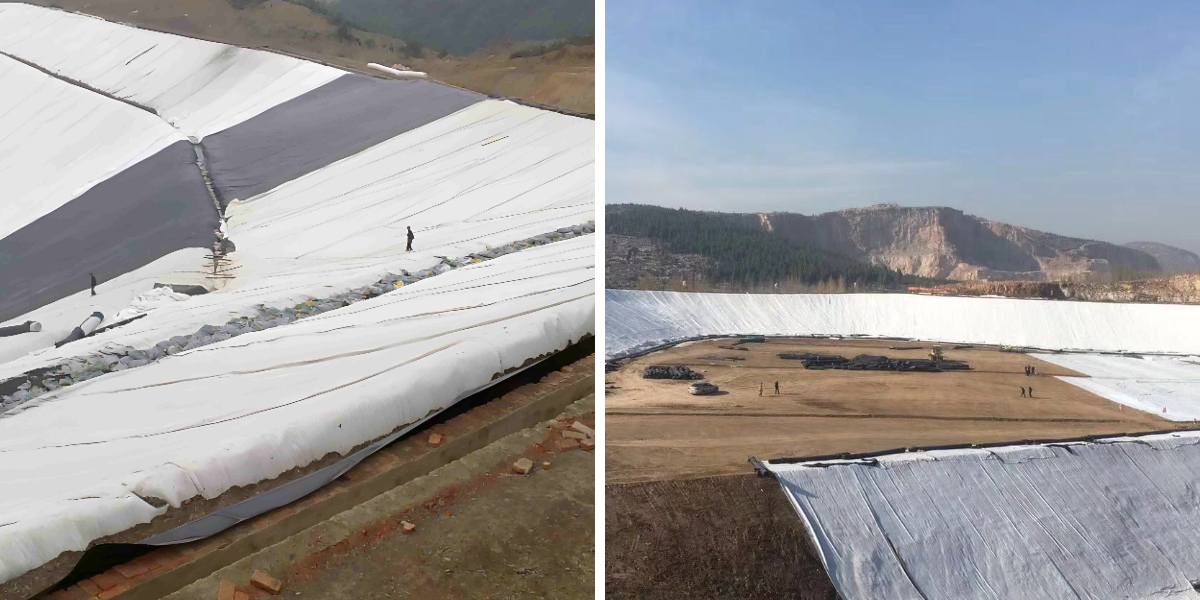
A qualified anti-seepage system needs not only waterproof barrier capability, but also reasonable drainage and filtration functions to avoid water pressure accumulation damaging the lining structure. composite geotextile uses the fabric layer to form a stable drainage channel, which can timely discharge accumulated water and redundant osmotic pressure behind the membrane. This function effectively prevents lining bulging, floating and cracking caused by water pressure, and stabilizes the long-term anti-seepage effect of the project.
impermeable geotextile fabric realizes integrated filtration and anti-seepage functions. It can block soil particle loss while discharging accumulated water, preventing foundation soil erosion and structural hollowing. This dual-performance design optimizes the internal water and soil balance of the project and avoids seepage risks caused by foundation damage.
Landfill Composite Geomembrane matches professional drainage and filtration design for environmental protection projects. It can guide leachate to discharge stably while isolating pollutants, avoid liquid accumulation inside the landfill lining, prevent local pressure overload and material aging damage, and maintain the long-term stable operation of the anti-seepage system.
Improve Durability and Reduce Long-Term Seepage Failure Risks
Material aging and performance attenuation are important causes of late seepage failure of engineering projects. composite geotextile adopts anti-aging and anti-ultraviolet composite technology, which can resist long-term outdoor exposure, water soaking and temperature alternation. Its composite structure will not delaminate or fail easily, maintaining stable anti-seepage performance throughout the project life cycle.
impermeable geotextile fabric has excellent corrosion resistance and weather resistance. It can adapt to various complex water quality and soil environments, resist microbial erosion and chemical aging, and avoid performance degradation caused by long-term contact with water and soil.
Landfill Composite Geomembrane is specially optimized for harsh corrosive environments. It can resist the erosion of various organic and inorganic pollutants, maintain intact structural and barrier performance for a long time, and effectively reduce the frequency of later maintenance and seepage accident handling of environmental protection projects.
Conclusion
The upgrade of project seepage prevention effect relies on systematic material optimization and structural innovation. composite geotextile realizes the integration of protection, drainage and anti-seepage, solving the fragile defect of single membrane materials. impermeable geotextile fabric improves the overall barrier density and terrain adaptability, eliminating micro-seepage hidden dangers of engineering structures. Landfill Composite Geomembrane provides high-standard anti-seepage solutions for harsh environmental protection projects. The application of these composite materials fundamentally improves the stability, durability and safety of engineering seepage prevention systems, becoming the core technical guarantee for modern water conservancy, municipal and environmental protection engineering construction.