Geomembrane Liner for Reservoir and Artificial Lake Water Containment
Introduction: Why Modern Water Containment Projects Need Geomembrane Liner
Reservoirs and artificial lakes are core water storage and landscape facilities for municipal construction, agricultural irrigation and ecological restoration. Unlined water containment structures often face persistent water seepage, water level drop, soil erosion and water quality deterioration, which increase operational difficulties and damage the stability of water ecological environments. Traditional concrete lining and soil compaction methods have obvious limitations such as poor terrain adaptability and easy cracking. Nowadays, professional geosynthetic lining solutions have become the mainstream choice for large-scale water containment projects. The versatile geomembrane provides basic anti-seepage protection for water storage structures, high-performancehdpe geomembrana delivers durable and stable barrier effects for long-term underwater service, and professional impermeable geomembrane thoroughly solves seepage hidden dangers of reservoirs and artificial lakes, realizing efficient and long-lasting water containment.
Basic Understanding of Geomembrane, Hdpe Geomembrana and Impermeable Geomembrane
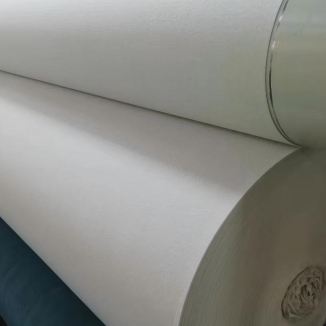
Geomembrane is a flexible synthetic barrier material specially designed for water containment and anti-seepage engineering. With compact molecular structure and excellent isolation performance, geomembrane can effectively block water penetration and prevent the exchange of water and soil substances. It features lightweight texture, flexible construction and strong terrain adaptability, suitable for various irregular slopes and bottom structures of reservoirs and artificial lakes. As the foundational lining material for water storage projects, geomembrane can adapt to different environmental conditions and meet the basic anti-seepage needs of various water containment scenarios.
Hdpe geomembrana is a high-density polyethylene-based geomembrane product optimized for large water conservancy projects. Hdpe geomembrana integrates excellent tensile resistance, puncture resistance and UV aging resistance, maintaining stable physical and chemical properties in long-term submerged and open-air environments. Different from ordinary lining materials, hdpe geomembrana will not deform, brittle or fail due to water level fluctuation, temperature change and microbial erosion, becoming the preferred material for permanent reservoir and artificial lake lining projects.
Impermeable geomembrane is a professional anti-seepage type geosynthetic material with ultra-low permeability. The core advantage of impermeable geomembrane lies in its ultimate water-blocking performance, which can completely isolate water bodies from underlying soil and groundwater. It effectively prevents internal water seepage and external pollutant infiltration, protects water quality stability, and provides the most reliable guarantee for standardized water containment of reservoirs and landscape artificial lakes.
Core Functions of Geomembrane in Reservoir Water Containment
Stable Water Storage and Seepage Prevention
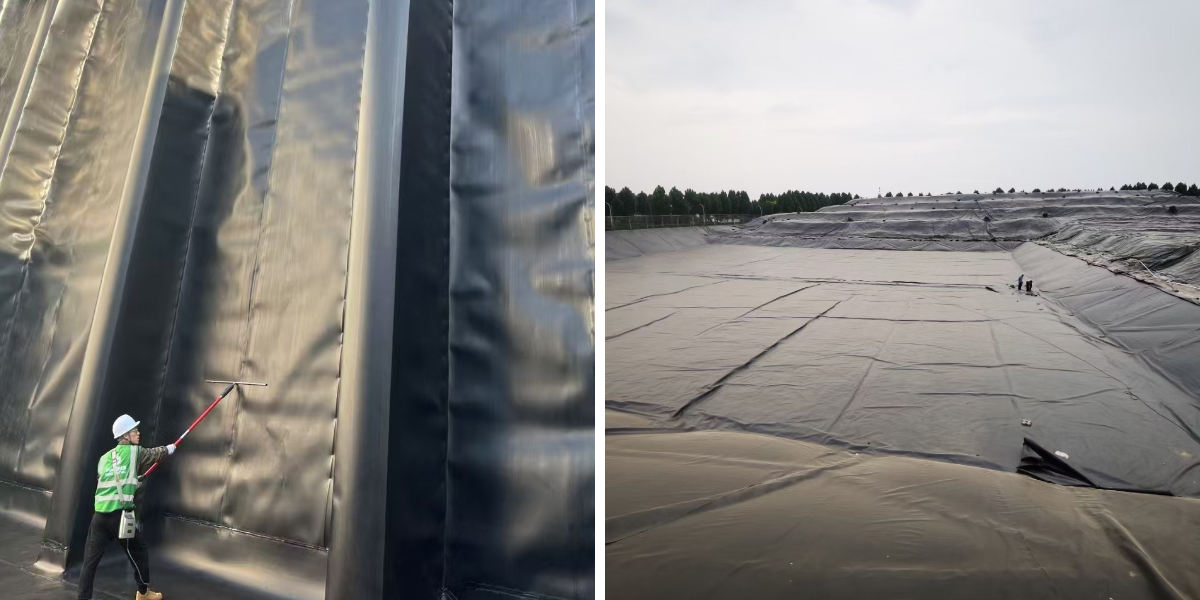
The primary purpose of laying lining structures in reservoirs is to maintain stable water storage capacity. Geomembrane forms a continuous and complete anti-seepage barrier on the reservoir bottom and side slopes, avoiding invisible water loss caused by soil gap penetration. For large-capacity water storage reservoirs, hdpe geomembrana strengthens the overall structural stability of the lining layer, resisting long-term water pressure impact and preventing local rupture and seepage of the lining body. Meanwhile, impermeable geomembrane eliminates all potential seepage channels, ensuring that the reservoir maintains a stable water level for a long time and avoids frequent water supplementation.
Protect Foundation Stability and Prevent Soil Loss
Long-term water soaking and flow scouring easily cause softening and loss of reservoir foundation soil, leading to slope collapse and foundation settlement. Geomembrane isolates the direct contact between water body and foundation soil, preventing soil softening and loosening. The high toughness of hdpe geomembrana can disperse water pressure evenly, restrict soil displacement on reservoir slopes, and maintain the integrity of the reservoir structure. With excellent isolation performance, impermeable geomembrane avoids the loss of fine soil particles, effectively protecting the long-term stability of the reservoir foundation.
Key Advantages of Geomembrane for Artificial Lake Landscape Water Containment
Maintain Landscape Water Quality and Ecological Balance
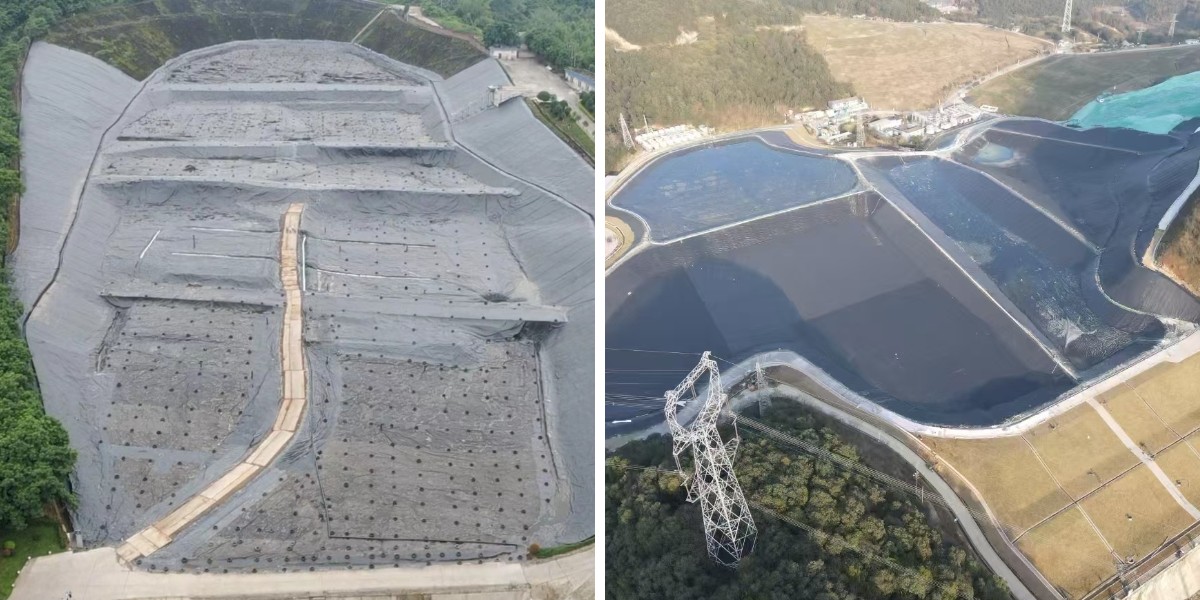
Artificial lakes focus on both water storage function and landscape ecological effect, putting forward higher requirements for lining materials. Geomembrane is environmentally friendly and non-toxic, which will not release harmful substances into the water body, protecting the growth of aquatic plants and organisms. Hdpe geomembrana has strong anti-corrosion performance, resisting the erosion of algae, microorganisms and water impurities, avoiding lining aging and water pollution. The tight isolation structure of impermeable geomembrane prevents underground sediment and pollutants from penetrating into the lake water, keeping the landscape water clean and transparent all year round.
Adapt to Complex Terrain and Beautiful Landscape Presentation
Most artificial lakes have irregular shapes, curved shorelines and undulating terrain, which cannot be perfectly adapted by rigid concrete lining. Geomembrane has good flexibility and ductility, which can closely fit various complex lake terrains without gaps.Hdpe geomembrana can be freely cut and spliced according to lake shape, with neat and flat laying effect, providing a smooth foundation for landscape water presentation. Impermeable geomembrane maintains structural integrity on curved slopes and special terrain, ensuring no dead angle for anti-seepage protection and realizing the integration of water containment function and landscape beauty.
Durability and Environmental Benefits of Professional Geomembrane Lining System
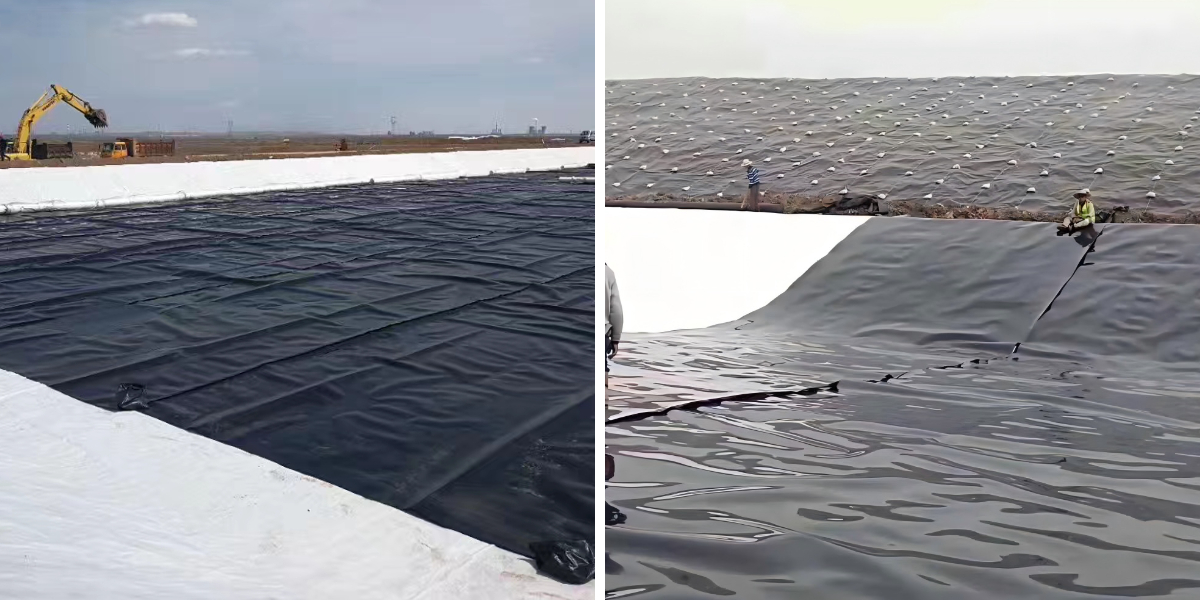
Long-term outdoor and underwater operation requires lining materials to have excellent durability. Geomembrane has good weather resistance, adapting to seasonal temperature changes and alternating dry and wet environments. Hdpe geomembrana undergoes professional anti-aging and anti-ultraviolet treatment, which can maintain stable performance in long-term open-air exposure and underwater soaking, avoiding frequent replacement and maintenance. Impermeable geomembrane has strong structural stability, resisting foundation slight deformation and external natural erosion, realizing long-term service of water containment facilities.
In terms of environmental protection, the whole geosynthetic lining system has outstanding green advantages. Geomembrane reduces water resource waste caused by seepage and improves water resource utilization efficiency. Hdpe geomembrana will not cause soil and water pollution, protecting the surrounding ecological environment of reservoirs and lakes.Impermeable geomembrane blocks the mutual penetration of internal and external water bodies, avoiding ecological damage caused by water and soil mixing, and meeting the construction requirements of ecological water conservancy and landscape projects.
Conclusion
Water containment is the core foundation of reservoir and artificial lake engineering, and the selection of lining materials directly determines the service life and operational effect of water facilities. The universal geomembrane provides basic anti-seepage and isolation protection for water storage structures. The high-strength hdpe geomembrana ensures long-term stable operation of large water conservancy projects. The high-barrier impermeable geomembrane realizes zero-seepage water containment effect. The coordinated application of the three materials perfectly solves various pain points of traditional water lining, with the advantages of strong adaptability, long durability and environmental friendliness, becoming the most reliable solution for modern reservoir and artificial lake water containment projects.